


















So, you're wondering, "what gauge is a tongue ring?" Let's get right into it. The short answer is that the standard and most common size is 14 gauge (14G). In everyday terms, that's about 1.6 millimeters thick. Think of it as the sweet spot—the go-to size for a piercing that's safe, comfy, and looks totally on point.
Unlocking the Mystery of Tongue Ring Gauges
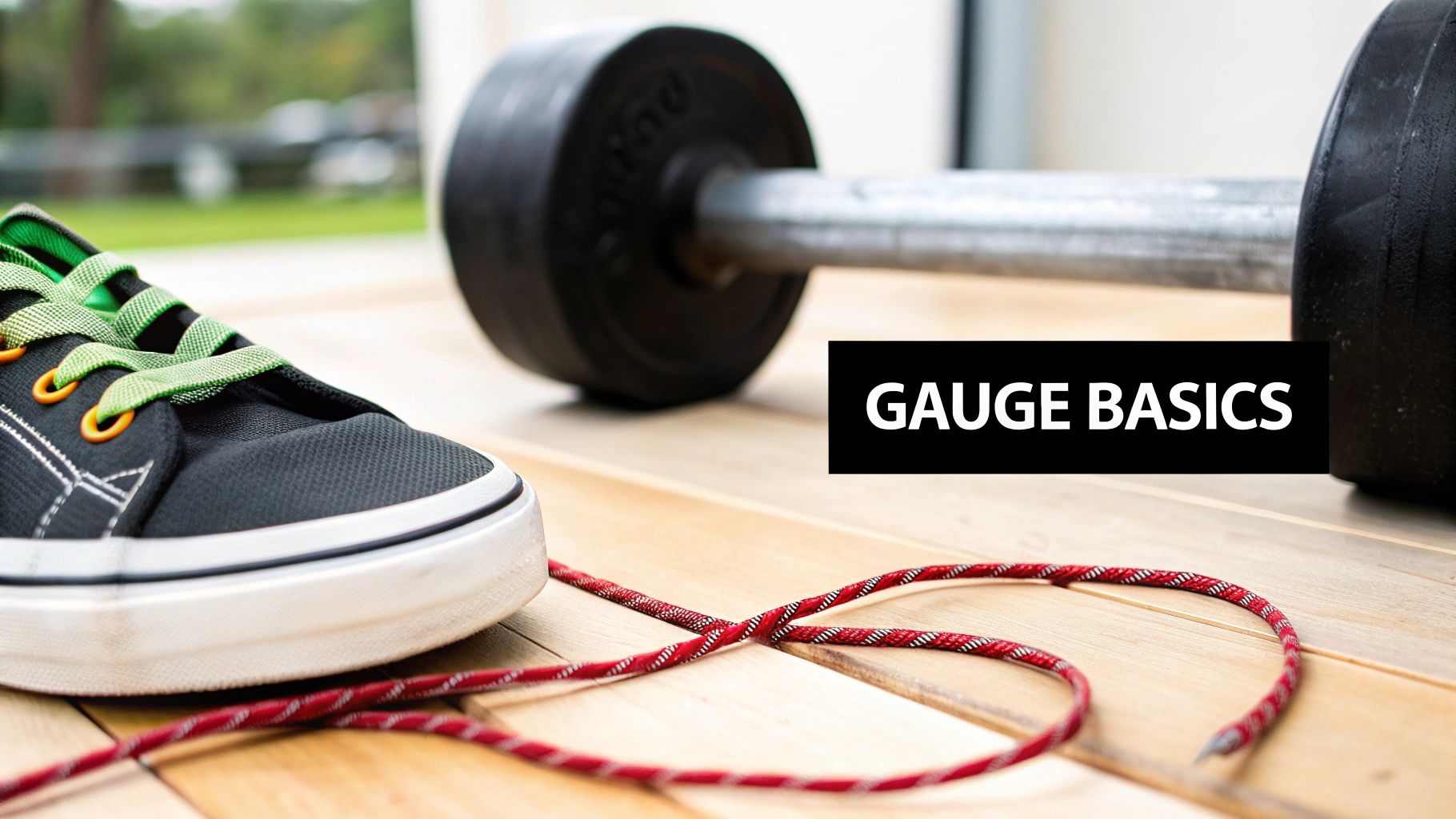
Gauge sizing can feel a little backward when you first encounter it, but it's super simple once you get the hang of it. Here’s the one rule you need to remember: the smaller the gauge number, the thicker the jewelry.
It’s a bit counterintuitive, right? Imagine you've got a thick, chunky shoelace and a thin piece of string. A 12G barbell is like that chunky shoelace, while a 16G is more like the delicate string. This measurement only refers to the thickness of the barbell post itself—not its length or how big the decorative balls on the ends are.
Why 14G is the Gold Standard
Pretty much anywhere you go, the industry standard for tongue rings is 14 gauge, which translates to a thickness of 1.6 millimeters. Professional piercers love this gauge because it strikes the perfect balance between being sturdy and comfortable. It’s thick enough to be stable but not so thick that it feels awkward, allowing the jewelry to move naturally with your tongue.
Key Takeaway: Sticking with a 14G tongue ring is your safest bet, especially for a brand-new piercing. This thickness helps prevent something nasty called the "cheese-cutter effect," where jewelry that's too thin can slowly migrate or even tear through the tissue. A 14G post provides a solid, stable foundation for a happy, healthy healing process.
To help you get a real feel for these sizes, here’s a quick chart breaking down the common gauges you’ll come across. Knowing these basics is the first step, and if you want to dive deeper, you can check out our guide on gauge sizing for body jewelry.
Quick Guide to Tongue Ring Gauges
This little table will help you visualize the difference between the most common tongue ring sizes you'll see.
| Gauge Size (G) | Thickness in Millimeters (mm) | Common Use Case |
|---|---|---|
| 12G | 2.0 mm | Stretched or larger tongue piercings |
| 14G | 1.6 mm | The industry standard for initial piercings |
| 16G | 1.2 mm | Thinner option, sometimes used for downsizing |
Most people will start and stay with 14G, but it's good to know what the other numbers mean in case you ever decide to stretch or downsize. Now you're ready to pick out jewelry with confidence!
Why You Should Start With 14G Gauge
When you step into a professional piercing studio, your piercer will almost always reach for a 14G needle for a tongue piercing. That’s not a random choice—it’s the industry standard for a handful of solid reasons, all aimed at giving your new piercing the best shot at a smooth, trouble-free heal.
Imagine your piercing like building a small bridge. You need a foundation sturdy enough to handle swelling and daily motion, yet slim enough to sit comfortably. A 14G (1.6 mm) barbell nails that balance, acting like the perfect support beam for your tongue.
The Perfect Balance For Healing
Right after piercing, your tongue swells—a lot. A 14G barbell provides just the right thickness to accommodate this swelling without strangling the tissue.
Go thinner—say, a 16G—and you risk the “cheese-cutter effect,” where constant movement can push the jewelry through the skin. Go thicker, and you’re inviting unnecessary trauma and an extended healing time.
Here’s Why 14G Is The Go-To Gauge:
- Strong resistance to migration and rejection
- Stable channel for that fistula (healed skin tunnel) to form
- Optimized for comfort while talking, eating, and moving
Pro Tip: Roughly 85–90% of tongue piercings worldwide start with a 14G needle and barbell. When done correctly, you’ll typically heal in four to six weeks with far fewer complications.
Because 14G is the universal standard, you’ll unlock the biggest range of styles once your tongue is fully healed. Start planning your post-healing look now with our collection of awesome 14G tongue rings. To dive deeper into choosing the perfect piece today, check out the essentials of selecting the perfect tongue ring.
How to Choose Your Ideal Tongue Ring Gauge
While 14G is the reigning champ for most tongue piercings, it's not the only option on the menu. Your own unique anatomy, personal style, and even your lifestyle might have you vibing more with a slightly thinner 16G (1.2 mm) or a bolder, stretched 12G (2.0 mm).
Think of it like finding the perfect shoe width—what’s comfortable and stylish for one person might feel totally wrong for you. Choosing the right gauge isn't just about looks; it's about a happy, healthy piercing. The thickness of your barbell directly impacts how it feels day-to-day.
Finding Your Perfect Fit
So, how do you know what you need? The easiest way is to just check your current jewelry. If you don't know the size, don't guess! You can grab a digital caliper for a super-precise measurement or even use a standard ruler to get a close estimate in millimeters. This little step saves you the massive headache of ordering the wrong size.
For a quick visual, this decision tree breaks down why starting with 14G is almost always the best move for a fresh piercing.
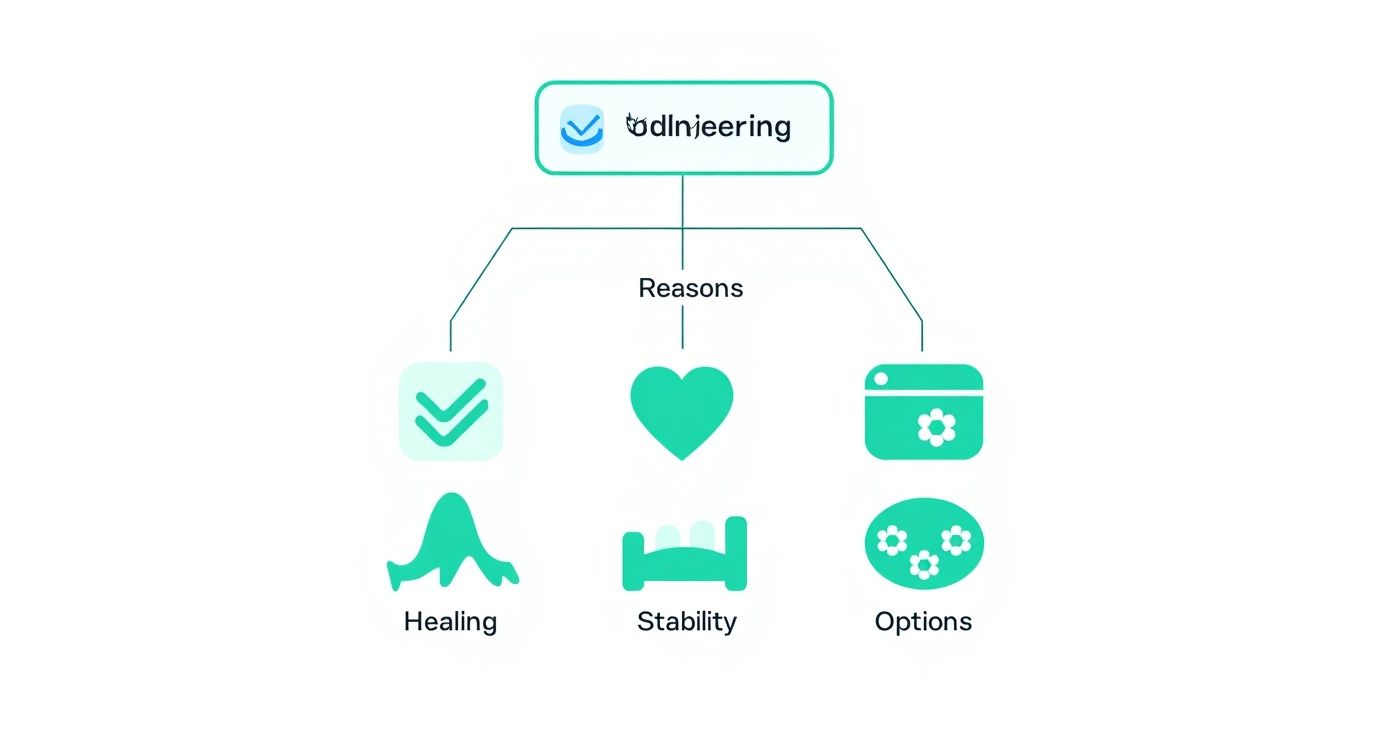
As you can see, 14G gives you the best foundation for a successful piercing. It offers the stability you need for good healing and opens up the widest variety of jewelry options later on.
Now, if you’re thinking about stretching or downsizing, that's a whole different ball game. Stretching up to a larger gauge like 12G should only be done slowly, after your piercing is fully healed, and ideally with your piercer’s guidance. Going down to 16G is simpler, but know that your fistula (the healed tunnel of flesh) may shrink, making it tough to go back to 14G later. For a complete breakdown of all the parts and pieces, explore the full anatomy of a tongue ring.
How the Wrong Gauge Can Harm Your Piercing
Picking the right gauge for your tongue ring is way more than just a style choice—it's super important for the health and comfort of your piercing. When a barbell doesn't fit properly, it can cause some seriously nasty problems. Trust us, you don't want your awesome new piercing to turn into a source of constant pain.
Think about trying to slice a block of cheese with a piece of floss. That’s pretty much what happens when you put a gauge that’s too thin into your piercing, like putting a 16G barbell into a hole made for a 14G. This is what piercers call the “cheese-cutter effect.” Over time, the skinny jewelry slowly slices through your tongue tissue, leading to pain, migration, and even permanent damage. Yikes.
On the flip side, trying to force a thicker gauge into a piercing that isn't ready for it is just asking for trouble. Shoving a 12G barbell into a healed 14G piercing can tear the fistula (the healed tunnel of skin), causing bleeding, fresh swelling, and a whole new, much more painful healing process.
Warning Signs of an Incorrect Gauge
Your body is pretty good at letting you know when something’s up. If you just swapped out your tongue ring and things feel… off, it could be the gauge. Keep an eye out for these tell-tale signs:
- Constant Irritation or Redness: Your piercing just feels sore, looks angry, and never really settles down.
- Puckering Skin: The skin around the piercing hole looks pinched or pulled, especially when you're talking or moving your tongue.
- Excessive Movement: The barbell slides around way more than it should, feeling loose and unstable in your mouth.
- Embedding: One or both of the barbell ends start to sink into the tissue of your tongue.
If you notice your jewelry starting to embed, that's a major red flag. It often means your gauge is too thin or the barbell is too short. This needs immediate attention from a professional piercer to avoid serious issues. Your oral health is a big deal, and keeping your piercing happy is a huge part of that. Learn more about the best practices for oral piercing care on our blog to keep your smile healthy and your piercing perfect.
How To Pick The Right Length And Material
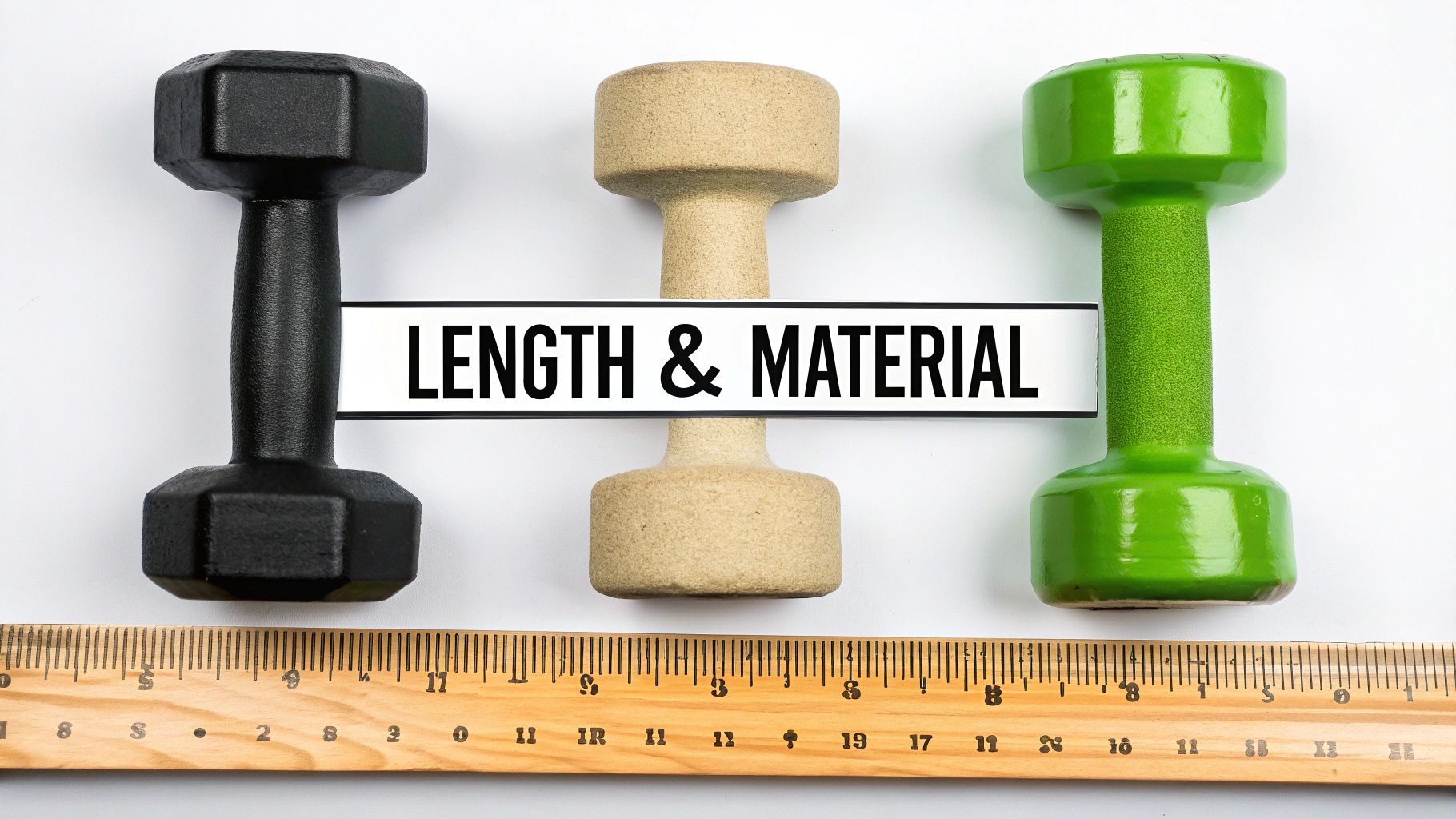
By now, you've nailed down gauge—but that’s only half the story. Barbell length and material determine how comfortably your piercing settles in and heals. Get these right, and your tongue jewelry will feel like a natural part of you.
Barbell Length Basics
When you first leave the studio, your piercer will have fitted an extra-long barbell on purpose. Your tongue can swell quite a bit, so they often choose something in the 19 mm to 22 mm range. This buffer keeps pressure off the area while it’s inflamed.
A few weeks later, once most of the swelling subsides, it’s time to downsize. A bar that’s too long will tap your teeth with every word and bite, risking chips and gum irritation. The standard go-to for a healed tongue piercing is 16 mm, though some anatomies call for a slightly shorter length.
- Extra length accommodates initial swelling.
- Downsizing prevents teeth clicking and gum damage.
- 16 mm typically works for most healed piercings; experiment within a small range to find your sweet spot.
Choosing The Right Material
Your mouth is a unique environment—warm, constantly moist, and full of movement. Picking jewelry that won’t irritate you is vital, especially during healing.
Pro Tip: When your piercing is fresh, stick with hypoallergenic metals like Implant Grade Titanium or 14k Gold. They’re biocompatible, which means fewer allergic reactions and smoother healing.
Below is a quick comparison of the most popular materials to help you decide what works best for your style and stage of healing.
Tongue Ring Material Comparison
Here’s a side-by-side look at the top choices for tongue-barbell materials.
| Material | Best For | Pros | Cons |
|---|---|---|---|
| Implant Grade Titanium | Initial piercings and sensitive skin | Hypoallergenic, lightweight, durable, and comes in various colors. | Generally pricier than surgical steel. |
| 14k Gold | Healed piercings and a refined look | Luxurious finish, classic shine, body-safe when nickel-free. | Softer metal can scratch or bend; higher cost. |
| 316L Surgical Steel | Healed piercings on non-sensitive individuals | Affordable, strong, and easy to find in many styles. | Contains nickel, which may irritate sensitive skin. |
| Bioflex / PTFE | Comfort, flexibility, and dental safety | Bendable and lightweight, great for sports, won’t damage teeth/gums. | Can stain over time and might need more frequent replacement. |
With these comparisons in hand, you’re ready to pick the ideal material for your tongue ring—whether you’re fresh out of the studio or switching things up once fully healed.
Common Tongue Ring Gauge Mistakes to Avoid
Choosing the right gauge for your tongue ring is a huge deal, but honestly, steering clear of a few common slip-ups makes all the difference. Think of it like buying a pair of shoes online—if you just guess your size or grab some cheap, unlabeled knock-offs, you’re just asking for a world of pain. Your piercing deserves better than that.
One of the absolute biggest mistakes is grabbing new jewelry without knowing its exact gauge. I get it, those mystery multi-packs or unbranded imports look tempting, but they rarely have proper sizing info. You could easily end up with a 16G barbell when your piercing is a 14G, which can lead to nasty irritation or even the dreaded "cheese-cutter effect."
Dodging Sizing Disasters
Another classic blunder? Skipping a professional measurement. If you're not 100% sure what your gauge is, don't just eyeball it! A piercer can tell you the correct size in a matter of seconds. Or, if you're comfortable, you can use a caliper at home to measure your existing jewelry. Guessing is just a recipe for a painful, poorly-fitting barbell that can do real damage to your piercing.
Remember: Just because a thicker gauge can technically fit doesn't mean it should. Forcing a 12G barbell into a healed 14G piercing without stretching it properly is a bad idea. You're risking micro-tears, which will bring back all that initial swelling and make for a much longer, more painful healing process. Always stretch gradually and safely.
To keep your piercing journey happy and healthy, run through this simple checklist before you click "buy":
- Confirm Your Gauge: Are you a standard 14G or have you downsized to a 16G? Double-check before you do anything else.
- Verify Jewelry Specs: Only buy from trusted sources like Bodycandy.com that clearly label the gauge, length, and material of every piece.
- Prioritize Material: Especially when you're swapping in new jewelry, stick with the good stuff. High-quality materials like Implant Grade Titanium or 316L Surgical Steel are your best friends for avoiding irritation.
Getting the gauge right is the foundation of a happy, healthy tongue piercing. Taking a quick moment to confirm your size makes sure your new bling will fit like a dream from the moment you pop it in.
FAQ On Tongue Ring Gauges
Got more questions about which gauge works best for your tongue piercing? You’re not alone. We’ve gathered the most common queries below so you can make informed choices and enjoy your bling without second-guessing.
Can I Use A 16G Ring In A 14G Tongue Piercing?
Yes—you technically can slide a 16G barbell into a piercing that started at 14G, but it’s a trade-off. Over time, that thinner jewelry can let your fistula shrink, leading to:
- Excess movement and irritation
- The “cheese-cutter” effect at the piercing site
Worst case, downsizing back to 14G becomes a challenge without professional help. Unless you’re intentionally slimming down your gauge, stick with what your piercer recommended.
How Do I Know When To Downsize My Initial Tongue Ring?
Shrinking your barbell is one of those small victories in the healing process. Around two to four weeks after your piercing appointment, look for:
- Swelling that’s completely gone
- That long rod clicking against your teeth
- Jewelry getting caught on snacks
Once you spot these signs, book a quick appointment with your piercer. They’ll confirm you’re healed and swap in a shorter barbell that’s far more comfortable for daily wear.
Key Insight: Downsizing isn’t optional—it’s essential. A well-fitted barbell protects your teeth and gums from accidental damage, so don’t skip this step.
Is A Thicker Gauge Like 12G Better For A Tongue Piercing?
Think of gauge like pant size—bumping up to a 12G gives you a chunkier look, but it isn’t the norm for good reason. Stretching from 14G to 12G requires:
- A fully healed fistula
- A patient, gradual process
Rushing it can lead to tears, bumps, or prolonged healing. For most people, 14G hits the sweet spot: speedy healing, plenty of style options, and a comfortable fit.
What Material Is Safest For A New Tongue Piercing?
When you’re fresh out of the needle, your tongue appreciates metals that won’t irritate sensitive tissue. Top picks include:
- Implant Grade Titanium (lightweight, nickel-free)
- 14k Gold (high quality, hypoallergenic)
Steer clear of coated metals or surgical steel until you’re fully healed—those finishes can flake or trigger reactions. Always follow your piercer’s advice to give your new piercing the best shot at trouble-free healing.
Ready to rock a perfectly fitted barbell? Check out BodyCandy’s Tongue Rings Collection for every gauge and material under the sun. Shop now at BodyCandy’s Tongue Rings and find the piece that feels made for you.