














So, you’re thinking about getting your nipples pierced, or maybe you're just ready for some new bling? That's awesome! Before you dive in and start adding all the cool stuff to your cart, let's talk about the single most important thing: getting the size right. It's the secret to a happy, healthy piercing.
For a fresh piercing, your piercer will almost always start you with a 14 gauge (14G) barbell that's 5/8" (16mm) long. This gives your piercing plenty of room to swell up and heal nicely without any drama.
Why Getting Your Nipple Ring Size Right is a BFD
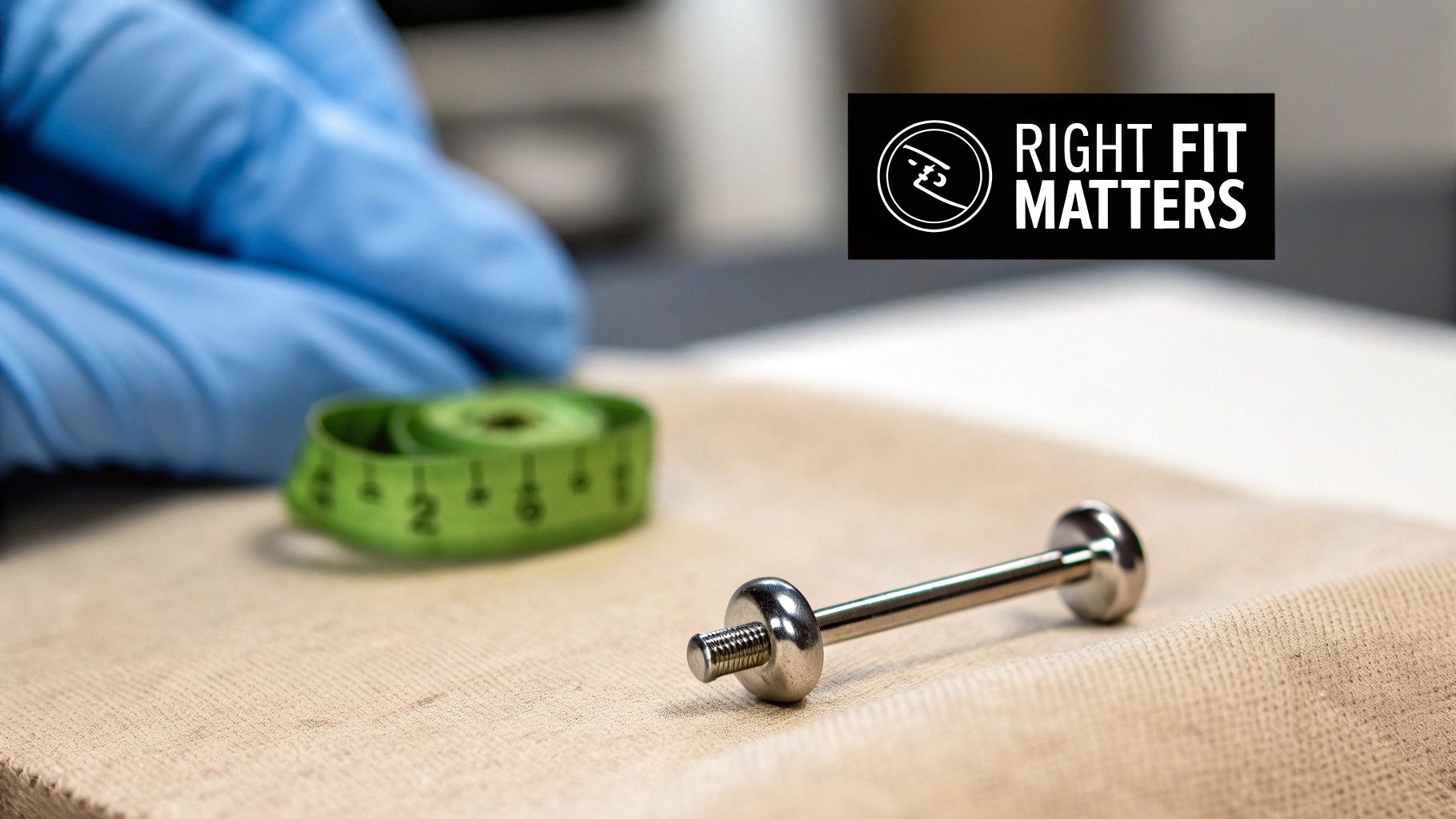
Welcome to the club! Picking out new jewelry is hands-down the best part, but the secret to a happy piercing is a perfect fit. This isn't just about looking good—it's super important for your comfort and the long-term health of your piercing.
Think of it like wearing shoes that are a size too small. Total nightmare, right? It's the exact same deal with your nipple rings. The wrong size can cause a whole mess of problems you'd much rather avoid.
Common Problems with Incorrect Sizing
When your jewelry doesn't fit, your body is going to let you know, and it won't be subtle. Here are a few things that can go wrong:
- Irritation and Discomfort: A barbell that’s too short will constantly squeeze your piercing, which is just plain uncomfortable. On the flip side, a bar that’s too long will catch on everything—your shirt, your towel, you name it. Ouch.
- Healing Delays: A little swelling is totally normal for a new piercing. If that initial barbell is too snug, there's no room for that swelling, which can lead to the jewelry embedding into your skin. Not fun.
- Unwanted Migration: Constant pressure from a tight bar or snagging from a long one can actually cause the piercing to shift or, in a worst-case scenario, reject completely.
Nipple piercings have absolutely exploded in popularity. In fact, some studios reported they made up over 20% of all piercings after reopening in 2020. With so many people rocking them, it's more important than ever to have a reliable nipple ring size chart to keep everyone safe and stylish.
Getting familiar with the lingo—gauge (the thickness) and length (the wearable part of the bar)—is your first step. Once you've got that down, you'll be set to explore everything you need to know about nipple rings.
Your Complete Nipple Ring Size Chart
Alright, let's get down to business: the numbers. This is your definitive guide for nipple jewelry sizing. We've laid everything out to take the guesswork out of shopping, creating a super clear, easy-to-use nipple ring size chart right here on this page. Do yourself a favor and bookmark this one—you'll thank us later.
We're going to break down the two measurements that matter most: gauge and length. Simply put, gauge is how thick the jewelry is, and length is the wearable part of a barbell that goes through your piercing. For hoops, this second measurement is called the diameter.
Nipple Jewelry Gauge and Length Conversion Chart
Trying to figure out what 14G actually means in millimeters? Or how 5/8" stacks up against 16mm? This chart is your new best friend. We've put all the standard sizes for both gauge (thickness) and length/diameter in one place, with conversions from inches to millimeters, so you can see exactly what you're looking at.
| Measurement Type | Standard Size (Gauge / Inches) | Metric Size (Millimeters) |
|---|---|---|
| Gauge (Thickness) | 12G | 2.0 mm |
| Gauge (Thickness) | 14G (Most Common) | 1.6 mm |
| Gauge (Thickness) | 16G | 1.2 mm |
| Length / Diameter | 1/2" | 12 mm |
| Length / Diameter | 9/16" | 14 mm |
| Length / Diameter | 5/8" (Initial Piercing) | 16 mm |
| Length / Diameter | 3/4" | 19 mm |
With this chart in hand, you can shop with total confidence. You'll know exactly what those numbers mean when you're browsing the latest styles.
A Quick Word on Gauge
First up is gauge. One of the trickiest things for newcomers is that with body jewelry, a smaller gauge number means a thicker bar. It feels backward, but you'll get the hang of it fast.
The most common size you'll see for initial nipple piercings is 14G. Professional piercers love this size because it strikes a perfect balance—it's sturdy enough to prevent tearing during healing but not so thick that it's uncomfortable.
A Quick Word on Length
Next is the length for barbells (or diameter for rings). Your very first piece of jewelry will be intentionally longer to make room for that initial swelling. A bar that's 5/8" (16mm) is pretty standard for a fresh piercing.
Once you're fully healed, you'll almost certainly downsize to a shorter barbell for a more snug and comfortable fit. It's a total game-changer.
Pro Tip: Don't even think about downsizing until a professional piercer gives you the all-clear. Healing can take a solid six to twelve months, and swapping jewelry too early can cause some serious drama, like nasty irritation or even embedding. Be patient!
Now that you're armed with this complete nipple ring size chart, you can confidently explore the Bodycandy collection and snag the perfect piece that fits like it was made just for you.
Understanding Gauge: The Thickness of Your Jewelry
Alright, you've seen the chart, now let's get into the nitty-gritty of what it all means. First up is the most crucial measurement you'll need to know: gauge.
Gauge is just the fancy piercer term for the thickness of the jewelry that goes through your piercing. Getting this right is probably the single most important factor for keeping your piercing happy and healthy long-term.
One of the first things that trips people up is how the sizing works. It feels a bit backward: a smaller gauge number means a thicker piece of jewelry. You'll get used to it fast, but just remember that a 12G barbell is much thicker than a 14G one.
The Gold Standard: 14G
When you first get your nipples pierced, your piercer will almost certainly use 14G (1.6mm) jewelry. This isn't a random choice—it's the industry standard for some very good reasons.
That specific gauge hits the sweet spot. It's sturdy enough to prevent accidental tearing while your piercing is healing, yet it's comfortable for most people's anatomy. It’s no surprise that 70-80% of initial nipple piercings are done at 14G.
This chart is a great visual for comparing common gauge sizes and barbell lengths at a glance.
As you can see, the chart clearly shows how smaller gauge numbers mean a thicker bar. It also maps out the standard barbell lengths you'll encounter for both fresh and fully healed piercings.
Exploring Other Gauge Sizes
While 14G is king, it's definitely not your only option. Once you're fully healed, you might want to explore other sizes depending on your personal style and what feels best for you.
- 12G (2.0mm): A popular choice for those wanting a bolder, more substantial look. Stretching up to a 12G is a common next step if you want jewelry that really makes a statement.
- 16G (1.2mm): On the flip side, some people prefer a more delicate, understated look and go for a 16G. This thinner jewelry can be a great option and might feel more comfortable for certain anatomies.
A quick word of advice: before you make any changes, especially if you're thinking about stretching to a larger gauge, always talk to a professional piercer. They'll make sure you do it safely and without causing any damage. For a deeper dive, check out our guide on the standards of gauge sizing for body jewelry.
Choosing the Right Length for a Perfect Fit

So, now that you’re a pro on gauge sizing, let's talk about the other half of the perfect fit equation: length. For your standard straight barbells, this is the wearable length of the bar itself—not counting the screw-on ends. If you're rocking hoops, we're talking about the internal diameter.
This measurement is all about how snugly the jewelry sits across your nipple. Nailing the right fit is a must for both comfort and that flawless look you're after. Get the length wrong, and you could be dealing with anything from annoying snags to some serious irritation.
Why Your First Barbell is Longer
When you get a fresh piercing, your piercer is going to use a barbell that seems a bit long. Don't worry, that's totally on purpose! A new piercing needs extra space for the swelling that's pretty much guaranteed to happen during healing.
A longer bar, often around 5/8" (16mm), gives your healing piercing room to breathe without the jewelry ends digging into your skin. This simple step is super important for preventing embedding, pressure sores, and other healing headaches. Trust your piercer—that extra length is your BFF at the start.
Bodycandy Tip: Whatever you do, resist the urge to swap out your initial jewelry for a shorter bar too soon! Downsizing should only happen after you're completely healed and have been given the thumbs-up by a professional piercer. Patience is key.
The Magic of Downsizing
Once all that initial swelling is gone and your piercing is fully healed (which can take anywhere from six to twelve months), you get to the best part: downsizing. This is when you finally swap that long starter bar for a shorter one that sits perfectly flush against your skin.
Some common downsized lengths you'll see are:
- 1/2" (12mm): This is a popular choice if you're going for a snug, almost invisible bar look.
- 9/16" (14mm): This one offers a tiny bit more room than the 1/2" while still giving you that nice, close fit.
This shorter bar isn't just for looks; it’s a total game-changer for your comfort. A properly downsized barbell is way less likely to get caught on clothing, which helps prevent irritation and keeps your piercing happy for the long haul.
How to Measure Your Piercing at Home
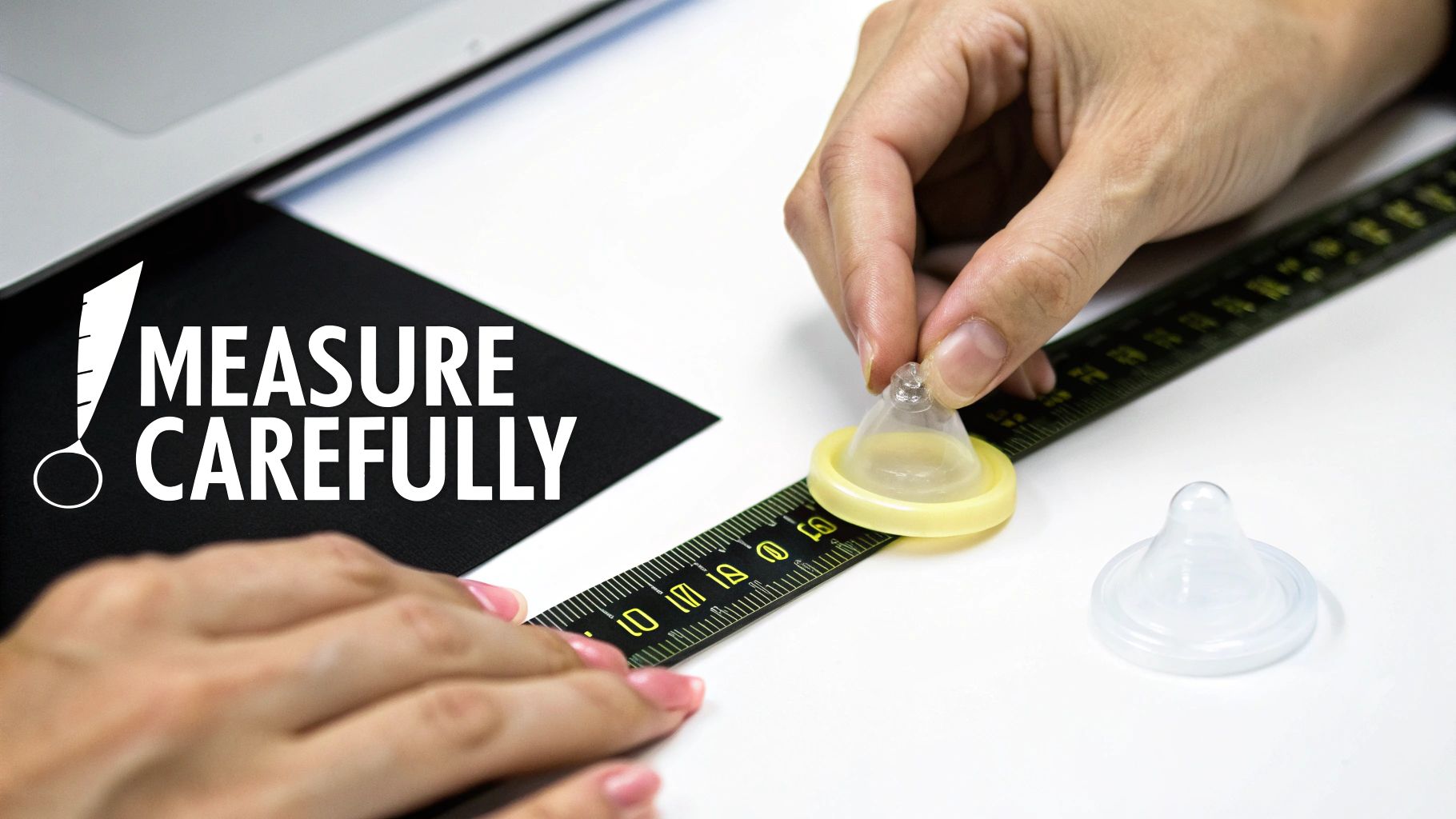
Ready to become your own sizing pro? Measuring your piercing at home is way easier than you think, and it's the only way to be sure you're ordering the perfect piece from our nipple ring size chart. All you need is your current, well-fitting barbell and a ruler with millimeter markings.
Before you start, make sure your piercing is completely healed and isn't irritated. Trying to measure a swollen or angry piercing is a recipe for an inaccurate reading and will probably just make things worse.
Measuring Barbell Length
This is the most important measurement for straight barbells. The "length" isn't the total length of the jewelry; it's the "wearable" part of the bar—the space between the two screw-on ends.
- Remove Your Jewelry: Carefully unscrew one end of your barbell and take it out.
- Measure the Bar: Lay the bar flat against your ruler. Make sure you're only measuring the bar itself, not the ends!
- Read the Measurement: Check the length in millimeters. For most healed piercings, you'll find the common sizes are 12mm (1/2") or 14mm (9/16").
And that's it! This is the number you'll use when you're browsing for new straight barbells on Bodycandy.
Pro Tip: For a super snug fit, you want a bar that's just a tiny bit longer than the distance between your piercing holes. A bar that’s exactly the width of your nipple might start to pinch. Adding about 1mm of wiggle room is often the sweet spot.
Measuring Ring Diameter
If you're more of a hoop person, the measurement you're after is the internal diameter. This is the distance across the widest part of the ring, measured from one inside edge straight across to the other.
- For Captive Bead Rings: Just pop the bead out and measure the distance from one inner edge of the ring to the opposite inner edge.
- For Circular Barbells: Measure the straight-line distance between the two innermost points of the horseshoe shape.
Getting these measurements right is the key to unlocking a world of perfectly fitting jewelry. For a broader look at how sizing works, check out our guide on measuring up body jewelry’s sizing basics. Happy measuring!
Common Sizing Mistakes and How to Avoid Them
Even with the perfect nipple ring size chart in front of you, it's surprisingly easy to make a few rookie mistakes. We've seen it all, so let's walk through some common slip-ups so you don't have to learn the hard way.
By far, the number one issue we see is people downsizing their jewelry too soon. We totally get it—you can't wait to swap that initial long bar for something more snug! But changing your jewelry before the piercing is fully healed is a huge no-go. If you get any unexpected swelling, that shorter bar leaves no room for your tissue to expand, which can lead to painful embedding.
Pitfalls for Healed Piercings
Just because you're fully healed doesn't mean you're totally in the clear. Picking the wrong size, even years later, can still cause a whole new set of problems.
- Going Too Short: A barbell that's too tight is just bad news. It puts constant, uncomfortable pressure on the piercing channel, which can lead to irritation, redness, and even cause the piercing to migrate or reject over time. Your jewelry should rest comfortably, never squeeze.
- Staying Too Long: On the flip side, a barbell that's way too long is basically asking for trouble. It’s much more likely to catch on clothes, towels, or even your bedsheets. All that constant pulling and tugging is a surefire recipe for an angry piercing.
Data from professional piercing studios shows a massive demand for nipple piercings, with the 14G / 5/8" size combo being used in about 80% of initial procedures. The key is what comes next. Downsizing too early is a major risk, with some estimates suggesting up to 25% of cases risk embedding if the jewelry is shortened before all the swelling has gone down. You can learn more about piercing trends and safety stats and see why patience is so critical.
Now that you're an expert, you're ready for the best part—shopping! With your sizing knowledge locked in, you can dive into the incredible world of nipple jewelry here at Bodycandy with total confidence.
Exploring Jewelry Types
Let's break down some of the most popular styles you'll find. Whether you're into a classic look or ready to make a bold statement, we've got you.
-
Straight Barbells: These are the timeless classics. Simple, sleek, and super comfortable, straight barbells are perfect for everyday wear and come with endless decorative end options. They're a must-have for any collection.
-
Circular Barbells: Also known as horseshoes, these offer a bit more flair. They give you a look that's similar to a ring but with easy-to-use barbell ends, making them a really versatile and fun choice.
-
Captive Bead Rings (CBRs): For that seamless hoop look, CBRs are fantastic. A single bead or gem is held in place by the ring's tension, creating a continuous circle that looks amazing.
-
Nipple Shields and Dangles: Ready to really make a statement? Nipple shields and dangles are designed to turn heads. Shields frame the nipple with intricate designs, while dangles add a touch of playful movement.
Bodycandy Tip: When choosing a style, think about your lifestyle. If you're super active, a simple barbell might be more practical. For those special occasions when you really want to show off, a dazzling nipple shield could be your perfect match.
Armed with your perfect measurements from our nipple ring size chart, you're all set to find your next favorite piece.
Nipple Ring Sizing FAQs
Still got a few questions? No worries. Think of this as your quick-reference guide, built to give you fast, clear answers to the most common questions we hear about nipple jewelry sizing.
We've rounded up the top queries about everything from standard sizes to troubleshooting a tricky fit. Let's dive in.
What Is The Standard Nipple Ring Size?
This is the number one question we get asked! The industry-standard size for a new nipple piercing is a 14 gauge (14G) bar, which is 1.6mm thick. Your piercer will almost always start you with a longer barbell, usually 5/8" (16mm), to give your piercing plenty of room for initial swelling.
Once you’re fully healed, many people find a shorter bar is way more comfortable for everyday life. Downsizing to a length like 1/2" (12mm) or 9/16" (14mm) is super common to get that perfectly snug fit.
Can I Change My Nipple Ring Gauge?
You absolutely can, but this is one of those changes you should always approach with professional guidance. It's really important to chat with your piercer before you make a move!
Going down to a smaller gauge (like from a 14G to a 16G) is usually pretty simple. Just know that your piercing might shrink a bit over time to hug the new, smaller jewelry.
Stretching up to a larger gauge (say, from a 14G to a 12G) is a whole different ballgame. This has to be done carefully by a professional piercer to avoid causing tears or damaging the tissue. Never, ever force jewelry into your piercing!
How Do I Know If My Nipple Ring Is Too Tight?
Your body is pretty good at sending warning signs when your jewelry is too snug. Keep an eye out for these tell-tale signals:
- Embedding: The balls of your barbell are pressing into your skin so hard they look like they're starting to sink in.
- Indentation: You can see noticeable little dents where the jewelry sits, even after it's out.
- Discomfort: You're feeling any new redness, soreness, or general irritation that isn't part of the initial healing process.
If you're noticing any of these, it's a sure sign that your barbell is too short. Swap it out for a longer piece right away to take the pressure off.
Sizing Takeaway: A perfect fit should feel comfortable. Your jewelry should rest flush against your skin without any pulling, pinching, or pressure. It's all about finding that happy medium where it's not too long and not too short.
When Should I Downsize My Nipple Jewelry?
Patience is everything here! You should only think about downsizing your initial jewelry after your piercing is 100% healed, which can take anywhere from 6 to 12 months.
The only person who can really give you the green light is your professional piercer. They can take a look and confirm that everything is healed up perfectly and ready for a jewelry swap. Downsizing too early is a huge risk, so always wait for the go-ahead from a pro!
Now that you're a sizing expert, the fun can begin! At Bodycandy, we've got an amazing collection of nipple jewelry in every size, style, and color you can imagine.
Ready to find your new favorite piece? Shop our full collection of nipple jewelry today and show off that perfect fit