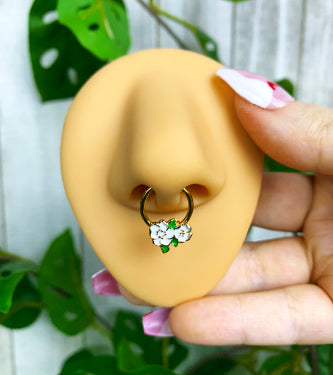




















Ever wonder what gives 14k rose gold that warm, blushy glow you’re totally obsessed with? The secret isn’t just pure gold, but a super smart recipe of metals. At its core, 14k rose gold is an alloy—a blend of metals—that combines 58.3% pure gold with a healthy dose of copper and a little bit of silver. It's the copper that’s the real MVP, giving the gold its gorgeous rosy color and, just as importantly, some much-needed strength.
The Magic Recipe Behind Rose Gold
Think of making 14k rose gold like a master chef creating a signature dish, but with precious metals. You start with the star ingredient: pure, 24k gold. By itself, pure gold is way too soft for body jewelry that has to stand up to your everyday life. It would bend and scratch in a heartbeat.
That's where the other metals come in to create a stronger, more vibrant final product. 14k is a super common standard for rose gold because it hits that perfect sweet spot between luxury and toughness. In fact, 14k gold makes up most of the gold jewelry sold in the United States, where durability is a big deal. You can dive deeper into what makes gold so special in our guide to real gold jewelry 101.
The recipe usually breaks down like this:
- 58.3% Pure Gold: This is where the value and classic golden glow come from.
- 41.7% Copper and Silver: Copper is the main player, creating that iconic pink hue. A small amount of silver is often mixed in to soften the color and make the metal easier to work with.
This specific mix is what makes 14k rose gold not just pretty, but incredibly practical for your body jewelry. It's tough enough for everything from a delicate nostril stud to a chic belly button ring.
A Closer Look At The Alloy Ingredients
The exact percentages of copper and silver can shift a bit from one piece to another, which allows for subtle differences in color. A little more copper will give you a deeper, redder tone, while a bit more silver can soften it to a lighter, more delicate pink.
The real beauty of 14k rose gold is in its perfect balance. You get the unmistakable luxury of real gold combined with the strength and stunning color from the copper alloy, creating a metal that’s as resilient as it is radiant.
This visual shows the simple but effective recipe for creating the 14k rose gold you know and love.
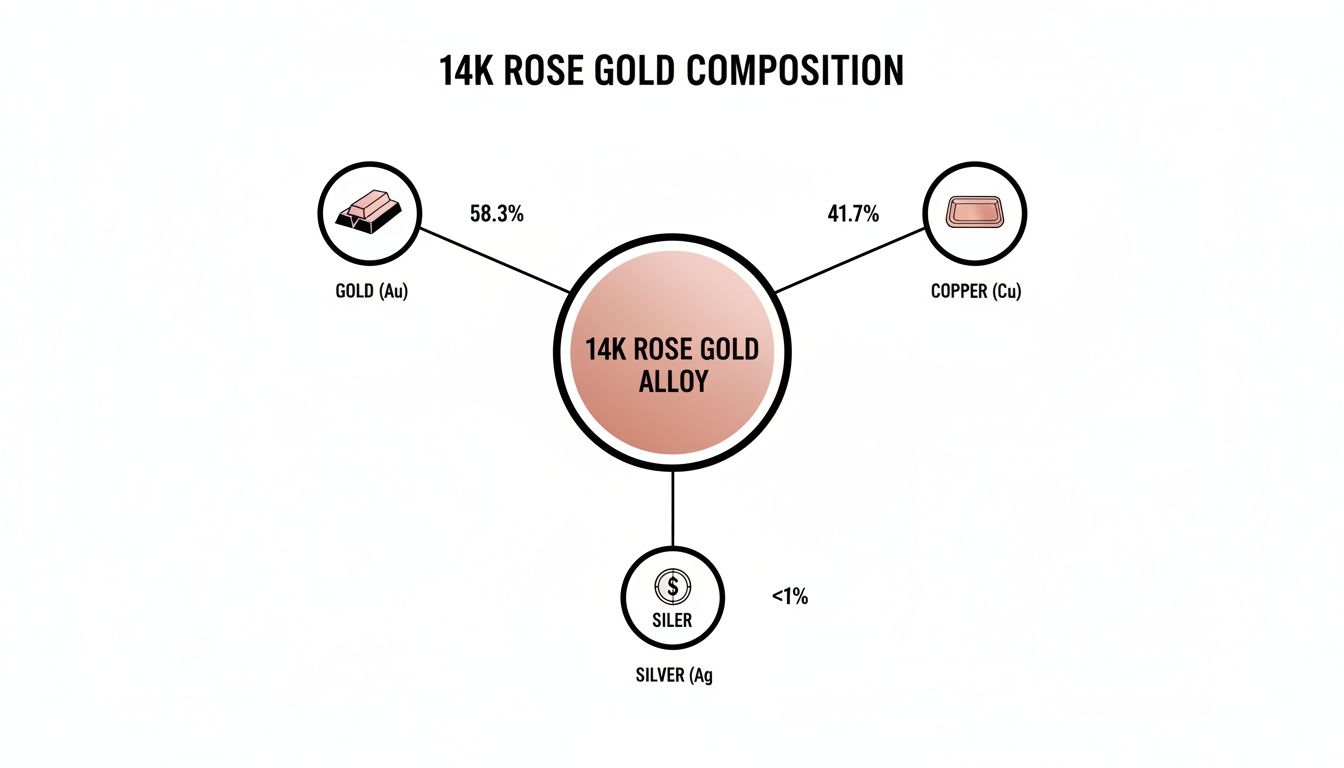
As you can see, it's really the gold-and-copper combo that gives this metal its signature style and durability.
To make things even simpler, here's a quick cheat sheet on what makes 14k rose gold a great choice for your piercings.
14k Rose Gold Quick Facts
| Characteristic | What It Means For You |
|---|---|
| Composition | An alloy of 58.3% gold, plus copper and silver. |
| Color | The copper content gives it a warm, pinkish-red hue. |
| Durability | Stronger and more scratch-resistant than higher-karat gold. |
| Hypoallergenic? | Generally yes, but the copper can be an issue for highly sensitive skin. |
| Best For | Daily-wear body jewelry like nostril studs, septum rings, and cartilage earrings. |
Ultimately, this blend of metals creates a piece of jewelry that's not just beautiful but built to last.
The Pros and Cons of Rose Gold Piercings
So you're crushing hard on that warm, rosy glow, but is 14k rose gold the right partner in crime for your piercings? Like any relationship, it's got its amazing moments and a few things to keep in mind. Let’s spill the tea on the good, the bad, and the beautiful so you can decide if it's a perfect match for your style and your skin.

The Pros Rocking Rose Gold
First, let's talk about why everyone is so obsessed with this metal. The list of reasons is pretty impressive, making it a top contender for your next piece of body jewelry.
-
Universally Flattering Color: Seriously, this is its superpower. The warm, pinkish hue of 14k rose gold complements literally every skin tone, from the fairest to the deepest complexions. It brings out a natural warmth and adds a touch of modern romance to any look.
-
Built to Last: Don't let its delicate color fool you—this metal is tough. Thanks to its copper content, 14k rose gold is significantly more durable than its 18k or 24k cousins. It's strong enough to resist the scratches, dings, and dents that come with daily life, making it perfect for navel rings, nostril studs, and cartilage hoops.
-
Timeless Yet Trendy: Rose gold has officially moved beyond a fleeting trend and cemented its status as a modern classic. It feels fresh and stylish but also carries an air of timeless elegance. You can confidently invest in a piece knowing it won’t look dated next season.
This combo of beauty and brawn is what makes 14k rose gold a go-to for so many piercing lovers.
The Cons A Reality Check
Now for the honest chat. While 14k rose gold is amazing, it has a couple of potential drawbacks you need to know about before you commit. Knowing the full story helps you make the smartest choice for your body.
The biggest consideration with 14k rose gold is its copper content. While copper provides that gorgeous color and impressive strength, it can also be a potential trigger for irritation in people with very sensitive skin or a specific copper allergy.
This is the main thing you need to weigh carefully. Here's the breakdown:
-
Potential for Sensitivity: That copper in the alloy can cause a reaction for a small percentage of people. If you have a known sensitivity to copper or extremely reactive skin, this might not be your best bet, especially for a brand-new piercing.
-
Not Ideal for Fresh Piercings: For initial piercings, you want the most inert, biocompatible material possible to ensure smooth healing. Implant-grade titanium is the undisputed king here. It’s best to save that stunning 14k rose gold piece for when your piercing is fully healed and way less likely to react.
Ultimately, deciding on 14k rose gold means balancing its undeniable style and strength against your skin's unique needs. For most people with healed piercings, it’s a fabulous and safe choice that adds instant luxury.
Is 14k Rose Gold Safe for Sensitive Skin?
This is the million-dollar question for anyone with reactive skin, and we're here to tackle it head-on. Let's be real: when you have sensitive skin, choosing the right metal for your piercing is everything.
The good news? For most people, 14k rose gold is a safe and stunning choice, especially once your piercing has fully healed.
While 14k gold itself is generally considered hypoallergenic, the key to understanding rose gold is in its unique alloy mix. That beautiful blush color comes from copper, and for a very small percentage of people, copper can be a trigger for skin irritation. It’s all about knowing your body and what works for you.
Listen to Your Body
The most important rule in the world of piercings is to listen to your body. If you have a known sensitivity to copper, or if your skin tends to react to almost everything, it’s best to be cautious.
However, for the vast majority of people, nickel-free 14k rose gold is perfectly fine for healed piercings. The key is to wait until the initial healing phase is completely over before you swap in that gorgeous rose gold piece.
For fresh piercings, implant-grade titanium is the undisputed champion of biocompatibility and the safest bet for a happy healing journey. You can find more helpful advice in our guide to hypoallergenic jewelry for sensitive skin.
For healed body piercings—including navel, nostril, and cartilage—14k rose gold is a top choice for combining durability with beauty. The copper content not only creates the signature color but also adds strength, helping small posts and beads keep their shape through daily wear and cleaning.
This extra strength makes it a super reliable option compared to softer, higher-karat golds. Industry pros often recommend high-quality, nickel-free 14k rose gold for those with healed piercings, as it strikes that perfect balance between style and safety.
Making the Smart Choice
So, how do you make the right call for your skin? Here's a quick checklist to help you decide if 14k rose gold is for you:
- Is your piercing fully healed? This is non-negotiable. Wait until your piercing is 100% healed and happy before introducing new metals like rose gold.
- Do you have a known copper allergy? If you've reacted to copper before, it's probably best to steer clear.
- Are you buying from a reputable source? Always purchase your body jewelry from a trusted retailer like Bodycandy to ensure the alloy is nickel-free and body-safe.
For most, 14k rose gold is a fantastic way to add warmth and luxury to a healed piercing without causing irritation. Just give your body the time it needs to heal properly first, and you’ll be ready to rock that rosy glow.
How to Keep Your Rose Gold Jewelry Gleaming
So, you’ve finally got the perfect 14k rose gold piece and it looks killer. Now what? The next step is keeping that warm, gorgeous glow shining for years. Good news—taking care of your rose gold body jewelry is ridiculously easy.
It all boils down to two things: gentle, regular cleaning and smart storage. Think of it like a simple skincare routine, but for your jewelry. A little TLC goes a long way in protecting your piece and keeping it looking brand new.
Your Simple At-Home Cleaning Routine
Forget about fancy cleaners or special tools. All you really need to make your jewelry sparkle is a quick, gentle wash to get rid of the everyday oils and grime that can make it look dull.
Here's the foolproof method that works every time:
- Prep Your Solution: Grab a small bowl and fill it with warm water. Add just a few drops of a mild, phosphate-free dish soap (the original blue Dawn is perfect for this) and give it a little swish to get some suds going.
- Soak It Up: Drop your rose gold jewelry into the soapy water and just let it hang out for about 10-15 minutes. This little bath does most of the work for you, loosening up any gunk without needing to scrub.
- Gentle Scrub: Using a super-soft toothbrush—seriously, think baby toothbrush soft—gently clean around any nooks, crannies, or gemstones. The key word here is gentle. You're just dislodging dirt, not trying to polish the metal.
- Rinse and Dry: Hold your jewelry under warm running water until all the soap is gone. Then, pat it completely dry with a soft, lint-free cloth. A microfiber cloth or a dedicated jewelry polishing cloth is perfect for this.
Remember: That beautiful rose color comes from the copper in the alloy, which can be sensitive to harsh chemicals. Sticking with simple soap and water is the absolute safest way to keep its brilliant finish without causing any damage.
Rose Gold Care Do's and Don'ts
Keeping your 14k rose gold looking amazing is just as much about what you don't do as what you do. To make it super simple, here’s a quick guide on what to embrace and what to avoid.
| Do | Don't |
|---|---|
| Store it separately. Keep your rose gold pieces in a soft pouch or a lined jewelry box to stop them from getting scratched up by your other jewelry. | Expose it to harsh chemicals. Never, ever wear your jewelry in swimming pools or hot tubs. Chlorine is public enemy number one for rose gold and can cause serious discoloration and damage. |
| Clean it regularly. A quick wash every few weeks will prevent oils and dirt from building up and will keep it looking like you just bought it. | Use abrasive cleaners. Step away from the toothpaste, baking soda, or any gritty cleaners. These will create tons of tiny scratches that will dull the surface over time. |
| Put it on last. Make your jewelry the final touch after you’ve already applied lotions, perfumes, or hairspray. | Forget to take it off. Remove your jewelry before you hit the gym, do some heavy cleaning, or anything else that might cause accidental dings and scratches. |
Follow these simple rules, and your rose gold will stay as stunning as the day you got it. It's really that easy!
How to Spot Authentic 14k Rose Gold
You deserve the real deal, so let’s turn you into a gold-spotting pro. When you're investing in a gorgeous piece of 14k rose gold body jewelry, you want to be 100% sure it’s authentic. Luckily, there are a few simple clues to look for that will give you total peace of mind.

The absolute best and most reliable way to verify your jewelry is to find its hallmark. This is a tiny stamp imprinted directly onto the metal that certifies its purity. Think of it like a birth certificate for your jewelry.
Decode the Hallmark Stamp
For 14k rose gold, you’ll want to look for one of a few specific marks. It might be tiny, so you may need good lighting or even a magnifying glass to spot it.
Here’s what you should be looking for:
- 14k or 14kt: This is the most common stamp you'll see in the United States and indicates the piece is 14 karats.
- 585: This number represents the percentage of pure gold in the alloy, which is 58.5% (often rounded from 58.3%). This stamp is more common on European jewelry but is a definitive sign of authenticity.
On body jewelry, these marks are often tucked away in discreet spots. Check the post of a labret stud, the flat back of an earring, or near the clasp of a belly button ring.
A genuine hallmark is your single best guarantee of quality. It’s a legal marking that confirms the gold content, so you know you’re getting exactly what you paid for.
Other Clues to Look For
Beyond the hallmark, a couple of other things can help you gauge authenticity. The price is a big one. Real 14k rose gold is a precious metal, so it's going to have a price tag to match. If you see a deal that seems way too good to be true, it almost certainly is.
Also, consider the weight of the piece. Gold is a dense metal, so a solid 14k rose gold piece will have a noticeable heft compared to a cheaper, plated alternative. The ultimate defense, however, is always to buy from a trusted and reputable retailer like Bodycandy. That way, you can shop with confidence, knowing every piece is exactly as advertised.
Why Rose Gold Is a Smart and Stylish Choice
Let's pull it all together. Picking out your next piece of body jewelry is about way more than just how it looks. It's about finding something that feels special, is built to last, and just plain fits your vibe. When you line up all the pros and cons, 14k rose gold really starts to shine as more than just a pretty option—it’s a genuinely smart and stylish one.
Sure, it comes with a higher price tag than materials like surgical steel, but it helps to think of it as an investment. You're not just buying another piece of jewelry; you're investing in real gold, a precious metal that holds its value and gives you an unmatched look of luxury. It's the perfect way to elevate your piercing collection from everyday to extraordinary.

More Than a Trend a Modern Classic
One of the best things about rose gold is its staying power. This isn't some fleeting trend that will be out of style by next season. Rose gold has firmly cemented its place as a modern classic, adding a unique warmth and sophistication that feels both current and timeless.
Whether you're dressing up for a special occasion or just want to add a little sparkle to your daily grind, its flattering hue just works for everyone. For even more ideas, check out our guide on the latest trending rose gold body jewelry to see all the cool ways you can style your pieces.
Value That Endures
The price of 14k rose gold is tied directly to the value of what's inside. Because it contains 58.3% pure gold, its cost fluctuates with the global market price for gold. This means if the spot price of gold goes up, the intrinsic value of your jewelry does too. It's a beautiful accessory that also holds its worth over time.
Choosing 14k rose gold is the perfect blend of durability, beauty, and lasting value. It’s an excellent way to treat yourself to a piece that you'll love and wear for years to come, knowing you've made a smart choice for your collection.
Ultimately, it’s a metal that delivers on all fronts: it’s strong, safe for most healed piercings, and absolutely stunning. Ready to find your perfect piece and see the magic for yourself?
Your 14k Rose Gold Questions Answered
Still have a few questions buzzing around? You're not alone! When you're picking out gorgeous new body jewelry, you want to get all the facts straight. Let's tackle some of the most common things people ask us about 14k rose gold so you can feel totally confident in your choice.
Does 14k Rose Gold Tarnish or Change Color?
One of the best things about solid 14k rose gold is that its beautiful rosy color is there for good. Since that blush hue comes from copper that's mixed all the way through the metal, it's not going to fade or rub off like plated jewelry does.
That said, because of the copper content, you might notice your jewelry develop a slightly deeper, darker tone over time. This is called a patina, and it's a completely natural process! Lots of people actually love the rich, vintage vibe a patina creates. But if you prefer that brand-new, bright shine, a quick clean with soap and water will have it looking good as new in minutes.
Can I Use It For a New Piercing?
This is a big one, and the short answer is almost always no. When a piercing is brand-new and still healing, you need the most biocompatible and inert material you can get. That title belongs to implant-grade titanium.
It’s best to save that stunning 14k rose gold belly ring or nostril stud for later, after your piercing has completely and totally healed. Once your body has worked its magic and the healing is done, swapping in a high-quality rose gold piece is an amazing way to upgrade your look.
Think of it this way: Titanium is for healing, and 14k rose gold is for celebrating! Waiting until you're fully healed means you can rock your new jewelry without worrying about irritation.
What’s the Difference Between 10k, 14k, and 18k?
The main difference between these karats really comes down to how much pure gold is in the alloy. This affects the color, durability, and of course, the price.
- 10k Rose Gold: This has the least amount of gold (41.7%) and the most copper. That makes it super durable and often gives it the most intense pink color, but it’s also less valuable.
- 14k Rose Gold: This is the sweet spot for most people, with 58.3% pure gold. It hits that perfect balance of a rich, warm color, excellent durability for everyday wear, and a great price point.
- 18k Rose Gold: With a hefty 75% pure gold, this is the most valuable option. The color is softer and more of a golden-rose, but because it has more pure gold, it's also a softer metal and more prone to scratches.
When it comes to body jewelry that you'll wear all the time, 14k rose gold is the perfect all-around choice.
Ready to add some warmth and luxury to your collection? Shop our full collection of 14k rose gold body jewelry today! https://bodycandy.com