



















So, your new belly bling is supposed to be a super cute statement, but right now it just feels… angry. We've all been there. That jolt of panic when you spot some redness or weird goo is totally normal. To fix an infected belly button piercing, you first have to figure out what you're dealing with.
Gentle, consistent aftercare with a sterile saline solution is your BFF for minor issues. But knowing when you're facing something more serious is key to keeping you and your piercing safe and healthy.
Is Your Belly Piercing Irritated Or Truly Infected?
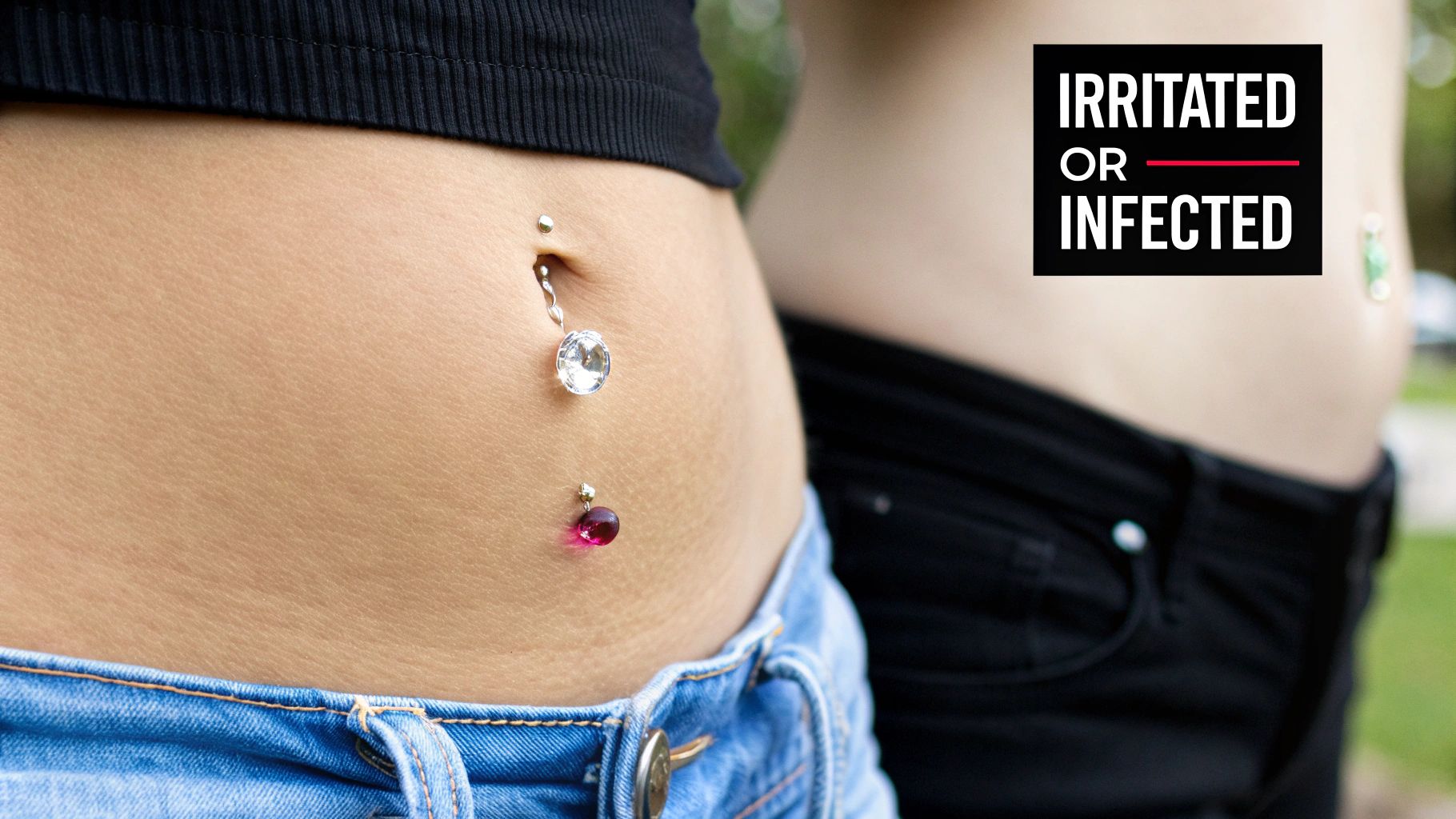
So, your navel piercing is red, a little swollen, and maybe even leaking some clearish fluid. Before you spiral, let's play detective. Is it just a grumpy, irritated piercing settling into its new home, or are you looking at a genuine infection that needs serious TLC?
Knowing the difference is the most important first step. An irritated piercing is usually just your body’s normal reaction to a new piece of metal. It might be sensitive, slightly pink, and produce a thin, whitish-yellow fluid called lymph. This is all part of the standard healing process. An infection, on the other hand, is your body fighting off nasty bacteria, and it brings a whole different set of symptoms to the party.
Irritation Vs. Infection: The Telltale Signs
Think of irritation as your piercing being a little dramatic, while an infection is a serious cry for help. Mild redness, some itching, and clear or whitish fluid that forms "crusties" are typically signs of a standard healing journey. You can learn more about what to expect by checking out our guide on healing times for popular piercings.
But if you see thick, green, or dark yellow pus, feel intense heat radiating from the area, or experience pain that's getting worse instead of better, those are major red flags. This simple infographic breaks down the key differences between a fussy piercing and a real problem.
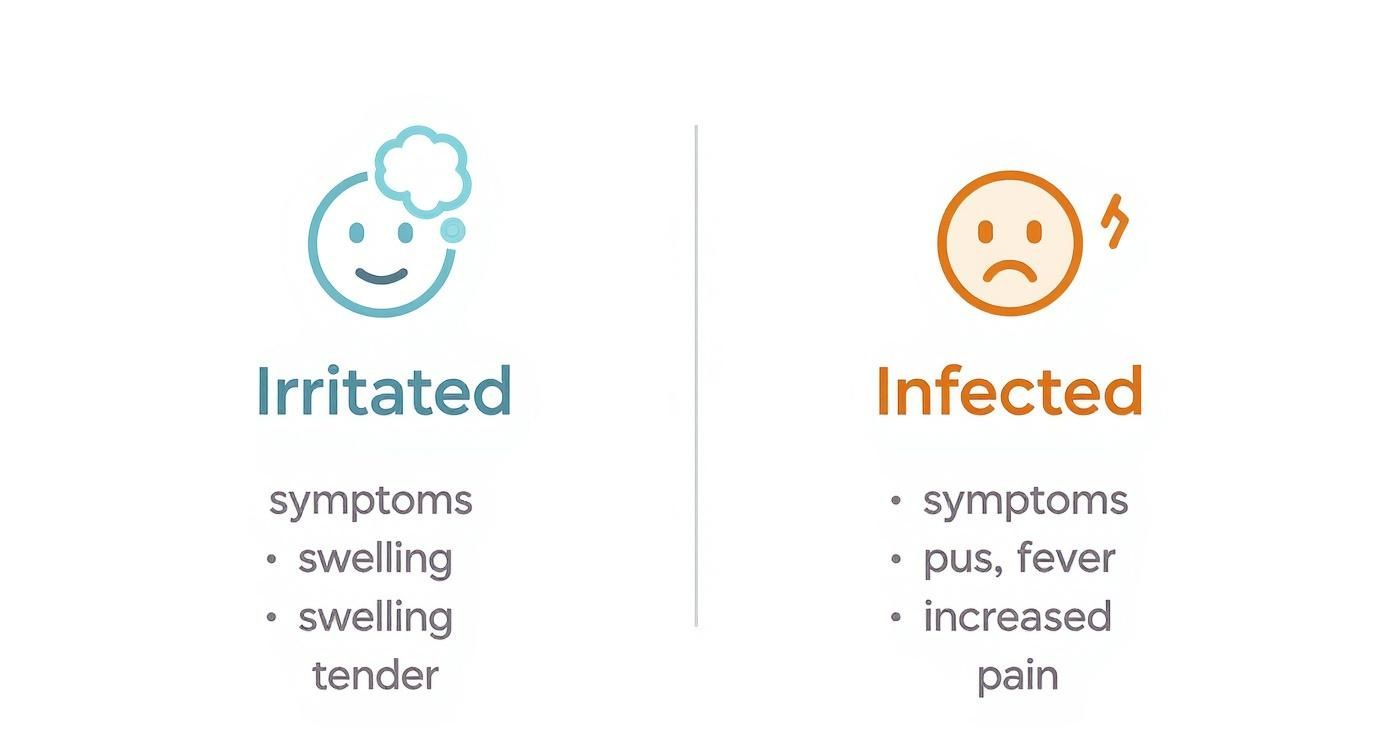
This visual guide highlights that while irritation involves manageable symptoms like slight redness and clear discharge, an infection presents with more alarming signs like intense pain and colored pus.
Here's a quick side-by-side to help you figure out what's going on with your piercing.
Normal Healing vs. Potential Infection Symptoms
| Symptom | Normal Healing (Just Irritated) | Potential Infection (Red Flag) |
|---|---|---|
| Pain | Mild soreness or tenderness, especially when touched. Pain should decrease over time. | Severe, throbbing, or escalating pain that doesn't improve. |
| Redness | A pinkish or slightly red hue right around the piercing site. | A deep, spreading redness that expands well beyond the piercing hole. |
| Swelling | Minor swelling is expected in the first few days or weeks. | Significant, puffy swelling that makes the skin tight and shiny. |
| Discharge | Thin, clear, or milky-white fluid (lymph) that dries into "crusties." | Thick, cloudy discharge that is yellow, green, or brown. It may have a foul odor. |
| Heat | The area may feel slightly warm to the touch, like the rest of your skin. | The piercing site feels hot, and you can feel heat radiating from it. |
| Fever | No fever. | You may develop a low-grade fever, chills, or feel generally unwell. |
Remember, this is just a guide. If you're ever in doubt, your best move is to contact your piercer or a doctor.
Why Infections Happen
It's easy to feel like you did something wrong, but piercing infections are more common than you might think. Approximately 33.6% of people with body piercings report experiencing skin problems, with infections making up 44% of those issues.
They're often linked to simple missteps in aftercare, touching the jewelry with unwashed hands, or even just the friction from your favorite high-waisted jeans.
Key Takeaway: Don't panic at the first sign of redness. A little irritation is normal. The real trouble starts when you see thick, colored pus, feel significant heat, or notice the pain escalating. That’s when it's time to take action.
Your At-Home Care Plan for Minor Infections
Alright, you've assessed the situation, and it seems like you're dealing with a mild infection or just some major-league irritation. First things first: take a deep breath. And whatever you do, do not take your jewelry out. Seriously, this is the golden rule of piercing aftercare.
It feels totally counterintuitive, we know. But yanking out your belly ring can actually trap the infection inside the piercing channel as the skin tries to close up. This is how an abscess forms, which is a much bigger, more painful headache than what you’re likely dealing with now. The jewelry keeps that channel open, letting everything drain properly.
The Magic of Saline Soaks
For the next little while, sterile saline solution is going to be your absolute best friend. Forget everything you've ever heard about dousing a piercing in rubbing alcohol, hydrogen peroxide, or harsh antibacterial soaps. Those products are way too aggressive; they strip the skin of moisture and wipe out the good bacteria your body actually needs to heal itself.
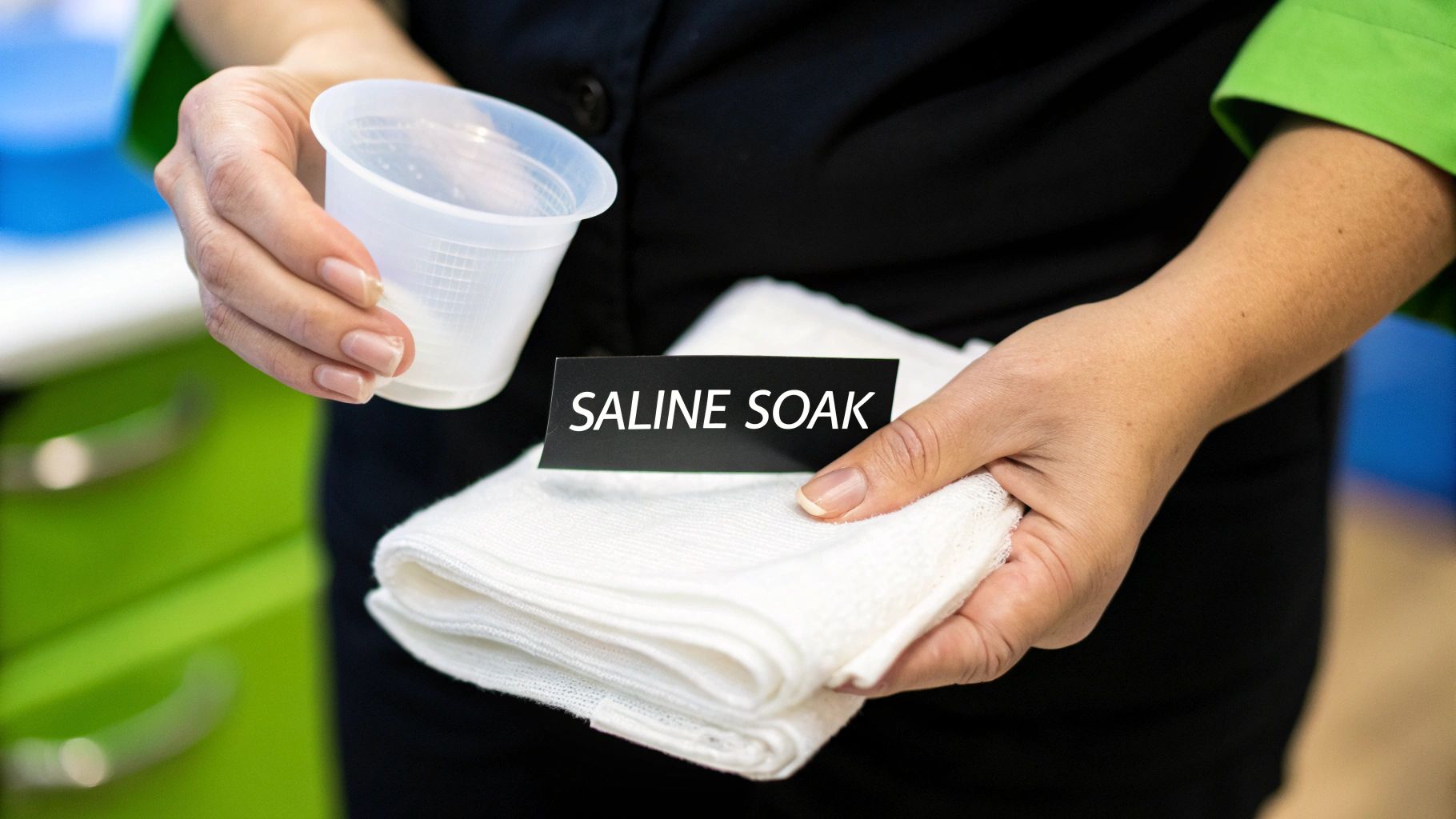
A simple saline soak is gentle yet incredibly effective. It mimics your body's own natural fluids, making it the perfect cocktail to clean and soothe an angry piercing. The salt helps draw out trapped fluid, brings down inflammation, and washes away crusties and other irritants without causing more drama.
You can grab a pre-made sterile saline wound wash at just about any pharmacy—it’s by far the easiest and safest bet. If you want to get into the nitty-gritty of why it works so well, check out our guide on H2Ocean piercing aftercare, which is a brand piercers have trusted for years.
How to Do a Saline Soak
Ready to give your piercing the spa treatment it's crying out for? Here’s your game plan. You’ll want to do this two to three times a day until the symptoms have totally chilled out.
- Get Squeaky Clean: Before you even think about touching the area, wash your hands thoroughly. Use antibacterial soap and warm water, and scrub for at least 20 seconds.
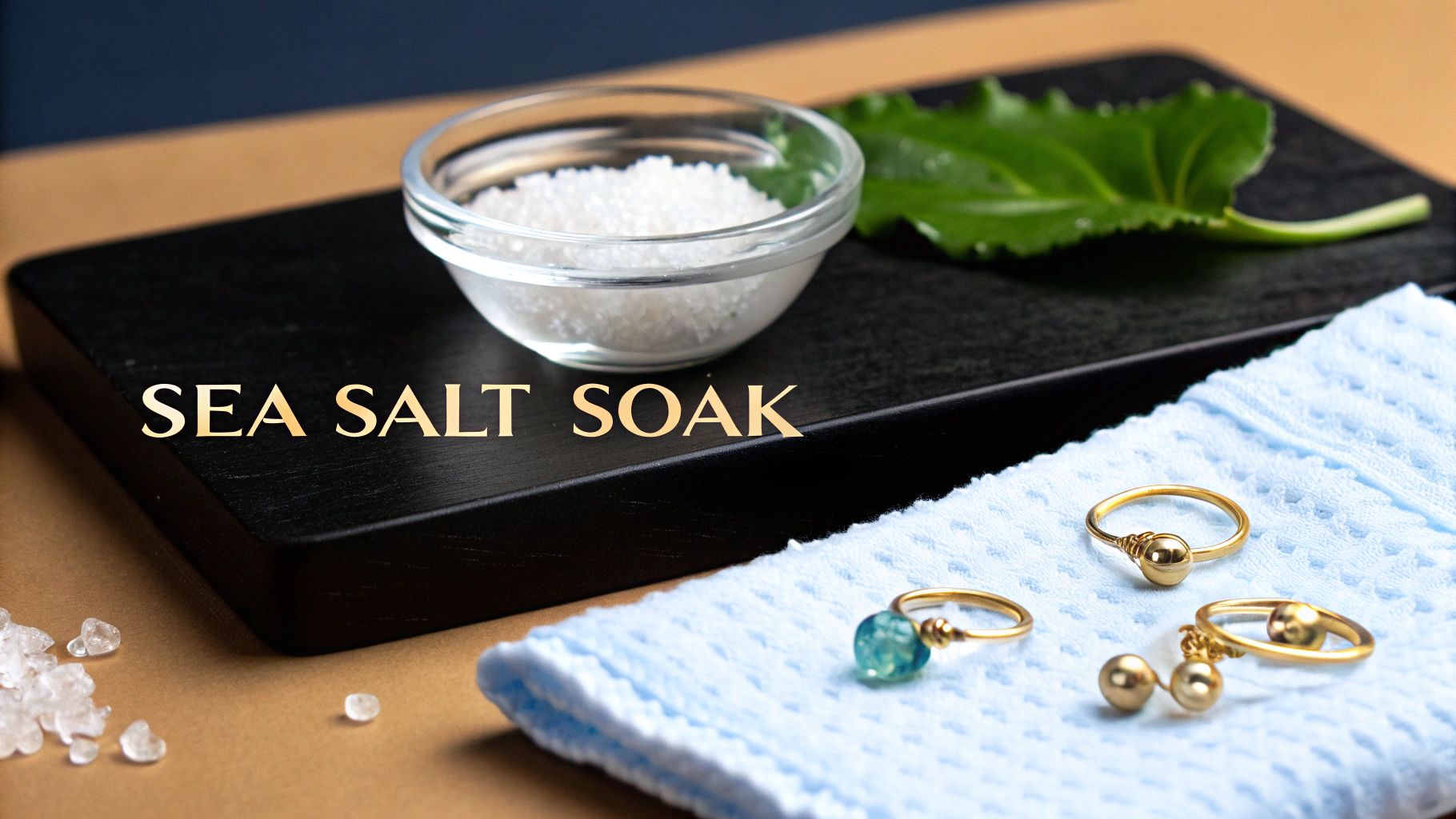
- Prep Your Soak: Find a small, clean cup—a shot glass works perfectly for this. Fill it with your sterile saline solution. You can even pop it in the microwave for just a few seconds to get it comfortably warm, but never hot.
- Create a Seal: Lean forward and press the rim of the cup firmly against your stomach, creating a little vacuum-seal around your piercing.
- Soak and Relax: Now, carefully lie down on your back. Let your piercing soak in the solution for a good 5 to 10 minutes. This gives it enough time to really penetrate the piercing channel and work its magic.
- Rinse and Dry: Once your timer goes off, gently rinse the area with clean, running water to get rid of any salt residue. Then, carefully pat it dry with a fresh, disposable paper towel. Ditch the cloth towels for now—they can harbor bacteria and snag your jewelry.
Pro Tip: Don't go overboard. Soaking more than a few times a day can actually dry out your skin, which just leads to more irritation. With piercing care, consistency always beats frequency.
What to Avoid During At-Home Treatment
While you're focusing on what to do, it’s just as crucial to know what not to do. Steer clear of these common mistakes to avoid making things worse.
- Antibacterial Ointments: Creams like Neosporin are a no-go. They're thick, greasy, and can create a seal over the piercing that traps bacteria in and keeps oxygen out. Your piercing needs to breathe to heal.
- Twisting and Turning: This is some seriously outdated advice. Rotating your jewelry just tears up the delicate new tissue your body is trying to build. It also drags crusties and bacteria right back into the wound. Leave it alone!
- Harsh Chemicals: As we mentioned, stay far away from alcohol and hydrogen peroxide. They're way too harsh and will only irritate your piercing further.
- Going for a Swim: You'll have to skip the pool, hot tub, lake, or ocean for a bit. These bodies of water are basically a soup of bacteria just waiting to cause trouble for an open wound. Stick to showers until your piercing is 100% happy again.
Common Mistakes That Make Piercing Infections Worse
When your piercing is angry, your first instinct is to do something—anything—to fix it. But here's the thing: sometimes our best intentions can accidentally make the situation a whole lot worse. Knowing what not to do is just as important as knowing the right steps for at-home care.
It's surprisingly easy to turn a little bit of irritation into a full-blown infection by making a few common mistakes. Let's walk through the major pitfalls so you can steer clear and get your piercing back on the road to recovery.
The Over-Cleaning Trap
Yes, you can absolutely have too much of a good thing. While cleaning your piercing is crucial, overdoing it is a classic mistake. Constantly washing strips the skin of its natural oils and can even kill off the good bacteria that help with healing.
This just disrupts your body’s natural process, leaving your piercing dry, cracked, and even more vulnerable to infection. Stick to your saline soaks just two or three times a day. Any more than that, and you're likely causing more harm than good. Your body is a healing machine—your job is to keep the area clean and let it do its thing.
Hands Off The Jewelry
This is a big one. You might be tempted to twist, turn, or fiddle with your belly ring, maybe thinking you're breaking up "crusties" or preventing it from getting stuck. This is an old, outdated piece of advice that actually does major damage.
Twisting the jewelry drags bacteria and debris from the outside directly into the raw, healing fistula (that's the piercing channel). It also tears up all the delicate new skin cells your body is working so hard to build. The absolute best thing you can do for your piercing is to leave it alone.
Key Takeaway: The "LITHA" method—Leave It The Heck Alone—is your piercing’s best friend. Besides your daily soaks, avoid touching, twisting, or playing with your jewelry at all costs.
Hidden Irritants in Your Daily Routine
Sometimes the culprit isn't so obvious. Everyday habits and clothing choices can create the perfect storm for a piercing infection by introducing friction, pressure, and moisture.
- High-Waisted Everything: Those trendy high-rise jeans, leggings, and skirts? They can rub directly against your navel piercing all day long, causing constant friction and irritation. Opt for lower-rise options until things have calmed down.
- Sweaty Workouts: Intense exercise means sweat, which creates a warm, moist environment where bacteria love to party. Always clean your piercing with saline right after a gym session to wash away any lingering sweat and bacteria.
- Lotions and Potions: Body lotions, sunscreens, and spray tans are notorious for clogging piercings. This can trap bacteria and lead to trouble. Be extra careful to keep these products far away from the area around your navel ring.
These environmental factors can significantly ramp up the risk of bacterial colonization. The navel is already prone to moisture and friction, which is why bacteria like Staphylococcus aureus can thrive. Keeping the area dry and free from these sneaky irritants is a critical step in healing an infected belly button piercing. For a deeper dive, you can explore the details on body piercing bacteria and the specific germs involved.
Knowing When It's Time to Call a Professional
Your daily cleaning routine is your best friend when it comes to healing, but let's be real—sometimes an infection just doesn't want to cooperate. Figuring out when to throw in the towel on at-home care and call in the pros is a crucial part of managing a piercing. This isn’t admitting defeat; it’s about being smart and safe with your body.
Some symptoms are more than just a little fussiness. They're your body's way of shooting up a flare gun, signaling a bigger problem is brewing that another saline soak just isn't going to fix.
Red Flags That Mean "Get Help Now"
If you spot any of these signs, it's time to stop what you're doing and get on the phone with a doctor or your piercer. Seriously, don't wait.
- Spreading Redness: A little pinkness right around the piercing site is pretty standard. But if you see angry red streaks branching out from your navel across your stomach, that's a huge warning sign of a spreading infection.
- Intense Pain: We're not talking about the mild tenderness you expect with a new piercing. This is that deep, throbbing pain that seems to get worse by the hour and makes even simple things like wearing a t-shirt feel awful.
- Nasty Discharge: If the gunk coming out of your piercing is thick, green, or brown and has a funky smell, that's a classic sign of a bacterial infection taking hold.
- Feeling Generally Sick: An infection doesn't always stay put. If you start running a fever, get the chills, or just feel completely run-down and unwell, it means your body is in a full-blown fight.
These symptoms can point to something more serious like cellulitis, a bacterial skin infection that needs a doctor's attention and usually a course of antibiotics. It’s more common than you might think; in fact, about 23% of people with piercings outside the earlobe run into some kind of medical issue. Getting it treated quickly is everything. You can learn more about piercing complications to get a better sense of why professional help is non-negotiable in these situations.
Who Do You Call: Doctor or Piercer?
Okay, so you know you need help, but who's the right person to call? It really depends on what's going on.
General Rule of Thumb: If you have signs of a body-wide infection (like a fever or red streaks), your first call should be to a doctor, no question. If the issue seems more localized to the piercing or jewelry, your piercer is an amazing first stop.
A doctor is the only one who can officially diagnose an infection and prescribe the antibiotics you'll need to clear it up. They are your go-to for any health concerns that feel bigger than just the piercing itself.
Your professional piercer, on the other hand, is the expert on all things piercings! They can spot issues that a doctor might miss, like an allergic reaction to the jewelry metal or signs that your piercing is migrating or rejecting. Sometimes, what looks like a nasty infection is actually just extreme irritation from cheap, low-quality metal. Your piercer can take a look and suggest switching to implant-grade titanium or surgical steel, which can often solve the problem almost immediately. Never be afraid to use their expertise—that's what they're there for!
Choosing the Right Jewelry for a Happy Piercing
So you’ve been cleaning your piercing religiously, avoiding all the common mistakes, and you're still dealing with redness and irritation. What gives? Sometimes, the problem isn’t your aftercare routine at all—it’s the bling you’re wearing. The wrong jewelry can be a major troublemaker, causing issues that look and feel just like an infection.
The material, size, or even the shape of your belly ring can be the secret source of your piercing woes. Let’s get into how choosing the right piece of jewelry can make all the difference, setting you up for a happy, healthy piercing that looks as good as it feels.
Why Material Matters Most
Think of your piercing as a fresh wound; it’s going to be super sensitive to whatever you put in it. If your jewelry is made from low-quality metals containing nickel or other allergens, your body can have a major freak-out. This reaction often includes redness, swelling, and itching—all symptoms that are easily mistaken for an infection.
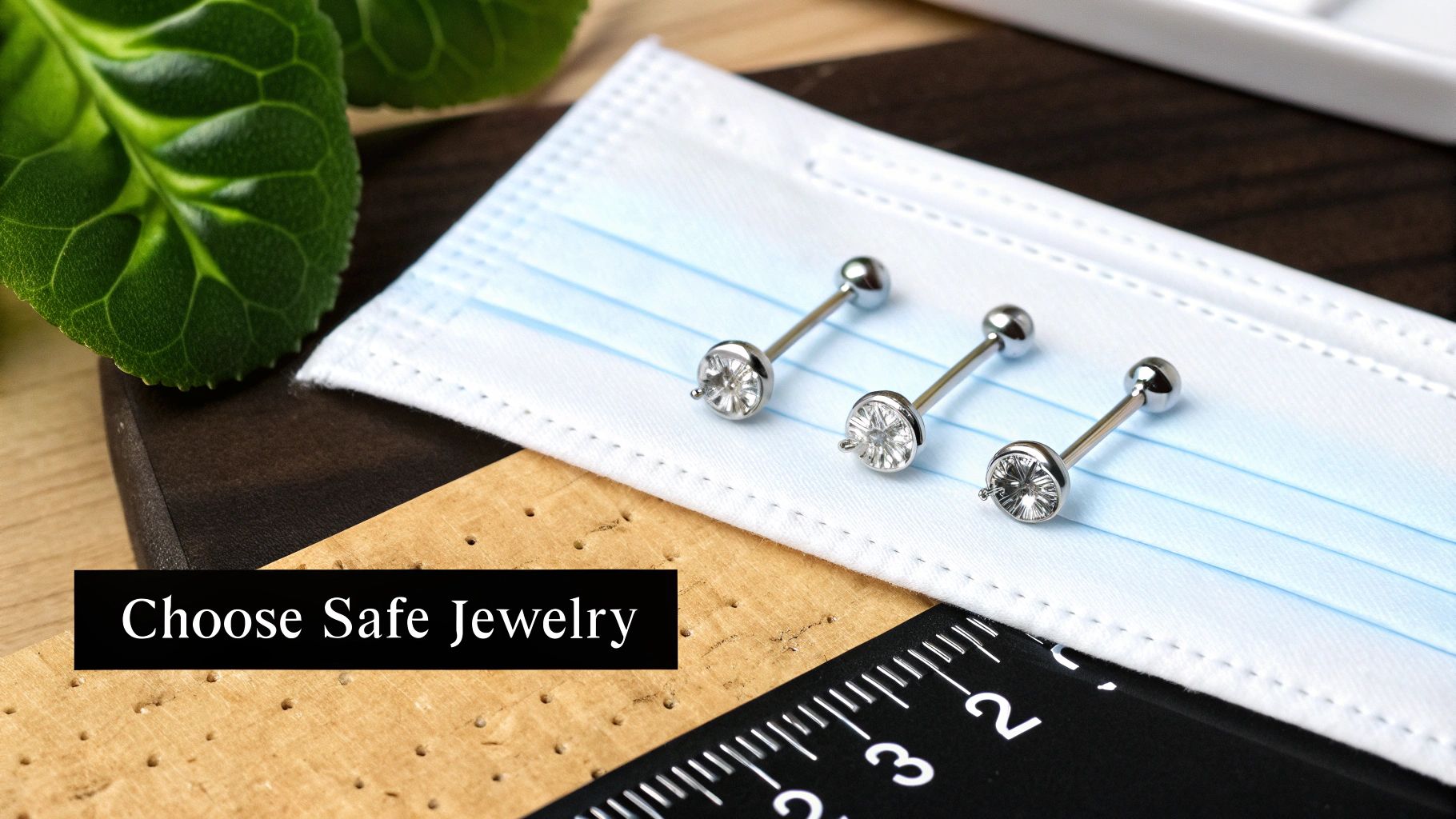
To keep your skin calm, you need to stick with body-safe, implant-grade materials. These are the top choices your piercer would recommend:
- Implant-Grade Titanium: This is the gold standard for a reason. It's completely nickel-free, lightweight, and non-reactive, making it the perfect choice for fresh piercings or anyone with sensitive skin. If you’re struggling with irritation, switching to a high-quality titanium belly ring can often solve the problem almost overnight.
- 316L Surgical Steel: This is another popular and safe option for most people. While it contains a very small amount of nickel, it’s held within the alloy in a way that makes it highly bio-compatible. For healed piercings, surgical steel belly rings offer a durable and affordable way to rock some serious style.
Your piercing is an investment in your look—don't compromise its health with cheap mystery metals. Sticking to implant-grade titanium or 316L surgical steel is one of the best ways to prevent irritation and infection from ever starting.
Getting the Right Fit
Beyond the material, the size and style of your jewelry play a huge role in your piercing's health. Jewelry that doesn't fit properly can cause a world of problems, from pressure sores to nasty snags.
- Too Short: If the barbell is too short, it will press into the skin at both ends. This constant pressure can restrict blood flow, cause painful embedding, and create an ideal environment for bacteria to get trapped. Your piercing needs room to breathe, especially if it’s swollen.
- Too Long: A barbell that’s excessively long is a snagging hazard. It can easily get caught on your clothes, blankets, or towels, causing a painful tear. This kind of physical trauma can quickly turn a happy piercing into an irritated, infected mess.
Understanding the different parts of your jewelry is key to finding that perfect fit. If you're unsure about what size you need or what all the different components are, our deep dive into the anatomy of a belly ring is a great place to start. A quick switch to a properly sized piece might be the simple fix your piercing has been begging for.
Your Infected Piercing Questions Answered
We get it—when something feels off with your new piercing, your mind starts racing with a million questions. You're not alone! It’s totally normal to worry, so let's tackle some of the most common questions we hear to give you some clarity and peace of mind.
Think of this as your quick-fire FAQ round for those nagging concerns. We’ll give you the straightforward answers so you can feel confident about what to do next.
Can I Save My Piercing After an Infection?
Absolutely! This is one of the biggest fears out there, but a minor infection doesn't automatically mean you have to say goodbye to your belly ring. The key is catching it early and treating it correctly.
As long as you’re diligent with a gentle aftercare routine and get a doctor's opinion for more serious symptoms, most piercings make a full recovery. Just remember the golden rule: never take the jewelry out of an infected piercing by yourself. Removing it can trap the infection inside, causing a much bigger problem like an abscess.
How Long Does It Take for an Infection to Clear Up?
This really depends on how severe the infection is and how quickly you start treatment. A minor flare-up or bad irritation might start to calm down within a few days of consistent saline soaks.
For a more stubborn infection that needs a doctor’s help, you should see improvement within 48 to 72 hours of starting antibiotics. Even after it starts looking better, you have to keep up with your aftercare until the piercing is fully healed to make sure the infection doesn't come back.
Don't Rush It: Your body needs time to fight off the bacteria and then heal the tissue. Be patient, stay consistent with your cleaning, and don't stop your aftercare routine the second it looks better.
What’s That Funky Smell Coming From My Piercing?
An unpleasant odor is often one of the first signs that something is up. That smell is usually caused by a buildup of bacteria, dead skin cells, and sebum (your skin's natural oil) getting trapped in the piercing channel. It’s pretty common, actually.
This buildup creates the perfect environment for bacteria to party. While sometimes it's just a sign you need to be a little more thorough with your cleaning, a strong, foul odor—especially when paired with yellow or green gunk—is a definite red flag for an active infection.
A few things can contribute to a smelly piercing:
- Poor Hygiene: Not cleaning the area thoroughly and regularly.
- Low-Quality Jewelry: Porous or reactive metals can harbor bacteria and cause irritation.
- Trapped Moisture: Not drying the area completely after showers or soaks.
Getting your belly button piercing back on track often starts with fixing these root causes. Something as simple as switching to better jewelry and being more consistent with your cleaning can make a world of difference.
Ready to upgrade to jewelry that will keep your piercing happy and healthy? At BodyCandy, we have a massive collection of high-quality, implant-grade titanium and 316L surgical steel belly rings designed for style and safety. Shop our full collection and find your perfect piece today at https://bodycandy.com