



















That feeling of scoring a new, sparkling piece of body jewelry is just the best, isn't it? Of course, you want to keep it looking absolutely perfect while making sure your piercing stays happy and healthy. The good news? For most jewelry, a simple soak in mild, fragrance-free soap and warm water is all it takes.
So, let's get you set up to clean your bling like a total pro.
Why Cleaning Your Jewelry Is a Total Game Changer
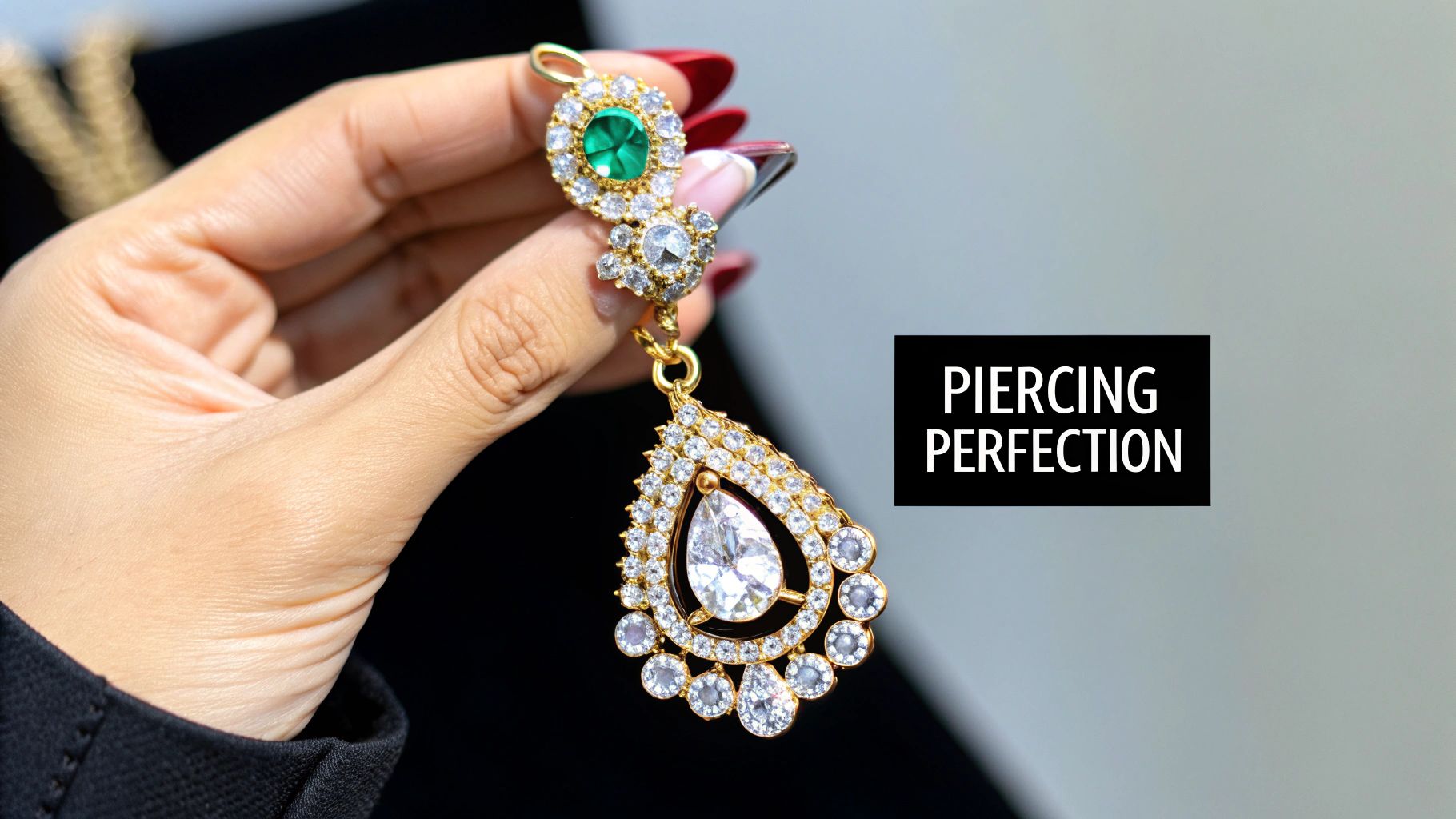
Let’s be real—cleaning your body jewelry often feels like a chore that's easy to put off. But making it a priority is about so much more than just keeping that "new jewelry" sparkle. It's truly essential for the health of your piercing.
Think about it: your jewelry sits right up against your skin 24/7. It’s only natural for it to collect a mix of dead skin cells, oils, and bacteria. Over time, that buildup can lead to funky smells, skin irritation, or even an infection. Consistent cleaning is your first and best line of defense.
More Than Just a Pretty Shine
Beyond preventing problems, keeping your pieces clean protects your investment. High-quality materials deserve high-quality care, which helps them last for years. This is especially true when dealing with different metals, since some are more prone to issues than others.
A regular cleaning routine removes buildup that can dull the finish of your favorite pieces and cause irritation. It's the simplest way to keep both your piercings and your jewelry collection in top-notch condition.
Here's why you'll want to make it a habit:
- Prevent Irritation and Infection: Getting rid of bacteria is crucial for a happy, healthy piercing, whether it's a few weeks old or a few years old.
- Maintain That Sparkle: Regular cleaning keeps metals gleaming and gemstones sparkling, so your jewelry always looks its best.
- Extend Jewelry Life: Proper care prevents tarnish and damage, helping your favorite surgical steel belly rings and titanium studs last longer.
Of course, understanding the right cleaning approach for different metals is key. If you're not sure what you're working with, we've put together a guide on what metals and materials are right for you and your skin.
Building Your Essential Jewelry Cleaning Kit
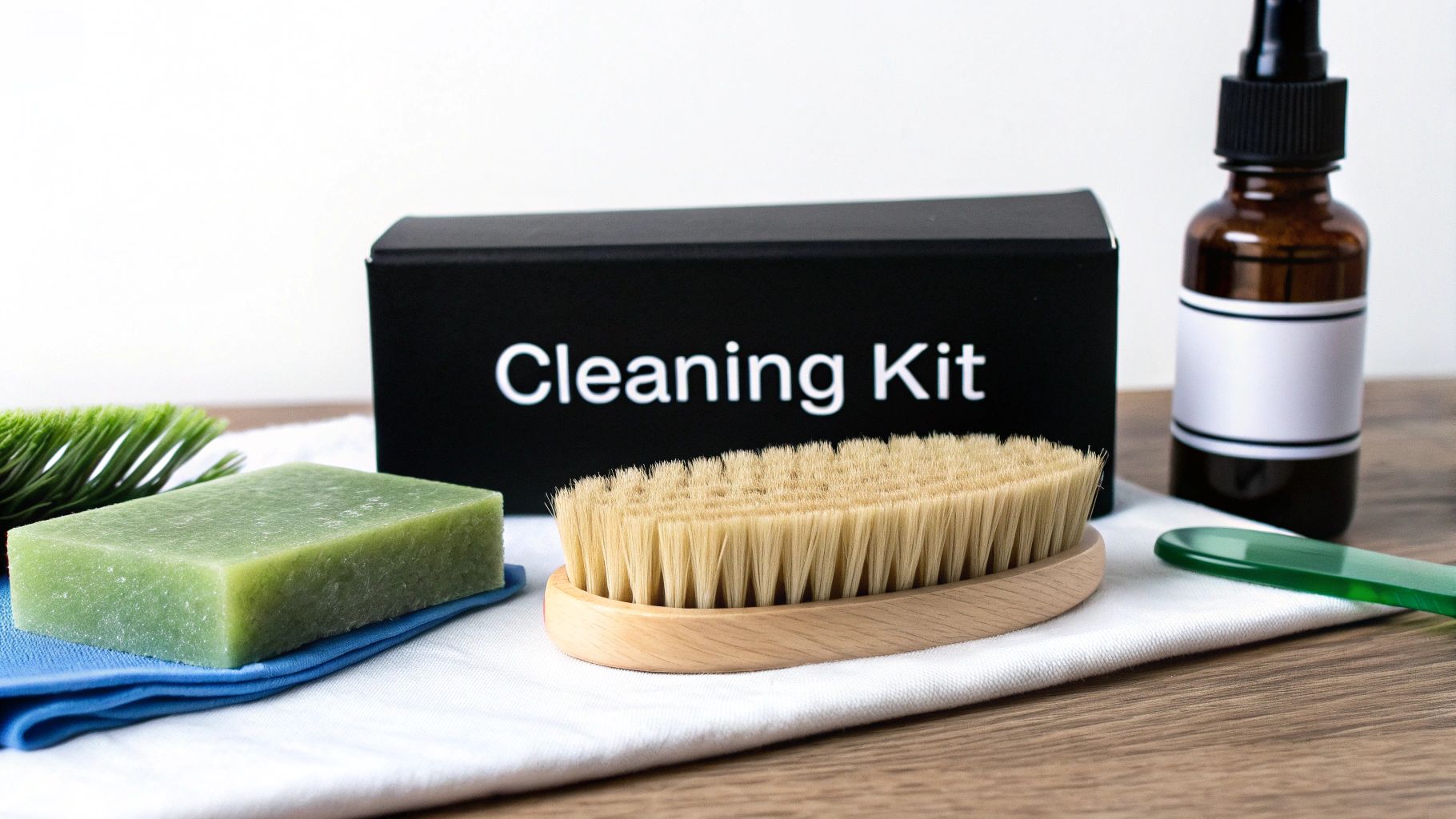
Before you can start cleaning your body jewelry like a seasoned pro, you've got to gather the right supplies. Think of this as your official cleaning arsenal—the essentials for keeping your piercings healthy and your jewelry sparkling. The best part? You probably have most of what you need lying around the house already.
But hold on! Don't just reach for any old cleaner under the sink. Using the wrong stuff can seriously irritate your skin or, even worse, damage your favorite pieces. Harsh chemicals are a huge no-go; they can tarnish metals and break down materials like acrylic over time.
Your Go-To Shopping List
Let's get your toolkit sorted. You really don't need a lot, but having these specific items ready makes a world of difference.
- Mild, Fragrance-Free Soap: This is your MVP. Grab a gentle liquid soap that's free of any dyes, perfumes, or aggressive antibacterial agents. When it comes to your skin, a simple, basic formula is always the winning move.
- Sterile Saline Solution: This stuff is perfect for a quick, gentle rinse, especially around a sensitive or still-healing piercing. It’s a super safe way to wash away any gunk without causing irritation. Our Saline Aftercare Spray is a great one to keep on hand.
- Soft-Bristled Brush: Your secret weapon against buildup is an old, soft toothbrush or a small, dedicated jewelry brush. It’s perfect for getting into all the tiny nooks and crannies on intricate jewelry without scratching the surface.
- Lint-Free Cloth: A microfiber cloth or a proper jewelry polishing cloth is absolutely essential for drying your pieces. This little step prevents annoying water spots and makes sure you don't leave any fuzzy fibers behind.
Pro Tip: Keep all your cleaning supplies together in a small bag or container. That way, when it’s time to give your collection some TLC, everything you need is in one spot and ready for action.
Your Go-To Method for Everyday Cleaning
Alright, let's talk about the single most important technique you'll ever need for keeping your body jewelry fresh. This simple soap-and-water method is your best friend for durable materials like surgical steel and titanium. It’s effective, incredibly easy, and the perfect routine to get into for daily maintenance.
First things first, and this is non-negotiable: always wash your hands thoroughly with soap and water before you even think about touching your jewelry or piercing. This is a crucial step to avoid transferring any unwanted gunk or bacteria to your bling.
Creating Your Simple Cleaning Solution
Once your hands are clean, you're ready to get started. Grab a small bowl or container—definitely not the sink, as we all know how that story can end in tragedy. If you have no other choice, please, please triple-check that the drain is securely plugged. We've even written a whole guide on body jewelry vs. the sink to help you avoid that nightmare scenario.
Fill your bowl with warm (not hot!) water and add just a few drops of a mild, fragrance-free soap. Give it a little swirl to create a gentle, sudsy solution. This simple mixture is all you need to break down the daily buildup of oils and grime without being harsh on your jewelry.
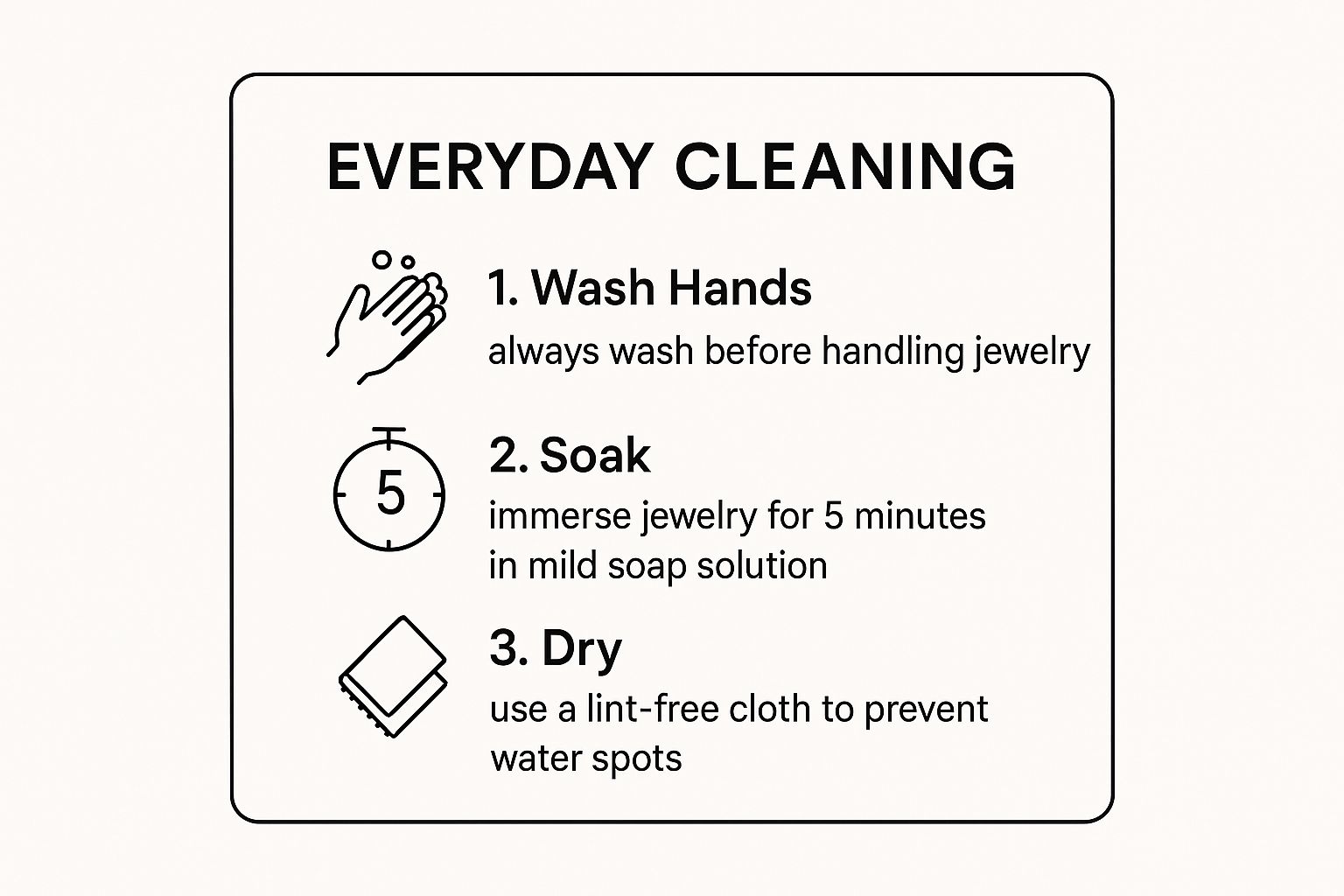
This three-step process is a great foundation for your entire jewelry care routine. Just look at how straightforward it is!
Now, gently place your jewelry in the solution and let it hang out for about three to five minutes. This soak gives the soapy water enough time to work its magic and loosen up any stubborn residue.
After the soak, use a very soft-bristled brush (a baby toothbrush is perfect for this) to gently scrub the jewelry. Make sure to get into any intricate details, crevices, or around gem settings where gunk absolutely loves to hide.
A common misconception is that you need special, expensive cleaners for everything. The truth is, for most everyday pieces, a gentle soap-and-water bath is not only sufficient but also the safest option.
Once you’re done scrubbing, rinse the jewelry completely under warm running water until every last bit of soap residue is gone. To finish, pat it completely dry with a clean, lint-free cloth. This final step prevents annoying water spots and really brings back its original shine.
This method is incredibly popular for a reason. In fact, a recent survey found that simple soap and water is the most common cleaning method out there, preferred by 25% of people. (Discover more insights on jewelry cleaning habits on shaneco.com)
Cleaning Different Body Jewelry Materials
Not all body jewelry is created equal, and your cleaning method shouldn't be a one-size-fits-all deal. What works wonders for your trusty titanium barbell might be a total disaster for your favorite acrylic plugs. Knowing how to care for different materials is the secret to keeping your entire collection sparkling.
Think of it this way: you wouldn't toss a silk shirt in the wash with your gym socks, right? Same logic applies here. The wrong cleaning technique can lead to discoloration, damage, or even cause the jewelry itself to break down over time.
The Metal Mainstays: Titanium and Steel
For your workhorse pieces, like implant-grade titanium and 316L surgical steel, you're in luck. These materials are incredibly durable and non-porous, which makes them super easy to clean. That simple soap and warm water method we talked about earlier? That's your go-to.
These metals can handle a gentle scrub without any risk of scratching, so you can really get in there and remove any gunk or buildup. Just remember to rinse them completely and dry everything off with a soft, lint-free cloth to keep that brilliant shine.
For Your Fancier Pieces: Gold Jewelry
When it comes to your gold pieces, whether they're solid gold or plated, a little extra care goes a long way. Gold is a much softer metal, so you’ll want to be gentle to avoid any accidental scratches. The soap and water soak is perfect, but skip the aggressive scrubbing.
For jewelry with delicate coatings, being mindful is key. Cleaning too hard can wear away the plating over time. To learn more about keeping these looking fresh, check out our guide on the proper aftercare of coated and plated body jewelry.
Plastics and Organics: Acrylic, Wood, and More
This is where the rules really change. Porous materials like acrylic, Bioflex, wood, stone, and bone require a completely different approach.
- Acrylic & Bioflex: NEVER use alcohol, hydrogen peroxide, or harsh soaps on these. Those chemicals can cause the material to break down, leading to cracks or discoloration. A simple wipe-down with a damp cloth and some mild soap is all you need.
- Wood, Bone, & Stone: For these organic materials, water is the enemy. Soaking them can cause swelling, warping, or cracking. Instead, just wipe them gently with a dry or very lightly dampened cloth. A tiny drop of jojoba or tea tree oil can also help keep wood conditioned and looking its best.
To keep things simple, we've put together a quick reference guide. It’s a handy cheat sheet for remembering what works best for each type of jewelry you own.
Body Jewelry Cleaning Cheat Sheet
| Material Type | Recommended Cleaning Method | What to Avoid |
|---|---|---|
| Titanium & Steel | Mild soap and warm water soak; gentle scrubbing. | Harsh chemicals (though they are very resilient). |
| Gold & Plated | Gentle soap and water soak; soft cloth polish. | Abrasive brushes, harsh scrubbing on plated areas. |
| Acrylic & Bioflex | Wipe with a damp cloth and mild soap. | Alcohol, hydrogen peroxide, hot water soaks. |
| Wood & Stone | Wipe with a dry or lightly damp cloth. | Soaking in water, harsh soaps, any chemicals. |
When in doubt, always go with the gentlest method first. A little knowledge about your materials will ensure your collection stays beautiful and safe to wear for years to come.
Pro Tips and Common Mistakes to Avoid
Alright, you know the basics of cleaning, but let's get into the stuff that separates the amateurs from the pros. These are the little secrets and big warnings you'd get straight from a seasoned piercer—the kind of advice that keeps your collection looking perfect and your skin happy.
First and foremost, a non-negotiable rule: always clean new jewelry before you wear it. Seriously. Even pieces fresh out of the package can have dust or residue from the manufacturing process clinging to them. A quick wash is all it takes to start things off right.
Now, how often should you be cleaning? For a brand-new piercing, you'll want to stick to the aftercare instructions from your piercer like glue. But for a fully healed piercing? Giving your jewelry a deep clean every few weeks is a solid routine to prevent buildup and keep things feeling fresh.
Smart Storage and Professional Secrets
Don't just toss your beloved pieces in a random drawer when you're not wearing them! Proper storage is your secret weapon against scratches and tarnish. Your best bet is to keep your jewelry in a clean, dry container, preferably one with separate compartments. This stops your favorite pieces from rubbing against each other and causing damage.
Pro Tip: For a truly deep clean, professionals often turn to specialized steam cleaners. This method uses controlled, high-pressure steam to blast away grime from every tiny crevice without relying on harsh chemicals.
It's an incredibly effective technique, especially for intricate designs with lots of nooks and crannies. Plus, professional steam cleaning is a great environmentally friendly option. You can learn more about how professionals use steam to clean jewelry on stindustry.eu.
The Biggest Jewelry Cleaning No-Gos
We've all heard some wild DIY cleaning hacks over the years, but trust me, many of them do way more harm than good. To save your jewelry (and your skin), you need to steer clear of these common mistakes:
- Using Toothpaste: The abrasive ingredients in toothpaste are great for your teeth, but they will leave micro-scratches all over your beautiful jewelry. It permanently dulls the shine. Just don't do it.
- Boiling Delicate Pieces: While boiling can sterilize some plain metals, it's a total disaster for pieces with gemstones, acrylic, or pearls. The extreme heat can cause them to crack, discolor, or even fall right out of their settings.
- Reaching for Harsh Chemicals: Put down the rubbing alcohol and hydrogen peroxide! These, along with any other abrasive cleaners, can damage delicate materials, strip plated coatings, and cause some major skin irritation. Always stick to gentle soap.
Got a few questions still buzzing around? Totally normal. Let's tackle some of the common things that come up when you're getting the hang of cleaning your body jewelry. Think of this as your final boost of confidence to care for your collection perfectly.
How Often Should I Clean Jewelry In a Healed Piercing?
For a piercing that's fully healed and not giving you any trouble, a good deep clean every few weeks is a solid baseline. This keeps any sneaky buildup from getting out of hand and helps maintain that fresh-out-of-the-box sparkle.
Now, if your jewelry is in a spot that sees a lot of action—like a lip ring that's constantly dealing with food or a navel ring tucked under clothes—you'll want to step it up a bit. A quick rinse with saline or a gentle soap about once a week is a smart move for these.
Honestly, your body is the best guide here. Regular maintenance is great for preventing problems, but if something just looks or feels a little off, a quick, gentle cleaning is always a good idea.
Can I Use Alcohol Or Hydrogen Peroxide On My Jewelry?
It's so tempting to reach for the heavy hitters like rubbing alcohol or hydrogen peroxide, but please, steer clear of them. These chemicals are way too aggressive for both your piercing and your precious jewelry.
For your skin, they can cause serious irritation, dryness, and even set back healing time if your piercing isn't 100% healed yet. And for your jewelry? They're just as destructive. They can damage delicate materials like acrylic, tarnish plated metals, and even make beautiful gemstones look cloudy or discolored.
Your safest bet is always sticking with the simple stuff: mild soap and water, or a sterile saline solution.
What Is the Best Way to Clean Intricate Jewelry With Gems?
For those gorgeous, detailed pieces with tiny gems or elaborate metalwork, a soft-bristled brush is about to become your new best friend. An old, soft toothbrush or even a small, clean makeup brush works perfectly for this.
Give the piece a quick soak in some mild, soapy water first. Then, use the brush to gently get into all those little nooks and crannies where grime loves to hide. Pay extra attention around any prong-set gems, but be careful not to snag them. This targeted approach will bring back that amazing sparkle without putting your favorite jewelry at risk.
Now that you're a cleaning pro, why not treat yourself to something new? Explore the full collection at BodyCandy and find your next favorite piece today! Shop our new arrivals now.