


















Thinking about getting an eyebrow piercing? Heck yeah! You're in the right place. Eyebrow piercings are a sick way to show off your personal style, adding a touch of edge that’s uniquely you. From timeless vertical piercings to bolder styles, the different types of eyebrow piercings range from subtle to statement-making, ensuring there's a perfect fit for every vibe.
A Crash Course in Eyebrow Piercings
So, you've decided to add some new bling to your brow game. Awesome choice! Eyebrow piercings aren't a new trend—they hit the mainstream hard in the 90s alternative scene and have made a massive comeback. They're a super versatile way to frame your face and really express yourself.
But before you jump into the piercer's chair, it’s helpful to know what you're working with. Not all eyebrow piercings are created equal! They generally fall into a few main categories based on where they're placed and how they're pierced. Getting a handle on these differences is the key to picking a style you'll love for years to come.
To get a clearer picture, this diagram breaks down the main families of eyebrow piercings.
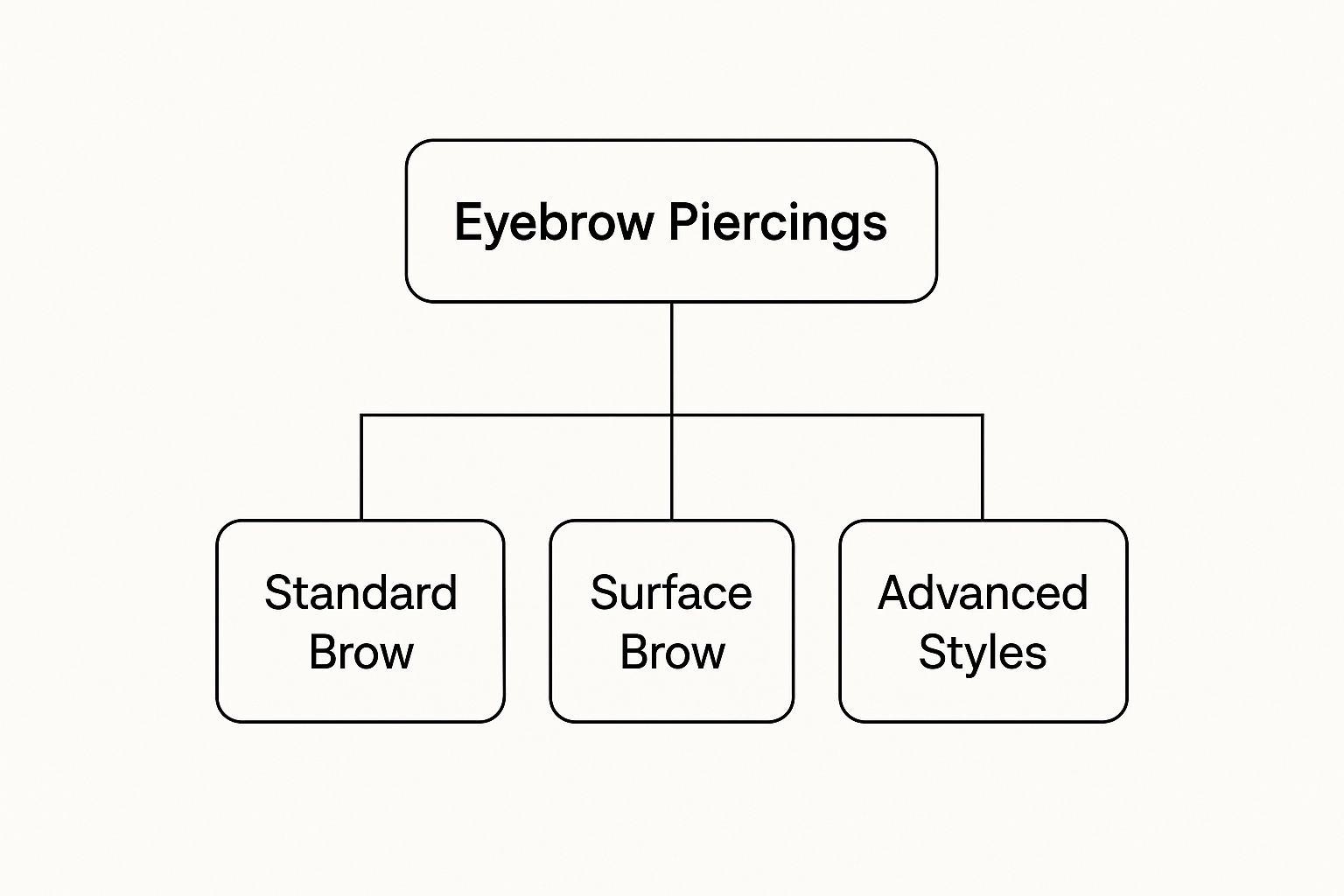
This visual shows how all brow piercings can be grouped into a few core categories, from standard placements to more advanced surface styles. The choice you make will influence everything from the jewelry you can wear to your aftercare routine.
What Makes Each Style Unique?
Each type of eyebrow piercing has its own personality and a different set of rules. For instance, a standard vertical piercing is what most people picture—that classic look that goes through the brow from top to bottom. It's relatively simple to heal and gives you tons of jewelry options, like cool curved barbells.
A horizontal piercing, on the other hand, is a surface piercing. This means it runs just under the skin along the brow bone instead of going straight through. This style needs special jewelry called a surface bar and a bit more TLC during healing to keep it happy. Then you have "advanced" styles like the anti-eyebrow, which isn't actually on the brow at all but on the cheekbone right below the eye.
The most important thing to remember is that your anatomy plays a huge role. A skilled piercer will help you choose a placement that not only looks amazing but also has the best chance of healing well based on your unique facial structure.
To make things easier, here's a quick rundown of the most popular styles you'll come across.
Quick Guide to Eyebrow Piercing Styles
| Piercing Type | Placement Location | Best Jewelry Style |
|---|---|---|
| Vertical Eyebrow | Standard placement, through the eyebrow from top to bottom. | Curved Barbell, Captive Bead Ring |
| Horizontal Eyebrow | Placed horizontally along the brow bone, usually above or below. | Surface Bar |
| Anti-Eyebrow | A surface piercing on the upper cheekbone, below the outer eye. | Surface Bar, Curved Barbell |
| Bridge Piercing | Placed horizontally across the bridge of the nose, between the eyes. | Straight Barbell |
| Multiple Eyebrow | Two or more piercings placed next to each other on the same brow. | Curved Barbells, Small Rings |
This table should give you a solid starting point for figuring out what you like and what might work best for you.
Think of this guide as your personal consultation. We're about to break down all the different types of eyebrow piercings, exploring what makes each one special, what jewelry you can rock, and how to pick the one that perfectly complements your face. Let’s dive in and find your next favorite piercing.
The Timeless Standard Eyebrow Piercing
When you picture an eyebrow piercing, this is almost certainly the one that pops into your head. The standard eyebrow piercing is the undisputed classic, the OG that started the trend and still holds the crown. It's typically a vertical or slightly angled piercing that runs through the brow, usually placed toward the outer third to really make your eyes pop.
Its staying power comes down to one thing: insane versatility. Whether you’re aiming for a subtle touch of rebellion or a full-blown punk look, the standard piercing just works. It was just as at home in the gritty 90s alternative scene as it is in today's viral TikToks, which proves some styles are truly built to last.
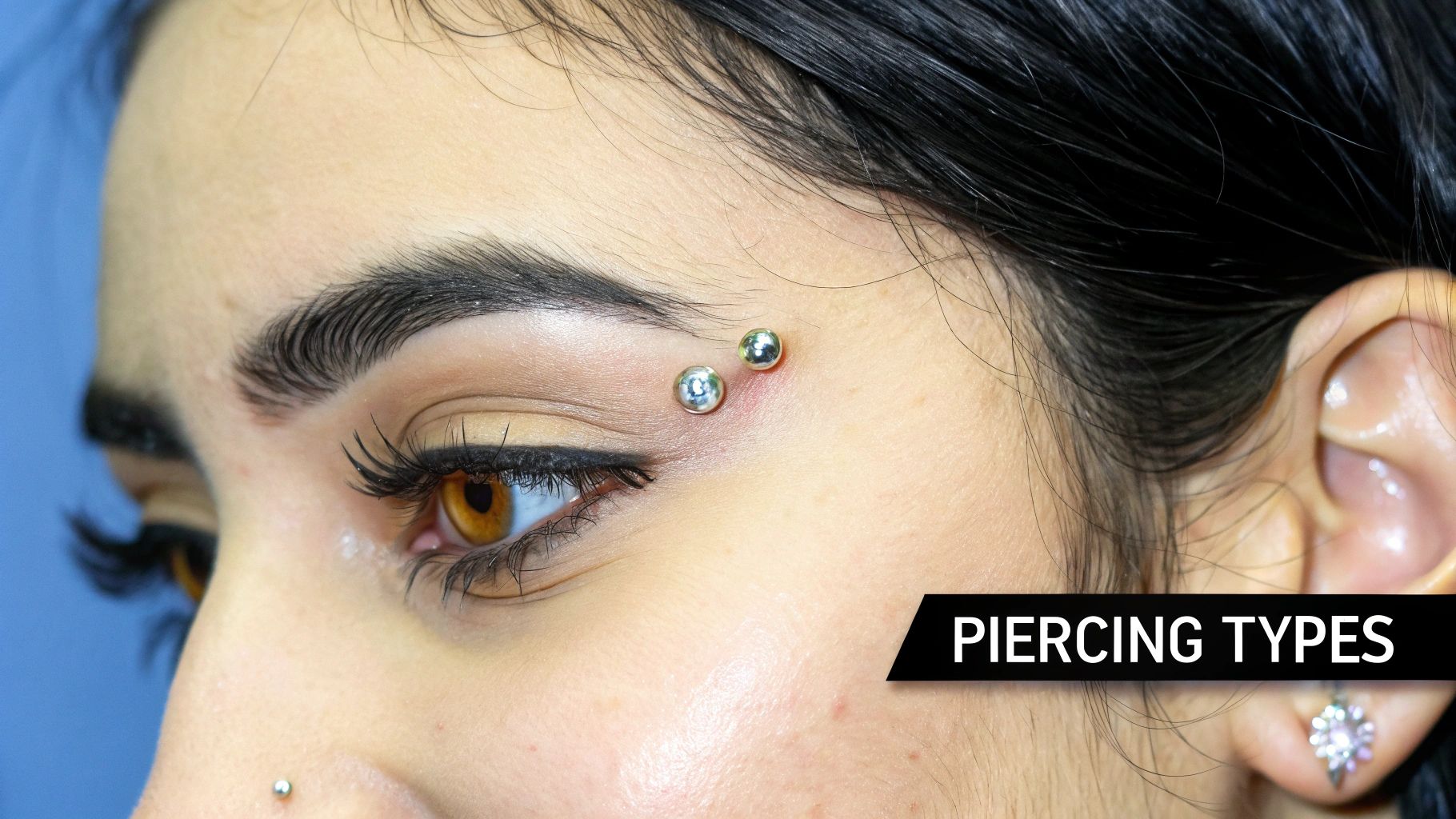
This piercing’s popularity isn't just a vibe; it's a fact. As one of the most common types, the standard eyebrow piercing involves a single channel and absolutely blew up in Western countries during the 90s and early 2000s. Today, it's back in a big way, with data from the body piercing market showing eyebrow piercings make up about 12-15% of all facial piercings in North America and Europe. That's largely thanks to Gen Z and millennials fully embracing self-expression. You can dive deeper into these piercing trends to see just how massive the movement is.
What to Expect During the Piercing Process
Getting this piercing is a surprisingly quick and straightforward experience. Seriously, don't let the thought of a needle near your eye freak you out! Your piercer is a pro who has done this hundreds, if not thousands, of times.
First, your piercer will clean the area and work with you to mark the perfect placement. They'll look at your unique facial anatomy—the arch of your brow, the shape of your eye, and your bone structure—to make sure the final result is super flattering. Once you both agree on the spot, they’ll clamp the skin and, with a quick, smooth motion, pass the needle through and insert the jewelry.
Pain-wise, most people describe it as a quick, sharp pinch that’s over in a flash. It's almost always less painful than people build it up to be. You might have some minor swelling or even a little bruising afterward, but that's totally normal.
Choosing Your First Piece of Jewelry
For a fresh standard eyebrow piercing, your piercer is almost always going to start you off with a curved barbell. The shape is perfect because it sits comfortably within the piercing channel, which minimizes pressure and movement during that critical healing phase. You want to give your new piercing the best possible start, and the right jewelry is a huge piece of that puzzle.
When you're picking out that initial jewelry, here's what you need to keep in mind:
- Material: For any new piercing, implant-grade titanium (ASTM F-136) is the gold standard. It's lightweight, completely nickel-free, and biocompatible, meaning your body is way less likely to have a reaction to it. Surgical steel is another common choice, but titanium is the top recommendation for anyone with sensitive skin.
- Gauge: This refers to the thickness of the barbell. The standard for eyebrow piercings is typically 16 gauge (1.2mm). It's thick enough to be stable but still looks delicate and balanced on your face.
- Length: Your first barbell will be a bit longer than the one you'll wear once everything is healed. This extra room is crucial to accommodate any initial swelling. Your piercer will pick the perfect length for your anatomy, usually around 5/16" (8mm) or 3/8" (10mm).
Pro Tip: Resist the temptation to swap your barbell for a cool hoop or a shorter bar too soon! You need to wait until your piercer gives you the green light, which is usually after the initial healing period of 6-8 weeks. Changing jewelry too early can cause a world of irritation and drag out your healing time.
Nailing the Aftercare Routine
Proper aftercare is completely non-negotiable if you want your piercing to heal up looking amazing. Your only job is to keep the area clean and free from irritation. For the first few months, just be gentle and consistent with your cleaning routine.
A simple saline solution is your absolute best friend here. You can buy a sterile saline spray or easily make your own by dissolving 1/4 teaspoon of non-iodized sea salt in one cup of warm distilled or bottled water.
- Clean Twice Daily: Soak a clean paper towel or some sterile gauze in the saline solution and gently hold it against the piercing for a few minutes. This will help soften any "crusties" (that's just dried lymph fluid) so you can gently wipe them away without forcing anything.
- Avoid Harsh Chemicals: Stay far away from rubbing alcohol, hydrogen peroxide, and antibacterial ointments. These products are way too aggressive and will only irritate the delicate healing tissue.
- Hands Off!: Do your best to avoid touching, twisting, or playing with your new jewelry. Every time you touch it, you're introducing bacteria and risking irritation.
- Be Mindful: Be careful when you're washing your face, applying makeup, or pulling shirts over your head. A snag can be seriously painful and can definitely set back your healing.
By following these simple steps and listening to your piercer's advice, you'll be on the fast track to rocking a healthy, healed, and absolutely killer standard eyebrow piercing.
The Modern Horizontal Eyebrow Piercing
Ready to flip the script on the classic eyebrow piercing? If you're looking for something with a seriously modern edge, let's talk about the horizontal eyebrow piercing. This style takes the traditional vertical look and turns it on its side, creating a fresh, unexpected aesthetic that’s all about clean lines and bold placement.
Instead of passing from top to bottom through the brow, this piercing runs sideways along the brow ridge. What you get is this super cool 'staple' effect, with two piercing balls sitting flat against your skin. It's a guaranteed head-turner and a unique twist on facial piercings.
This style has been picking up some serious steam lately. While it's newer and you won't see it as often as the standard vertical piercing, its popularity is definitely on the rise, especially among those who want to stand out from the crowd. It’s a favorite on social media, where influencers are constantly showcasing creative body art.
Why This is a Job for a Pro Piercer
Okay, this is important: the horizontal eyebrow piercing isn't your average piercing. It falls into a special category known as a surface piercing. This is a crucial detail because it changes everything about the procedure and healing.
A surface piercing doesn't go through a distinct piece of tissue like an earlobe. Instead, it enters and exits through the same flat plane of skin. This makes it much more technical to perform correctly, which is why a skilled, experienced piercer is an absolute must. They have the training to assess your anatomy and place the piercing at the perfect depth to minimize the risk of rejection—that's when your body slowly pushes the jewelry out.
The Right Jewelry for a Surface Piercing
Because this is a surface piercing, your jewelry options are very specific. You can't just pop a standard curved barbell in here and call it a day. The only appropriate jewelry for a fresh horizontal eyebrow piercing is a surface bar.
Here’s why it's so non-negotiable:
- Shape: A surface bar is shaped like a staple, with two 90-degree bends. This design allows the bar to sit comfortably and flat under the skin while the ends pop up neatly through the surface.
- Reduced Tension: This unique shape is engineered to put minimal stress on the tissue. This is essential for preventing migration (the piercing shifting from its original spot) and rejection.
- Stability: A surface bar provides the stability needed for this type of placement to heal successfully.
Trying to use the wrong jewelry, like a curved or straight barbell, will almost guarantee that the piercing will reject, and you could be left with some nasty scarring. So, when your piercer tells you a surface bar is the only way to go, trust them. For more on why this piercing is one of the rising stars of modern piercing, our deep-dive article has you covered.
Placement and Healing Considerations
Where you place a horizontal piercing completely defines the look. You can get it pierced above the eyebrow, below it, or even directly through the thickest part of the brow hair. Popular spots include the outer edge for a subtle accent or right in the center for a more dramatic statement.
Healing a surface piercing like this one requires extra patience and care. Because the jewelry sits just under the skin, it's more susceptible to getting snagged on clothing or irritated by movement. The healing timeline is typically longer, often taking 6 to 9 months or more to fully settle.
Your aftercare routine will be pretty standard—gentle cleaning with a sterile saline solution twice a day. The real challenge is being extra vigilant about avoiding snags and putting any pressure on the area. Be mindful when washing your face, sleeping, and pulling shirts on and off. Keeping this piercing happy is all about being gentle and consistent. With the right approach, you can rock this stunningly modern look flawlessly.
Bold Styles Like Bridge and Anti-Eyebrow Piercings
If you're ready to venture beyond the brow itself for a seriously high-impact look, let's talk about a couple of styles that frame the eyes in a totally unique way. We're getting into more advanced territory here with the bridge piercing and the anti-eyebrow piercing. While neither technically goes through your eyebrow hair, they share that same expressive vibe and are guaranteed to get you noticed.
These aren't your everyday starter piercings. They demand a confident attitude and a real commitment to a look that is unapologetically you. They sit in high-movement areas of the face, which means they need precise placement from a skilled piercer and a little extra TLC during healing. Ready to walk on the wild side?
The Striking Bridge Piercing
The bridge piercing is exactly what it sounds like—it's a horizontal piercing that runs across the bridge of your nose, right between your eyes. This placement creates a powerful, symmetrical look that pulls instant attention to your eyes. It’s fierce, it’s edgy, and it can be surprisingly versatile.
Anatomy is absolutely everything for this one. For a bridge piercing to have a fighting chance at healing well, you need to have a good amount of "pinchable" skin on the bridge of your nose, away from the bone. A professional piercer will need to carefully feel the area to see if you're a good candidate. If there isn't enough tissue to support it, the piercing is much more likely to reject.
The only jewelry that should ever go in a fresh bridge piercing is a straight barbell. This is non-negotiable! Using a curved barbell puts uneven pressure on the tissue, which almost guarantees it will migrate or reject over time, potentially leaving a nasty scar.
The Daring Anti-Eyebrow Piercing
The anti-eyebrow piercing is the ultimate cool-kid accessory. This is a surface piercing placed on the upper cheekbone, just below the outer corner of your eye. It gets its name because it mirrors the placement of a standard eyebrow piercing, just on the opposite side of the eye. The result is a subtle yet striking "teardrop" effect that's both delicate and daring.
This is another one where a skilled hand is an absolute must. As a surface piercing, the anti-eyebrow runs just under the skin rather than through a distinct piece of tissue like a lobe. It takes a piercer with a solid understanding of surface work to place it at the right depth and minimize the risk of rejection.
Heads Up: Surface piercings like the anti-eyebrow are often considered long-term temporary. This means that even with perfect placement and care, your body may eventually push the jewelry out over time. It's a true commitment to a unique look, but one that might not last forever.
Jewelry and Aftercare for These Advanced Styles
When it comes to jewelry for these placements, you have to use the right tool for the job. As we mentioned, a bridge piercing demands a straight barbell. For an anti-eyebrow piercing, the only correct choice is a surface bar, which is shaped like a staple to sit flat and comfortably under the skin. Putting in the wrong jewelry shape is just asking for trouble.
Because these piercings are on prominent and high-movement areas of your face, aftercare requires extra diligence.
- Be Gentle: Clean them twice a day with a sterile saline solution. No harsh chemicals, no twisting the jewelry, and definitely no touching!
- Watch Out for Snags: Glasses can be a real challenge with a healing bridge piercing. You'll need to be super mindful when putting them on and taking them off.
- Skincare and Makeup: Keep all makeup, lotions, and facial cleansers far away from your healing piercings. These products can cause some serious irritation.
- Patience is a Virtue: Healing can take anywhere from 3 to 6 months, and sometimes even longer. You have to listen to your body and your piercer.
These styles are a fantastic way to express your individuality, but they absolutely come with their own set of rules. For a complete rundown on what makes this piercing so unique, check out our body modification overview of anti-eyebrow piercing styles and standards.
Finding Your Perfect Eyebrow Jewelry
Alright, let's get to the fun part of any new piercing: the bling! Once you’ve patiently made it through the healing phase, a whole universe of awesome jewelry opens up. Think of this as your personal guide to picking out the pieces that just scream you.
Choosing the right jewelry isn't just about what looks cool; it's about finding the right fit, material, and style for your specific eyebrow piercing. From the classic curved barbells to sleek surface bars, we'll break down everything you need to know so you can shop with confidence and start building that dream collection.
Jewelry Styles for Different Eyebrow Piercings
Not all eyebrow jewelry is created equal, and what works wonders for a standard vertical piercing is a total no-go for a horizontal one. The shape and style are designed to perfectly match the piercing channel, which is key to keeping it comfortable, happy, and healthy.
Here’s a quick rundown of the go-to styles for the most common eyebrow piercings:
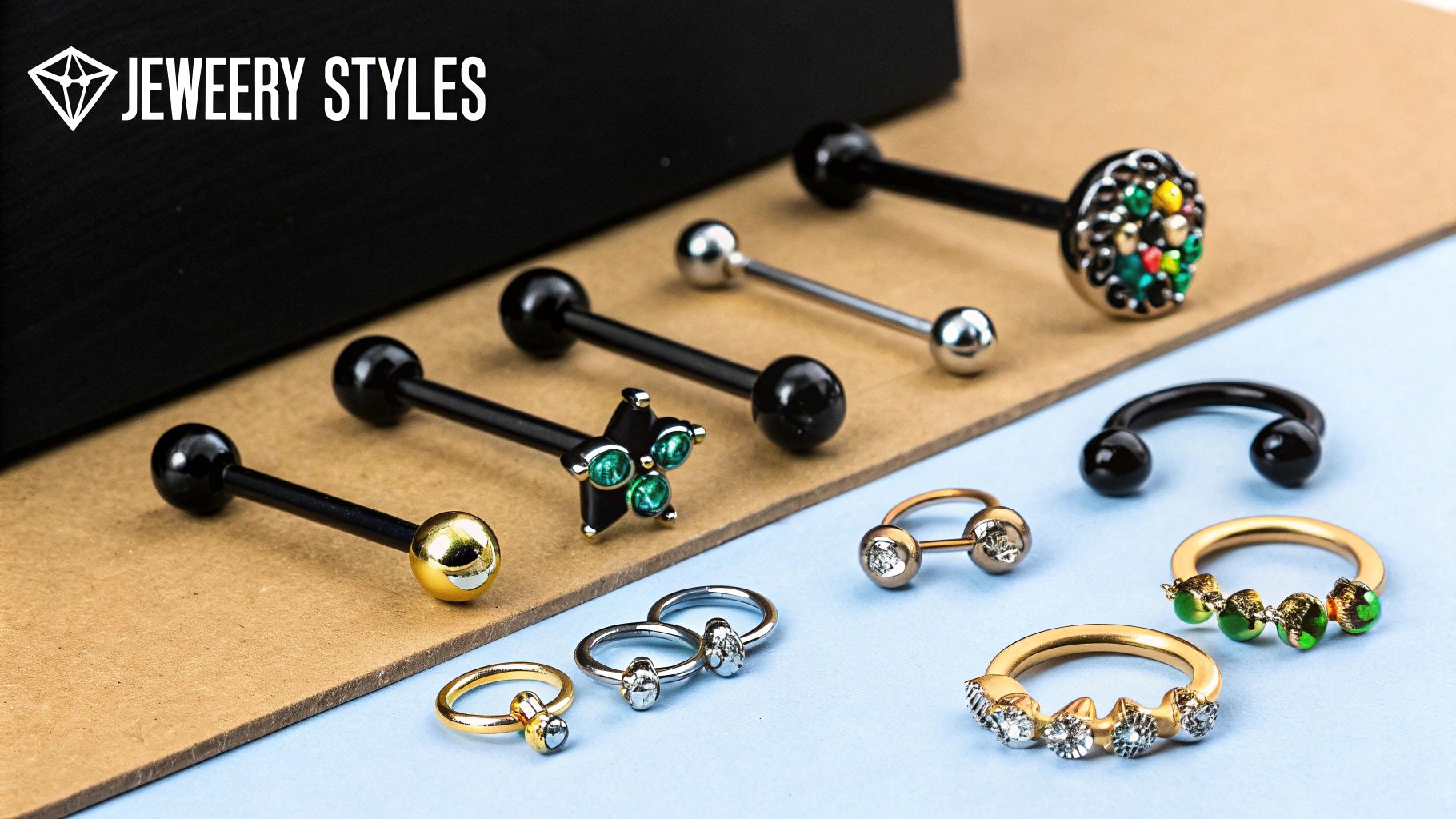
- Curved Barbells: This is the absolute MVP for your standard vertical eyebrow piercing. That gentle curve is designed to follow the natural path of the piercing, which prevents any weird pressure points. Plus, the ends are totally customizable—think simple balls, sparkly gems, or edgy spikes.
- Captive Bead Rings (CBRs) & Hoops: Once your piercing is 100% healed, a snug hoop or a classic CBR can look absolutely killer. They give off a totally different vibe than a barbell and are perfect if you're going for a more seamless, bold look.
- Surface Bars: This one is non-negotiable for horizontal and anti-eyebrow piercings. It's shaped kind of like a staple and sits flat right under the surface of the skin. This design is crucial for minimizing the risk of rejection, which is a bigger concern with these types of surface piercings.
- Straight Barbells: These are exclusively for bridge piercings. The straight bar makes sure pressure is distributed evenly across the piercing channel, which is essential for keeping that piercing happy and healthy right between your eyes.
Why Materials Matter So Much
Seriously, the material of your jewelry is a huge deal, especially when your piercing is still fresh. Using the right metal is the secret to a smooth healing process and avoiding any nasty irritation or allergic reactions.
For a brand-new piercing, implant-grade titanium (ASTM F-136) is the undisputed champion. It's totally nickel-free, super lightweight, and biocompatible, which is just a fancy way of saying your body is way less likely to freak out over it. It's the safest bet out there, especially if you have sensitive skin.
Once your piercing is totally, completely healed, your options open up. High-quality 316L surgical steel is a fantastic and affordable choice for many people. You can also explore gorgeous options in 14k gold, but always buy from a reputable source to make sure you're getting a quality piece without irritating alloys.
Understanding Sizing: Gauge and Length
Ever felt totally lost trying to shop for jewelry online with all those numbers and fractions? Don't sweat it. Understanding gauge and length is way easier than it sounds, and it’s the secret to getting a perfect, comfortable fit every time.
Gauge (G): This is just a simple measurement of the barbell's thickness. The standard for most eyebrow piercings is 16 gauge (1.2mm). It’s really the sweet spot—sturdy enough to be stable but still looks perfectly balanced on your face.
Length: This measures the wearable surface of the jewelry—the distance between the two ends, not including the balls themselves. For a standard eyebrow piercing, lengths usually fall between 5/16” (8mm) and 3/8” (10mm). Your piercer will start you off with a longer bar to leave room for swelling, but you can downsize to a snugger fit once you're all healed up.
For an even deeper dive into all things brow bling, check out our quick take on eyebrow piercing jewelry.
Common Eyebrow Piercing Questions Answered
So, you’ve explored the classic vertical, the edgy horizontal, and even the super-bold bridge and anti-eyebrow styles. Your head is probably buzzing with ideas and maybe just a few lingering questions. Don't worry, that's totally normal!
Getting a new piercing is a big deal, and it’s smart to have all the info before you take the plunge. We've put together answers to the most common questions people have. Let's get you feeling 100% confident and ready for your new look.
How Much Does an Eyebrow Piercing Hurt?
This is the big one, right? The question on everyone's mind. The honest answer is that pain is super subjective—what feels like a big deal to one person might be just a tiny pinch to another.
That being said, most people place the pain of a standard eyebrow piercing pretty low on the scale. It's often described as a quick, sharp pinch that’s over in a matter of seconds. Seriously, the anticipation is almost always worse than the actual piercing! You might feel a bit of a dull ache afterward, but it's generally very manageable.
What Is the Healing Time?
Patience is your best friend when it comes to healing a new piercing. For a standard vertical eyebrow piercing, you can expect the initial healing phase to last about 6 to 8 weeks. During this time, it's all about being gentle and consistent with your aftercare.
But "fully healed" can take a bit longer—often 3 to 4 months before the tissue is completely settled and strong. Surface piercings like the horizontal or anti-eyebrow can take even longer, sometimes up to 6 to 9 months, because they sit just under the skin and are more prone to irritation.
Don't Rush It: Even if your piercing looks and feels fine on the outside, the tissue on the inside is still doing a lot of work. Stick to your aftercare routine for the full recommended time and don't change your initial jewelry until your piercer gives you the green light.
Can I Wear Makeup with a New Eyebrow Piercing?
This one is a hard "no" for the first few weeks. You absolutely need to keep all makeup, concealers, foundations, and even brow powders far away from your fresh piercing. These products can easily clog the piercing channel, introduce bacteria, and cause some serious irritation or even an infection.
Once the initial healing phase is over (around that 6-8 week mark), you can start to carefully apply makeup around the piercing, but never directly on it. Just be super gentle during application and removal to avoid snagging your jewelry.
What Should I Do If I Get a Bump on My Piercing?
First off, don't panic! Irritation bumps are incredibly common with new piercings, especially in a spot like the eyebrow that can get bumped or snagged. They're usually just your body's way of saying something is bothering it.
Here are a few steps to take:
- Check Your Aftercare: Are you cleaning it twice a day with a sterile saline solution? Are you avoiding harsh chemicals like alcohol or peroxide?
- Hands Off: Have you been touching, twisting, or playing with the jewelry? Stop immediately! Your hands are the biggest source of bacteria.
- Assess for Irritation: Have you been sleeping on it? Did you accidentally snag it on a shirt? Identifying the cause is the first step to fixing it.
If the bump doesn't improve with gentle care or if you see signs of infection (like yellow/green pus, extreme redness, or heat), it's time to check in with your piercer. They are the experts and can give you the best advice for your specific situation.
Will an Eyebrow Piercing Leave a Scar?
If you decide to retire your piercing down the road, you will likely have a small scar. For most people, it's just a tiny, dot-like mark that becomes less noticeable over time. The visibility of the scar really depends on how well the piercing healed and how long you had it.
To minimize potential scarring, it's crucial to follow proper aftercare and never force jewelry out of a piercing that hasn't fully healed. If your piercing is rejecting, removing it sooner rather than later can also help reduce the appearance of the final scar.
How Do I Know If I'm a Good Candidate?
Your facial anatomy is a huge factor in determining which of the different types of eyebrow piercings will work for you. For a standard vertical piercing, your piercer will look for a nice, pinchable ridge of tissue that's away from the orbital bone. This ensures the piercing has enough support to heal properly.
For more advanced styles like the bridge or anti-eyebrow, anatomy is even more critical. A professional piercer is the only person who can give you a definitive answer. They will assess your facial structure, tissue depth, and even how your face moves to recommend a placement that is both safe and flattering. A consultation is always a great first step!
Ready to find your new look? We've got a massive collection of high-quality eyebrow rings, from classic curved barbells to edgy hoops and everything in between.