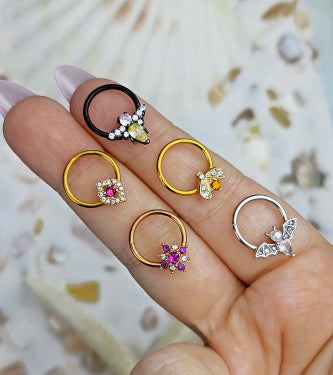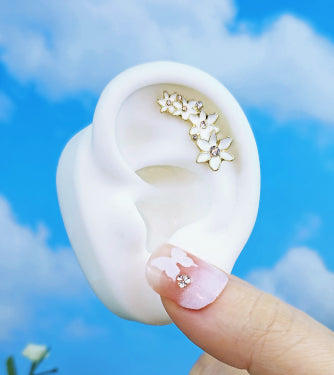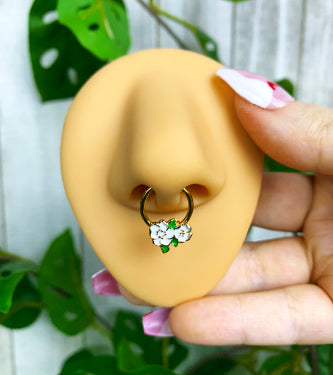









Ready to find that perfect piece for your piercing? Hell yeah, you are. Choosing body jewelry is one of the absolute best ways to show the world who you are, whether you're all about a subtle sparkle or prefer a statement piece that screams you. The world of different types of body jewelry is massive, from classic barbells and rings to studs and plugs, and each one is designed to fit specific piercings and create a totally unique look.
Welcome to Your Body Jewelry Adventure
Let's be real, diving into the world of body jewelry can feel a little intimidating at first, but honestly, that's part of the fun! Think of this as your personal map for an awesome adventure. We're here to break down every single thing you need to know, making it ridiculously simple to find pieces that not only look killer but also feel amazing in your piercing.
This is about more than just picking something shiny; it's about finding jewelry that tells your story. Are you feeling edgy today? Elegant tomorrow? Maybe a little bit of both? Don't worry, there’s a piece out there that perfectly captures that vibe. We’ll walk you through everything, from the absolute basics to mastering the art of styling your collection.
What You're About to Learn
We've crammed this guide with tons of useful info to turn you into a legit body jewelry pro. You'll learn how to match the right style of jewelry to your specific piercing, which is the number one rule for comfort and a happy, healthy piercing.
You'll also get the inside scoop on:
- Jewelry Styles: We'll get into the main categories, like the barbells you need for your tongue or industrial and the captive bead rings that look so perfect in a septum.
- Safe Materials: Find out why materials like implant-grade titanium are a new piercing's best friend and how to choose what's right for your body.
- The Perfect Size: We’ll finally clear up the confusion around gauges and lengths so you can shop with total confidence and get a flawless fit, every single time.
By the time you're done here, you won't just know about the different types of body jewelry; you'll have the confidence to build a collection that is 100% you.
Ready to jump in? Let's go find the jewelry that will make your piercings pop and show off that unique personality of yours. Your next favorite piece is waiting!
Decoding the Main Body Jewelry Styles
Alright, let's get into the good stuff—the actual jewelry! Exploring all the different types of body jewelry is where your personal style really starts to take shape. Think of this as your personal catalog of coolness, where every piece is designed for specific piercings to give you that perfect mix of comfort and edge.
We're going to break down the most popular styles so you know exactly what to look for, whether you're a piercing newbie or a seasoned pro. From the essential barbells to classic rings and versatile studs, you're about to become an expert on what makes each one unique and which piercings they call home.
This simple hierarchy shows how choosing body jewelry flows from self-expression down to the practical details of style and fit.
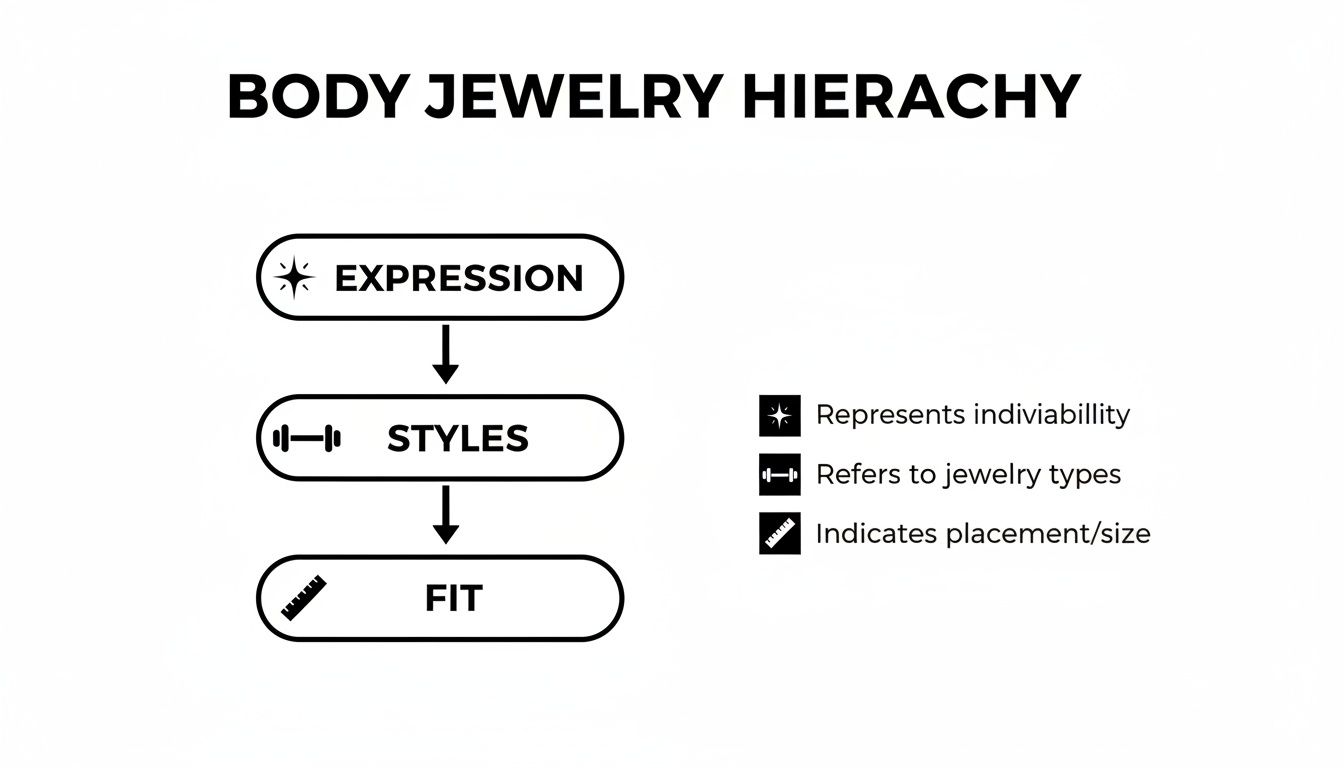
Ultimately, finding the perfect piece is a journey that balances your personal taste with the practical needs of your piercing.
Barbells: The Piercing Powerhouses
When you picture body jewelry, a barbell is probably one of the first things that comes to mind. These are the absolute workhorses of the piercing world—super versatile and used in a ton of different spots. A barbell is essentially a straight or curved bar with a bead or ball on each end, and one of them usually unscrews for easy insertion.
The incredible variety of barbells is a huge part of what makes body piercing so expressive. In fact, the global market for all types of body jewelry, from classic navel bars and tongue rings to bold nipple shields, was valued at a massive US$ 8,435 million in 2024. Industry experts expect it to climb all the way to US$ 12,060 million by 2031, which just goes to show how much our collective love for unique styles is growing worldwide.
Let's break down the main players in the barbell family:
-
Straight Barbells: The OG. This is a simple, straight post with two end-pieces. It’s the go-to for tongue piercings, industrial piercings (which need a super long barbell), and some nipple piercings. Simple, effective, and endlessly customizable.
-
Curved Barbells: Just like it sounds, this is a barbell with a gentle curve. This C-shape makes it perfect for piercings that go through a "pinch" of skin, like your eyebrow, rook, and navel (belly button). The curve helps the jewelry sit more naturally and comfortably against your body.
-
Circular Barbells: Also known as horseshoes, these are shaped like a "U" with a bead on each end. They’re a super popular choice for septum piercings, daith piercings, and some lip piercings (like a smiley). They give you the look of a ring with the easy-to-handle style of a barbell.
For a deeper dive, you can check out our complete photographic dictionary of barbell styles to see them all in action.
Rings: Hoops, Hoops, and More Hoops
Who doesn't love a good hoop? Rings are a timeless choice that can look delicate, bold, or anywhere in between. They're perfect for creating that seamless, elegant look in piercings like the nostril, septum, daith, and many ear cartilage placements.
But not all rings are created equal! The opening and closing mechanism is what really sets them apart.
A well-fitted ring should hug your piercing just right—not too tight, not too loose. It's that "just right" fit that creates a clean, polished look and ensures your piercing stays happy.
Here are the main ring styles you'll run into:
-
Captive Bead Rings (CBRs): This is a true classic. A CBR is a circular ring with a small gap that's held closed by a single bead or charm, which is held in place by the ring's tension. They're super secure, making them a fantastic option for healed piercings.
-
Seamless Rings: These rings create the illusion of a perfectly unbroken circle. You gently twist the ends apart to open it, insert it into your piercing, and then twist it back into place. They offer a sleek, minimalist vibe that's perfect for nostril and cartilage piercings.
-
Segment Rings: Similar to a seamless ring, but instead of twisting, a small section of the ring actually pops out. This creates a wider opening for insertion, which can be a lifesaver for some people.
-
Clickers: Honestly, these are a game-changer for convenience. Clickers have a hinged segment that simply "clicks" open and shut, making them incredibly easy to put in and take out. You'll find them used everywhere from septums to daith piercings.
Studs: The Subtle Statement-Makers
Sometimes, you just want something a little more understated. That's where studs come in! A stud is basically a post with a decorative top on one end and a backing to hold it in place. They are the absolute go-to for many lip and ear piercings, offering tons of comfort and endless style options.
The real magic of a stud is often in its backing. Different backings are designed for better comfort and security in different parts of the body.
Common Stud Styles
-
Labret Studs: This is probably the most versatile stud out there. It features a decorative top on a post with a flat disc back. That flat back is a lifesaver for comfort, especially in oral piercings (like lip or Monroe piercings) and cartilage piercings (like the helix, tragus, and conch), since it won't poke the back of your ear or irritate your gums.
-
Nose Screws & L-Bends: Designed specifically for nostril piercings, these studs have a bent post that helps keep them secure inside your nose. A nose screw has a small curl at the end, while an L-bend has a sharp 90-degree angle.
-
Nose Bones: These have a straight post with a small ball on the end that is slightly larger than the post itself. This tiny ball is what holds the jewelry in place inside your nostril. They're super easy to pop in but are best for fully healed piercings.
Understanding these core styles—barbells, rings, and studs—is the first major step in finding jewelry that you'll absolutely love. Each one is designed with specific piercings in mind, ensuring your look is not only stylish but also comfortable and secure for the long haul. Now that you know the basics, you can start mixing, matching, and building a collection that's as unique as you are.
Choosing Your Jewelry Material Like a Pro
So, you’ve picked out a super cool barbell or a killer new hoop—awesome! But hold on for just a sec. The material your jewelry is made from is every bit as important as the style. Picking the right one is the secret to keeping your piercing happy, healthy, and looking its absolute best.
Think of it like this: you wouldn't wear itchy wool socks in the middle of summer, right? The same logic applies to your piercings. Some materials are perfect for chilling in a healed piercing, while others are the superheroes you need for a fresh one. Making the smart choice now helps you dodge irritation later and lets you rock your new piece with total confidence.
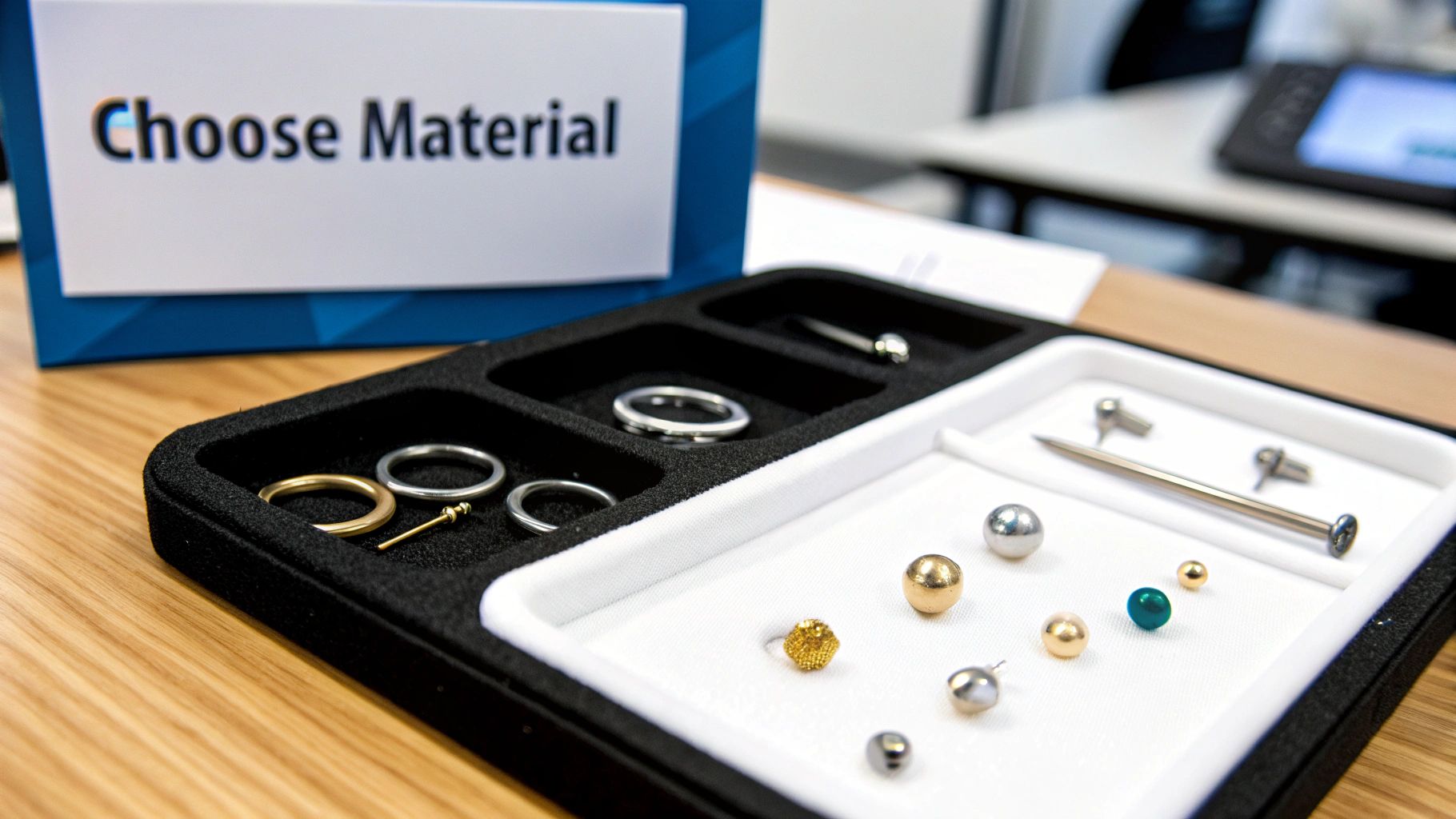
The global interest in personalized pieces is exploding, which means more options than ever before. In fact, the market for body jewelry is expected to jump from USD 3.36 billion in 2024 to USD 5.0 billion by 2035. This massive growth is driven by people just like you, searching for unique pieces made from quality materials.
The VIPs of Piercing Materials
When you're dealing with a new or sensitive piercing, you need to roll out the red carpet for the best materials out there. These are the ones pro piercers trust because they are biocompatible, meaning your body is way less likely to have a bad reaction to them.
-
Implant-Grade Titanium (ASTM F-136): This is the undisputed champion of piercing materials. It's the same stuff surgeons use for implants, so you know it's incredibly body-safe. It’s also lightweight, 100% nickel-free, and an absolute dream for anyone with sensitive skin. If you're getting a new piercing, this is what you should be asking for.
-
14k-18k Solid Gold: Looking for a little bit of luxury? Solid gold (not plated!) is a fantastic, biocompatible option. You’ll want to stick to 14k or 18k, as 24k is way too soft for body jewelry and can get scratched up easily. Just make sure it's certified nickel-free, especially if you have known metal sensitivities.
-
Niobium: A close cousin to titanium, niobium is another excellent hypoallergenic choice. It's a bit heavier than titanium but has a cool trick up its sleeve: it can be anodized into a whole rainbow of vibrant colors without affecting its safety.
For even more details on what your jewelry is made of, check out our full guide to body jewelry materials.
Great Options for Healed Piercings
Once your piercing is fully healed and happy, you can start exploring a much wider world of materials. Your body isn't nearly as sensitive at this stage, giving you more freedom to play with different styles and price points. Just remember to always listen to your body—if a material starts causing irritation, switch it out.
A healed piercing gives you the freedom to experiment, but quality should always be your top priority. Even a long-healed piercing can get angry if you put low-quality, irritating jewelry in it.
Here are some popular choices for piercings that are well past the healing stage:
-
316L Surgical Steel: This is one of the most common materials you'll find for body jewelry, and for good reason. It's affordable, durable, and has that classic polished look. While it's considered body-safe for most people, it does contain a small amount of nickel, so we don’t recommend it for fresh piercings or for those with severe nickel allergies.
-
Bio-Flex or PTFE: These are flexible, biocompatible plastics that are amazing for certain situations. They're great for temporary wear during medical procedures (since they're metal-free) or for pregnant people whose navel piercings are stretching. They're also super comfortable and incredibly lightweight.
-
Glass: Don't sleep on glass! It’s perfectly smooth, non-porous, and completely hypoallergenic, making it another fantastic option for sensitive skin. It's especially popular for plugs and retainers.
To help you decide, here’s a quick-glance comparison of these common materials.
Body Jewelry Materials Compared
| Material | Best For | Pros | Cons |
|---|---|---|---|
| Implant-Grade Titanium | New piercings, sensitive skin | Hypoallergenic, nickel-free, lightweight, can be anodized | Higher initial cost |
| 14k-18k Solid Gold | Healed piercings, luxury look | Biocompatible (if nickel-free), classic appearance | More expensive, 24k is too soft, risk of nickel in alloys |
| Niobium | New piercings, colorful options | Hypoallergenic, can be anodized into many colors | Slightly heavier than titanium, can be harder to find |
| 316L Surgical Steel | Healed piercings, budget-friendly | Durable, affordable, widely available | Contains trace amounts of nickel, not for fresh piercings |
| Bio-Flex / PTFE | Temporary wear, pregnancy, active lifestyles | Flexible, metal-free, lightweight, comfortable | Can degrade over time, less decorative options |
| Glass | Stretched lobes, retainers, sensitive skin | Hypoallergenic, smooth, non-porous, easy to clean | Can break if dropped, limited styles |
Ultimately, choosing the right material comes down to knowing your body and your piercing's stage of healing.
Making an informed choice about your jewelry material is one of the best things you can do for your piercing. By starting with top-tier materials like titanium for new piercings and branching out to trusted options like surgical steel for healed ones, you set yourself up for a lifetime of comfortable, stylish self-expression.
Getting the Perfect Fit Every Time
Ever fallen in love with a piece of jewelry online, only to hit a wall when you see words like "gauge" or "diameter"? Let's clear that up for good. Nailing the right size isn’t just about looking good—it's absolutely essential for a happy, healthy piercing. A bad fit can cause irritation, migration, or just look plain awkward, and nobody wants that.
Think of the gauge as the shoe size for your piercing. It’s simply how thick the post or bar is. Here’s the part that trips people up: the smaller the number, the thicker the jewelry. So, a sturdy 14g bar is actually thicker than a delicate 18g piece. Getting this right is your first step to a perfect fit.
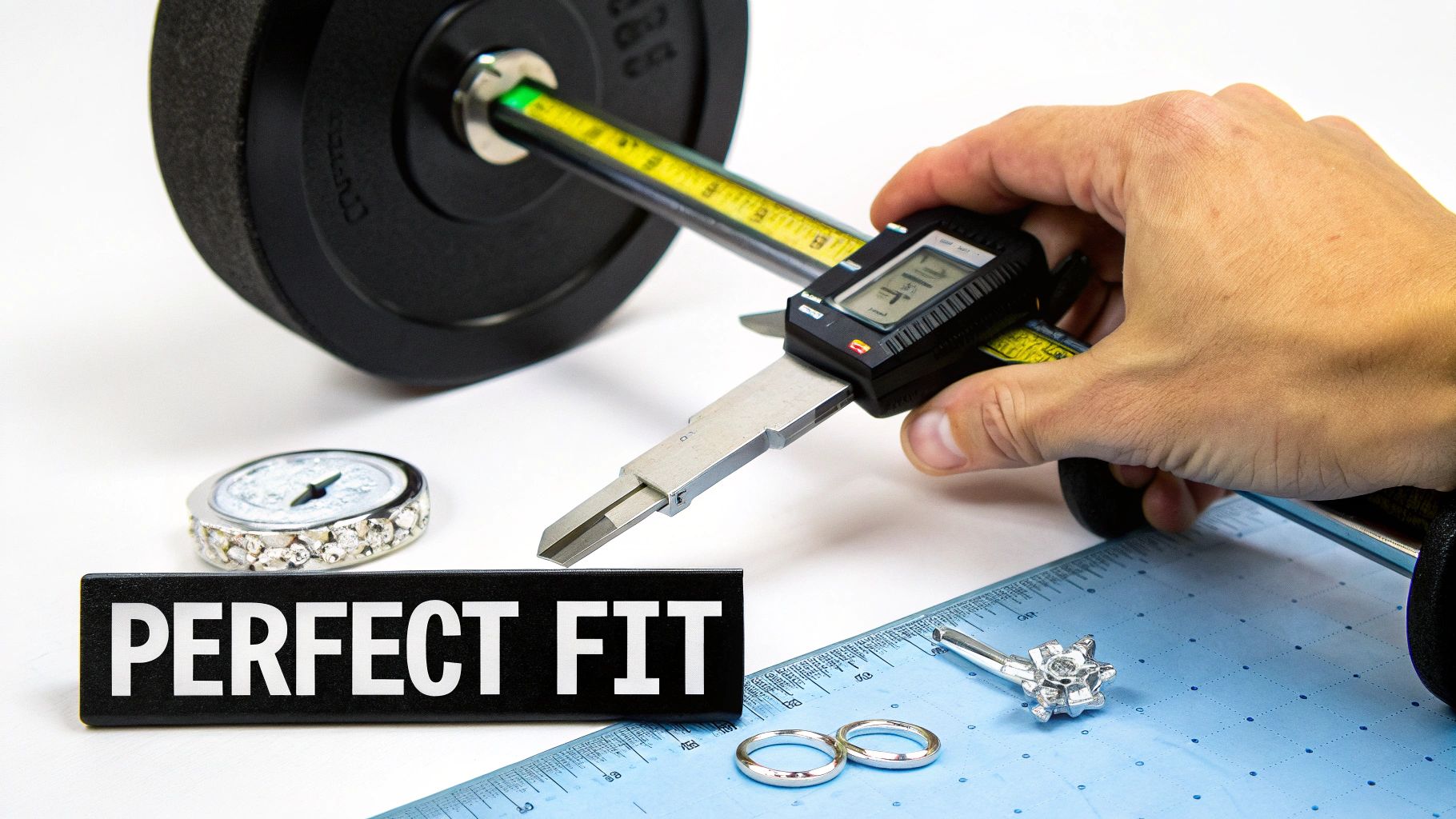
It might seem a little backward at first, but once you know your size, shopping for new jewelry becomes an absolute breeze.
Mastering Your Measurements
So, how do you figure out your size without just guessing? It's way easier than you think! The best move is to measure a piece of jewelry you already own that fits you perfectly. If you don't have one, popping into your local professional piercer is the safest bet—they can measure you with total precision.
If you're tackling it at home, a ruler with millimeter markings or a digital caliper will be your best friend.
-
For Studs and Barbells: You need the length. Measure the bar from the base of one ball to the base of the other. Don't include the balls themselves in the measurement!
-
For Rings and Hoops: You're looking for the internal diameter. This is the measurement of the widest point across the inside of the ring.
Knowing both your gauge and length/diameter is the secret to unlocking a world of perfectly fitting, super comfortable jewelry.
Your body is unique, and so is your piercing. What's "standard" might not be the perfect size for you. Always measure for your own anatomy to make sure you get the most comfortable and secure fit possible.
Common Sizes for Popular Piercings
While your personal anatomy is always king, there are some common "starting" sizes that piercers often use. This can give you a ballpark idea of what to look for, but remember, it's always best to confirm your own specific measurements.
- Ear Cartilage (Helix, Tragus, Conch): Usually pierced at 16g. Labret studs often have a length of 1/4" (6mm) or 5/16" (8mm).
- Nostril: Often started with a tiny 20g or 18g post. Hoops typically have a diameter of 5/16" (8mm) or 3/8" (10mm).
- Septum: Most commonly pierced at 16g. The standard diameter for a snug look is usually 5/16" (8mm).
- Navel (Belly Button): The go-to gauge here is 14g. The bar length is typically 3/8" (10mm).
- Nipple: Almost always pierced at 14g. Barbell length can vary a lot but often starts around 1/2" (12mm) to 9/16" (14mm).
- Tongue: Standard is 14g, with a typical length of 5/8" (16mm).
Feeling like a sizing whiz yet? Shopping with confidence means no more letdowns from a piece that just doesn’t fit right. For a complete walkthrough, check out our full guide on body jewelry sizing and knowing your dimensions. It's packed with charts and tips to make you a total measuring master.
Styling Your Piercings for Any Vibe
Alright, this is where the real fun begins. Think of your piercings as a personal canvas and your jewelry as the paint. You're the artist, and you get to create a masterpiece that is 100% you. Styling is all about mixing, matching, and playing around to curate a look that screams your name, whether you're feeling minimalist and chic or loud and proud.
Getting creative with your body jewelry is what makes piercings such an incredible form of self-expression. It’s no surprise the global body jewelry market was valued at an insane USD 7,500 million in 2024 and is expected to climb to over USD 10,341 million by 2030. That boom shows just how many of us, especially younger generations, see piercings as a key part of our personal style. If you want to dive deeper, you can learn more about the market's explosive growth.
So, let's get you inspired to build your own signature look!
Building Your Curated Ear
The "curated ear" has become the holy grail for piercing lovers. It’s the art of thoughtfully placing different earrings across your various lobe and cartilage piercings to create a single, cohesive, and totally stunning look. This isn't about random placement; it's about telling a story with your jewelry.
Ready to start designing your ear-scape? Here's how to think like a stylist:
- Pick a Centerpiece: Start with one "hero" piece that will be the star of the show. This could be a dazzling clicker in your daith, a sleek industrial barbell, or a sparkling cluster stud in your conch. Let this one piece set the vibe.
- Mix Shapes and Sizes: Contrast is your best friend here. Try pairing tiny, delicate studs with a bold hoop, or a few seamless rings with a statement labret. Playing with different silhouettes adds so much visual interest and depth.
- Think About Flow: Arrange your jewelry to follow the natural curve of your ear. A great approach is to place smaller, more delicate pieces up in your helix and save the bigger, dangly styles for your lobes. This creates a beautifully balanced, cascading effect.
Playing with Metals and Textures
Forget what you heard—the days of never mixing metals are long gone. Today, it’s a sign of a confident, well-thought-out style. Combining metals like gold, silver, and rose gold can create a dynamic and completely personalized look that’s all your own.
Want to know the secret to mixing metals like a pro? Treat one metal as your main color and the others as accents. This creates a look that feels intentional, not chaotic.
For instance, if most of your ear is decked out in silver, try adding one or two rose gold studs or a single gold hoop. It adds just the right amount of warmth and a pop of contrast. And don't stop at metals! Mixing textures adds another layer of personality. Pair a smooth, polished ring with a gem-encrusted barbell for a look that's impossible to ignore.
Ready to start experimenting? Your unique vibe is just a few pieces away. Have fun, play around, and don't forget to tag us in your photos—we live for seeing the amazing looks you create!
Got Questions? We've Got Answers.
Still have a few things rattling around in your head? We've got you. Think of this as your personal FAQ session with your bestie who just so happens to be a piercing pro. We’re here to tackle some of the most common questions people have about all the different types of body jewelry out there.
Our goal is to clear up any lingering confusion so you can feel totally confident in every piece you pick. Let's dive in and get you those answers.
What's the Best Type of Jewelry for a New Piercing?
For a brand-new piercing, you absolutely want to start with implant-grade materials. This is non-negotiable! Your body is working hard to heal, so you need jewelry that it will welcome, not fight against.
Your top choices are implant-grade titanium (ASTM F-136), 14k or 18k solid gold (and we mean solid, never gold-plated!), or even high-quality glass. These materials are biocompatible, which is just a fancy way of saying your body is way less likely to have an allergic reaction to them. This is the secret to a smooth and easy healing process.
We always suggest a simple style like a flat-back labret stud or a straight barbell for that initial healing period. Why? They're less likely to snag on your hair or clothes and won't move around too much, which can really irritate a fresh piercing. Once you're fully healed, you can go wild and switch to all the awesome hoops and dangles you've been eyeing!
How Do I Know If I'm Allergic to My Body Jewelry?
Trust us, your body will definitely let you know if it's not vibing with your jewelry. The tricky part is that signs of an allergy or sensitivity often pop up long after the initial healing phase is over, so don't mistake it for a normal part of the process.
Keep an eye out for these tell-tale signs:
- Persistent redness or itching that just won't quit.
- Swelling around the piercing site that doesn't seem to go down.
- A rash or bumpy texture on the skin right around the jewelry.
- Sometimes, the skin can even look dark or discolored.
The most common culprit behind these reactions is nickel, an alloy found in tons of lower-quality metals. If you suspect you're having a reaction, your first move should be to immediately switch to a hypoallergenic material like titanium or niobium. If your symptoms don't clear up after making the swap, it's always a good idea to check in with your professional piercer or a doctor for advice.
Can I Use the Same Jewelry for Different Piercings?
This is a great question, and the answer is a solid "sometimes!" It all boils down to two things: the gauge (thickness) and the length or diameter required for each specific spot. Your anatomy is different from one place to another, and the jewelry has to be the right fit.
For example, a 16g labret stud might be a perfect fit for a helix, tragus, conch, or even a lip piercing—as long as the post length is correct for that specific spot on your body.
A piece of jewelry can be versatile, but it's not universal. Always double-check the required size for a piercing before swapping jewelry to ensure a comfortable, safe fit that won't cause irritation or damage.
But you'd never use a curved barbell designed for an eyebrow piercing in an industrial, which needs a super long, perfectly straight barbell to connect two separate holes. When in doubt, our sizing guides are your best friend!
Ready to put all this knowledge to good use and find your next favorite piece? At BodyCandy, we have an incredible collection of all the different types of body jewelry you just learned about, in high-quality materials you can trust.
Shop our full collection and express your unique style today!