













You're standing in front of the mirror, new jewelry in hand, trying to talk yourself into it.
Your starter stud has done its job. It got you through the piercing, the cleaning routine, the random “is this normal?” checks, and the long stretch where you wanted a hoop way before your nose was ready. Now you want the fun part. A tiny sparkle. A sleek ring. Maybe something a little moodier, a little cuter, a little more you.
And then the panic kicks in.
Is it healed enough? What if you take the old one out and can't get the new one in? What if the angle feels weird? What if the ring looks perfect in your hand and completely wrong on your nose?
Totally normal. Changing nose ring jewelry for the first time feels way bigger than it should. The good news is that it gets easier fast when you know what to look for and what motions work.
People have been wearing nostril piercings for more than 4,000 years in the Middle East, and the practice spread into Indian culture around the 1500s before showing up in Western pop culture through the 1960s and later punk and goth scenes in the 1970s and 1980s, eventually going mainstream again according to this history of nose piercing. So if you're nervous, you're still joining a very long, very stylish tradition.
You've got this. Let's make your first swap smooth.
That New Jewelry Feeling Is Calling Your Name
The funniest part of getting a nose piercing is that a lot of us start planning the second piece before the first one even stops being tender.
You get pierced, you behave, you clean it, you resist touching it, and then one day your reflection hits you with the truth: the starter jewelry is fine, but you're ready for your actual look. Maybe it's a tiny gold-toned stud. Maybe it's a snug hoop. Maybe it's one of those nose screws that somehow looks effortless once it's in.
That excitement comes with a very specific kind of stress. You want the upgrade, but you also know your nose can be dramatic when it's annoyed.
Why this feels like a big deal
A nose piercing is small, but changing it is fussy. The hole can be hard to see, the angle can feel confusing, and some jewelry styles seem designed to test your patience. That's why people get stuck on the same questions over and over.
- “Is it too soon?” The outside can look calm before the inside is ready.
- “Why won't this hoop go in?” Often it's the angle, not you.
- “Why does everyone make this look easy?” Because nobody films the ten awkward seconds where they drop the jewelry in the sink.
You don't need perfect hands or expert-level coordination. You need a healed piercing, a clean setup, and a calm approach.
The goal isn't speed
The goal is a clean, low-stress change with as little irritation as possible.
If this is your first time changing nose ring jewelry, consider it learning a tiny mechanical skill. Once you understand how your jewelry shape moves through your piercing, everything starts to click. The first change is the learning curve. After that, you'll know what angle your nose likes, what hoop diameter sits best, and which closure type makes you want to throw the ring across the room.
The Ultimate Is My Piercing Ready Checklist
The most annoying answer in piercing care is “it depends.” Unfortunately, with healing, it really does.
Public advice is all over the place. Some sources say 2 to 3 months, others say 6 months or more, and the big reason for the disagreement is that hoops put different pressure on the channel than a straight stud does. Changing too early can lead to irritation bumps even when the piercing seems healed on the surface, as noted in this discussion about when to change from a stud to a hoop.
So instead of staring at the calendar, check your piercing itself.
Your ready-or-not checklist

A healed piercing usually behaves like calm skin. It doesn't complain when you clean it, and it doesn't act angry when the jewelry shifts a little.
Use this checklist:
- No pain or tenderness. Touching near the piercing shouldn't make you flinch.
- No redness or puffiness. The skin around the hole should look like the rest of your nose.
- No discharge or crusting. If you're still waking up to buildup around the jewelry, it may need more time.
- Jewelry moves without resistance. A tiny gentle wiggle shouldn't feel tight, stuck, or sharp.
If even one of those is questionable, wait.
The outside can fool you
The confusion often stems from a nostril piercing looking settled from the front while the channel inside still feels delicate. This is why a jewelry change can suddenly sting even though the skin looked fine all week.
A simple rule helps here:
Practical rule: If your piercing feels “mostly okay,” it's probably not the day to switch.
If you want more healing clues, BodyCandy has a helpful guide on how to tell if a new body piercing is healing.
Stud to hoop needs extra honesty
A straight post and a hoop don't sit the same way. A hoop curves through the channel and moves differently when you smile, sleep, or wash your face. So if your end goal is a ring, be stricter with yourself about readiness.
A piercing that tolerates a straight stud might still get grumpy with a hoop. If you're unsure, waiting longer is almost always easier than dealing with a swollen, irritated nostril later.
Gather Your Piercing Change Out Kit
Changing jewelry goes better when you stop treating it like a quick bathroom stunt and set up like you mean it.
A clean mirror, good lighting, washed hands, and all your tools in one place make a huge difference. You don't want to be halfway through removing a stud and then realize your saline is in another room.
What to put on your counter

Keep your setup simple:
- Clean hands first. Wash thoroughly before touching your nose or jewelry.
- Sterile saline. Use it before and after the swap to keep the area clean.
- Sterile gloves. Optional, but helpful if you want extra grip and less slipping.
- A mirror with bright light. Tiny jewelry becomes impossible in bad lighting.
- Water-based lubricant or a transfer tool. Helpful if the fit is snug.
- Paper towel or clean surface. So dropped jewelry doesn't vanish into the void.
One body-jewelry guide says the transfer-tool method has a 95% success rate on healed piercings, with fall-out rates under 2% compared with 15% for press-fit approaches, and recommends it because it reduces tugging and makes reinsertion easier in this guide to getting a nose ring back in.
Tools are not cheating
They're smart.
If you're not sure what a taper, transfer pin, or closure tool looks like, BodyCandy's photo guide to piercing and body jewelry tools makes the whole tool lineup much less mysterious.
How to Change Your Nose Jewelry Like a Pro
Take a breath before you start. The whole vibe here is gentle hands, slow movements, no forcing.
Piercing guidance recommends sterile gloves, saline cleansing before and after, and a transfer tool or lubricant if the jewelry is tight. It also advises aligning the new ring from the outside, using minimal pressure, and securing the closure without overtightening to reduce tissue trauma, with saline aftercare continuing twice daily and alcohol or hydrogen peroxide avoided in this nose jewelry change guide.
Here's the visual version first.

Start with clean, boring prep
Before you touch the jewelry, wash your hands. Clean the area with saline. Clean the new jewelry too.
Lay everything down where you can reach it. If you're using a clicker or continuous ring, open and inspect it first so you know exactly how it closes before it gets anywhere near your face.
Taking out the old jewelry
Different styles come out differently, and often people get rough as a result. Don't.
- L-shaped nose stud. Gently pull while following the bend. You may need a tiny rotation as the short end exits.
- Nose screw or corkscrew. Think twist, not yank. You're unwinding the curve through the channel.
- Bone stud. Go slowly. The thicker end can feel resistant, so steady pressure matters more than force.
- Hoop or clicker. Open the closure fully first, then guide the post out along the existing angle.
If something feels glued in place, pause and add a little patience. A saline rinse and a moment to relax your hands often helps more than brute force.
If your shoulders are tense, your fingers usually are too. Loosen up before you try again.
Here's a quick video if you like seeing the hand motion in real time.
Putting in the new jewelry
This part goes smoother when you stop aiming blindly and work with the angle of your piercing.
For most nostril jewelry, line it up from the outside first. Find the opening with the tip, then follow the path the old jewelry used. If you hit resistance right away, don't push harder. Back out, adjust the angle slightly, and try again.
A few style-specific notes help:
L-shaped studs
Insert the long end first at the angle of your piercing. Once the tip is through, gently rotate so the bend tucks into place. This one is often easier than it looks, but only if you let the shape do the work.
Nose screws
Start the tip in the channel, then twist as the curve feeds through. If you try to push a screw straight in, it'll fight you.
Hoops and clickers
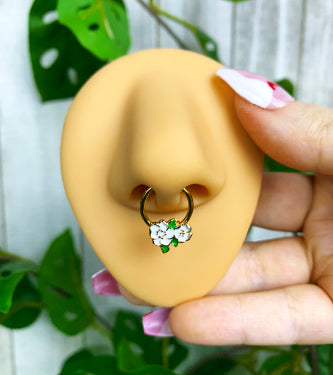
Guide the wearable part through the hole from the outside. Move slowly so the curve follows the channel instead of scraping it. Once it's through, close it securely, but don't squeeze or over-tighten.
Seamless rings and captive styles
These can be fiddly because the opening is small and the alignment matters. If your hands are shaky or your nails are long, a tool can be a sanity-saver.
What it should feel like
A good jewelry change might feel odd, snug, or mildly sensitive. It should not feel sharp, tearing, or impossible.
If you get the piece in, clean with saline again and leave it alone. Don't keep rotating it just to admire your work. Enjoy the mirror moment, then let your nose settle.
Help My Nose Ring Is Stuck or Sore
This is the part nobody talks about enough. Sometimes the jewelry change doesn't go neatly, and that doesn't mean you failed.
A really common issue is that the hole has shrunk slightly or sits at an angle, especially if the jewelry was out longer than you expected or your anatomy naturally tilts the channel. Creator guidance also points out that success often comes down to geometry, insertion direction, and using tools, especially for people with long nails or limited dexterity in this discussion of fit and insertion issues.
When the ring won't go in
Say you removed your stud, picked up the hoop, and suddenly the hole feels gone. Usually it isn't gone. It's just tiny, angled, or fussy.
Try this:
- Go back to a simpler piece. A straight or familiar stud is often easier to reinsert than a hoop.
- Change the angle slightly. A tiny shift can make the opening appear.
- Use lubricant or a transfer tool. Less friction usually means less irritation.
- Work with the direction of your piercing. Don't assume straight in is correct.
When it's sore after the swap
A little irritation can happen from the change itself. Your nose just had jewelry moved through it. Mild tenderness for a short time isn't shocking.
What you don't want is escalating discomfort. Stop and reassess if you notice:
- Persistent sharp pain
- Increasing redness or swelling
- A ring that feels too tight or sits crooked
- A closure that keeps catching the skin
Good call: If the new piece keeps fighting you, put the old jewelry back in if you can and try again another day, or let a professional piercer handle it.
When fit is the real problem
Sometimes the issue isn't healing at all. It's the jewelry.
A hoop that's too large may hang strangely. One that's too small may press in a way that irritates the nostril. A closure style that looks easy online can feel impossible if your piercing angle is unusual. If a piece keeps refusing to sit right, don't keep forcing the same style. Change the geometry, not your patience.
Choosing Your Next Look and Keeping It Fresh
Once you've done your first successful swap, the whole world of nose jewelry opens up. That's the reward.
Now you get to think about style and comfort together. A tiny stud gives a clean, everyday look. A delicate hoop softens the face and changes your profile in a really noticeable way. A bolder ring or gem becomes part of your whole vibe, even with minimal makeup and messy hair.
Pick jewelry you'll actually enjoy wearing
Material matters, especially if your skin gets reactive. Smooth finishes, secure closures, and a shape that matches your anatomy usually matter more than chasing the trickiest design first.
After the change, keep aftercare going with saline twice daily, and skip alcohol or hydrogen peroxide, as noted earlier in the piercing guidance. Your piercing may be healed, but it still appreciates a little calm after being disturbed.

Build a small rotation
You don't need a giant collection right away. Start with a few reliable pieces that cover different moods.
- One easy everyday stud for low-effort wear
- One hoop that fits your nostril comfortably for the look you've probably wanted all along
- One standout piece for going out, photos, or whenever you want extra shine
If you want styling ideas before you buy, BodyCandy has a fun nose piercing fashion style guide.
You're not just changing nose ring jewelry now. You're figuring out which shapes, fits, and finishes feel most like you.
Ready to switch things up? Browse the latest styles at BodyCandy and find a nose ring you'll be excited to wear.