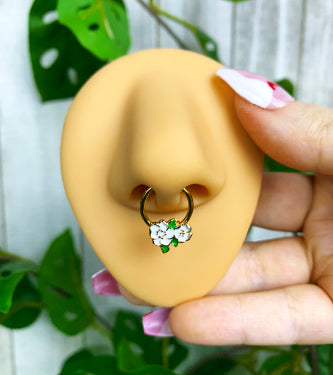




















You spot a blue gem for your nostril, helix, or tragus, fall a little in love, and then the product title hits you with 1 carat sapphire. Cute. Slightly intimidating. Also not nearly as straightforward as jewelry listings make it sound.
For body jewelry, carat weight is only one piece of the story. A 1 carat sapphire can read sleek, bold, delicate, or oddly bulky depending on its shape, cut, and setting. In a piercing, those details matter fast because you are working with a tiny canvas. What looks balanced in a ring can feel huge in a nostril stud or sit too high in cartilage jewelry.
That is why sapphire advice written for engagement rings misses the point for piercing shoppers. You are probably not asking whether a stone feels grand enough for a center setting. You want to know if it will look polished in a small space, hold up to daily wear, and give you that rich color without paying for marketing fluff.
Sapphire earns its reputation for good reason. It is associated with classic fine jewelry, comes in a range of colors, and is widely loved for its durability, which makes it more practical for piercings than many softer gems. It also has that premium look people want when plain crystal feels a little too basic.
The useful question is not “Is 1 carat a lot?” The useful question is “How will 1 carat look and behave in my specific piercing?” That is what makes sapphire shopping for body jewelry feel less random, and a lot more fun.
So You Want a Sapphire for Your Piercing
You're scrolling for a nostril stud at 11:42 p.m., find a deep blue stone that looks expensive in the best way, and then the title throws out 1 carat sapphire like that clears everything up. For body jewelry, it really doesn't. In a piercing, the same stone can read crisp and refined or weirdly oversized depending on where you plan to wear it.
That gap between gemstone marketing and real-life wear is why sapphire shopping gets confusing fast. Ring advice tends to focus on drama and center-stone presence. Piercing jewelry plays by different rules. A gem has to look good on a tiny canvas, sit comfortably, and survive regular life, including sleep, hair snags, and the occasional headphone battle.
Why sapphire has such a pull
Sapphire gives you that polished fine-jewelry look without drifting into overly formal territory. Blue is the commonly understood version, and it works especially well in body jewelry because it brings strong color even in small stones. If you like the idea of a gem with a little story behind it, sapphire is also the September birthstone for body jewelry lovers.
It also fits a lot of piercing styles.
- Minimal looks get a small hit of color that still feels clean.
- Curated ears get more depth when one blue stone breaks up a lineup of plain metal ends.
- Gift pieces feel more personal than basic clear crystal, especially if birthstones matter to you.
A sapphire can do a lot in a very tiny space. That is the appeal.
The part piercing shoppers actually need to know
For body jewelry, the stone's job goes beyond sparkle. You are choosing how much color shows from the front, how high the setting sits off the skin, and whether the piece will feel easy to wear every day.
That matters more in piercings than people expect. A gemstone that looks balanced in a ring can feel clunky in a tragus. A stone that seems modest on paper can take over a nostril stud. Sapphire is popular partly because it has the durability and color people want, but the smart question is how that 1 carat translates to your specific piercing and your actual wear habits.
That's where the fun starts.
What a 1 Carat Sapphire Actually Looks Like
You click on a sapphire end for your nostril stud, see “1 carat,” and your brain probably pictures something boldly visible from across the room. In piercing jewelry, that label can be a little sneaky. It tells you how much the stone weighs. It does not tell you how wide the top will look once it is set against skin.
A 1 carat sapphire has a fixed weight. The look on the ear or nose can still shift a lot depending on the cut and the setting. That difference matters more in body jewelry than in larger pieces, because piercings give a gem very little room to hide bad proportions.

Why size can feel surprising
Sapphire has good density, so a 1 carat stone often presents a smaller face-up look than shoppers expect if they have diamond size charts floating around in their heads. Then cut enters the chat. A sapphire with more depth can hold a lot of its weight below the visible top, which means you are paying for carat weight that your piercing may not really show off.
For body jewelry, the face-up view usually matters most.
That is the part people see in a flat, helix, nostril, or tragus piercing. If the stone sits deep or the setting is tall, the piece can start reading bulky instead of luxe, especially in small placements where every millimeter counts.
What 1 carat looks like in actual piercings
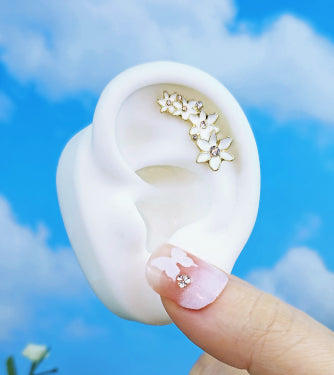
A 1 carat sapphire can look pretty substantial in body jewelry. In a nostril stud, it may feel larger than many people want for daily wear. In a flat or helix piece, it can become a strong focal point. In a tragus, it can crowd the area fast if the setting is thick.
That does not mean 1 carat is too big. It means placement decides whether it looks refined, dramatic, or just awkwardly oversized.
Here's the cheat sheet:
- Nostril studs: 1 carat can read bold and dressy very quickly
- Helix and flat earrings: 1 carat often works better here because there is more visual space
- Tragus jewelry: the same stone may look heavier and more crowded
- Lobe stacks or curated ears: a 1 carat sapphire can easily become the anchor piece in the lineup
If you already love sapphire's color story, this guide to the September birthstone sapphire for body jewelry gives more style context for why it shows up so often in piercing setups.
Why two 1 carat sapphires can give completely different vibes
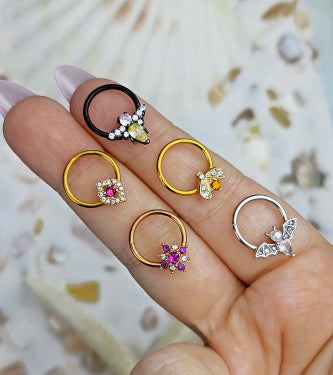
Shape changes the whole mood. A round sapphire can look compact and punchy. An oval or pear can spread that color across the surface in a way that feels a little larger from the front. Then the setting adds another layer. Bezel, prong, and low-profile ends all frame the stone differently, and that changes how much gem you notice.
So if you are shopping for a luxe piercing piece, carat weight is only one clue. The smarter questions are: How much of the sapphire shows from the top? How high does it sit? Does the cut give you visible color in a small space?
That is what makes a sapphire look expensive in a piercing. Clean proportions, strong color, and a setting that does not fight the anatomy.
Natural vs Lab Created Sapphires
At this point, the price tags can start acting wild.
You'll see natural sapphire and lab-created sapphire used side by side, and shoppers often assume one is “real” and one is “fake.” That's not a useful way to think about it. The better question is what you want from the stone in your piercing: rarity, budget-friendliness, cleaner appearance, or a mix of all three.
What most piercing shoppers actually care about
For body jewelry, people usually want four things:
- A color that looks rich, not washed out
- A stone that can handle regular wear
- A price that makes sense for a small piece of jewelry
- Clear info about what they're buying
Natural sapphire can absolutely be the dream option if you love the idea of a mined gem with its own history and character. But natural stones come with more variables. Color can vary. Clarity can vary. Treatments can enter the picture. That matters a lot if you're paying extra for a stone marketed as special.
The treatment issue nobody explains well
A big point of confusion is the difference between natural and unheated.
Those are not the same thing. The premium for a verified unheated natural sapphire can be material, and buyers should know that “natural” doesn't automatically mean untreated. Low-temperature treatments that are harder to detect can still be present, as discussed in this gemology-focused video on treatment verification.
That's why paperwork matters more as your budget goes up. If a seller is charging a rarity premium, you want credible verification, not just dreamy adjectives.
If a natural sapphire is expensive because of its story, make sure the story comes with proof.
Natural vs Lab-Created Sapphire at a Glance
| Feature | Natural Sapphire | Lab-Created Sapphire |
|---|---|---|
| Origin | Formed in nature | Made in a controlled setting |
| Look | Can show natural variation and inclusions | Often looks more uniform |
| Price feel | Usually higher, especially with rarity claims | Usually more budget-friendly |
| Treatment questions | Important to ask about | Usually simpler buying decision |
| Body jewelry use | Great if you want a natural gem and verified details | Great if you want the sapphire look with fewer surprises |
Which one makes sense for piercings
For a nostril stud, tragus piece, or cartilage earring, lab-created sapphire often makes a lot of practical sense if your main goal is that saturated blue look without paying for rarity you can barely see once the jewelry is on.
Natural sapphire makes more sense when you care about provenance, collect fine jewelry, or want a meaningful gem in a piece you'll keep long term. If you go that route, ask direct questions about treatment and whether any lab report is included.
Neither choice is wrong. They just solve different problems.
Is a Sapphire Right for Your Piercing
You spot a blue gem online, picture it in a nostril stud or flat-back helix piece, and then the practical questions hit. Will it hold up to sleep, hair-brushing, earbuds, and that one towel that catches everything? For a lot of piercings, sapphire is a smart yes.
Sapphire is a hard-wearing gemstone, which is a big deal in body jewelry because piercings take more daily contact than people expect. A ring can be babied. A cartilage stud gets bumped, twisted, and slept on.

Why sapphire works well in piercings
For body jewelry, durability is really about keeping that crisp, glossy look. A gemstone that resists everyday wear is less likely to end up looking tired after months of rubbing against pillowcases, headphones, or makeup brushes.
That makes sapphire especially appealing for pieces you leave in often, like:
- Nostril studs, where you want color without a fragile feel
- Helix, flat, and conch piercings, which deal with frequent bumps
- Tragus jewelry, where a low-profile stone can still add a rich pop of color
- Lobe stacks, if you want a polished birthstone vibe that can handle regular wear
A sapphire in a piercing reads a little different than a sapphire in a ring. In a small setting, the magic is less about huge size and more about saturated color, clean sparkle, and a setting that does not annoy you by lunchtime.
The metal matters just as much as the gem
Here's the part that trips people up. The sapphire usually is not the reason a piercing gets cranky. The metal is often the bigger issue.
If your skin is sensitive, pair the stone with body-safe materials such as implant-grade titanium or solid gold. BodyCandy's guide to hypoallergenic jewelry for sensitive skin is a helpful check before you buy, especially if you've had mystery irritation before.
A beautiful gem in bad metal is like putting luxury tires on a wobbly bike. The fancy part does not fix the underlying problem.
Setting style can make or break the piece
For piercings, setting design affects comfort almost as much as appearance.
- Bezel settings cover the edge of the stone and usually feel smoother against skin and hair
- Prong settings show more of the gem, but they need careful finishing so they do not snag
- Low-profile settings tend to feel better in cartilage and nostril placements because they sit closer to the body
This is one of those insider details that saves regret. A gorgeous sapphire can still be irritating jewelry if it sticks up too high or catches every sweater, towel, and strand of hair you own.
If you want a gem that looks luxe in a small piercing, holds up well, and brings strong color without shouting for attention, sapphire fits beautifully. The best results come from choosing the right placement, the right metal, and a setting that feels good on an actual human ear or nose, not just in a product photo.
How Much Does a 1 Carat Sapphire Cost
You spot a listing for a 1 carat sapphire nostril stud and the price looks weirdly low. Then another one shows up at several times the cost. Same carat weight. Totally different price tag.
That happens because 1 carat tells you weight, not beauty, rarity, or how the stone will look once it is set in body jewelry. In piercings, that difference matters even more. A tiny gem has to do a lot of visual work.

Why one stone can cost far more than another
Price usually rises or falls based on a few core traits working together, not on carat weight alone.
- Color. Rich, even color is usually the first thing people notice, and often the first thing that pushes price up.
- Clarity. Tiny internal marks are normal, but obvious inclusions can make the stone look sleepy or cloudy.
- Cut. Two sapphires can weigh the same while one looks bright and lively and the other looks dark or flat.
- Origin. Some mining locations carry collector prestige, which can raise the price fast.
- Treatment status. Unheated sapphires and stones with clear disclosure often cost more than heated or less-documented options.
What actually matters for body jewelry
For a ring, a buyer might care a lot about origin papers and collector language. For a nostril stud, rook, or flat-back cartilage piece, the better question is simpler. Does the sapphire look good at a glance?
Body jewelry is viewed in flashes. Someone sees the pop of color, the brightness, and whether the piece looks polished on your ear or nose. They are not inspecting the gem with tweezers and a loupe.
So yes, a rare sapphire can cost a lot more. But in a small piercing, paying extra for prestige you cannot really see is a little like buying designer lining for a jacket no one opens.
A realistic price mindset
If your goal is everyday body jewelry, the sweet spot is often a sapphire that looks vivid face-up, is cut well for sparkle, and is set in metal that can handle daily wear. That can be a smarter buy than chasing the fanciest origin story.
If your budget is bigger, then documentation, treatment details, and rarity may matter more to you. That is fine too. Just match the spending to the mission. A luxe everyday tragus stud and a collector gem are two different purchases.
One more insider tip. The stone is only part of the bill. The setting, the metal quality, and the build of the jewelry can change the final price a lot, especially for pieces meant to stay in around the clock. If you want your purchase to hold up, brush up on how to make your jewelry and body jewelry last before you buy.
Shopping Smart and Caring for Your Sapphire
Buying sapphire body jewelry gets easier fast when you stop asking “Is 1 carat good?” and start asking better questions.
The biggest one is simple. How does the stone look in the piece I'm buying? A sapphire's value and beauty depend heavily on its cut, and cutters sometimes keep extra weight from the rough even when it leaves the gem looking dull or smaller face-up, as explained in this cutting-focused video. For piercings, that can be the difference between refined sparkle and a stone that just sits there.

A smarter shopping checklist
Before you buy, run through this:
- Ask about the setting height. Low-profile designs usually wear better in piercings.
- Look at the stone face-up. You want even color and a lively look, not a watery center.
- Check the metal. Prioritize materials your skin already tolerates well.
- Read treatment details carefully. Especially for natural sapphire listings.
- Match the stone to the piercing. A size that feels perfect in a lobe can overwhelm a tragus.
- Use a trusted jewelry care routine. BodyCandy's guide on how to make your jewelry and body jewelry last is helpful for the maintenance side.
If you want one concrete product example, BodyCandy carries sapphire jewelry options including a genuine blue sapphire nose ring in 14K white gold, which is the kind of piece where stone, metal, and wearability all matter together.
How to clean sapphire body jewelry at home
Cleaning doesn't need to be dramatic.
- Take the jewelry out only if your piercing is fully healed and you can safely remove it. If not, get help from a professional piercer.
- Use lukewarm water and a little gentle soap. Nothing harsh.
- Clean around the stone carefully. A soft cloth works well.
- Rinse thoroughly. Soap film can make a sapphire look dull.
- Dry it completely before storing or reinserting.
What to avoid
A few habits can make nice jewelry look tired faster:
- Skipping cleaning for too long lets buildup mute the stone's color.
- Using aggressive cleaners can be rough on the metal or finish.
- Ignoring loose settings can turn a secure stud into a lost-stone situation.
Clean gemstones sparkle better, but clean settings matter just as much. Gunk under the stone can kill the whole look.
A sapphire doesn't need constant babying. It just needs sensible care and a setting that suits the way you live.
Ready to give your piercing that polished blue-pop energy? Browse BodyCandy for body jewelry styles that match your vibe, and if you're choosing between metals, stones, or settings, keep this guide handy while you shop.