













Your jewelry tray is full, but somehow every piece feels the same. You want something bolder than plain silver, more playful than a basic gem, and a little less expected than another black hoop. That's exactly where zebra piercing jewelry starts to feel fun again.
The best part is that zebra doesn't have to mean costume-y or over the top. It can be a tiny striped end in your helix, a graphic septum ring, or a statement navel piece that makes a simple outfit look finished. If you love jewelry that feels expressive without losing its edge, this pattern has range.
Ready to Walk on the Wild Side
You know that moment when you're standing in front of the mirror, twisting the same old stud and thinking, “I need a change”? Zebra piercing jewelry hits that sweet spot between classic animal print energy and body jewelry attitude. It feels fearless, but it's still wearable.
Some people go all in with a bold striped hoop. Others keep it subtle with a small accent piece that flashes black and white when the light hits. Either way, zebra works because it gives your piercing a point of view.

Fashion loves animal prints because they read as expressive without needing a ton of extra styling. Piercing jewelry follows the same logic. A striped piece can turn a minimal ear stack into something memorable, or give a healed septum and nostril combo a sharper look.
There's a reason body jewelry keeps getting more creative. The global body piercing jewelry market was valued at USD 59.8 billion in 2023 and is projected to grow, reflecting how many people are using jewelry for personal style, including patterned pieces made for standout self-expression, according to this body piercing jewelry market report.
If you're into the symbolism side of statement style, BodyCandy's take on animal magnetism in jewelry symbolism is a fun rabbit hole.
Zebra print works best when it looks intentional. One strong piece often says more than five random ones.
Defining Your Stripes The Styles
Zebra piercing jewelry isn't a piercing type. It's a design pattern applied to different kinds of jewelry. That one detail clears up a lot of shopping confusion, because the first question isn't “What is a zebra piercing?” It's “What jewelry shape do I need for my piercing?”
Here's the quick visual breakdown.

Studs and flat backs
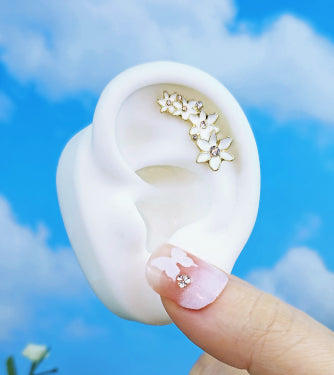
Studs are usually the easiest way to wear a pattern without overwhelming your look. They work well in lobes, helix piercings, tragus placements, and some nostril styles.
The zebra effect might show up on the decorative top, the gem setting, or a printed face plate. With flat backs, the striped detail is usually visible only on the front, while the post stays plain.
Rings and hoops
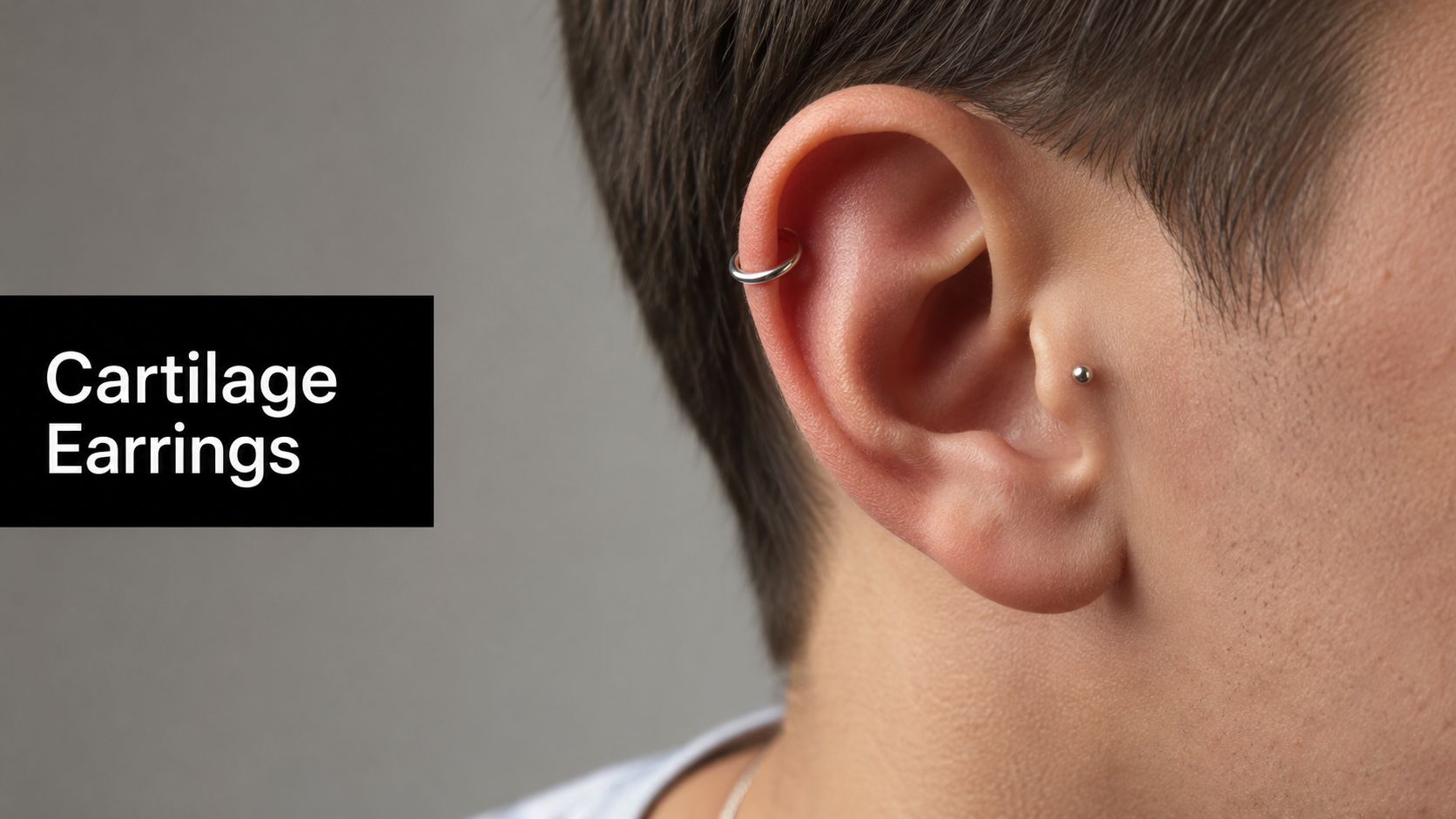
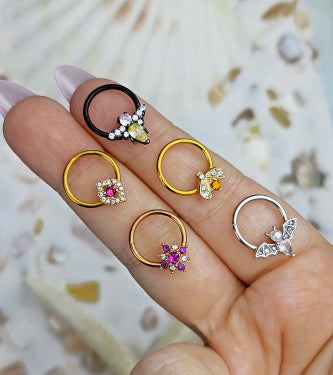
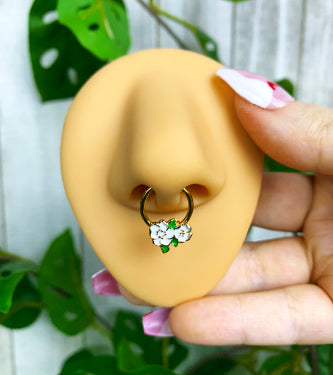
Rings give zebra print more room to show off. You'll see this style in septum jewelry, ear hoops, nostril rings, and some cartilage looks.
On rings, the pattern may be etched, coated, inlaid, or added through a decorative charm. If you're after a graphic, high-contrast vibe, this is where zebra really pops.
Barbells and curved barbells
Barbells can carry zebra styling in a bunch of ways. Think industrial bars, nipple barbells, tongue barbells, eyebrow jewelry, or curved pieces for navels.
Sometimes the striped look appears on the ball ends. Sometimes it runs along a visible decorative element attached to the bar. The key is remembering that the patterned part and the part that sits inside your body may not be made the same way.
Quick shopping rule: Identify the jewelry shape first, then the zebra design, then the material.
Dangles, plugs, and statement pieces
If your style leans extra, this is your lane. Dangle ends can bring movement to a lobe, cartilage ring, or navel piece. Stretched lobes may use zebra plugs or tunnels for a loud, graphic finish.
A simple way to think about it:
| Jewelry style | Common placements | Zebra effect usually shows on |
|---|---|---|
| Stud | Lobe, helix, tragus, nostril | Front-facing end |
| Ring | Septum, ear, nose | Outer visible surface or charm |
| Barbell | Industrial, nipple, navel, eyebrow | Ends or decorative add-ons |
| Dangle or plug | Lobe, stretched lobe, navel | Front panel or hanging charm |
If you know your piercing type and jewelry shape, you're already shopping smarter.
Safe and Stylish Zebra Jewelry Materials
Here's the part too many trend posts skip. A zebra pattern can look amazing and still be the wrong choice if the material touching your piercing isn't body-safe. If you've got sensitive skin, this matters even more.
For initial piercings, materials must meet ASTM and/or ISO standards for implantation under Montana body piercing jewelry regulations. That's the kind of standard you want to use as your personal baseline even when you're shopping decorative pieces for healed piercings.

Start with the part that touches your body
If you remember one thing, make it this. The wearable surface matters more than the print.
High-end piercing jewelry often uses implant-grade titanium (ASTM F136) and 14K solid gold, both known for being biocompatible, hypoallergenic, and corrosion-resistant, as described in this Mr. Zebra piercing materials page. That's why piercers and educated shoppers keep coming back to those materials.
Zebra Tattoo & Body Piercing, a family-owned studio established in 1984, says it exclusively uses implant-grade titanium, 14k or 18k gold, and surgical steel jewelry in sterile environments. It also lists entry-level hypoallergenic options starting at $30 and premium implant-grade titanium flat backs starting at $80 on its Walnut Creek studio listing.
If you want a deeper explainer on metals, BodyCandy's guide to what metal body jewelry is made of is worth bookmarking.
Where patterned jewelry gets tricky
The confusion starts when the zebra effect comes from enamel, resin, acrylic, paint, or coating. Those decorative materials may be totally fine on an outer charm or front-facing top, but they're a different story if they rub directly against the fistula or sit inside a healing piercing.
The problem is simple. Many patterned pieces look cute in photos, but product descriptions don't always tell you what part is metal and what part is decorative.
Keep the safest material in the post, bar, wearable surface, or threadless pin. Let the pattern live on the visible top or charm whenever possible.
What to look for before you buy
Use this checklist when you're eyeing zebra piercing jewelry:
- Ask what touches skin: If the striped part sits inside the piercing channel, skip vague listings.
- Look for implant-grade titanium or solid gold: Those are the easiest materials to trust for sensitive ears and healed piercings.
- Check how the pattern is made: Inlay, enamel, printed coating, and acrylic all behave differently.
- Treat mystery materials as a red flag: If a listing doesn't clearly explain the base metal, move on.
Bold jewelry should never force you to gamble with irritation.
Will It Work For Your Piercing
Not every piercing shows off a pattern the same way. Zebra jewelry looks strongest where there's enough visible surface to read the design. If the piece spends most of its time tucked into a fold of cartilage, the stripes may not hit the way you hoped.
That's why placement matters almost as much as style.
Best spots for showing the pattern
Flat piercings, conch placements, lobes, and navels usually give patterned jewelry room to breathe. A front-facing top in any of those areas can display black-and-white contrast clearly, especially if the piece sits still instead of rotating all day.
Industrial setups can also work if the zebra detail is concentrated on the visible ends rather than stretched across the whole bar. For nostril jewelry, a small zebra accent can be cute, but tiny pieces naturally read more subtle than dramatic.
Hidden and high-friction placements
Consumers often encounter disappointment. Many shoppers love the idea of a zebra helix or septum piece, but some placements hide part of the design, flip inward, or take more everyday friction from sleep, glasses, makeup, or repeated movement.
A frequently asked question is whether zebra-pattern jewelry works for hidden piercings like the helix or septum. Data linked from this Instagram post featuring a hidden helix zebra piece says 62% of users with hidden piercings switch jewelry within 6 months due to pattern fading or irritation.
A pattern can be technically wearable and still be a bad visual choice for the placement.
A few practical calls:
- Helix: Cute for small zebra studs, but check whether your hair covers it most of the time.
- Septum: Great for contrast, but choose a finish that won't irritate if the decorative area sits close to skin.
- Daith: Usually not the best canvas if your main goal is seeing the print.
- Navel: One of the easiest placements for a bold motif.
If you're unsure what styles fit which placement, BodyCandy's guide to cartilage jewelry and which style works in which piercing can help you narrow it down.
Don't ignore sizing
Even the best-looking zebra piece fails if the gauge, length, or diameter is off. A too-tight ring can irritate. A too-long bar can snag. Patterned jewelry tends to pull focus, so fit problems become obvious fast.
When in doubt, match the shape and size you already wear comfortably in that piercing.
How to Rock Your Zebra Jewelry
Styling zebra jewelry is basically a balancing game. You want the pattern to look deliberate, not accidental. Once you get that right, it's one of the easiest statement details to wear.

If your style is clean and minimal
Wear one striped piece with an otherwise simple setup. A zebra flat-back in a curated ear with plain titanium or gold neighbors looks sharp without trying too hard.
An all-black outfit plus a small zebra nostril stud also hits. The jewelry becomes the little surprise that makes the whole look feel finished.
If you like a louder stack
Mix texture instead of piling on more patterns. Pair zebra with polished metal, a single gem, or a smooth hoop. That contrast keeps the look fashion-y instead of chaotic.
You can also build around one anchor piece:
- Ear stack: Zebra stud, plain huggie, tiny metallic accent
- Septum look: Zebra ring with clean brows and simple lip gloss
- Navel styling: Zebra curve with a fitted tank or cropped tee
- Lobe setup: One striped dangle with plain second and third holes
The easiest styling win is letting one zebra piece lead while everything around it stays supportive.
Match the mood, not the print
You don't need zebra shoes, zebra nails, and zebra jewelry all at once. Usually, that's too much. What works better is matching the energy of the piece. Sharp blazer, vintage tee, monochrome fit, slick eyeliner, silver stack, soft gold hoop combo. Zebra can swing edgy, glam, or playful depending on what you pair it with.
If your jewelry feels loud in the tray, try it on before judging. A lot of patterned pieces read more polished once they're in the piercing.
Where to Find Your Perfect Piece
A good zebra piece has to pass three tests. It should fit your piercing, suit your style, and use materials you trust. If one of those is missing, keep scrolling.
When you shop online, slow down and read the listing like a picky friend. Product photos can show the vibe, but the details tell you whether the piece is worth wearing.
Your quick buying checklist
- Material clarity: The listing should clearly state the base material.
- Design placement: You should know whether the zebra detail is on the top, charm, ring surface, or wearable area.
- Fit details: Gauge, length, diameter, and closure style should be easy to find.
- Photo quality: You want multiple angles, not one blurry front shot.
- Store policies: Returns, exchanges, and contact info should be easy to locate.
The smartest mindset to shop with
Don't buy a patterned piece just because the front looks cute. Buy it because the whole build makes sense for your piercing. That's how you get jewelry you'll keep wearing.
If you've got sensitive skin, be extra selective with decorative coatings and mystery materials. If you're shopping for a hidden piercing, think hard about whether the pattern will even show. And if you want a statement look, choose one placement where zebra can really shine instead of forcing it into every piercing you have.
The sweet spot is simple. Bold design, safe materials, solid fit.
Ready to find a piece that fits your style and your standards? Shop BodyCandy for body jewelry that lets you build a look you'll want to wear on repeat.