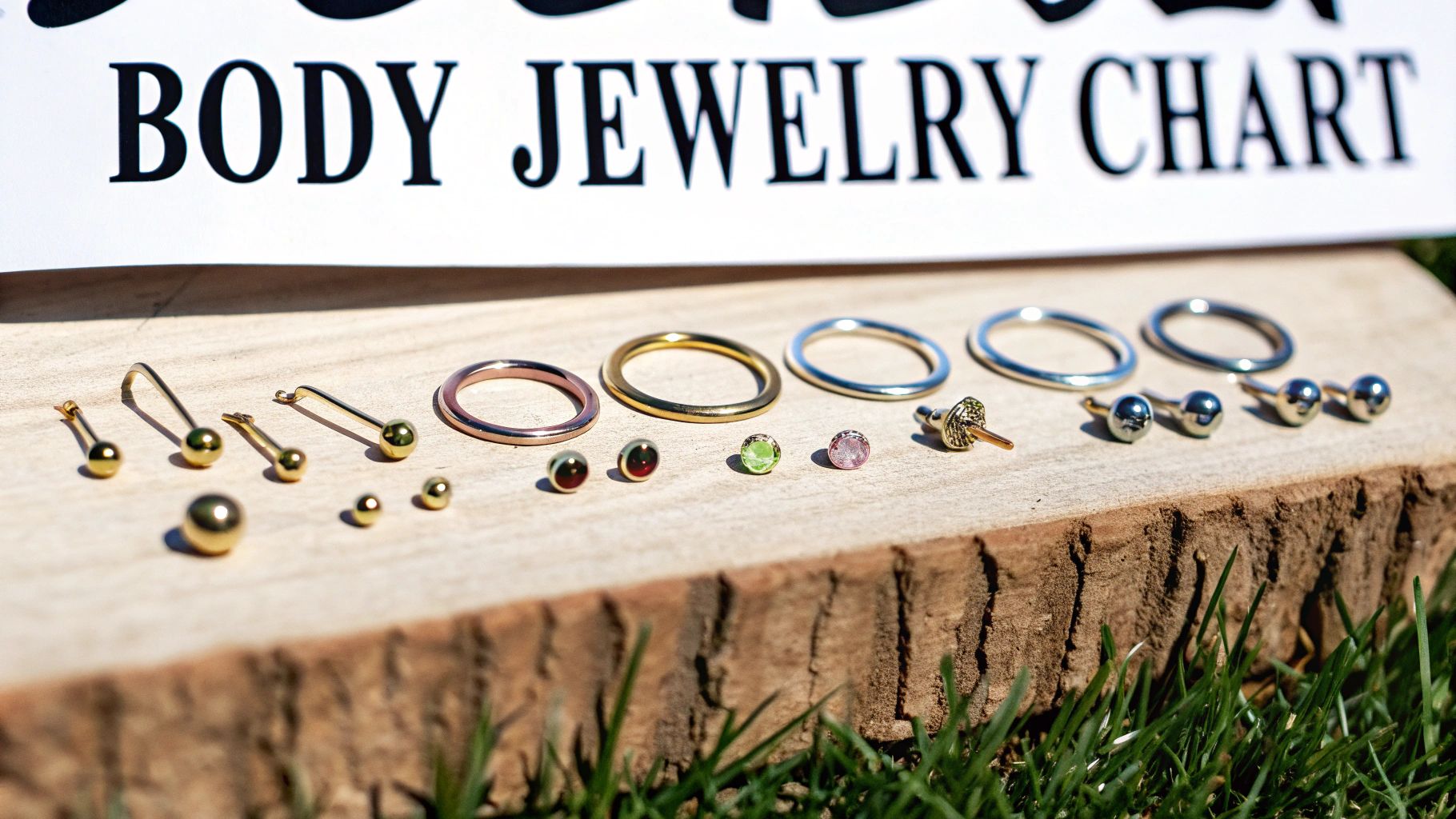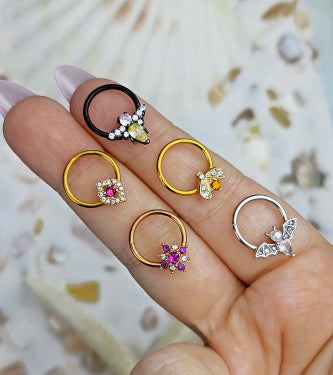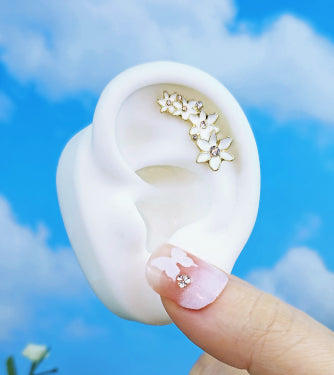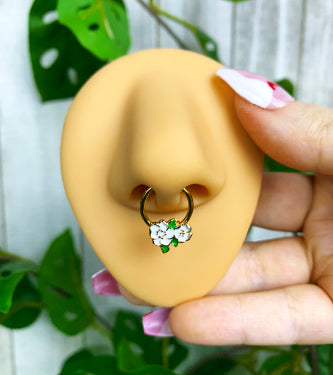


















So, that brand-new piercing you were so excited about is now red, itchy, and generally making you miserable. Sound familiar? Let's talk about hypoallergenic jewelry. In a nutshell, it's jewelry made from materials that are way less likely to make your skin freak out. Think of it as the VIP section for your sensitive skin, designed to keep your piercings happy and irritation-free.
Why Your New Piercing Hates Your Jewelry
You got that awesome new piercing, you've been a saint with your aftercare routine, and yet, it's still angry. What gives? Nine times out of ten, the problem isn't something you did—it's the jewelry you put in it. The real culprit is almost always a metal allergy, and the number one offender is nickel.
For a surprisingly large number of people, nickel is a major no-go. It's actually one of the most common triggers for allergic contact dermatitis. When jewelry with nickel rests against your skin, your immune system can go on high alert, thinking it's a threat. The result? That awful itchiness, redness, and swelling.
This is where understanding hypoallergenic jewelry becomes a total game-changer for your piercing journey. Catching the signs early can save you a ton of discomfort. If you're worried, our guide on allergic reactions and piercing irritation is a great place to start figuring things out.
Decoding Common Jewelry Terms
Trying to read jewelry descriptions can sometimes feel like you're learning a new language. Words like "hypoallergenic," "nickel-free," and "biocompatible" get thrown around a lot, but what do they really mean for your piercing?
Let's break it down. To make things super simple, here's a quick cheat sheet to help you tell these key terms apart.
Decoding Jewelry Terms: A Quick Guide
Use this cheat sheet to understand the key differences between jewelry terms for sensitive skin.
| Term | What It Means For You | Ideal For |
|---|---|---|
| Hypoallergenic | This jewelry is made from materials with a very low risk of causing an allergic reaction. It's your safest bet for avoiding irritation. | Anyone with sensitive skin or new, healing piercings. |
| Nickel-Free | This label means the jewelry contains no nickel, the most common metal allergen. It's a great starting point for sensitive skin. | People with a known or suspected nickel allergy. |
| Biocompatible | This is the gold standard. It means the material is safe to live inside the human body without causing a negative reaction. | Fresh piercings, long-term wear, and extremely sensitive individuals. |
So, while the term "hypoallergenic" literally just means "less likely to cause an allergy," it doesn't guarantee a 100% reaction-free experience for every single person on the planet. Everyone's body is different.
However, choosing pieces made from high-quality, biocompatible metals is the best way to stack the deck in your favor. With metal allergies affecting roughly 10-15% of people worldwide, it's no wonder the demand for safer body jewelry has skyrocketed. By picking materials your body can happily coexist with, you’re setting your piercing up for a smooth, stylish, and irritation-free future.
The Best Materials for Happy Piercings
Alright, let's get into the A-list celebrities of the piercing world—the materials that get the red carpet treatment from even the most sensitive skin. When you're picking out new jewelry, especially for a fresh or fussy piercing, the metal you choose is everything. Think of it like picking a roommate; you want someone who is clean, respectful, and won't cause any drama.
So, who makes the cut for this VIP list? We're diving into the absolute best of the best, breaking down what makes each one a rockstar for your piercings. Forget the confusing jargon; we’re giving you the straight-up scoop on what to look for and why.
This quick visual breaks down the core problem—and the solution—when it comes to angry piercings.
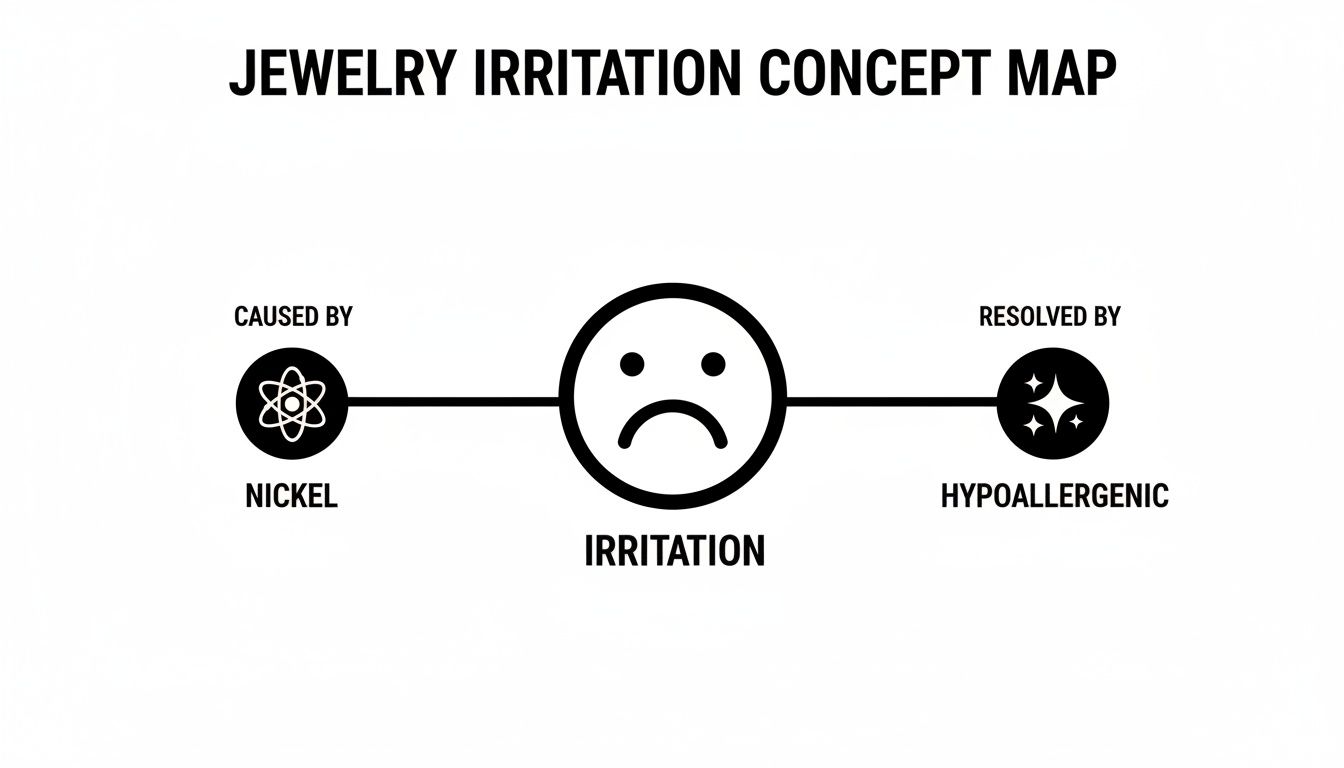
Simply put, nickel is usually the bad guy causing irritation, and switching to safer materials is the sparkling solution. Now, let's meet the materials that make up that solution.
Implant-Grade Titanium: The Undisputed Champion
If hypoallergenic jewelry materials had a superhero league, titanium would be its Superman. It's incredibly strong, surprisingly lightweight, and completely biocompatible. That means your body basically doesn't even notice it's there, which is exactly what you want for a happy piercing.
It’s the same material used for medical implants like bone screws and joint replacements, so you know it's serious about not causing trouble. One of the best things about titanium is that it contains zero nickel, making it the safest bet for anyone with extreme sensitivities or brand-new piercings. It's the go-to recommendation from professional piercers for a reason.
Pro Tip: Look for jewelry labeled as ASTM F-136 or ISO 5832-3 compliant. This is the official designation for implant-grade titanium, ensuring it meets strict standards for body implantation. It's your guarantee of purity and safety.
Plus, titanium can be anodized to create a whole rainbow of vibrant colors without using any sketchy dyes or coatings. You get all the style without any of the risk. Want to learn more? Check out our deep dive into the need-to-know facts about titanium body jewelry.
Implant-Grade Surgical Steel: The Reliable Classic
Surgical steel is one of the most common materials you'll see, and for good reason. It's durable, affordable, and has that classic polished look. Think of it as the trusty Honda Civic of the body jewelry world—it’s reliable, gets the job done well, and won't break the bank.
But there's a catch. The term "surgical steel" can be a bit vague. For piercings, you need to be looking for implant-grade stainless steel, specifically grades like ASTM F-138 or ISO 5832-1.
Why does the specific grade matter so much? Because while these top-tier steels are considered hypoallergenic, they do contain a very small amount of nickel. The key is that the nickel is bound within the metal in such a way that it's extremely unlikely to be released and cause a reaction in most people. For the vast majority of piercing lovers, implant-grade steel is a perfectly safe and stylish option.
Niobium: The Colorful Underdog
Meet niobium, the cool, artsy cousin in the hypoallergenic family. It's an elemental metal, just like titanium, which means it’s inherently pure and contains no nickel, lead, or other weird additives. It’s another fantastic biocompatible option that’s incredibly safe for sensitive skin.
What makes niobium really stand out is its ability to be anodized into even more vivid and electrifying colors than titanium—including a true black. It’s slightly heavier than titanium but still very comfortable for all-day wear. While it’s not quite as tough as titanium and can be bent more easily, it's a perfect choice for pieces like septum clickers, captive bead rings, and earrings where you want a pop of vibrant, guaranteed-safe color.
Solid Gold: The Timeless Luxury
For those who love a touch of classic luxury, solid gold is a beautiful and often hypoallergenic choice. But here's the crucial detail: karat matters. The higher the karat, the purer the gold and the less it's mixed with other metals (alloys) that could cause irritation.
Here's a quick guide to gold for your piercings:
- 14k or 18k Gold: This is the sweet spot. It offers the perfect balance of purity and durability, making it high enough in gold content to be safe for most people but strong enough to withstand daily wear.
- 24k Gold: While this is pure gold and completely nickel-free, it's actually too soft for most body jewelry. It can easily get scratched or bent out of shape.
- Gold-Plated or Gold-Filled: Be careful with these! The thin layer of gold can wear away over time, exposing the base metal underneath, which often contains nickel. For piercings, especially healing ones, solid gold is always the way to go.
Choosing the right material is the single most important step in building a body jewelry collection you can wear comfortably and confidently. By sticking to these top-tier options, you're giving your piercings the love and quality they deserve.
Understanding What Makes Jewelry Truly Safe
So, you're starting to get the hang of the A-list materials for your piercings. But let's dig a little deeper, past the basic labels you see on the packaging. You’ve probably seen terms like "nickel-free" and "biocompatible" thrown around, but what do they actually mean when it comes to keeping your piercing happy and healthy?
Think of it this way: choosing "nickel-free" jewelry is a great start. It’s like knowing your food is gluten-free if you have a gluten sensitivity—you're avoiding the main culprit. But "biocompatible" is the next level. That’s like knowing your food is also organic, non-GMO, and packed with nutrients. It’s not just about dodging the bad stuff; it's about embracing what’s genuinely good for your body.
Beyond the Nickel-Free Label
Seeing "nickel-free" on a package is a big green flag, especially since nickel is the number one troublemaker for skin allergies. But here's the real tea: "nickel-free" doesn't always tell the whole story. Some jewelry might be technically free of nickel but still be made from other low-quality metal alloys that can irritate super-sensitive skin.
It’s an excellent first step, for sure, but it’s not the final word on safety. When you’ve got a healing piercing, you need to be extra picky. You need a material that your body won't just tolerate but will actually welcome without putting up a fight.
That’s where the idea of biocompatibility becomes your new best friend. To learn more about how to navigate these choices, check out our quick take on hypoallergenic jewelry for sensitive skin for some extra pointers.
The Gold Standard: Biocompatibility
Biocompatibility might sound like a complicated science term, but it's actually pretty simple. It just means a material can hang out inside the human body without causing drama or a negative reaction. For body jewelry, this is the ultimate safety benchmark.
Imagine you have a new roommate. A "nickel-free" roommate might just be someone who doesn't throw loud parties. A "biocompatible" roommate, on the other hand, is the one who helps with chores, respects your space, and generally makes life better. That's what biocompatible materials do for your piercing.
Materials like implant-grade titanium (ASTM F-136) and niobium are the very definition of biocompatible. They are so non-reactive that your body's immune system basically ignores them, which lets your piercing heal peacefully. This is exactly why professional piercers overwhelmingly recommend these materials for fresh piercings.
Not all metals are created equal, especially when it comes to a healing piercing. Some are perfect for getting you through that initial healing stage, while others are best saved for when you're fully healed. Here’s a quick guide to help you choose the right material for the right time.
Material Safety Guide for Your Piercing's Healing Stage
| Material | Safe For Fresh Piercings | Safe For Healed Piercings | Key Safety Feature |
|---|---|---|---|
| Implant-Grade Titanium | ✅ | ✅ | The gold standard; extremely non-reactive and trusted for medical implants. |
| Niobium | ✅ | ✅ | Highly biocompatible and can be anodized into vibrant, nickel-free colors. |
| 14k-18k Solid Gold | ✅ | ✅ | Must be nickel-free and alloyed with safe metals like palladium. |
| Implant-Grade Stainless Steel | ✅ | ✅ | ASTM F-138 certified steel has very low nickel release, safe for most. |
| Gold-Filled | ❌ | ✅ | A thick layer of gold over a base metal; not for healing piercings. |
| Sterling Silver | ❌ | ⚠️ (Short-term) | Tarnishes and can cause skin discoloration; not for internal wear. |
| Surgical Stainless Steel (unspecified) | ❌ | ⚠️ (Use caution) | Vague term; can contain high levels of nickel and other irritants. |
| Acrylic/Bioplast | ❌ | ✅ | Good for temporary wear in healed piercings but can degrade over time. |
Choosing the right material from the start makes all the difference in a smooth healing journey. Stick with the checkmarks in the "Safe For Fresh Piercings" column until your piercer gives you the all-clear!
Why Piercing Safety Is a Global Concern
The push for safer jewelry isn't just a fad; it's a global health movement. As more people become aware of allergic reactions and infections from sketchy metals, standards and certifications have gotten much stricter worldwide, especially around nickel.
Europe and North America are leading the charge on this. In fact, Europe holds a 36% market share in the body jewelry world, with North America right behind at 35%, which shows just how seriously people are taking piercing safety. These regulations are in place to protect you, but knowing the difference yourself is your best defense. You can find more details about these body jewelry market trends and regulations here.
When you choose truly safe, biocompatible jewelry, you're doing more than just buying a cute accessory. You're investing in your body's health and making sure your piercing journey is smooth, comfortable, and stylish from day one.
Spotting the Signs of a Metal Allergy
So, your piercing is acting up. Is it just the normal healing grumbles, or is your skin staging a full-blown rebellion against your new jewelry? It can be tricky to tell the difference, but your body usually sends some pretty clear signals when it's not happy. Learning to read these signs is the first step to figuring out if a metal allergy is the culprit.
First, let's clear something up: is it just irritation, or a true allergy? An allergy is your immune system going into overdrive, mistakenly seeing a substance—in this case, a metal like nickel—as a threat. Simple irritation, on the other hand, might just be from snagging your jewelry, sleeping on it wrong, or using a cleaning product that's too harsh.

Common Symptoms of an Allergic Reaction
If you're dealing with an allergy, the symptoms aren't just going to pack up and leave after a day or two of babying your piercing. They’ll likely stick around or get worse as long as you're wearing the offending jewelry. Keep an eye out for these classic signs of allergic contact dermatitis.
Here’s a quick checklist of what to watch for right at the piercing site:
- Persistent Redness and Swelling: A little redness is totally normal for a new piercing, but if the area stays red, puffy, and angry-looking for days on end, that’s a major red flag.
- An Unrelenting Itch: This is the hallmark symptom. We’re not talking about a little tickle; this is that deep, frustrating itch that makes you want to scratch your piercing like crazy.
- Rash or Bumps: You might notice tiny bumps, blisters, or a full-on rash developing on the skin that's directly touching the jewelry. Sometimes, these can even become weepy or crusty.
- Skin Discoloration: The skin around the piercing might turn dark, almost like a bruise. This is a different kind of discoloration than the temporary tarnish you might see from metals like sterling silver.
It's worth remembering that a metal allergy can pop up at any point in your life, even if you’ve never had problems before. It’s an acquired sensitivity, which means that repeated exposure to an allergen like nickel can eventually push your body over the edge and trigger a reaction.
Allergy vs. Infection: What Is the Difference?
Knowing the difference between an allergic reaction and an infection is super important, because you treat them differently. While both can show up with redness and swelling, an infection has a few tell-tale signs of its own.
An infection is caused by bacteria and usually brings more severe symptoms to the party. Look for yellowish or greenish discharge (pus), skin that feels hot to the touch, and significant pain or tenderness. If you think you have an infection, don't try to tough it out at home—it’s time to see a doctor or your professional piercer right away.
What to Do If You Suspect an Allergy
If your symptoms are screaming "allergy" (itchy, rashy, but no signs of infection), the first step is simple: take out the problem jewelry. Clean the area gently with a saline solution and just let it breathe for a bit.
Your next move is to switch to a truly hypoallergenic material. This is where all your new knowledge about biocompatible metals comes in handy! Swap out that mystery metal for something your body will love, like a piece from our collection of implant-grade titanium belly rings or 14k solid gold nose rings.
By paying attention to your body and choosing high-quality materials, you can say goodbye to irritation and hello to happy, healthy piercings that look and feel amazing.
How to Shop for Hypoallergenic Jewelry Like a Pro
So, you've figured out your skin is sending you an SOS, and you're ready to find some gorgeous jewelry that actually plays nice. Awesome! But let's be real, diving into the world of body jewelry can feel like a lot. Let's make you a confident shopper who knows exactly what to look for.
Forget the guesswork. Shopping smart for hypoallergenic jewelry is all about knowing the right clues to look for. With a few key pointers, you'll spot the good stuff from a mile away and leave those low-quality, irritating pieces in the dust. Think of this as your personal checklist for a happy piercing.
Read Product Descriptions Like a Detective
The secret to finding safe jewelry is often hiding in plain sight: the product description. Any reputable seller will be totally upfront about their materials—they’re proud of the quality they're offering! So don't just skim the details, dig into them.
Instead of a vague label like "surgical steel," you want to see specific grades. Keep an eye out for phrases that scream quality, like:
- ASTM F-136 Implant-Grade Titanium: This is the gold standard for a reason. It’s a specific designation that guarantees the material is certified for safe, long-term wear inside your body.
- ASTM F-138 Implant-Grade Stainless Steel: This tells you it’s a high-quality steel with an extremely low nickel release, making it a safe bet for most people.
- 14k or 18k Solid Gold: The keyword here is "solid." This means the entire piece is a high-quality gold alloy, not just a thin coating over some mystery metal.
If a seller is cagey about the specific material grade, take that as a major red flag. When it comes to your body, transparency is everything. You have every right to know exactly what you're putting in your piercing!
Understand Coatings and Finishes
Let's talk color. That vibrant blue industrial bar or glossy black labret stud looks amazing, but how did it get that way? This is where understanding coatings becomes critical for your skin's health.
A high-quality finish like PVD (Physical Vapor Deposition) coating is your best friend. This process bonds a super-thin layer of material (often titanium nitride) to the base metal on an atomic level. It’s incredibly durable, biocompatible, and won't flake, chip, or expose the metal underneath. You can find some fantastic examples in Bodycandy's collection of PVD coated belly rings.
On the flip side, cheap "plating" is your piercing’s worst enemy. This is just a thin layer of paint or mystery metal electroplated onto a base, which is usually packed with nickel. It wears off quickly from friction and your body's natural oils, leaving your skin in direct contact with the irritating metal below. No thanks!
Why Price Can Be a Major Clue
Everyone loves a bargain, but with body jewelry, a price that seems too good to be true probably is. High-quality, biocompatible materials like implant-grade titanium and solid gold simply cost more to produce. If you spot a belly ring for just a couple of dollars, chances are it's made from a cheap, questionable alloy that your skin will absolutely hate.
Think of it this way: investing in quality jewelry is an investment in your piercing's health and happiness. You don’t have to break the bank, but a piece that costs a little more upfront will save you from the discomfort, irritation, and potential doctor's visits later. It’s a small price to pay for total peace of mind.
Online shopping has opened up a whole new world of amazing jewelry, with projections showing online sales will make up over 32.7% of all jewelry revenue by 2025. This gives you incredible access to safe, hypoallergenic options from trusted sellers everywhere. You can read more about these evolving consumer expectations for jewelry. Now that you’re armed with this knowledge, you can navigate the market like a true pro and pick out pieces that are perfect for you.
Keeping Your Hypoallergenic Jewelry in Top Shape
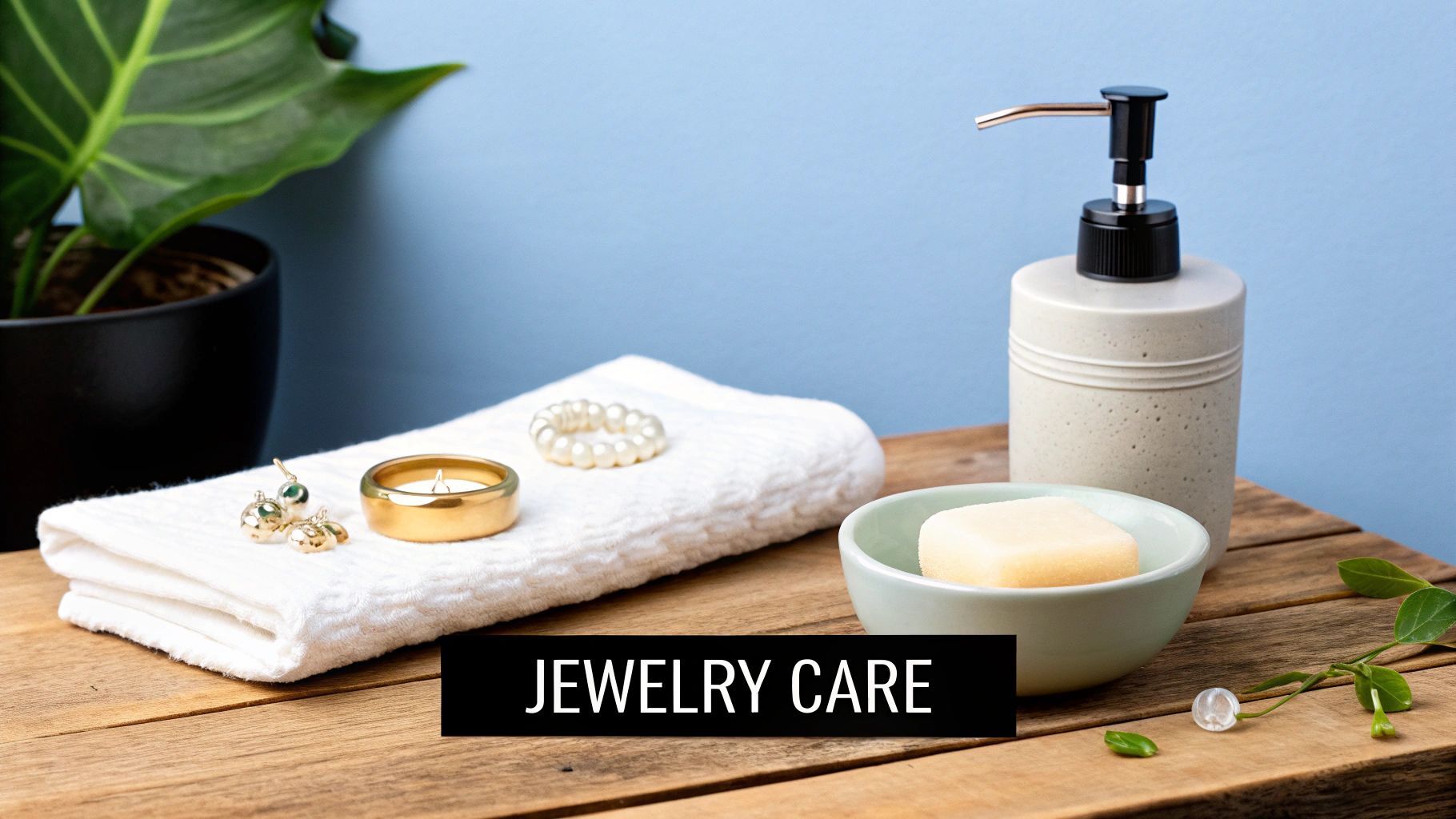
So, you’ve done the hard work and picked out some gorgeous, high-quality jewelry your skin actually loves. Awesome! Now, let’s talk about keeping those pieces sparkling and safe for the long haul. The real secret to making your hypoallergenic jewelry last is proper care—it keeps it looking amazing and maintains its skin-friendly magic.
Think of it this way: daily life is tough on jewelry. Lotions, natural skin oils, dust, and sweat can all build up on your favorite pieces, dulling their shine and creating a grimy film that could trap bacteria. A quick, regular cleaning routine is the best way to keep everything fresh and ready to wear.
Simple Cleaning for Different Materials
Not all hypoallergenic metals are built the same, so you can't just toss them all in the same cleaning solution. Using the wrong stuff can seriously damage delicate finishes or coatings. Here’s a quick rundown on how to clean your favorites right at home.
For the real workhorses like implant-grade titanium, niobium, and implant-grade surgical steel, cleaning is an absolute breeze. These materials are incredibly durable and non-porous, so they don't need much fuss.
- What you’ll need: Just a little bit of mild, fragrance-free soap (think liquid castile soap) and some warm water.
- How to do it: Get some suds going, gently wash your jewelry, rinse it really well with clean water, and then pat it dry with a soft, lint-free cloth. That's it!
For pieces with a bit more flair, like solid gold or jewelry with colorful PVD coatings, you’ll want to be a bit more gentle to protect that finish.
Pro Tip: Never, ever use harsh chemicals like bleach, alcohol, or chlorine on your body jewelry. They can strip away coatings, corrode the metal's surface, and ultimately lead to some nasty irritation. Stick to the simple, safe stuff!
Protecting Coatings and Delicate Pieces
If you've got a vibrant PVD-coated piece, like one of Bodycandy’s awesome anodized titanium industrial barbells, the goal is to keep that color looking brilliant. While PVD is tough stuff, you don't need to scrub it aggressively. That same gentle soap and water method works like a charm. The key is to avoid abrasive cloths or brushes that might scratch up the surface over time.
When it comes to solid gold, especially higher karats which are a bit softer, a gentle wash is also your best bet. A simple soak in warm, soapy water for a few minutes, followed by a gentle dry with a soft cloth, will bring back its shine without risking scratches. By treating your jewelry with a little care, you make sure every piece stays safe, stunning, and ready to show off for years to come.
Got Questions About Hypoallergenic Jewelry? We've Got Answers.
Still have a few things buzzing around in your head? You're not alone! The world of hypoallergenic jewelry can feel a little confusing, especially when you're just trying to figure out what works for your body. Let's tackle some of the most common questions we get so you can feel like a total pro.
Think of this as your go-to FAQ for keeping your piercings happy and stylish. We're here to turn any lingering confusion into pure confidence.
Can I Suddenly Develop a Metal Allergy?
Oh, absolutely. It's way more common than you'd think. A metal allergy isn't something you're necessarily born with; it's an acquired sensitivity that can pop up after your body has been exposed to an allergen over and over again. You might wear cheap, nickel-heavy jewelry for years with zero issues, and then one day... BAM. Your body decides it's officially had enough.
It’s kind of like a cup filling up with water one drop at a time—eventually, it’s going to overflow. This is exactly why switching to high-quality, hypoallergenic jewelry is a smart move for everyone, not just for people who already know they have sensitive skin. It’s the best way to keep future flare-ups from ever happening.
Is All Surgical Steel Safe for Piercings?
This is a huge point of confusion, so let's set the record straight: nope. The term "surgical steel" is incredibly broad and, on its own, doesn't guarantee a thing. While it sounds super official, lots of lower-grade surgical steels pack in enough nickel to trigger a nasty reaction, especially in sensitive skin. It’s often the culprit in cheap jewelry and a major source of irritation.
To make sure you're getting the good stuff, you absolutely must look for implant-grade stainless steel, specifically labeled as ASTM F-138. This grade has a very specific chemical makeup with an extremely low nickel release, making it biocompatible and safe for fresh piercings and long-term wear. Don't settle for less!
Why Is My Hypoallergenic Jewelry Still Irritating Me?
Ugh, this is the worst, but don't panic. There are a few likely reasons this could be happening. First, double-check that your jewelry is from a reputable source that actually tells you what metal you're buying. A piece just vaguely marked "hypoallergenic" without specifying the material might be hiding something.
Second, you might just be one of the unlucky few with an extremely high sensitivity. While it’s rare, some people can even react to the teeny-tiny amount of nickel in top-quality implant-grade steel. If this sounds like you, your best bet is to go for 100% nickel-free materials like implant-grade titanium or niobium. They are the safest options out there, period.
Finally, think about other factors. Is the jewelry the right size and shape for your piercing? Are you cleaning it properly? Sometimes, the irritation isn't about the metal at all but comes down to a poor fit or a slip-up in your aftercare routine.
Ready to find jewelry that finally lets your piercings heal happily? At BodyCandy, we are obsessed with quality. Explore our massive collection of implant-grade titanium and 14k gold jewelry to find your perfect, irritation-free style!