












Feeling lost in a world of gauges, millimeters, and inches? Don't worry, you're in the right place. This is your ultimate cheat sheet for decoding every body jewelry sizing chart with total confidence. Think of this as your go-to guide for figuring out what 'gauge' and 'length' really mean for your favorite piercings.
Your Quick Guide to Body Jewelry Sizes
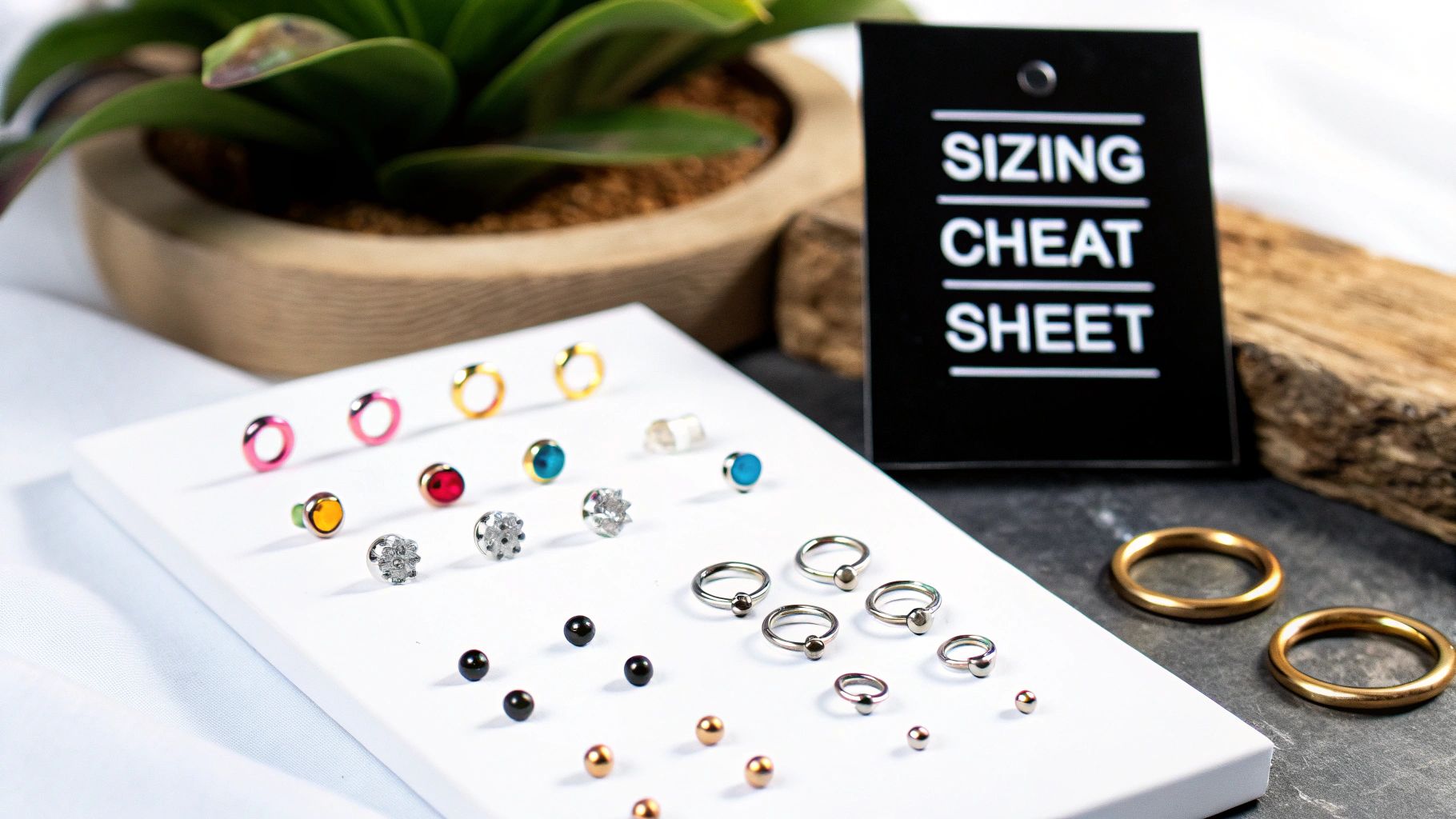
Let's be real—there's nothing more frustrating than ordering a super cute new barbell only to discover it's the wrong size when it arrives. Learning the language of body jewelry is the key to avoiding that disappointment. This guide is built to give you a quick, easy-to-scan overview so you can get back to what truly matters: picking out your next amazing piece.
The two most important measurements you'll ever see are gauge and length/diameter. Getting these right isn't just a suggestion; it's essential for a comfortable and healthy piercing.
- Gauge (g): This is all about the thickness of the post that goes through your piercing. It's a little counterintuitive, but a smaller number means a thicker bar (for example, a 14g is thicker than an 18g).
- Length/Diameter: This measures the wearable part of the jewelry. For straight or curved barbells, it's the distance between the two ends (not including the balls or gems). For hoops, it’s the internal diameter from one side to the other.
Gauge to Millimeter (mm) Quick Conversion Chart
Sometimes, you just need a quick translation between gauge and millimeters. This table is perfect for those moments when you're trying to match up sizes on the fly.
| Gauge (AWG) | Millimeters (mm) | Common Piercings |
|---|---|---|
| 20g | 0.81mm | Nostril, some earlobes |
| 18g | 1.0mm | Nostril, ear cartilage (helix, tragus) |
| 16g | 1.2mm | Septum, lip, ear cartilage, eyebrow, earlobes |
| 14g | 1.6mm | Navel (belly button), tongue, nipple, industrial |
| 12g | 2.0mm | Nipple, navel, tongue, stretched piercings |
| 10g | 2.4mm | Stretched piercings (septum, ears, etc.) |
| 8g | 3.2mm | Stretched piercings (septum, ears, etc.) |
Remember this is a quick-reference guide. If you're ever in doubt, it's always best to consult with your professional piercer to confirm the exact size you need for your unique anatomy.
Why Sizing Matters So Much
Getting the sizing right isn't just about comfort; it's the bedrock of the entire body jewelry world. In fact, the global market, valued at around USD 13.5 billion in 2023, is built on accurate, standardized sizing. The widespread adoption of these charts after 2010 actually helped cut down on industry-wide returns by a whopping 25%—proving just how vital a good body jewelry sizing chart is for keeping both customers and piercings happy. If you're curious, you can find more about the market's reliance on accurate sizing data online.
This guide will give you the confidence to measure your piercings correctly and choose the perfect fit every single time, making sure your new jewelry looks and feels fantastic from the moment you put it in.
Understanding Gauges, Lengths, and Diameters
Let’s get into the nitty-gritty of what makes body jewelry fit perfectly. When you’re scrolling through our site, you’ll see three key measurements pop up again and again: gauge, length, and diameter. Nailing these down means you’ll never have to guess when buying jewelry again. Think of it as learning the secret language of your piercings!
First up is gauge (g), which is simply the thickness of the jewelry post that goes through your piercing. Here's the one slightly counterintuitive thing to remember: the smaller the gauge number, the thicker the jewelry. So, a beefy 14g navel ring is much thicker than a delicate little 20g nose stud. This is all based on the American Wire Gauge (AWG) system, an old-school standard that’s used across the industry. Want to dive a little deeper into the history? Check out our article on the standards of gauge sizing for body jewelry.
Length and Diameter Explained
Next, we have length and diameter. These measurements define the "wearable surface" of your jewelry—basically, the part that actually sits inside your piercing. Getting these right is crucial for making sure your piercing has enough room to breathe without the jewelry being too loose or annoyingly snug.
- Length: We use this measurement for any straight or curved barbells, like what you’d wear in your tongue, industrial, or navel piercing. It’s the distance between the two screw-on ends—it does not include the balls or gems themselves.
- Diameter: This one’s for any circular jewelry, like hoops, captives, or septum clickers. It measures the internal width of the ring from one inner edge to the other at its widest point.
Pro Tip: A super common mistake is measuring the entire piece of jewelry, decorative ends and all. Always measure just the wearable length or the internal diameter. Getting this wrong is a surefire way to end up with jewelry that's way too big!
Understanding these basics is exactly why body jewelry sizing charts are a piercee’s best friend. Those charts ensure that an 18g (1mm) piece you buy for your cartilage has the same thickness every time, just as a 14g (1.6mm) barbell will always fit your navel piercing just right. This kind of precision is a huge deal for the health of your piercing—in fact, sticking to proper sizing has been shown to reduce the risks of piercing migration by an impressive 22%. You can dig into market analyses that show just how much these industry standards impact piercing health.
How to Measure Your Piercings at Home
Ready to become your own sizing pro? Honestly, knowing how to measure your jewelry at home is a total game-changer. It gives you all the power to shop online with total confidence, knowing you’re picking the perfect piece every single time. All you need is your current favorite piece of jewelry and a ruler that has millimeter markings.
Don't have a ruler handy? No worries at all. A simple tape measure will do the trick, or you can even find a printable ruler online to download—just double-check that it’s printed to the correct scale. The whole point is to get a super-accurate measurement so you can find a new piece that fits just as perfectly as the one you already know and love. Let's get to it!
Measuring Barbells for Length
When you're measuring a straight or curved barbell (think jewelry for your navel, nipple, or industrial piercing), you only want to measure the "wearable" part of the post itself.
- Start by taking the decorative ends or balls off your jewelry.
- Lay the bar down flat against your ruler.
- Measure the distance from the very start of the bar to the very end. Do not include the length of the balls or any part of the threading that sticks out. And that’s it! The measurement you see in millimeters is your length.
Measuring Hoops for Diameter
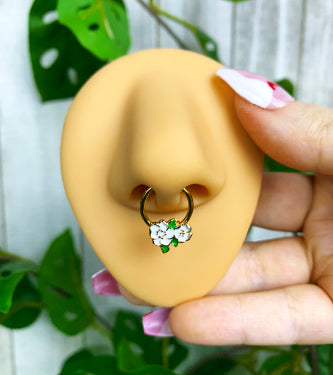
For any kind of circular jewelry like hoops, captive bead rings, or septum clickers, the key measurement you're looking for is the internal diameter.
- Simply place your ring on top of the ruler.
- Measure the space inside the ring at its absolute widest point. Make sure you’re measuring from one inner edge directly across to the opposite inner edge, not from the outside of the metal.
If you need a little extra help, we've put together a handy visual guide. This simple infographic breaks down the process for measuring gauge, length, and diameter for your jewelry.
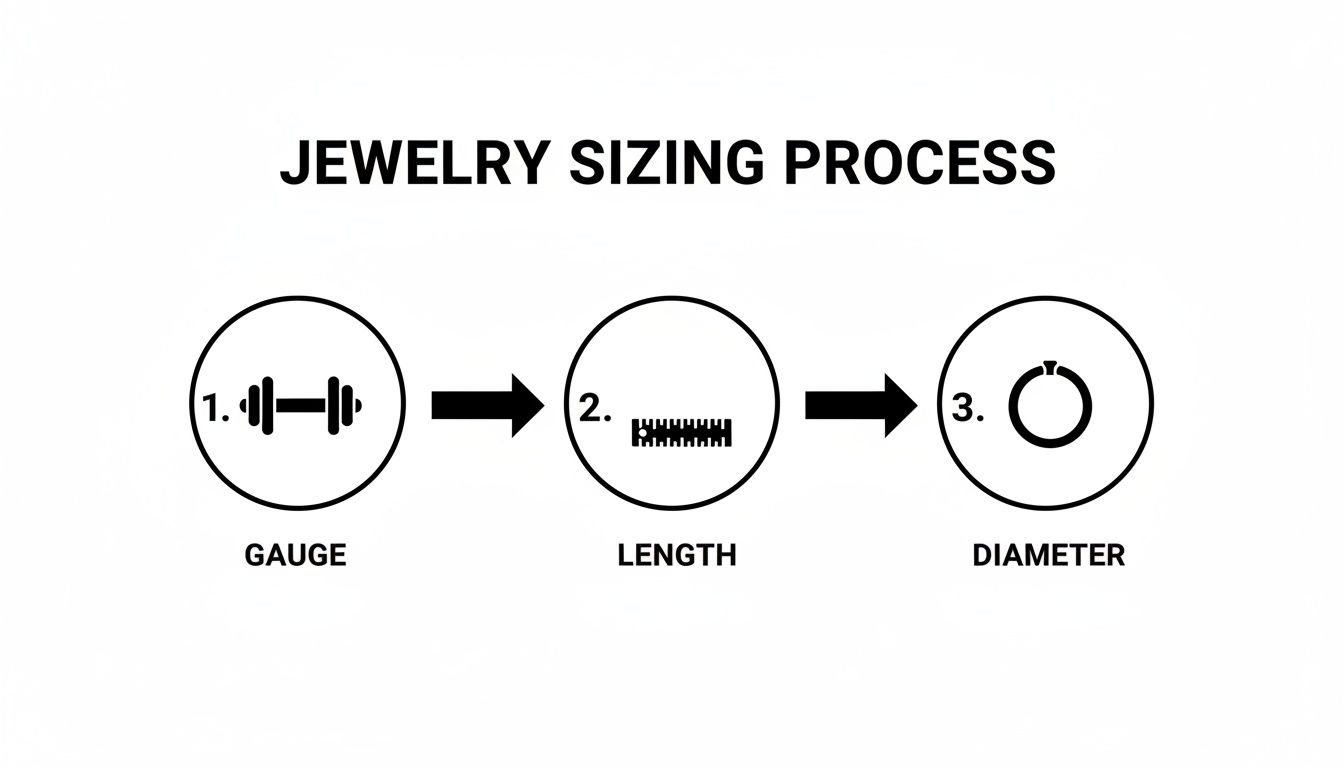
This visual just goes to show that finding your perfect fit is as easy as checking the thickness (that's your gauge), the wearable length, or the internal diameter. Once you’ve mastered these simple steps, you'll be able to navigate any body jewelry sizing chart like you’ve been doing it for years. For more tips and tricks, you can learn more about measuring up your body jewelry in our dedicated article.
The Complete Ear Piercing Sizing Guide
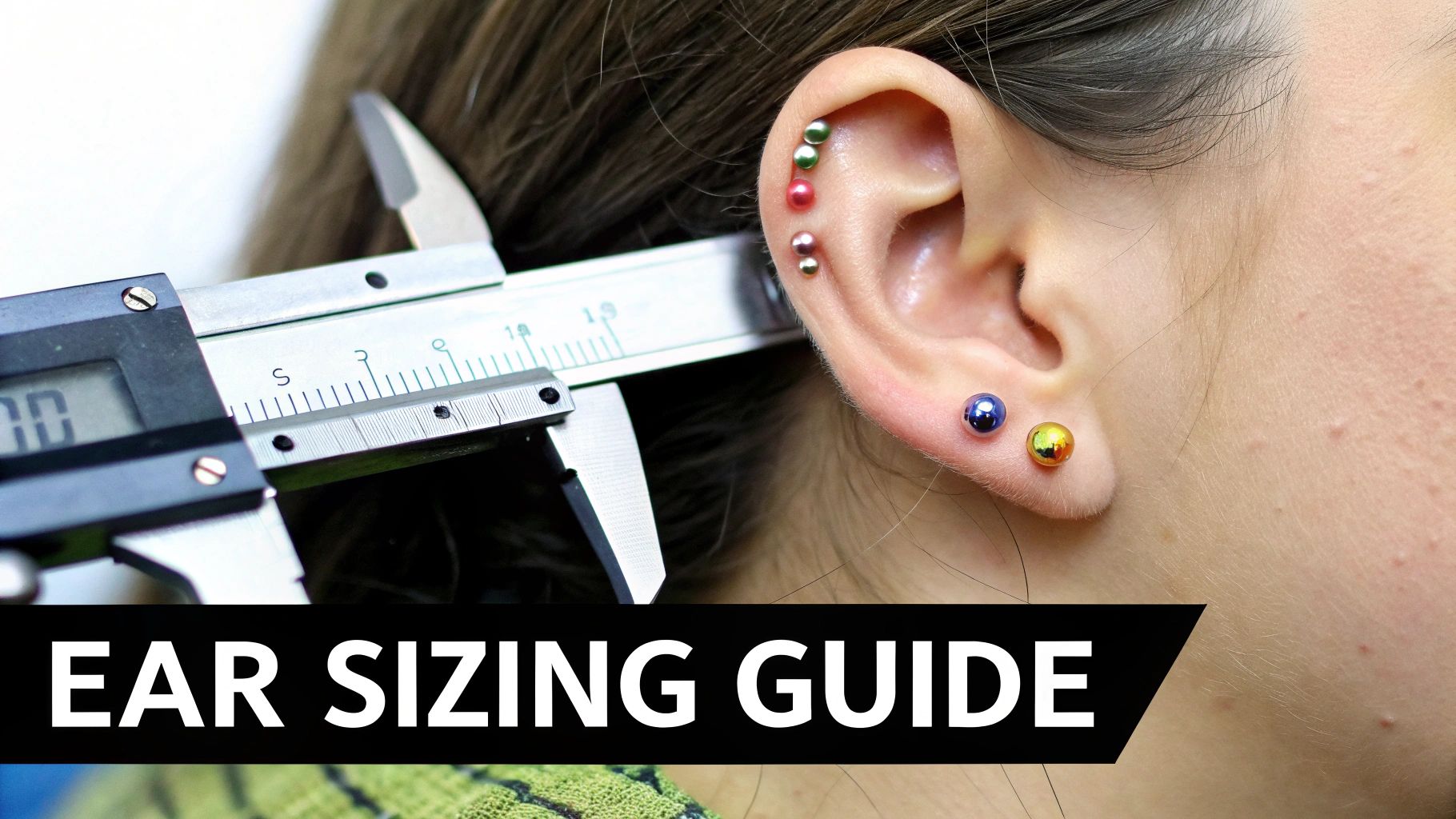
Your ears are pretty much the ultimate canvas for showing off your style, right? With so many piercing placements possible—from the classic lobe to a cool industrial bar—it's super easy to get mixed up about sizing. This part of our body jewelry sizing chart is all about your ears.
Whether you’re rocking a delicate tragus stud or a bold conch hoop, using the correct size is everything. A good fit is what keeps your piercing healthy and looking exactly how you imagined. A piece that’s too short can cause painful embedding, while one that’s too long will snag on everything. Let's make sure that never happens!
Standard Sizes for Popular Ear Piercings
While your unique anatomy is always the final say, there are standard starting sizes that professional piercers use for most people. Think of this chart as your go-to reference when you're trying to figure out the gauge and length you’ll most likely need for that new helix or rook piercing you’ve been eyeing.
Here's a quick breakdown of the most common sizes you'll encounter.
| Piercing Type | Standard Gauge (AWG) | Standard Length / Diameter |
|---|---|---|
| Earlobe | 20g or 18g | 1/4" (6mm) length |
| Helix | 16g | 1/4" (6mm) or 5/16" (8mm) |
| Tragus | 16g | 1/4" (6mm) or 5/16" (8mm) |
| Conch | 16g or 14g | 5/16" (8mm) or 3/8" (10mm) |
| Rook | 16g | 1/4" (6mm) or 5/16" (8mm) |
| Daith | 16g | 5/16" (8mm) or 3/8" (10mm) |
| Industrial | 14g | 1 1/4" (32mm) to 1 1/2" (38mm) |
It's no surprise that lobe piercings are incredibly popular, making up a huge 55% of all piercings worldwide. They're usually pierced at 20g with a 1/4 inch (6mm) post. But once you get into cartilage, the measurements get more specific. For instance, tragus hoops often start at a 5/16 inch (8mm) diameter, and conch rings can go up to 1/2 inch (12.7mm) to fit just right. You can discover more insights about piercing market trends and sizing needs online.
Pro Tip: For a fresh piercing, especially cartilage, your piercer will use a slightly longer bar to leave room for swelling. Don't even think about downsizing until you're fully healed and your piercer gives you the okay!
Why Your Ear Shape Matters
Seriously, these charts are just a starting point. Your anatomy is totally unique! That snugger hoop might be perfect for your forward helix if you have a smaller ridge, while someone with thicker cartilage will definitely need a larger diameter for the same piercing.
Take an industrial, for example. The barbell has to be long enough to span your ear perfectly without putting any pressure on the cartilage. You should always measure the distance between your two piercing holes to find the ideal length. At the end of the day, your comfort is key. Choose jewelry that complements your unique ear shape for the best look and feel.
Sizing Guides for Facial and Oral Piercings
Alright, let's talk about the jewelry that gets you noticed the most—the pieces that accent your smile, your expressions, and your overall vibe! Sizing for your facial and oral piercings is super important, not just for looks but for keeping your smile happy and healthy.
From a delicate nostril stud to a statement septum clicker, the right fit makes all the difference. An ill-fitting piece can cause some serious irritation, while the perfect one feels like it’s barely there. This guide will help you nail the measurements for your nose, septum, lip, and tongue piercings.
Nailing Your Nose and Septum Sizing
When it comes to nostril piercings, the most common gauges you'll run into are 20g or 18g. These are thin enough for a delicate look but still sturdy enough to handle daily life. The style you pick—like an L-bend, a classic nose screw, or a flat-back labret—will also play a big part in how it feels and fits.
For septum piercings, diameter is everything! It’s all about the aesthetic you’re going for, whether that's a subtle peek-a-boo ring or something more dramatic.
- For a snug fit: You'll want to measure the shortest distance from your piercing hole to the bottom edge of your septum. This gives you the smallest internal diameter you can wear comfortably, which for most people is around 8mm (5/16").
- For a dramatic hoop: If you want your septum ring to hang a little lower for a bolder look, just add a millimeter or two to your snug-fit measurement. A 10mm (3/8") hoop is a popular choice that provides that more noticeable look without being overwhelming.
Lip and Tongue Piercing Perfection
Oral piercings are a whole different ball game because you have to think about your teeth and gums. A labret stud that's too long can constantly rub against your gums, which is a major no-no for dental health. On the flip side, a tongue barbell that’s too short can cause embedding as your tissue tries to heal over it. Yikes!
Pro Tip: For any new oral piercing, your piercer will use a longer initial bar to make room for swelling. It is absolutely crucial to downsize to a shorter post once the swelling has completely gone down. This is the single most important step to protect your dental health in the long run!
Most lip piercings, like a labret or Monroe, start with a 16g post. Once you’re all healed up, you'll likely wear a shorter length, such as 8mm (5/16"), to keep the flat back disc sitting flush and comfortable against the inside of your lip.
Tongue piercings are almost always done at a 14g. The standard healed length is typically 16mm (5/8"), but your own unique anatomy might require something slightly shorter or longer. Using a comprehensive body jewelry sizing chart like this one lets you compare styles and find the perfect piece to keep both you and your piercer smiling. Getting the right fit is truly the best way to show off your personality safely and comfortably.
Navel and Nipple Piercing Sizing Essentials
Let's get into two of the most popular piercings out there—navel and nipple jewelry! Getting the size right for these areas is a big deal, not just for nailing that killer look you're going for, but for your comfort and the health of your piercing. A poor fit can lead to some serious irritation, so let’s make sure you know exactly what you’re looking for.
When it comes to navel piercings, things are usually pretty straightforward. The standard navel gauge is almost always 14g. This thickness gives a belly button ring the perfect amount of sturdiness. Where you'll see some variety is in the length.
Finding Your Perfect Belly Ring Length
While the gauge tends to stay consistent, the length of the barbell can change depending on your unique anatomy. The goal is a snug fit where the jewelry isn't pinching your skin but also doesn't have a ton of extra space to slide around.
- The Most Common Length: The go-to size for most fully healed navel piercings is 3/8" (10mm). It's the industry standard for a reason!
- Shorter Options: If you have shallower anatomy, you might find a shorter bar, like 1/4" (6mm) or 5/16" (8mm), is a much better fit.
- Longer Barbells: For those with thicker tissue around the navel or a deeper piercing, lengths like 7/16" (11mm) or even 1/2" (12mm) are available to give you the room you need.
Getting this right is key to preventing the jewelry from rubbing, getting snagged, or migrating over time. For an even deeper dive, check out our complete crash course on navel ring styles and sizing.
Nipple Piercing Sizing Basics
Nipple piercings also have standard sizes, but you'll find a little more variety in both gauge and length here. The most common gauges are 14g or 16g, with the slightly thicker 14g being the more popular choice.
The measurement that matters most here is the barbell length. To find your ideal fit, you'll want to measure the distance between your piercing holes, straight across your nipple, in millimeters. The jewelry should sit comfortably without pinching or leaving too much of the bar exposed, which is just asking for it to get snagged on clothing.
A perfectly sized bar will have just a tiny bit of space on either side, ensuring it doesn't put any pressure on the piercing. This attention to detail in your body jewelry sizing chart is what allows you to confidently choose pieces that not only look amazing but feel even better.
Common Body Jewelry Sizing Questions
Got a few questions still buzzing around in your head? You're not alone! Sizing can feel a bit mysterious at first, but don't worry, we've got your back. Think of this section as your quick-fire round of answers to the most common sizing dilemmas we hear about.
This is your personal troubleshooting guide. We're going to tackle everything from what happens if you're stuck between sizes to figuring out if your jewelry is sending you a signal that it's the wrong fit. Let's clear up that confusion so you can get back to the fun part—shopping for new pieces!
What Happens If I Wear the Wrong Gauge Jewelry?
Wearing a gauge that’s too small for your piercing might seem harmless, but it can actually let your piercing start to shrink over time. This can make it a real struggle, or even impossible, to get your original, thicker jewelry back in later on.
On the flip side, forcing in a gauge that’s too big is a recipe for disaster. You could stretch or even tear your piercing, which is not only painful but can lead to some nasty irritation. It's always best to stick with the gauge your professional piercer originally used.
My New Belly Ring Feels Tight. Is the Length Wrong?
It definitely could be! A belly ring that's too short is a big problem—it can press into your skin, causing serious irritation or even embedding itself. Nobody wants that.
A perfectly sized barbell for a healed piercing should always have a tiny bit of wiggle room on either side. If your piercing is brand new, some tightness is totally normal because of swelling. But if it's healed and still feels uncomfortably snug, you almost certainly need a longer barbell, like the standard 3/8" (10mm).
How Do I Know What Diameter Hoop to Buy for My Nose?
Here’s the best trick in the book: measure the distance from your piercing hole straight down to the bottom edge of your nostril. That measurement in millimeters is the smallest inner diameter you can wear if you're going for a super snug look.
For a fit that's a little looser and more relaxed, just add 1-2mm to that number. The most common nose hoop diameters you’ll see range from a very close-fitting 6mm all the way up to a roomier 10mm.
Ready to put all your new sizing knowledge to the test? At BodyCandy, we have an incredible collection of jewelry in just about every size you can imagine.
Shop the full collection at Bodycandy.com and find your perfect fit today!