












You're probably doing one of two very Portland things right now. You're either planning a fresh piercing and want jewelry that feels like you, or you're trying to replace a piece that fell out, started irritating your skin, or just never fit right in the first place.
That's where a lot of people get stuck. Portland has style for days, a strong piercing culture, and plenty of places to browse, but that doesn't automatically make shopping simple. Cute and safe are not the same thing. Local and properly sized are not the same thing. Sparkly and hypoallergenic are definitely not the same thing.
Welcome to the Portland Piercing Scene
You walk into a shop on a rainy afternoon thinking you'll grab a simple nose stud. Ten minutes later, you're staring at a case full of clickers, flat backs, hoops, ends, posts, gems, and mystery metals while trying to remember whether your helix takes a shorter post than your lobe. That's a normal Portland piercing moment.
Portland makes it easy to want more jewelry. The city has that mix of creative style, alternative fashion, and everyday self-expression that makes a curated ear, a sleek septum ring, or a tiny nostril sparkle feel completely at home. And this isn't some tiny niche. The global body piercing jewelry market reached USD 59.8 billion in 2023, and North America accounted for over 42% of revenue according to Cognitive Market Research's body piercing jewelry market report.

Why Portland shoppers get overwhelmed fast
The problem usually isn't lack of taste. It's too many choices mixed with too little clear information.
A lot of shoppers are trying to solve several things at once:
- Find something body-safe that won't make their piercing angry
- Match their style whether that's minimal, glam, edgy, or soft
- Get the right size for a specific spot like the tragus, helix, nostril, or septum
- Figure out what shops know their materials
That last one matters more than people think. A polished display case can still hold jewelry that looks great and behaves terribly once it's in your body.
Portland is a fun city to buy piercing jewelry in. It's also a city where you need to know how to separate aesthetic language from actual safety.
The sweet spot
The best approach is half local knowledge, half smart shopping habits. You want to know how to spot a good Portland studio, how to ask better questions, and when it makes more sense to order a specialized piece online instead of settling for “close enough.”
That's how you build a collection that looks good in selfies and feels good at 2 a.m. when your ear hits the pillow.
Choosing Materials That Your Body Will Love
Material is the part people skip because it sounds boring. Then their piercing starts itching, swelling, crusting, or getting weirdly sore, and suddenly material becomes the only thing they care about.
If you remember one thing, remember this. Your piercing doesn't care what the jewelry is called in a product description if the metal touching your skin is low quality.
The metals worth knowing
The safest shopping starts with a short list.
| Metal | Best For | Key Feature | Certification to Look For |
|---|---|---|---|
| Implant-Grade Titanium | Fresh piercings, sensitive skin | Lightweight and widely considered the gold standard for many wearers | ASTM F-136 |
| Solid 14k Gold | Healed piercings and elevated everyday wear | Precious metal with a luxe look | Ask for solid 14k, not plated |
| Niobium | Sensitive skin and simple styles | Hypoallergenic and flexible | Ask the seller to confirm material details |
| Surgical Stainless Steel | Budget-friendly options for some wearers | Common and easy to find | Ask about exact composition and nickel content |
Understand the health and safety of different jewelry materials for optimal healing and comfort.

Implant-grade titanium is the easy answer for a reason
Titanium gets recommended constantly because it removes a lot of drama. It's a strong pick for fresh piercings and for people who already know their skin gets moody around mystery metals. If a shop says “titanium,” ask what kind. Implant-grade titanium is the phrase you want, and ASTM F-136 is the certification worth looking for.
It's comparable to skincare. “Clean beauty” sounds nice, but ingredients matter more than branding. Same deal here.
Gold can be great, if it's actually gold
Solid 14k gold is a classic choice, especially if you want a warmer tone or a more polished look. The catch is that “gold” gets used loosely in jewelry marketing. Gold-plated pieces can look lovely in a photo and still be a terrible choice for a healing piercing.
Ask direct questions:
- Is it solid or plated
- What metal is underneath
- Is this suitable for a healing piercing or only for healed wear
The crystal myth that needs to go
This one trips up a lot of people because the language sounds gentle and skin-friendly. It isn't.
A local Portland discussion pointed to people looking for “crystal jewelry” because they believed it would be better for metal allergies, but the common misconception is that crystal jewelry is hypoallergenic, while the Association of Professional Piercers warns that low-quality metals containing nickel are the most frequent cause of allergic reactions in uncertified decorative materials, as noted in this Portland Reddit discussion about crystal jewelry and metal allergies.
That means the sparkle isn't the issue. The base material is.
Practical rule: Don't buy jewelry based on words like crystal, fashion, cute, luxe, or sensitive. Buy based on the actual metal and whether the seller can verify it.
What to ask before you buy
If you're standing at a counter and the label isn't clear, use these questions:
-
What is the wearable part made of
The gem or top is less important than the post, ring, or backing touching your body. -
Is it implant-grade titanium, solid 14k gold, or niobium
Ask plainly. A good seller won't get weird about it. -
Can you confirm certification or supplier details
Especially for titanium.
If you want a deeper material breakdown, BodyCandy has a useful guide on allergic reactions and piercing care and what metals and materials are right for you.
How to Vet a Portland Piercing Studio
A great piercing studio feels calm, clean, and transparent. Nobody should act annoyed because you asked what metal they use or how they sterilize tools. If they do, that's useful information.
Portland has options. As of 2026, Portland features at least five top-rated piercing businesses on Yelp, including Soda Pop Piercing and Adorn East, which tells you the local market is active and reputation matters, based on this Yelp search for body jewelry in Portland, Oregon.
What you should notice right away
The first few minutes in a studio tell you a lot.
Look for these signs:
- Clean, organized stations that don't feel cluttered or improvised
- Packaged sterile tools opened for you, not pulled loose from a drawer
- Jewelry information that's specific, not vague
- Staff who answer directly instead of relying on trendy buzzwords
If everything sounds polished but no one can tell you what metal a post is made from, that's a problem.
Questions worth asking out loud
A good studio expects questions. Ask them like you mean it.
- How is your equipment sterilized
- Do you use a brand-new sterile needle for every client
- What material do you use for initial jewelry
- Can I see examples of healed work, not just fresh piercings
- How do you size jewelry for different anatomy
That last one matters because one person's “standard” jewelry can be another person's pressure bump waiting to happen.
Shops that care about your healing usually sound patient, specific, and a little nerdy about details. That's exactly what you want.
Red flags that deserve an immediate no
Some warnings are subtle. Some aren't.
A few deal-breakers:
-
Piercing guns for cartilage or other non-lobe piercings
Walk away. -
Mystery metal starter jewelry
If they can't identify it clearly, don't let it near your body. -
One-size-fits-all sizing language
Anatomy isn't one-size-fits-all, especially for cartilage. -
Only fresh-piercing photos
Fresh work can look good for a day. Healed work reveals its actual appearance.
If you want a handy question list before booking, BodyCandy also has a professional piercing checklist for what to look for in a piercer.
Nailing the Perfect Fit and Style
Most jewelry problems that people call “bad luck” are sizing problems. If your hoop looks too tight, your stud tilts strangely, or your tragus jewelry keeps acting up, the fit is probably off.
The Portland shopping experience, for example, can get frustrating. A Portland-area Facebook user looking for jewelry for a tragus piercing highlighted a local supply gap for specialized sizes, which matters because generic pieces can cause healing trouble when they aren't sized properly, according to this Portland-area Facebook post about finding tragus jewelry.

Learn the three sizing words that matter
You do not need to become a jewelry engineer. You just need to know these three terms.
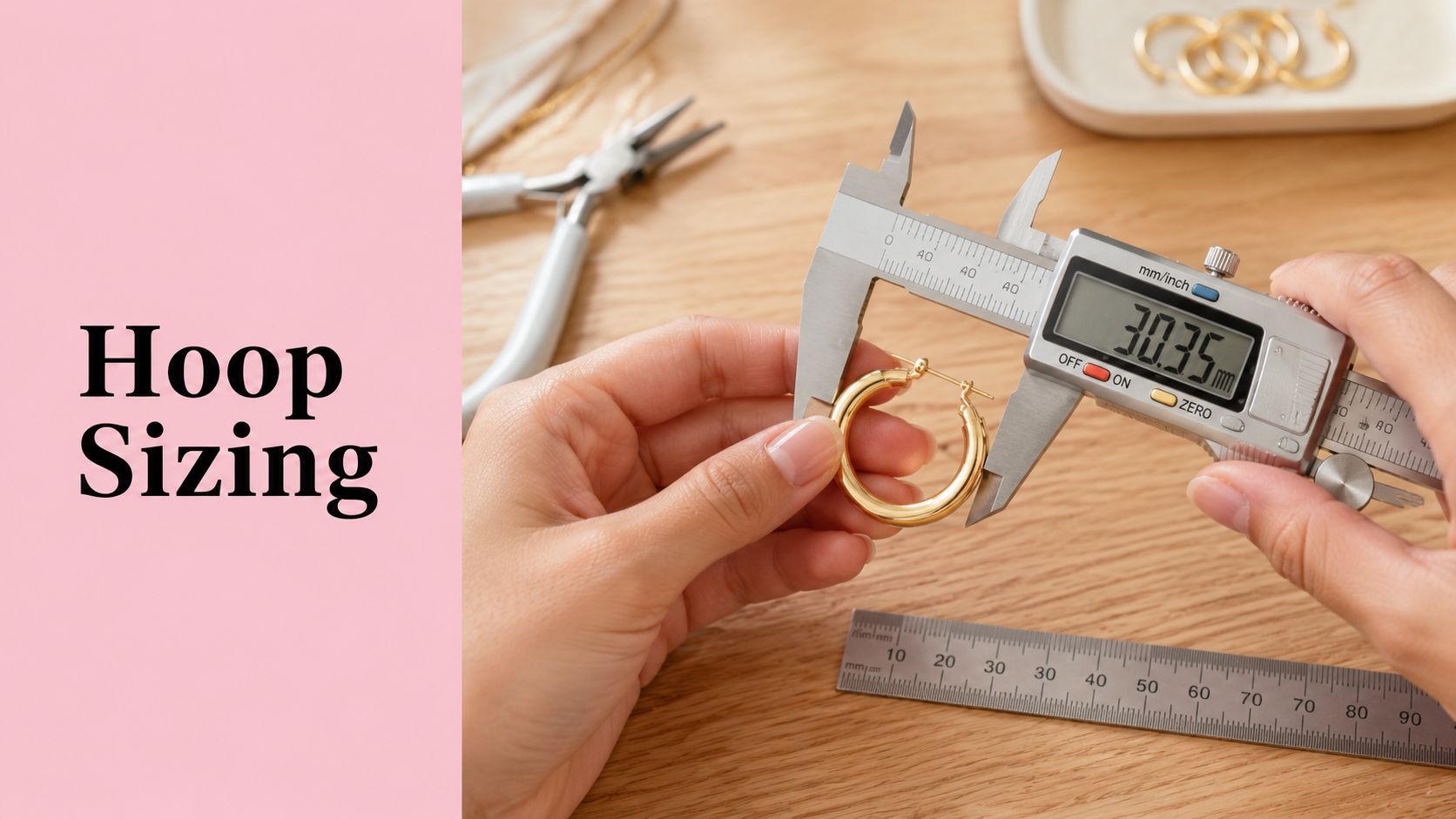
Gauge is the thickness of the post or ring.
Length usually applies to straight jewelry like labrets or barbells.
Diameter matters for hoops and clickers.
If you've ever bought a hoop that hugged too tightly or a flat back that felt like it was poking out too far, one of those measurements was wrong.
Why anatomy changes the answer
A tragus piercing needs different proportions than a lobe. A helix can handle one style beautifully and hate another. Nostril piercings can look tiny and refined on one person but stick out awkwardly on someone else with different anatomy.
That's why “standard size” should never be treated like a guarantee.
Here's the practical way to approach this:
- For cartilage piercings, too much pressure can irritate the area.
- For hoops, too small can pinch and too large can snag.
- For flat backs, the post has to match your tissue thickness, especially once swelling changes.
When local shopping helps and when it doesn't
A local Portland studio is great when you need eyes on your anatomy, a professional jewelry change, or help identifying why something feels wrong. But local inventory can be narrow, especially for more specific placements like tragus jewelry.
That's where knowing your exact measurements becomes power. Once you know your gauge, length, and diameter, you can shop with purpose instead of guessing.
For a quick refresher, BodyCandy's guide to body jewelry sizing basics is a solid place to review the terms before you buy.
Style trends that actually make daily wear easier
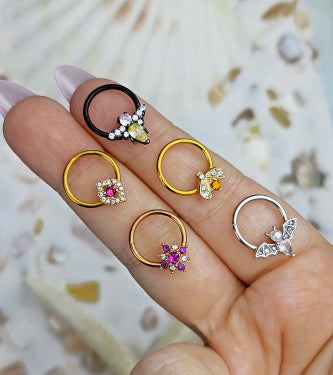
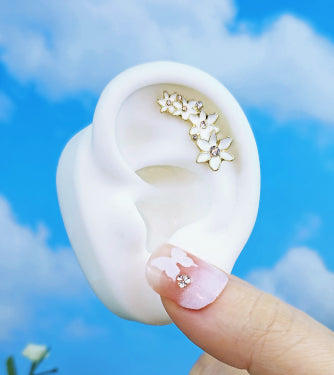
Current style isn't just about looks. It's also about comfort. One of the biggest trends is tech-infused minimalism, built around sleek shapes, magnetized ends, and ultra-slim closures that help reduce snagging. It shows up beautifully in helix hoops, stacked lobes, and low-profile ear styling.
A little visual inspo helps when you're deciding between a hoop, stud, or flat back:
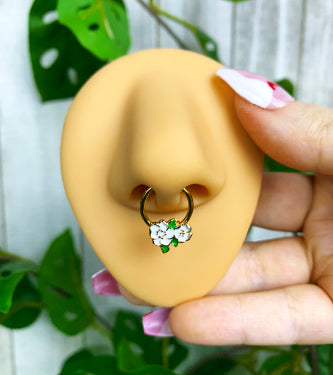
If your style leans facial rather than ear-focused, polished septum hoops, tiny nostril stacks, medusa studs, and clean labret looks all fit the broader move toward intentional, curated piercing jewelry.
If a piece is beautiful but annoying every single day, it's not the right piece for that piercing.
Budgeting Price Safety and Aftercare
This is the part where people try to save money and accidentally spend more.
You're paying for two separate things when you get pierced. One is the service. The other is the jewelry. They matter differently, but they both matter. Cheap service can mean poor technique. Cheap jewelry can mean irritation, allergy issues, or a piece you replace almost immediately.
Know what the initial spend can look like
One local example tied to the tragus supply issue noted that the average cost of a piercing is $35 plus $30 for jewelry, often pushing the total past $70 after tax. That doesn't mean every shop will price things exactly the same, but it's a useful reminder that the cheapest-looking option isn't always cheaper once you account for replacement, troubleshooting, and healing setbacks.
If your budget is tight, put the money into the part that touches your body first. You can always buy flashier styles later for healed piercings.
Where not to cut corners
People usually regret skimping in the same places:
- Starter jewelry quality because the healing period is when your piercing is least forgiving
- Proper fit because “close enough” can create pressure or movement issues
- Professional downsizing or follow-up help if your piercer recommends it
A simple piece in a safe material beats a dramatic piece that causes months of irritation.
Aftercare that actually helps
Aftercare gets overcomplicated fast. Most piercings do better when you stop fussing with them.
Use simple habits:
-
Use sterile saline
Keep it basic. You want gentle cleaning, not a chemistry experiment. -
Don't twist or rotate the jewelry
That old advice sticks around, but it's not your friend. -
Keep hands off
Touching, picking, and checking it constantly slows things down. -
Protect it from friction
Headphones, hats, towels, shirts, and pillow pressure can all be sneaky troublemakers depending on the piercing.
What safe studios should also be doing
A professional Portland studio should be following local health and sanitation rules, maintaining a clean environment, and using sterile technique. You don't need to memorize regulations. You just need to notice whether the studio acts like cleanliness is routine or optional.
Healing is usually less about doing more and more about not doing dumb stuff to a fresh wound.
If your piercing becomes increasingly painful, hot, or severely irritated, contact your piercer or a medical professional instead of trying random internet fixes.
Your Portland Jewelry Shopping Checklist
Saturday on Alberta. You pop into a cute shop, spot a sparkly clicker labeled "crystal," and start wondering if it will work for your healed helix or that fussy nostril piercing. This is the moment when a simple checklist saves you from buying something pretty that your body hates.
Portland has plenty of style. What trips people up is the gap between what looks good in the case and what works in a piercing. Local shops can help you check anatomy and sizing in person. Online retailers can be useful when you need a hard-to-find post length, a specific threadless top, or a replacement for a piercing your neighborhood studio does not keep in stock.
The five-point check
-
Material first
Ask what touches your body, not just what the decorative top is made from. "Crystal" usually describes the gem, not the post or ring. You still need clear details on the wearable material. -
Correct sizing
Write down your gauge, post length, or hoop diameter before you shop. Jewelry sizing works like shoe sizing. Close is not close enough. -
Seller reputation
Buy from a Portland studio with trained staff or from an established retailer that lists material and sizing clearly. If the product page or display tag feels vague, keep walking. -
Style that matches your piercing and your routine
Trends come and go, but your daily life matters more. A delicate piece can look amazing and still be annoying if it snags on hoodies, headphones, helmets, or hair. -
Budget with purpose
Put your money into safe materials and the right fit first. Fancy ends and statement pieces are more fun when the foundation is solid.
Before you buy, pause for ten seconds and run through those five points. That tiny habit can save you weeks of irritation and one very annoying return.

Combining local and online shopping
The smartest approach is usually a mix of both. Start local for in-person help, anatomy checks, and confirmation that your sizing is right. Then use that information to shop online with a lot more confidence if you need a specialized piece that is tough to find around Portland.
That matters most for piercings with picky sizing, unusual anatomy, or limited local stock. A good online catalog can help you find the exact length or diameter you need. A good local piercer can help you make sure you should be wearing it in the first place.
Your jewelry should look good, feel good, and make sense for your body. That is the goal.
Ready to find your next favorite piece? Browse BodyCandy for styles that let you put your new jewelry knowledge to work, whether you're building a sleek ear stack, replacing a lost tragus stud, or hunting for something fresh that still puts comfort first.