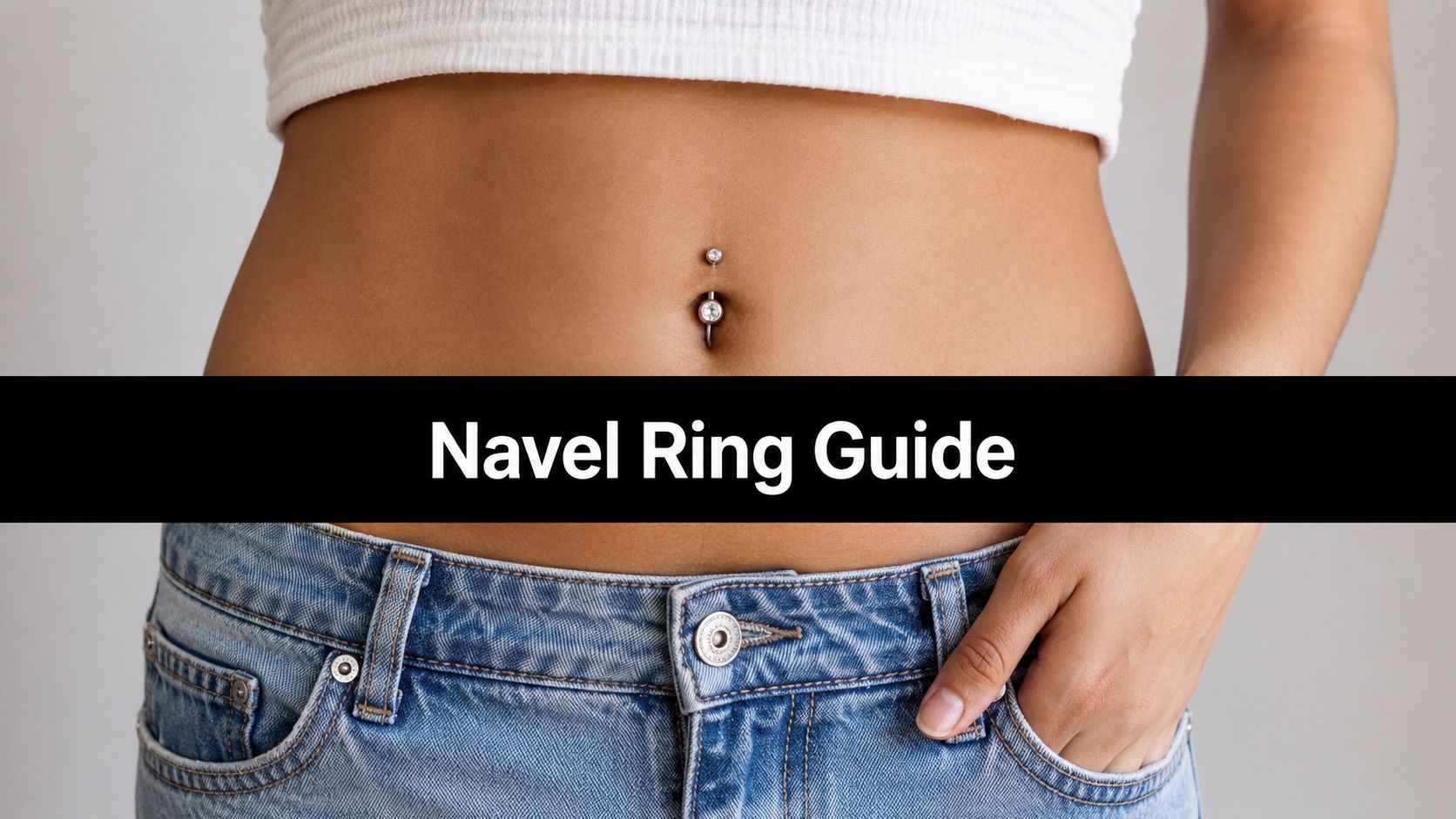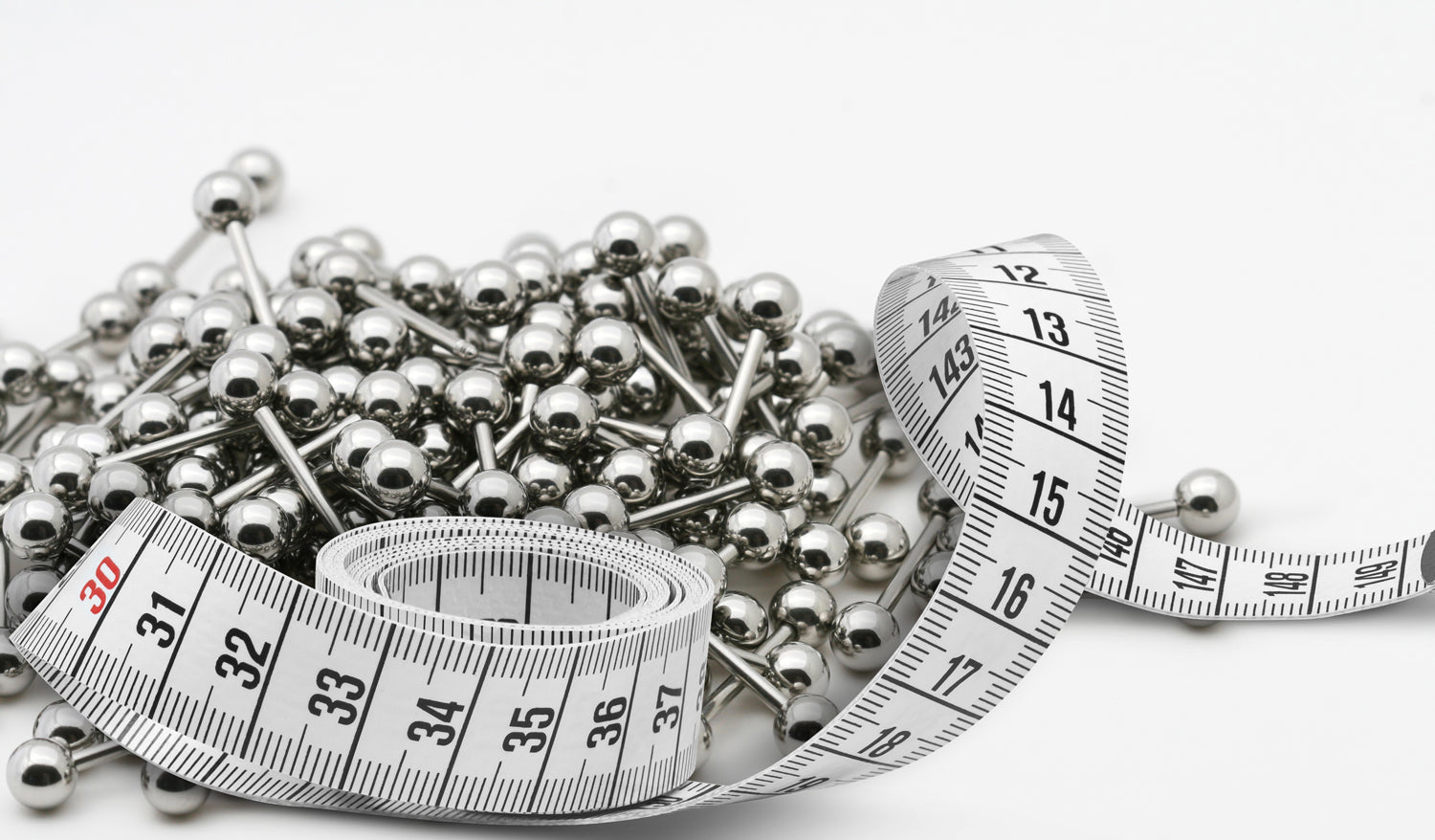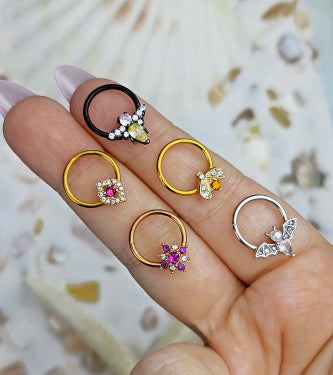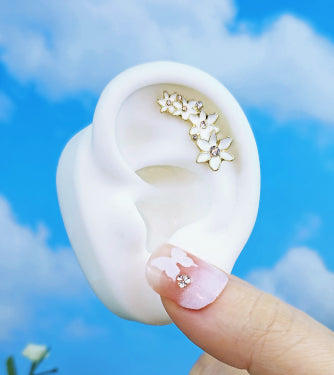
















You're standing in front of the mirror, hair half done, outfit already picked, and your piercings feel almost right. You want something polished, something cute, something that works with a hoodie on Monday and a dinner outfit on Saturday. But the giant gem cluster you loved online suddenly feels like a lot for everyday wear.
That's where minimalist piercing jewelry shines. A tiny bezel stud in a helix. A slim hoop in a lobe stack. A flat back with just a little sparkle in a tragus. It doesn't fight the rest of your look. It finishes it.
The fun part is that “minimal” doesn't mean boring, and “small” doesn't automatically mean safe. The piece that looks the most effortless often takes the most thought. Metal quality matters. Fit matters. Your anatomy matters. The prettiest little stud in the world can still be annoying if it's the wrong length, made from the wrong alloy, or shaped for someone else's ear.
Your Guide to Understated and Chic Piercings
You're getting ready, you catch your reflection, and one tiny piece of jewelry changes the whole mood. A small lobe hoop makes everything look cleaner. A flat-back stud in a helix adds polish without stealing attention. The effect feels effortless, but good minimalist piercing jewelry is rarely random.
That balance is why subtle pieces are so appealing. They give you the neat, edited look people associate with minimalism, but they also tend to work better with real life. Lower-profile shapes are less likely to snag on hair, headphones, towels, or sweaters. Smaller designs can also sit more naturally on the anatomy they're meant for, which matters just as much as the look.
Style and safety are tied together here. A minimalist piece only reads as refined if it fits the piercing well, sits at the right angle, and is made from body-safe material. If the post is too long, the jewelry can stick out and look clumsy. If the hoop diameter is off, the ring can tilt or press in a way that looks awkward and feels worse. If you want a quick primer on common jewelry materials, this guide to what metal body jewelry is made of is a helpful starting point.
That's also why delicate jewelry can be a little deceptive.
A piece may look tiny in a product photo and still be wrong for your piercing. A very small end can disappear on one person and look perfectly balanced on another. Anatomy changes the scale. Placement changes the angle. Even your daily routine changes what feels comfortable enough to wear all the time.
Analysts project strong growth for minimalist jewelry as a category over the next several years, which matches what many shoppers are already doing. They are building small, wearable collections instead of buying one dramatic piece for occasional use. For piercings, that approach makes sense. You're choosing jewelry that has to look good at close range, feel comfortable for hours, and behave well on a living body.
If you've ever bought a cute subtle piece and then wondered why it looked off once you put it in, the problem usually wasn't your taste. It was the behind-the-scenes part: metal, measurements, shape, and anatomy working together. Minimalist piercing jewelry looks simple on the surface. The smart choice is usually the one that keeps your piercing calm while giving you that clean, understated finish.
What Makes Piercing Jewelry Minimalist Anyway
You spot a tiny stud online and assume it will disappear into your ear in that clean, barely-there way. Then you put it in, and somehow it looks busy, pokes out too far, or throws off the whole balance of your stack. Minimalist piercing jewelry works best when the design is quiet and the shape suits the piercing itself.

Minimalism in piercings comes from restraint. The piece should look intentional without asking for all the attention. In practice, that usually means a simple silhouette, a low profile, and details that do not fight with the natural shape of the ear, nose, or lip.
That last part matters more than many style guides admit. A minimalist piece often feels more comfortable because it gives your anatomy less to catch, press, or carry. So the clean look is not only aesthetic. It often overlaps with choices that are easier for a piercing to wear well.
The visual clues to look for
A minimalist piece usually has a few easy-to-spot traits:
- Clean lines with little visual clutter
- Simple geometry such as dots, bars, slim hoops, discs, or tiny stones
- Low-profile settings that stay closer to the skin
- A quiet finish where polish, shape, or a small gem does the work
- Flexible styling so the piece can sit beside other piercings without competing
A good test is to look at the outline first. If the silhouette reads clearly from a distance, it usually feels minimal. If you have to notice tiny decorative details to understand the design, it usually reads busier.
Minimalism is also about how a piece sits
Two pieces can be the same size and give totally different results.
A tiny dangling charm may be physically small, but movement adds visual weight. A flat disc or close-fitting hoop can be slightly larger and still look cleaner because the shape stays tidy against the body. That is why a flat-back stud often feels more minimal than a very small ornate end. One reduces visual noise. The other adds it.
This is also where safety and style start to overlap. Jewelry that sits flush usually snags less on hair, towels, collars, and pillowcases. A piece with fewer protruding parts often looks neater because it is built to stay stable.
Here's a quick comparison:
| Style choice | Usually feels minimalist | Usually feels less minimalist |
|---|---|---|
| Shape | Dot, disc, tiny bar, plain hoop | Cluster, charm, ornate motif |
| Profile | Sits flush or close to skin | Sticks out or hangs down |
| Surface | Smooth, polished, simple | Textured, busy, highly detailed |
| Styling role | Layers easily | Dominates the stack |
If you are unsure whether a piece will sit close or stick out, a quick guide to body jewelry sizing basics can help you picture how gauge, length, and diameter affect the final look.
Why minimalist pieces stay popular
Minimalist jewelry keeps earning space in people's collections because it is easy to wear across different settings and different piercings. A slim hoop can read soft in a lobe, sharp in a helix, or sleek in a nostril. A tiny stone can add light without making the piercing feel dressy.
That versatility comes from balance. The best subtle pieces work with your anatomy instead of trying to overpower it.
Style check: If a piece looks right with several outfits and still leaves room for the rest of your piercings to shine, you are probably looking at strong minimalist design.
The Best Metals for Your Delicate Jewelry
Tiny jewelry gets mistaken for “easy” jewelry all the time. But when a piece is going to sit in your skin for long stretches, the metal does the heavy lifting, making minimalist style a safety conversation.
The biggest thing to know is that initial jewelry should meet ASTM and/or ISO standards. The Association of Professional Piercers explains this in its guidance on mill certificate criteria for body jewelry materials. In plain language, that means the alloy composition and physical properties are verified against a known standard. For fresh or healing piercings, that kind of traceability matters.

Titanium, steel, gold, and what people mix up
You'll see a few common metal options in minimalist piercing jewelry. They aren't all equal for every person or every piercing.
| Metal | Why people choose it | What to watch |
|---|---|---|
| Implant-grade titanium | Lightweight, commonly chosen for sensitive wear and healing piercings | Product listing should clearly identify compliant material |
| Implant-grade steel | Durable and familiar | Some wearers need to be more cautious about metal sensitivity |
| Solid gold | Great for healed, elevated looks when quality is clear | Purity and construction matter |
| Niobium | Often discussed for sensitive wear | Less common to find in every style |
If you want a deeper material primer, BodyCandy has a useful guide on what metal body jewelry is made of.
Why nickel worries so many people
A minimalist piece can be tiny and still irritate your skin if the alloy isn't a good match for you. Independent dermatology guidance notes that nickel is the most common contact allergen in jewelry, and low-profile styles don't get a free pass just because they're small. That's the part shoppers often miss. “Simple” is a visual description, not a material guarantee.
If your skin gets itchy, red, flaky, or angry with certain earrings, don't focus only on the shape. Focus on what the piece is made from and whether the seller tells you clearly.
What to read on a product page
A good listing should make the metal easy to identify. You shouldn't have to decode vague wording like “high-quality metal” or “safe alloy.”
Look for:
- Specific material naming such as implant-grade titanium rather than generic “metal”
- Clear standards language when jewelry is intended for healing or long wear
- Finish details that tell you whether the piece is polished, plated, or solid material
- Construction details so you know whether the decorative end and post match in quality
A delicate look only works long term if the metal agrees with your body.
If a product page hides the material details, that's your sign to slow down. Cute first, questions later is how a lot of irritation starts.
Finding the Perfect Fit for Your Piercing
Fit is the part that decides whether minimalist piercing jewelry looks sleek or slightly off. The same tiny stud can look refined in one ear and awkward in another, just because the post is too long or the gauge isn't right for the piercing.

Gauge, length, and diameter in plain English
Here's the quick translation:
- Gauge is the thickness of the post.
- Length is the wearable space on a straight post, like a labret.
- Diameter is the inside width of a hoop or ring.
Those measurements affect comfort, movement, and how the jewelry sits. A post that's too long can snag, tilt, or make a small end look less polished. A hoop with the wrong diameter can either squeeze or droop.
Typical minimalist piercing jewelry often shows up with a 1.2 mm bar thickness and 6 mm or 8 mm wearable length in product specs, and many pieces use an internally threaded design, as shown in this titanium minimalist piercing product example. Internally threaded construction helps reduce scraping during insertion because the threads aren't exposed on the part moving through the piercing.
A simple fit mindset for common placements
Different placements need different kinds of subtle.
For a tragus, people usually want a front that looks tiny and tidy. That only works if the back isn't too bulky and the post length matches the tissue. For a helix, a low-profile stud or a slim hoop can look amazing, but only if the angle of the piercing lets the jewelry sit naturally. For a nostril, the decorative top may be small, but the wearable fit still has to feel stable.
Sizing guides are very helpful. If you want a refresher on the terms before you shop, check out BodyCandy's body jewelry sizing basics.
The anatomy part people skip
Minimalist jewelry gets photographed straight-on, but your piercing lives in three dimensions. The angle, depth, and spacing of your piercing decide whether a piece sits flush, tilts outward, or bumps into neighboring jewelry.
That means two people can buy the exact same tiny labret and get different results. One gets the clean “barely there” look. The other gets a stud that sticks up more than expected. The jewelry didn't fail. The fit was just wrong for the anatomy or placement.
Practical rule: The more subtle the jewelry, the more obvious a bad fit becomes.
Fast checklist before you buy
- Match the gauge first so you're not forcing the wrong thickness into the piercing.
- Check wearable length second because too much extra room ruins the snug look.
- Confirm the backing style if you want smooth insertion and everyday comfort.
- Think about the piercing angle before choosing a very flat or very rigid design.
Minimalist pieces don't give you much room to hide sizing mistakes. That's why the best tiny jewelry always looks intentional, not accidental.
How to Style Your Minimalist Piercing Collection
Minimalist styling is where people start having a lot of fun with very little jewelry. A tiny hoop in the first lobe, a beadless-looking stud in the second, a flat-back sparkle in the helix, and suddenly your ear looks curated instead of random.

Three styling stories that work
A soft gold stack is probably the easiest place to start. Think one tiny stud in the first lobe, one slim huggie in the second, and a small top piece in the helix. It feels warm, polished, and easy to wear every day.
A silver geometric mix leans cooler and a little sharper. A flat disc, a thin hoop, and a tiny bar end can give you that clean-line effect without looking sterile. This works especially well if your wardrobe already lives in black, white, denim, and gray.
Then there's the constellation look. This one uses small points of shine placed across the ear so the overall effect feels scattered and intentional, almost like your cartilage is wearing its own tiny star map.
Anatomy changes the whole look
Piercing educators stress that angle and spacing determine how jewelry sits, and that matters a lot with subtle styling. Recent trend coverage has also highlighted stacked lobes, thin hoops, and subtle barbells, but the main advantage comes from choosing shapes that suit your own ear and not just the flat-lay trend board. That's the practical side of the styling advice discussed in this piercing educator trend reel about fit and anatomy.
If your helix is placed at a sharper angle, a super-flat end may not face forward the way you hoped. If your lobe piercings sit close together, bigger “tiny” hoops may crowd each other. Minimalist styling is less about copying someone else's ear and more about editing for your own.
Here's a little visual inspiration to spark ideas:
Easy ways to make a stack feel intentional
- Repeat one shape across multiple piercings, like dots or slim hoops.
- Keep one focal point and let the rest support it.
- Mix finish, not chaos. Polished metal with one tiny stone often feels cleaner than several competing details.
- Leave breathing room so every piece has space to read clearly.
The prettiest minimalist stack usually looks edited, not packed.
A good stack doesn't need to be symmetrical, expensive-looking, or super elaborate. It just needs rhythm. If your eye can travel across the piercings without getting stuck on one loud piece, you're doing it right.
Essential Care for Your Dainty Jewelry
Small jewelry needs calm handling. That's especially true for flat backs, tiny threaded ends, and delicate studs that are easy to fumble when your hands are wet or rushed.
A gentle routine that works
If the jewelry is in a piercing, keep cleaning simple. Use saline appropriate for piercing care, or follow the aftercare advice given by your piercer. If the piece is fully removed and the piercing is healed, a mild soap and water wash can help remove buildup before you dry it carefully.
A few habits help a lot:
- Clean over a towel or closed sink so a tiny end doesn't vanish down the drain.
- Dry thoroughly because moisture trapped around jewelry can get annoying fast.
- Check closures gently instead of tightening aggressively.
- Handle the decorative end with clean fingers so you're not adding grime right where the piece meets the skin.
What to avoid
Skip harsh scrubbing, abrasive cleaners, and random DIY soaks. Minimalist jewelry often has tiny settings, little threads, or polished surfaces that don't love rough treatment.
If a piercing starts feeling sore, swollen, or unusually irritated after a jewelry change, don't keep twisting and testing it all day. Put comfort first and get professional advice if needed. For more day-to-day maintenance basics, BodyCandy has a guide on how to properly care for your body jewelry.
Tiny jewelry disappears visually when it's styled well. It shouldn't disappear because you dropped the end into the sink.
Shop Smart and Keep Your Piercings Safe
Shopping for minimalist piercing jewelry gets easier when you stop buying based on the front view alone. Product photos show the sparkle. They don't always show the post length, backing style, alloy details, or whether the piece makes sense for your anatomy.
Body piercing is mainstream. In a national U.S. dataset published in 2006, 14% of respondents had body piercings, while 24% had tattoos, according to this PubMed record of the study on body art. With that many people wearing piercings, it makes sense to shop like someone protecting a long-term investment in their skin, not like someone buying a throwaway accessory.
Your smart-shopping checklist
- Read the material line carefully and skip listings that stay vague.
- Look for actual measurements so you know the gauge, length, or diameter.
- Check the closure type because comfort during insertion matters.
- Study how the piece sits in worn photos, not just isolated product shots.
- Respect healing status and don't swap jewelry too early just for the aesthetic.
Minimalist jewelry looks effortless, but the good kind is never careless. It's chosen. That's the whole vibe.
Ready to build a subtle stack that still feels like you? Browse BodyCandy for minimalist-friendly styles, compare your sizing before you add to cart, and if you're unsure about fit or healing, ask a professional piercer before making the switch.