



















So, that fresh new piercing you're SO excited about is looking a little puffy, right? Don't stress! Some swelling is a completely normal part of the healing process. Think of it as your body's dedicated repair crew rushing to the scene, bringing in extra blood and fluid to get the job done right.
Why Your New Piercing is Swollen
Okay, let's get into the why behind the puffiness. When you get a piercing, your body treats it as a small wound. Its immediate reaction is to kickstart the inflammatory response, which is a fancy way of saying it sends healing cells and fluid to protect and rebuild the area. This natural process is what causes the initial swelling, redness, and tenderness you’re feeling.
This inflammation is actually a good sign—it means your body is working hard to heal! The trick is to manage it, not eliminate it. While some swelling is expected, too much can be uncomfortable and slow things down.
The amount of swelling also really depends on where your new jewelry is.
- Cartilage Piercings: Think helix, tragus, or industrial piercings. These tend to swell more because cartilage has less blood flow, making the healing journey a bit longer.
- Oral Piercings: Tongue and lip piercings can swell up quite a bit. This is thanks to the rich blood supply and all the movement from talking and eating.
- Navel Piercings: These are super prone to irritation from clothing—waistbands are the enemy!—which can easily trigger extra swelling.
Understanding Normal Healing
The initial, most noticeable swelling typically peaks within the first 48-72 hours. After that, it should gradually calm down over the next week or so. The key is knowing what's normal versus what might be a sign of trouble.
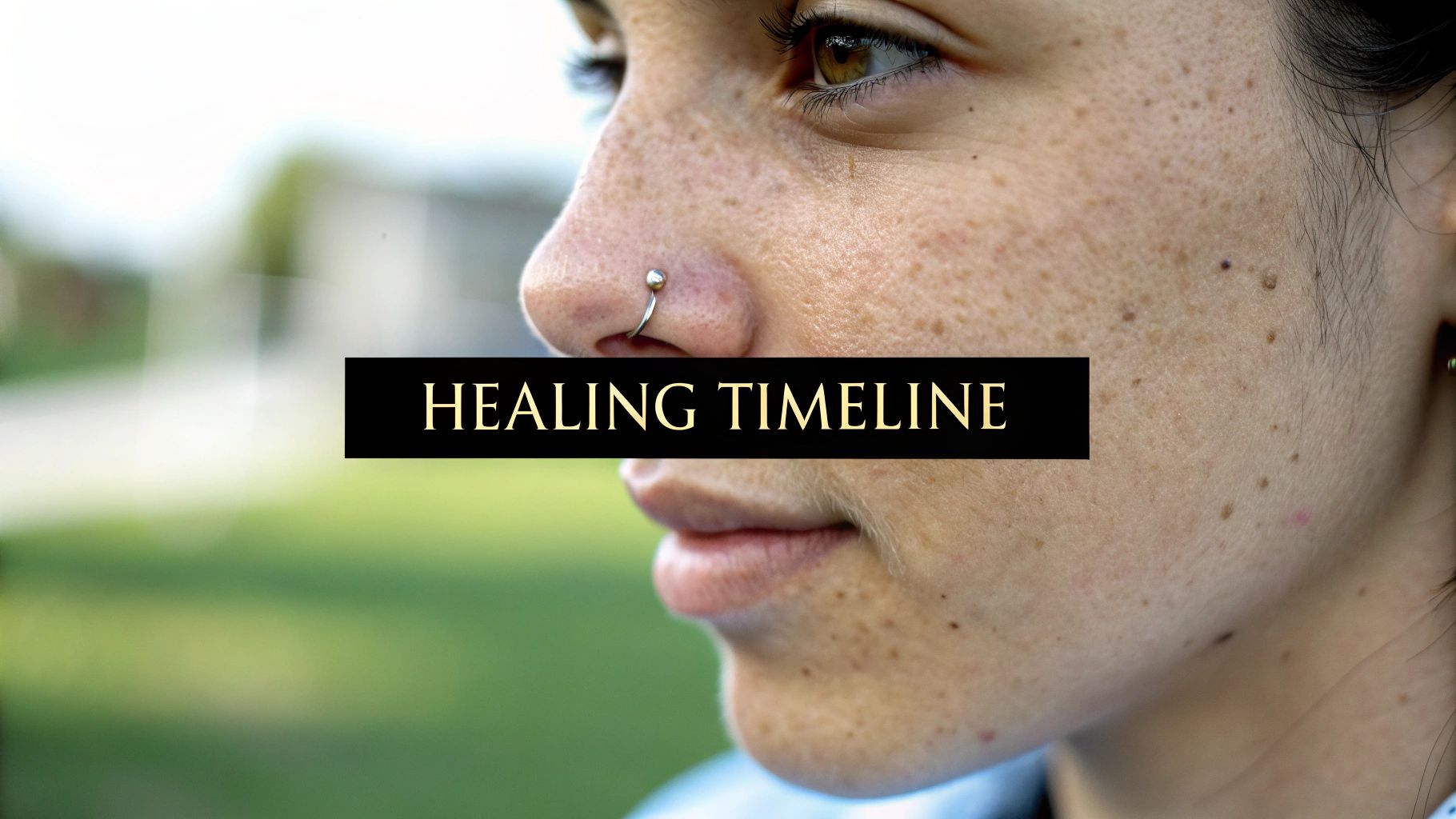
This infographic shows a close-up of a new piercing with the typical, expected puffiness of a healthy healing process.
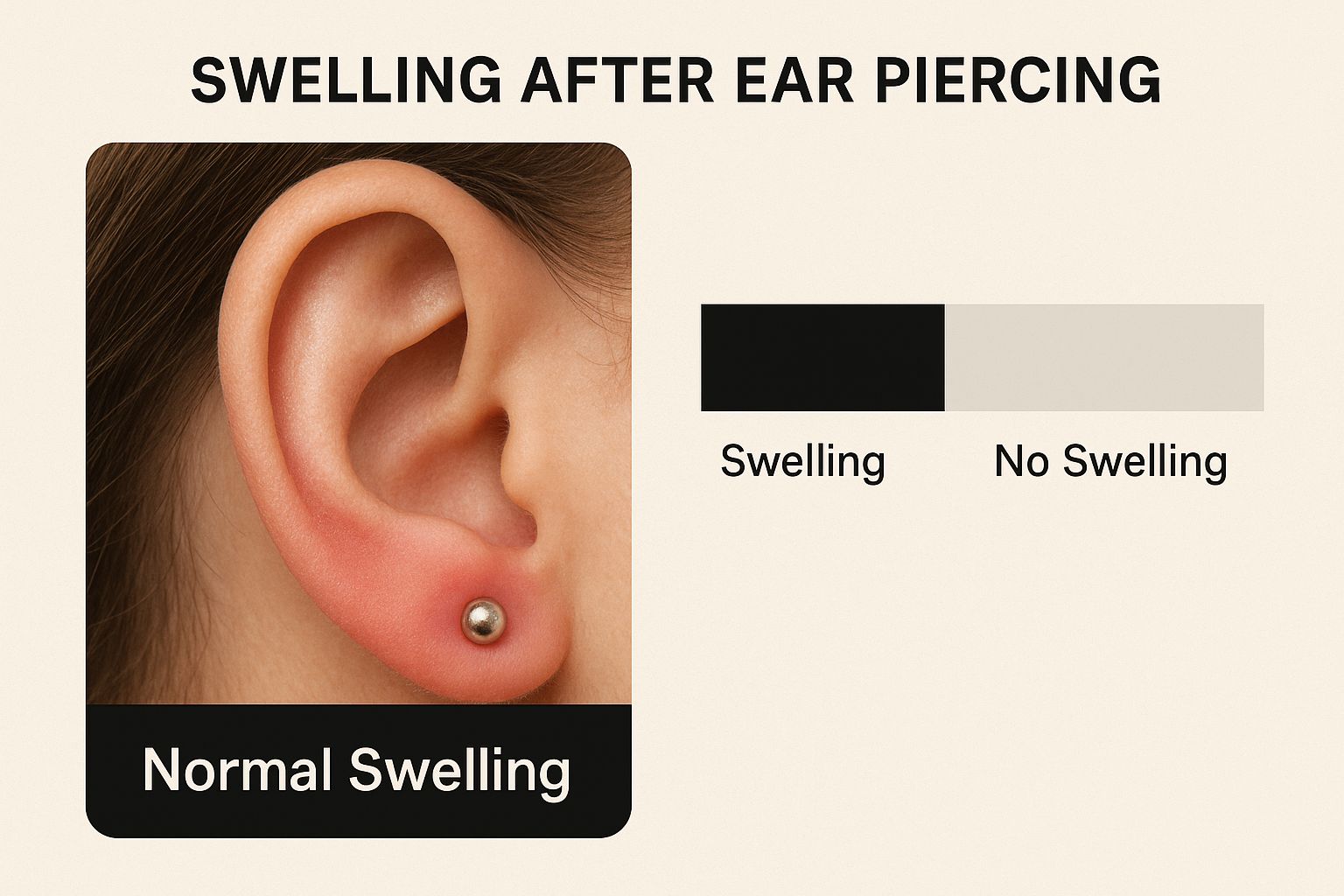
As you can see, mild redness and localized swelling right around the jewelry are standard and not an immediate cause for alarm. Unfortunately, complications can still happen. Some studies have found that around 50% of people with new piercings run into issues like prolonged swelling or minor infections within the first six months.
Knowing what to look for can save you a ton of worry. Here’s a quick guide to help you tell the difference between a happy piercing and one that needs a little more TLC.
Normal Swelling vs. Problem Swelling At a Glance
| Symptom | Normal Healing Swelling | Potential Problem Swelling |
|---|---|---|
| Timing | Peaks in the first 2-3 days, then slowly gets better. | Gets worse after day 3 or comes back after improving. |
| Color | Mild redness or pinkness right around the piercing. | Bright red, red streaks spreading out, or dark discoloration. |
| Feeling | Tender to the touch, feels warm. | Hot to the touch, throbbing pain, or increasing pain. |
| Discharge | Clear or slightly whitish fluid ("crusties"). | Thick, yellow, green, or foul-smelling pus. |
| Swelling | Localized around the piercing site. | Spreads far beyond the piercing area, very tight skin. |
This table is a great starting point, but always trust your gut. If something feels off, it's always best to check in with your professional piercer.
Key Takeaway: Swelling is your body’s productive, healing response. Your job is to support it, not fight it, by keeping things clean and avoiding irritation.
Knowing what to expect is half the battle. If you're curious about how long your specific piercing might stay puffy, you can learn more about healing times for popular piercings in our guide. It'll give you a much better timeline for when you can expect things to fully calm down.
Your Essential Toolkit for Calming Swelling
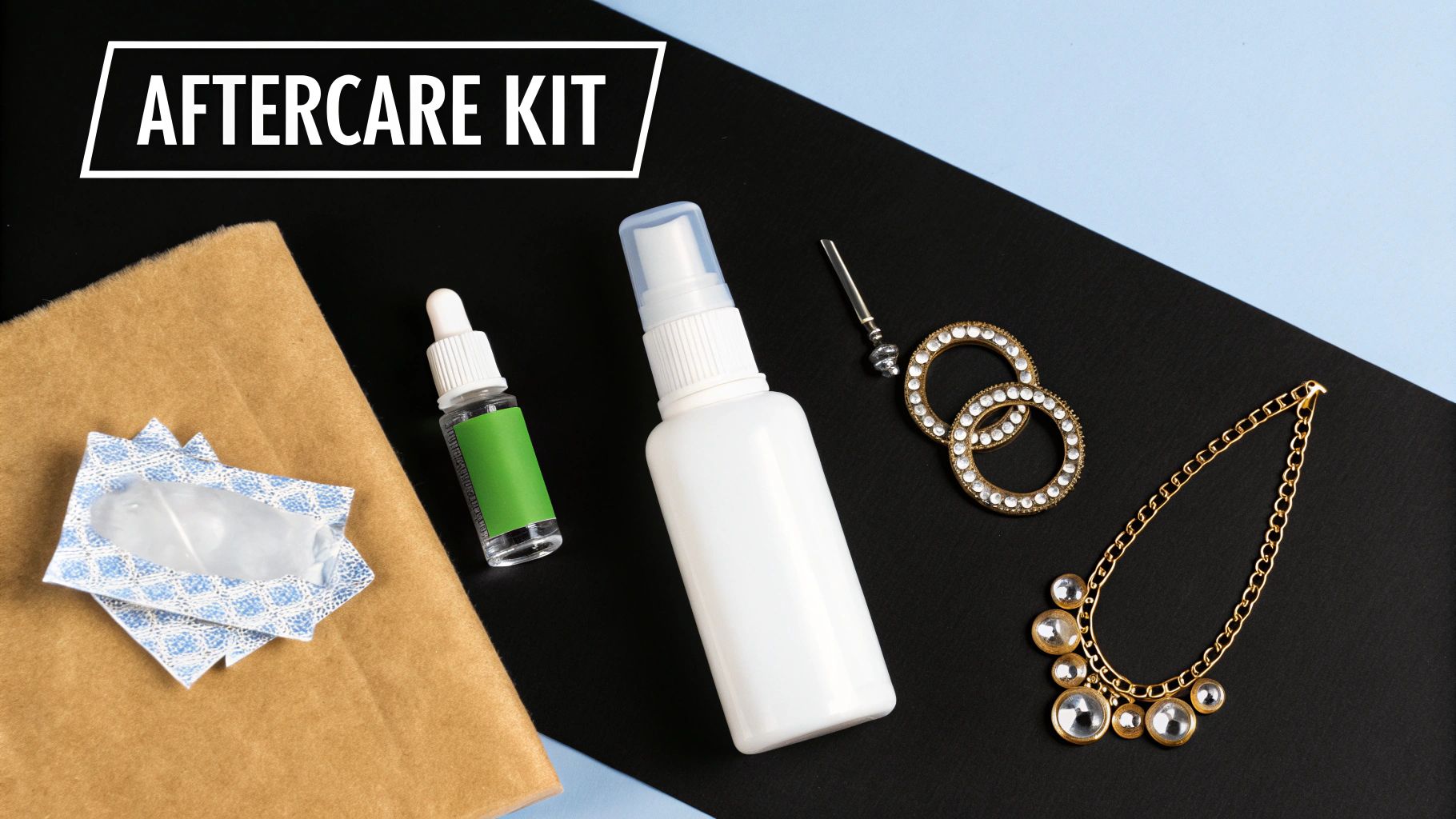
Ready to get that swelling under control? You don't need a massive first-aid kit, just a handful of essentials to build the perfect aftercare arsenal. Having the right stuff nearby makes it way easier to stay on top of your routine and give that new piercing the TLC it deserves.
Think of this as your holy grail toolkit for a happy, healing piercing.
The Must-Have Items
First up, your number one essential is a sterile saline solution. This is the absolute gold standard for cleaning. Why? Because it’s super gentle and mimics your body's natural salinity, so it cleans the piercing site without causing the irritation or dryness you'd get from harsh soaps or alcohol.
Next, you'll want the soothing power of a gentle cold compress. Nothing fancy needed here—a clean paper towel soaked in cold water works like a charm. Holding this against the area for a few minutes helps constrict the blood vessels, which slows blood flow and brings that sweet, sweet relief from any throbbing.
Pro Tip: Never, ever apply ice directly to your skin! Always wrap it in a clean paper towel or cloth. This creates a barrier to protect the delicate new tissue from getting an ice burn.
Finally, and this is a big one, let's talk jewelry. The battle against swelling really starts the moment you get pierced.
- High-Quality Jewelry: You absolutely want to start with implant-grade titanium or 14k gold. These materials are hypoallergenic, meaning they won't trigger an allergic reaction that just adds to the inflammation.
- Proper Sizing: Your piercer should use a bar that's slightly longer than the final piece. This extra room is crucial to accommodate that initial swelling. A bar that's too short is a disaster waiting to happen—it can get swallowed by the swelling, causing major pain and complications.
Seriously, investing in quality jewelry from the get-go is one of the smartest moves you can make. It sets you up for a much smoother healing process by knocking out a major source of potential irritation right from the start. For more tips and tricks, check out our guide on essential tools for the pierced life.
The Best Aftercare Routine to Minimize Swelling
Alright, you’ve got your aftercare kit ready to go. Now, let’s get down to the actual routine. When it comes to healing a new piercing and keeping that puffiness down, consistency is everything. But don't worry, this isn't some complicated, time-consuming ritual. The best approach is actually the simplest one.
Your main job here is to keep the area clean without going overboard. You might be surprised to hear that over-cleaning can be just as irritating as not cleaning at all! That means no harsh soaps, no alcohol, and please, no twisting or turning your jewelry. That old advice is officially retired—twisting just tears the delicate new tissue your body is working so hard to build.
Your Simple Daily Cleaning Ritual
The gold standard for aftercare? A gentle saline rinse twice a day. That’s it! Once in the morning and once at night is the sweet spot for most piercings.
Here’s how to do it right:
- Spray It: Give the front and back of your piercing a light misting with a sterile saline solution. No need to drench it; a quick spritz is all you need.
- Let It Sit: Let the saline do its magic for about a minute. This helps soften up any "crusties" (that dried fluid that naturally collects around the jewelry).
- Gently Dab Dry: Grab a piece of clean, non-woven gauze or a paper towel and gently pat the area dry. Steer clear of cotton balls or Q-tips, as their tiny fibers can get snagged on your jewelry and cause major irritation.
This super simple process clears away bacteria and buildup without disturbing the healing site. It’s all about supporting your body’s natural healing powers and letting it do its thing with minimal interference.
Think of it this way: your body is the hero in this story. The saline solution is just its trusty sidekick, keeping the environment clean and safe for the real healing to happen.
If you're looking for the perfect aftercare spray, there are some great options out there. For a deeper dive into what makes a quality solution, you can explore the benefits of H2Ocean aftercare products right here on our blog. It's a fantastic resource for understanding what you're putting on your new piercing.
Lifestyle Habits That Affect Piercing Healing
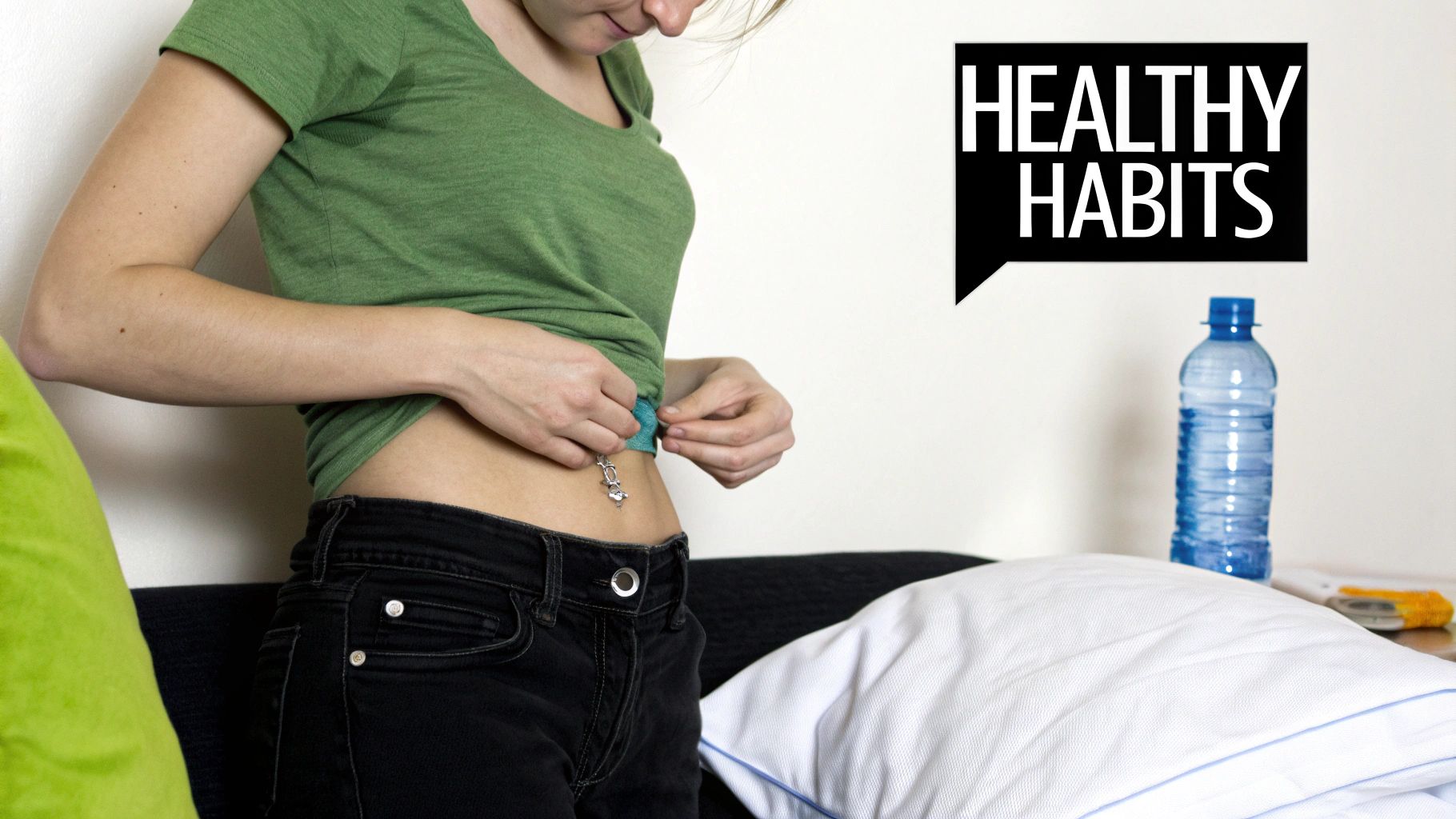
You might be surprised how much your day-to-day routine can mess with a new piercing. Everything from the clothes you pull on to what you're eating can either help or hurt the healing process. The goal is to create the perfect, low-stress environment for your body to work its magic.
Keeping Irritants at Bay
One of the absolute biggest enemies of a happy piercing is friction. We're talking about you, high-waisted jeans and tight crop tops! If you've just gotten a navel or hip piercing, constant rubbing from your clothes is a recipe for disaster. It keeps the area angry, irritated, and puffy.
Navel piercings are especially known for this. They can take up to nine months to fully heal, and that tight pair of jeans can seriously drag out the process and even lead to bigger problems down the road. This is exactly why a gentle cleaning routine and avoiding constant pressure are non-negotiable. If you want to dive deeper, you can read more about piercing care findings from medical professionals.
Beyond your closet, your everyday items are little germ magnets. Think about it: your phone screen, your earbuds, even your pillowcase can transfer bacteria to that fresh piercing without you even realizing it. The most important rule here? Hands off! Seriously, don't touch, twist, or fiddle with your jewelry.
Key Takeaway: Treat your new piercing like any other open wound. You wouldn't press a dirty phone against a fresh cut, right? Give your piercing that same respect.
A simple trick for ear or face piercings is to swap out your pillowcase every couple of nights—just flipping it over on night two gives you a fresh surface. Wiping down your phone with an antibacterial wipe daily is another small habit with a huge payoff.
Finally, don't forget to fuel your body for healing. Staying hydrated helps flush out toxins, and a balanced, vitamin-rich diet gives your immune system the boost it needs. Think of it as healing from the inside out.
For a quick reference, here's a little cheat sheet to keep your new piercing happy.
Do This Not That for a Happy Piercing
| Do This | Not That |
|---|---|
| Wear loose, breathable clothing made from soft fabrics like cotton. | Wear tight, restrictive clothes that rub or snag on your jewelry. |
| Change your pillowcase frequently, especially for new ear or facial piercings. | Sleep on the same pillowcase for a week, letting bacteria build up. |
| Stay hydrated and eat nutritious foods to support your body’s healing process. | Ignore your diet and hydration, leaving your body without the fuel it needs. |
| Keep your hands, phone, and hair away from the piercing. | Touch, twist, or play with the jewelry, introducing bacteria and irritation. |
Making these small adjustments to your routine isn't just about hoping for the best—it's about actively taking control of your healing process and giving your new piercing the best possible start.
When to See Your Piercer or a Doctor
Most of the time, some initial swelling is just your body’s way of saying, “Hey, I’m working on it!” But sometimes, it sends up a flare to signal it needs a little professional backup. Knowing how to read those signals is super important for a safe healing journey.
So, how can you tell the difference between normal irritation and a real problem? Your body gives you some pretty clear clues. Keep an eye out for anything that seems to be getting worse instead of better after the first few days.
Signs It's Time for Help
If you spot any of the following, it's time to stop guessing and reach out to a pro.
- Discharge: Is the fluid coming from your piercing thick, yellow, or green? Does it have a funky smell? That's a classic sign that unwanted bacteria have crashed the party.
- Spreading Redness: A little pink around the piercing is normal, but redness that starts creeping outward or looks like red streaks is a major red flag.
- Intense Pain and Heat: If the area is hot to the touch or the pain is throbbing and getting more intense, your body is screaming for help.
- Fever: Feeling feverish, chilled, or just generally unwell is a sign the issue might be becoming systemic.
Crucial Tip: If you suspect an infection, do not take the jewelry out! Removing it can cause the piercing hole to close up, trapping the infection inside and potentially leading to a much more serious problem called an abscess.
Deciding between your piercer and a doctor is your next step. Think of your piercer as your first line of defense for troubleshooting general irritation or jewelry issues. They've seen it all.
However, for signs of a true infection, a medical professional is the only one who can properly diagnose it and provide necessary treatment, like antibiotics. Treating piercing issues effectively means understanding their cause, from localized infections to other complications like hypertrophic scars, which may need different professional approaches. For a deeper dive, you can discover more insights about piercing bumps and their causes on medicalnewstoday.com.
Time to Heal & Show Off Your Style
You've got this! Now you know exactly how to handle piercing swelling like a seasoned pro. A little puffiness is totally normal—it’s just your body’s way of saying it’s working hard to heal that awesome new addition.
The most important things to remember are pretty simple: keep your new piercing clean, be gentle with it, and pay close attention to what your body is telling you. Patience is your best friend during these first few weeks, so just hang in there.
Once the swelling goes down and you're all healed up, the real fun can start. It's the perfect time to start daydreaming about all the cool jewelry you can wear.
Get Inspired: Ready to plan your fully-healed look? Start browsing Bodycandy's massive collection of high-quality body jewelry today and find the perfect piece to flaunt your style.
Answering Your Top Questions About Piercing Swelling
Got a few more questions rattling around? Totally normal. Let's tackle some of the most common things people wonder about when it comes to piercing swelling—you're definitely not the only one asking.
How Long Does Piercing Swelling Normally Last?
For most new piercings, you can expect the worst of the puffiness to chill out within 3-7 days.
Don't panic if you notice some minor, on-and-off swelling for a few weeks after that, though. This is especially true for trickier spots like cartilage. If things are still super swollen after a full week, it's always smart to pop in and see your professional piercer for a quick check-up.
Can I Use Ibuprofen to Reduce Swelling?
Yep, you can. Over-the-counter anti-inflammatory meds like ibuprofen can be a huge help in dialing down both the swelling and the ache that comes with a new piercing.
That being said, it's always a good idea to have a quick chat with your doctor or pharmacist before starting any new medication, just to be sure it’s the right move for you.
Is It Normal For An Old Piercing To Suddenly Swell?
It can be, so don't freak out! Even a piercing that's been healed for years can suddenly get angry and swell up.
Usually, the culprit is some kind of irritation—maybe you snagged it on a sweater, tried out some new jewelry that it didn't like, or a bit of bacteria snuck in. If this happens, just go back to basics with your saline soaks. If it doesn't calm down in a day or two, your piercer is your best bet for figuring it out.
Ready to show off your beautifully healed piercing with some fresh new bling? Bodycandy has an epic collection waiting for you. Shop our full range of high-quality body jewelry at https://bodycandy.com today