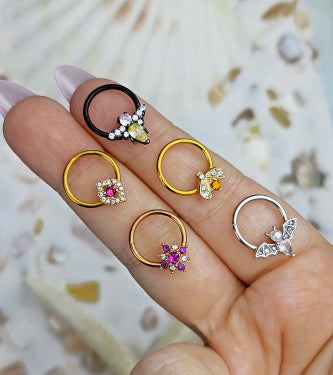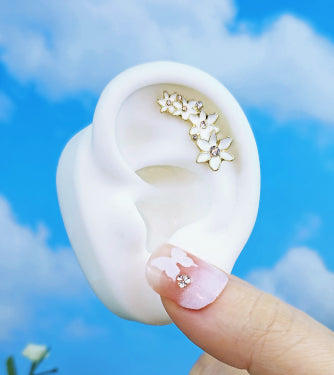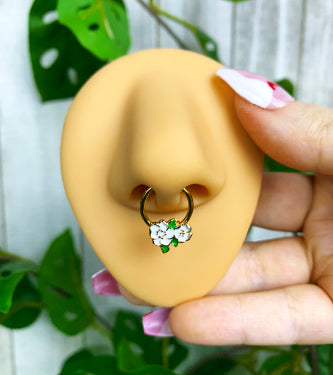










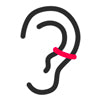

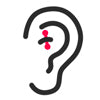






A forward helix piercing is one of those super stylish cartilage piercings, placed on that small, forward-facing rim of your ear, right above the tragus. It's totally loved for its delicate yet edgy look and has become an absolute must-have for anyone building out a curated ear. Whether you're dreaming of a single, sparkling stud or a cool triple arrangement, it offers some seriously amazing ways to customize your look.
What Is A Forward Helix Piercing Anyway?

Alright, let's get into the nitty-gritty of what makes the forward helix piercing so unique. Think about the upper cartilage of your ear—that curved outer rim is where a standard helix piercing lives. Now, trace that rim forward until you're just above the little nub of cartilage that covers your ear canal (that's the tragus). That small, flat ridge right there? That’s the prime real estate for a forward helix.
This piercing sits right where your ear connects to your face, making it a super visible and eye-catching part of your setup. Unlike its more common cousin, the standard helix, the forward helix faces, well, forward. This means your jewelry gets to truly shine from the front, which is exactly why it’s become a cornerstone of the "curated ear" trend. It's all about layering multiple piercings to create your own personal masterpiece.
Why Is Everyone So Obsessed With This Piercing?
You’re not just imagining it—this piercing has absolutely blown up. What started as a niche style for true piercing fans went totally mainstream, and it's all thanks to a viral moment online. Back in the early 2010s, a stunning black-and-white photo of a triple forward helix on Pinterest just caught fire, sparking a massive wave of obsession.
By 2019, the forward helix was a certified star, ranking among the top ten most popular piercings out there. The number of forward helix procedures actually more than doubled between 2016 and 2019, proving it has some serious staying power. It's the perfect example of how sometimes, the most subtle placements can make the biggest impact.
Single, Double, Or Triple: What's Your Vibe?
One of the absolute best things about the forward helix is how versatile it is. You're not locked into just one look; you can completely customize it to match your personal style. Depending on the shape and size of your ear's cartilage, you can rock a single, double, or even a triple forward helix.
A triple forward helix, often styled in a chic triangle or a graceful descending curve, has become an iconic look. It allows you to play with different-sized studs or gems to create a stunning visual flow.
Here’s a quick breakdown to help you figure out your vibe:
- Single Forward Helix: A classic, minimalist choice. It’s perfect if you want a subtle sparkle that adds just a touch of edge without being over the top.
- Double Forward Helix: This option kicks the personality up a notch. You can stack two identical studs for a clean, symmetrical look or mix and match different gems for some extra flair.
- Triple Forward Helix: The ultimate statement piece. This arrangement creates a bold, intricate look that’s guaranteed to turn heads and take your whole ear project to the next level.
Before you make a final decision, it's always a great idea to chat with a professional piercer. They can take a look at your unique anatomy and help you figure out the best placement. For even more cartilage styling ideas, be sure to check out our complete guide to helix piercings.
Navigating The Piercing Process From Start To Finish
So, you're ready to take the plunge and get that forward helix piercing? Awesome! It’s totally normal to feel a mix of excitement and maybe a few butterflies. Knowing exactly what to expect when you get in that chair can turn those nerves into pure confidence.
Let’s walk through the entire process together, from start to finish. A great piercing appointment is really a three-step dance: the consultation, the prep work, and the piercing itself. Each part is equally important for making sure your new piercing is safe, looks amazing, and heals up perfectly.
The Prep Work: Consultation and Marking
First up, you'll tackle some basic paperwork. This usually means filling out a consent form and showing your ID—a standard procedure that keeps both you and the studio protected. After that, it’s time for a one-on-one with your piercer.
This is your moment to talk about exactly what you want—a single, double, or even a triple forward helix. Your piercer will take a look at your ear's unique anatomy to make sure it's a good fit. Once you're on the same page, they'll clean the area with a medical-grade antiseptic, a crucial step for preventing infection.
Then, they’ll use a sterile, single-use skin marker to dot the proposed placement on your ear. They'll hand you a mirror so you can check it out from every angle. This is your chance to give the final "yes!" Don't be shy; if something looks even a tiny bit off, speak up. A good piercer wants you to be 100% happy with the spot before they move on.
The Main Event: The Piercing Itself
Once you’ve given the green light on the placement, it’s time for the main event. Your piercer will open a brand-new, sterile, single-use hollow needle right in front of you. This kind of transparency is a huge sign you're in a professional studio.
They will never, ever use a piercing gun for a forward helix, and for a very good reason. A piercing needle is worlds away from a piercing gun, and when it comes to cartilage, a needle is the only safe option.
Let's break down why.
Needle Vs. Piercing Gun: Why A Needle Is Non-Negotiable
| Feature | Professional Needle Piercing | Piercing Gun |
|---|---|---|
| Method | Uses a sharp, hollow needle to create a clean, precise channel by removing a tiny piece of tissue. | Uses blunt force to shove a dull stud through your skin and cartilage. |
| Tissue Impact | Minimal trauma. Promotes a smoother, faster healing process. | Causes blunt force trauma, which can shatter cartilage and lead to serious complications. |
| Sterilization | The needle is single-use and fully sterilized in an autoclave. | Made of plastic, the gun cannot be properly sterilized, increasing the risk of infection. |
| Precision | Allows for exact placement and angle, critical for piercings like the forward helix. | Clunky and imprecise, making accurate placement nearly impossible. |
| Jewelry | Uses high-quality, body-safe initial jewelry (like implant-grade titanium) that is long enough for swelling. | Forces in low-quality, "one-size-fits-all" studs with tight butterfly backs that can harbor bacteria. |
Simply put, piercing guns are dangerous for cartilage and no reputable professional would ever use one for a forward helix. A needle ensures a safer procedure, a cleaner piercing, and a much better healing experience from day one.
The entire piercing action is incredibly quick—we're talking just a second or two. You’ll feel a sharp, quick pinch, maybe followed by a warm sensation. Your piercer will then expertly guide the sterilized initial jewelry into the new piercing and secure it. And just like that, you're done!
Before you head out, you'll get detailed aftercare instructions. These are your golden rules for the next few months, and following them closely is the single best thing you can do to help your stunning new forward helix piercing heal beautifully.
Understanding Pain, Healing, And Aftercare
Alright, let's get into the two biggest questions on everyone's mind: how much does a forward helix piercing actually hurt, and what’s the healing process really like? Forget the fluff—we're here to give you the honest, straight-up scoop on what to expect.
How Much Does A Forward Helix Piercing Hurt?
Pain is always personal, but most people put the forward helix piercing at about a 5 to 7 out of 10 on the pain scale. Think of it as a sharp, quick pinch that fades into a dull throb. Since it goes through a thicker chunk of cartilage, it's definitely a step up from a lobe piercing (which is maybe a 2/10), but it's usually less intense than a daith or industrial (which can easily be an 8/10 or higher).
The best part? The most painful moment is literally over in a second. Your piercer is a pro at this and will be incredibly fast and efficient. It's totally normal to feel some lingering soreness for a few hours or even a couple of days afterward.
The whole process is surprisingly quick and designed to minimize any anxiety you might have. Here's a quick look at how it all goes down.

As you can see, a professional piercer focuses on careful preparation and precision, making the piercing itself as swift as possible.
Your Healing Timeline: Marathon, Not A Sprint
Let's be real: cartilage piercings are notoriously slow healers, and the forward helix is no different. Patience is going to be your new best friend! A full healing journey typically takes anywhere from 6 to 12 months, and sometimes even a little longer. Don't let it fool you if it looks and feels totally fine after a few months—the tissue deep inside takes a lot longer to toughen up and stabilize.
Pro Tip: Healing isn't always a straight line. You'll have good days and bad days. One morning it might feel perfect, and the next it could be a little swollen or crusty. This is a completely normal part of the healing rollercoaster!
Let’s break down what to expect during the main phases:
- Phase 1: The Inflammatory Stage (Week 1-4): This is your body's initial reaction. Expect some redness, swelling, tenderness, and maybe a tiny bit of bleeding. Your only job right now is to be extra gentle and keep it clean.
- Phase 2: The Proliferative Stage (Month 1-6): During this phase, your body is hard at work building new tissue (collagen) to form the fistula—the tunnel of skin inside your piercing. The swelling and tenderness will go down, but you'll probably still see "crusties" (which is just dried lymph fluid). That's actually a healthy sign of healing!
- Phase 3: The Maturation Stage (Month 6-12+): The fistula is getting stronger and more established. Your piercing will look healed on the outside, but it's still finishing up its work on the inside. It's so important to keep up with aftercare and avoid changing jewelry until your piercer gives you the green light.
For a deeper dive, check out our detailed guide on the healing times for popular piercings.
The Ultimate Aftercare Routine
Sticking to a strict aftercare routine is the single most important thing you can do for a successful healing process. If you want a happy, healthy piercing, you can't slack on this. Your mission is simple: keep it clean and leave it alone.
Step-by-Step Cleaning Guide
- Get Your Supplies: All you need is a sterile saline spray. Stay far away from harsh stuff like alcohol, hydrogen peroxide, or antibacterial soaps—they can seriously irritate your new piercing.
- Wash Your Hands: Before you even think about touching your ear, wash your hands thoroughly with soap and water. No exceptions!
- Spray and Soak: Gently spray the front and back of your piercing with the saline solution. Let it sit for about a minute to soften up any crusties.
- Pat Dry: Use a clean, non-woven gauze or a paper towel to gently pat the area dry. Avoid cotton balls or Q-tips, because their little fibers can get tangled in your jewelry and cause major irritation.
- Repeat: Do this routine twice a day—no more, no less. Over-cleaning can be just as bad as not cleaning enough.
Remember, your body is the real hero here; the saline is just giving it a helping hand. Keep things simple and consistent, and you'll be on your way to a fantastic, drama-free healing journey.
Choosing The Perfect Jewelry For Your Forward Helix

This is the moment you've been waiting for! After patiently navigating the healing process, it's finally time to swap out that initial jewelry and let your personality shine. The world of forward helix jewelry is huge, and picking the perfect piece is how you truly make this piercing your own.
From tiny, sparkling studs to chic little hoops, the options are endless. Let's dive into the best styles, materials, and sizes to help you create an ear stack that’s 100% you.
Top Jewelry Styles For Your Forward Helix
The forward helix piercing’s prime location calls for jewelry that's delicate yet impactful. Since the area is relatively small, smaller pieces tend to look best and fit most comfortably.
Here are the go-to choices you'll absolutely love:
- Flat Back Labret Studs: These are, without a doubt, the most popular and practical choice. A labret has a flat disc on the back that sits flush against your ear, making it super comfy for sleeping and wearing headphones. You can find them with endless decorative tops, from simple balls to dazzling gems and unique shapes.
- Captive Bead Rings (CBRs): For a classic ring look, a small CBR can be a fantastic option. The bead adds a little extra visual interest and keeps the ring securely in place. Just make sure the diameter is small enough to hug the curve of your ear snugly.
- Seamless Rings and Clickers: If you prefer a smooth, continuous hoop, a seamless ring or clicker hoop is your best friend. They offer a clean, minimalist aesthetic that looks effortlessly cool. Clickers are especially easy to put in and take out yourself!
The helix piercing family, including the forward helix, is a major player in today's piercing scene. As of 2024, helix piercings actually make up about one in every four piercings done worldwide, making them the undisputed industry leader. This trend covers all sorts of styles, from the standard outer helix to doubles, triples, and our beloved forward helix, which has become a super trendy favorite within this popular category.
Material Matters: Keeping Your Piercing Happy
Even after your piercing is fully healed, the material of your jewelry is still super important. Low-quality metals can cause irritation, allergic reactions, and even discoloration. Sticking to body-safe, high-quality materials ensures your forward helix stays happy and healthy for years to come.
Remember: Just because your piercing is healed doesn't mean it's invincible! Choosing the right material is a form of long-term aftercare that protects your investment and keeps your ear feeling great.
Your best bets for body-safe materials are:
- Implant-Grade Titanium (ASTM F-136): This is the gold standard. It’s completely hypoallergenic, nickel-free, and lightweight, making it perfect for even the most sensitive skin.
- 14k or 18k Gold: If you love the look of gold, make sure it’s solid (not plated) and nickel-free. 14k or 18k gold is an excellent, biocompatible choice that offers a timeless, luxe look.
- Surgical Steel (316LVM): A great budget-friendly option, surgical steel is durable and safe for most people. However, it does contain a small amount of nickel, so if you have a known sensitivity, titanium or gold is a safer choice.
Getting The Size And Gauge Just Right
Finding the perfect fit is key to both comfort and style. Most forward helix piercings are done with a 16 gauge (1.2mm) needle, which is the standard thickness. When you're shopping, you’ll want to stick with this gauge.
For studs, the post length is what matters. Your initial jewelry was likely a bit longer to allow for swelling. Once healed, you can downsize to a shorter post (usually 5mm or 6mm) for a snug fit that won't snag. For hoops, you'll need a small diameter, typically 5mm to 7mm, to ensure it hugs your ear just right.
Another important factor is whether your jewelry is internally or externally threaded. Internally threaded jewelry, where the screw is on the top piece, is much gentler on your piercing as it passes through. You can learn more about the differences in our guide on internally vs. externally threaded body jewelry.
To make things even easier, here's a quick reference guide to help you find the perfect piece for your piercing.
Forward Helix Jewelry Style Guide
| Jewelry Type | Best For | Common Gauge | Recommended Materials |
|---|---|---|---|
| Labret Studs | Everyday wear, comfort (especially for sleeping), and maximum style variety. | 16g (1.2mm) | Titanium, 14k/18k Gold, Surgical Steel |
| Captive Bead Rings | A classic ring look with a secure closure and a touch of visual detail. | 16g (1.2mm) | Titanium, 14k/18k Gold, Surgical Steel |
| Seamless Rings | A minimalist, clean hoop aesthetic that looks sleek and modern. | 16g (1.2mm) | Titanium, 14k/18k Gold |
| Clicker Hoops | The ease of a hoop with a simple-to-use hinged closure you can change yourself. | 16g (1.2mm) | Titanium, 14k/18k Gold, Surgical Steel |
This table should give you a great starting point for your jewelry shopping adventure. Happy styling!
Troubleshooting Common Piercing Problems
Even when you follow your aftercare routine to the letter, piercings can sometimes get a little fussy. It happens! Think of your new forward helix piercing like a delicate new plant—it’s sensitive to its environment and needs just the right conditions to thrive.
Learning how to spot and handle common issues will keep you from panicking and help you get your healing journey right back on track. Most problems aren't nearly as scary as they look and usually boil down to one simple thing: irritation. Your piercing is just trying to tell you that something is bothering it. Our job is to play detective, figure out what that is, and make your ear happy again.
The Infamous Irritation Bump
If you've spent any time scrolling through piercing forums, you've definitely seen horror stories about "the bump." Nine times out of ten, this isn't a dreaded keloid but a much more common (and manageable) issue: an irritation bump. These little fluid-filled bumps pop up right next to the piercing hole as a direct response to, well, irritation.
The usual suspects behind these annoying bumps include:
- Physical Trauma: Accidentally snagging your jewelry on your hair, glasses, or a mask is a huge trigger. So is sleeping directly on your new piercing.
- Improper Aftercare: Over-cleaning, using harsh chemicals like alcohol or peroxide, or touching the piercing with unwashed hands can all make your ear angry.
- Low-Quality Jewelry: Mystery metals containing nickel are notorious for causing allergic reactions that can look just like an irritation bump. This is why sticking with implant-grade materials is non-negotiable.
The key to making it go away is simple: remove the source of the irritation. Be extra gentle, stick to your basic saline cleaning routine, and make sure your jewelry is top-quality. Patience is everything here; the bump won't disappear overnight.
Is It Irritation or an Infection?
This is the big one that sends everyone into a full-blown panic. It’s super important to know the difference between a simply cranky piercing and a genuine infection. A grumpy piercing might be red and a little swollen, but a true infection brings a whole different set of symptoms to the party.
Let's break down the signs so you know exactly what to look for.
Key Takeaway: An infection requires a doctor's attention. Never, ever remove the jewelry from an infected piercing yourself. This can trap the infection inside your ear and lead to a much more serious abscess. A doctor will tell you the best course of action.
Signs of Normal Irritation:
- Slight redness or pinkness right around the piercing site.
- Minor swelling that comes and goes.
- Clear or whitish fluid (this is lymph) that dries into "crusties."
- Tenderness when you touch it.
Signs of a Possible Infection:
- Intense, throbbing pain that keeps getting worse.
- Extreme redness that spreads far beyond the piercing hole.
- The area feels hot to the touch.
- Thick, yellow, green, or foul-smelling discharge (pus).
- You have a fever or just feel generally unwell.
If your symptoms are on the infection list, it’s time to stop trying to fix it at home and seek medical advice. Your health always comes first.
What to Do After an Accidental Snag
Ouch! That sickening feeling of catching your new piercing on something is the worst, and it can happen to anyone. First things first: take a deep breath and don't panic. Gently check if the piercing is bleeding. If it is, apply gentle, firm pressure with a clean piece of non-woven gauze until it stops.
Once any bleeding is under control, do a gentle saline soak to clean the area and help soothe it. For the next few days, treat your piercing like it's brand new again. Be extra vigilant with your cleaning and do your best to avoid any more pressure or movement. Your ear might be a bit swollen and sore for a bit, but with some extra TLC, it should calm back down. If the pain or swelling gets worse after a day or two, it’s a good idea to check in with your piercer.
Got Questions About Your Forward Helix? We've Got Answers.
Still got a few questions rattling around in your head? You're in the right place. We've rounded up some of the most common things people ask about the forward helix piercing and laid out all the answers for you. Consider this your final-round, quick-fire guide to feeling totally ready for your awesome new piercing.
Let's knock out those last-minute doubts so you can focus on the fun part.
Can I Wear Earbuds With A New Forward Helix Piercing?
This is a huge one, and the answer is a hard no, at least for the first few months. Earbuds, especially the in-ear kind, put a ton of pressure right on the piercing site. That pressure is a recipe for disaster—it can cause major irritation, shove your jewelry out of place, and introduce a ton of nasty bacteria. The result? A very angry piercing and a much, much longer healing journey.
Your best move is to switch to over-the-ear headphones that don't even touch your forward helix. It's a tiny change that makes a world of difference in keeping your new piercing safe and happy while it heals. Seriously, giving it that space to breathe is crucial in those early, sensitive stages.
How Soon Can I Change The Jewelry?
Oh, we get it. The temptation to swap in a cute new stud is real, but patience is your best friend here. You should never, ever try to change the jewelry on your own until the piercing is 100% healed, which can take anywhere from 6 to 12 months. Yanking it out too soon can tear the delicate new tissue (the fistula) and send your healing progress right back to square one.
The one exception here is when it's time to downsize. Your piercer will start you with a longer bar to make room for swelling. After about 4-8 weeks, they'll likely ask you to come back in so they can switch it to a shorter, more comfortable post. This is a professional job that prevents snagging and should only be done by your piercer.
What Is The Best Way To Sleep With This Piercing?
The golden rule for healing any new cartilage piercing is simple: avoid sleeping on it at all costs. The constant pressure and friction from your pillow can totally mess up the angle of the piercing, cause those dreaded irritation bumps, and drag out the healing process for what feels like an eternity.
Your best bet is to train yourself to sleep on your back or the opposite side. If you know you're a toss-and-turner, here’s a game-changing pro tip: grab a U-shaped travel pillow and sleep with your ear nestled in the hole. This little hack is a lifesaver—it keeps all the pressure off your piercing so it can heal peacefully while you get your beauty rest.
How Do I Know When My Forward Helix Is Fully Healed?
This is the tricky part, because cartilage piercings heal from the outside in. That means it can look and feel totally fine on the surface way before the inside channel is actually strong and stable.
Here are the signs you're looking for to know it's truly healed:
- No more pain or tenderness, even when you gently touch the area.
- All the swelling and redness are completely gone. The skin should look calm and normal.
- There’s no discharge of any kind, meaning no more of those "crusties."
- The jewelry feels settled in place and doesn't get angry over minor bumps.
Because it's so tough to tell for sure, the absolute safest move is to pop back in to see your piercer for a quick check-up. They can take a professional look and give you the official green light to finally start playing with all the amazing jewelry options out there.
Ready to find the perfect stud or hoop for your new forward helix piercing? At BodyCandy, we've got a massive collection of high-quality, body-safe jewelry to help you create your dream ear stack. Shop our full collection today and let your style shine