









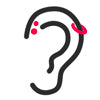
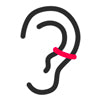

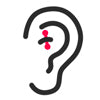






So, you’re thinking about getting a new ear piercing? Awesome! From the classic lobe to more out-there cartilage spots like the tragus or rook, there are literally dozens of ways to pierce your ear. Each placement brings its own vibe, pain level, and healing journey, making your ear a true canvas for your personal style.
Your Journey Into the World of Ear Piercings
Ever look at your ears and feel like they’re just… missing a little something? A bit of sparkle, maybe? You're definitely in the right place. Picking out a new piercing is a super exciting way to express yourself, but let's be real—with so many options, it can get overwhelming fast.
Are you going for a subtle stud, a bold hoop, or are you dreaming of a fully "curated ear" that tells its own story? Think of this guide as your personal piercing roadmap. We're going to dive into everything from the timeless lobe piercing to the edgy industrial bar, breaking down exactly what to expect with each one.
Planning Your Perfect Piercing
Before you even set foot in a piercing studio, it’s a good idea to think a few things through. For starters, your own unique ear anatomy plays a huge role in what will work for you. A great piercer will take one look at the folds and curves of your ear and know exactly which placements will not only look amazing but also heal well.
Here are a few things to chew on as you start your piercing adventure:
- Pain and Healing: Okay, let's talk about the ouch-factor. Pain is different for everyone, but generally, fleshy spots like the earlobe are a breeze (think a 2/10). Cartilage is a different story and can range anywhere from a 4/10 to a 7/10. Healing times are just as varied—a simple lobe can be happy in 6-8 weeks, while some tricky cartilage piercings can take a year or more to fully settle down.
- Your Lifestyle: Think about your day-to-day life. Do you live in over-the-ear headphones? Play contact sports? Some piercings, like the conch or tragus, can get irritated pretty easily depending on your habits, so it's good to plan ahead.
- The Jewelry! This is the best part, right? The piercing is just step one; the real fun is styling it. We'll show you exactly which flat back earrings are perfect for healing fresh cartilage and which hoops will make your helix the star of the show.
Ready? Let’s turn that blank canvas into a masterpiece, one piercing at a time.
Starting with the Classics: Lobe Piercings
Let's kick things off where most piercing journeys begin—the lobe! Think of it as the friendly, welcoming gateway to the world of ear styling. It’s the undisputed champion of first piercings, and for good reason. It’s one of the least painful spots and heals the fastest, making it perfect if you're new to the piercing game.
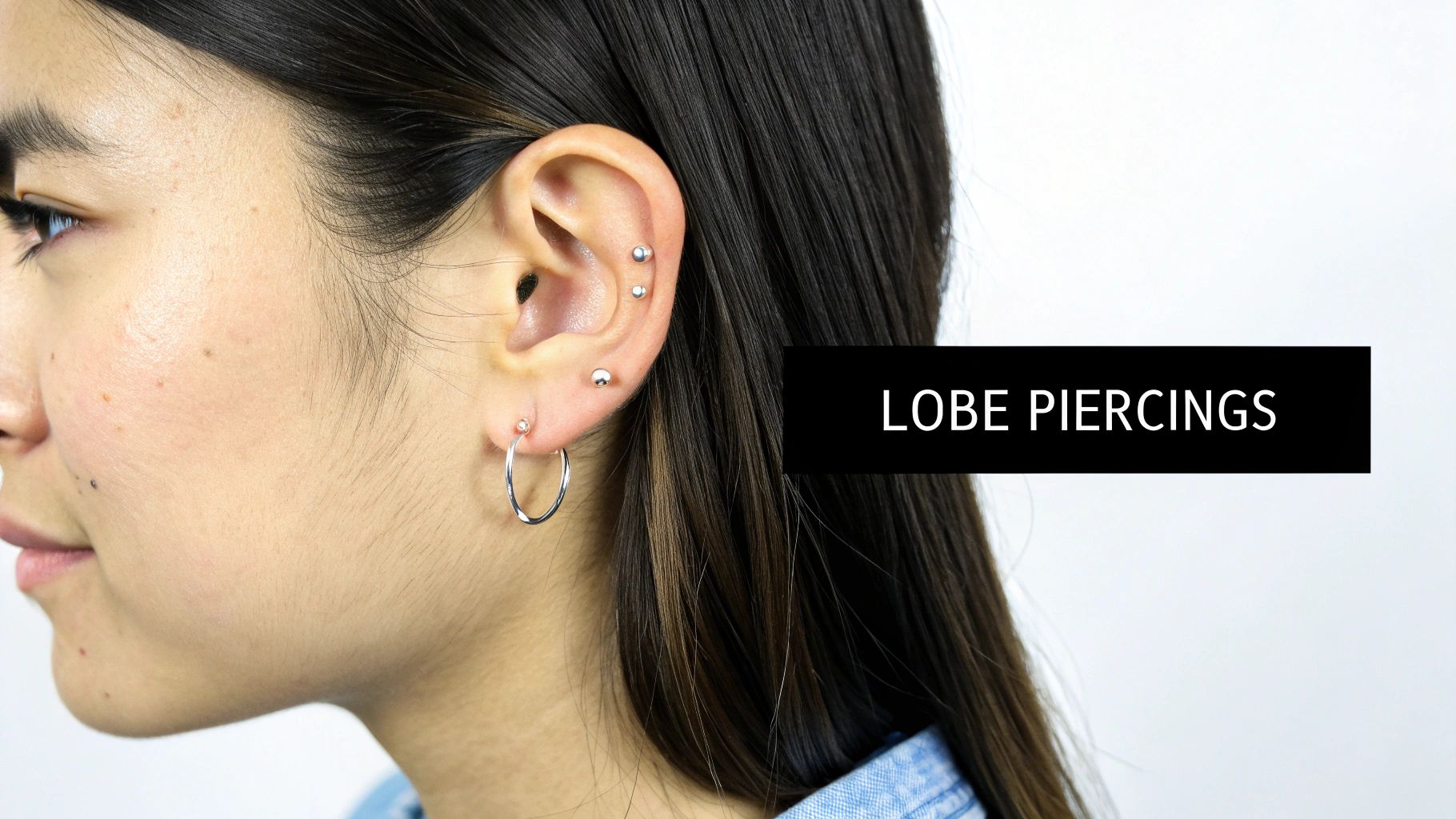
The lobe is that soft, fleshy part at the bottom of your ear, which is why it’s so forgiving. Unlike cartilage, it has a ton of blood flow, which really speeds up the healing process. This placement is your ultimate playground, a blank canvas ready for whatever style you can dream up.
Standard Lobe and Beyond
Your first stop is likely the standard lobe piercing, placed right in the center of that fleshy part. It's a timeless choice that looks amazing with a simple stud, a delicate hoop, or a dramatic dangle. It's like the little black dress of piercings—it simply never goes out of style.
But why stop at one? The upper lobe piercing sits just above the standard placement, following the natural curve of your ear. Placing two, three, or even four piercings in a row creates the super trendy "stacked lobe" look. This style allows for a beautiful cascade of jewelry, letting you mix and match tiny gems and hoops to create a unique constellation right on your ear.
Why You’ll Love Your Lobe Piercings
The real beauty of lobe piercings is their sheer versatility. You can go for an understated, elegant vibe with a single diamond stud or create a bold, maximalist look by filling up the space with an entire collection. Because they heal so much faster than cartilage, you can build out your curated ear much more quickly.
Pro Tip: When you're planning a stacked lobe, think about spacing. A skilled piercer can help you map out the placements to perfectly complement your ear's unique shape, ensuring your jewelry sits beautifully without looking crowded.
Whether you're starting fresh or adding to your collection, the lobe is the foundation of any great ear project. It's the perfect place to experiment with different styles. If you want to dive deeper, check out our complete guide to the standard ear lobe piercing to get all the details.
Exploring Stylish Outer Cartilage Piercings
Ready to level up from the lobe? Welcome to the exciting world of cartilage piercings. This is where your curated ear really starts to take shape, allowing for some seriously stylish and eye-catching placements along the outer rim of your ear.
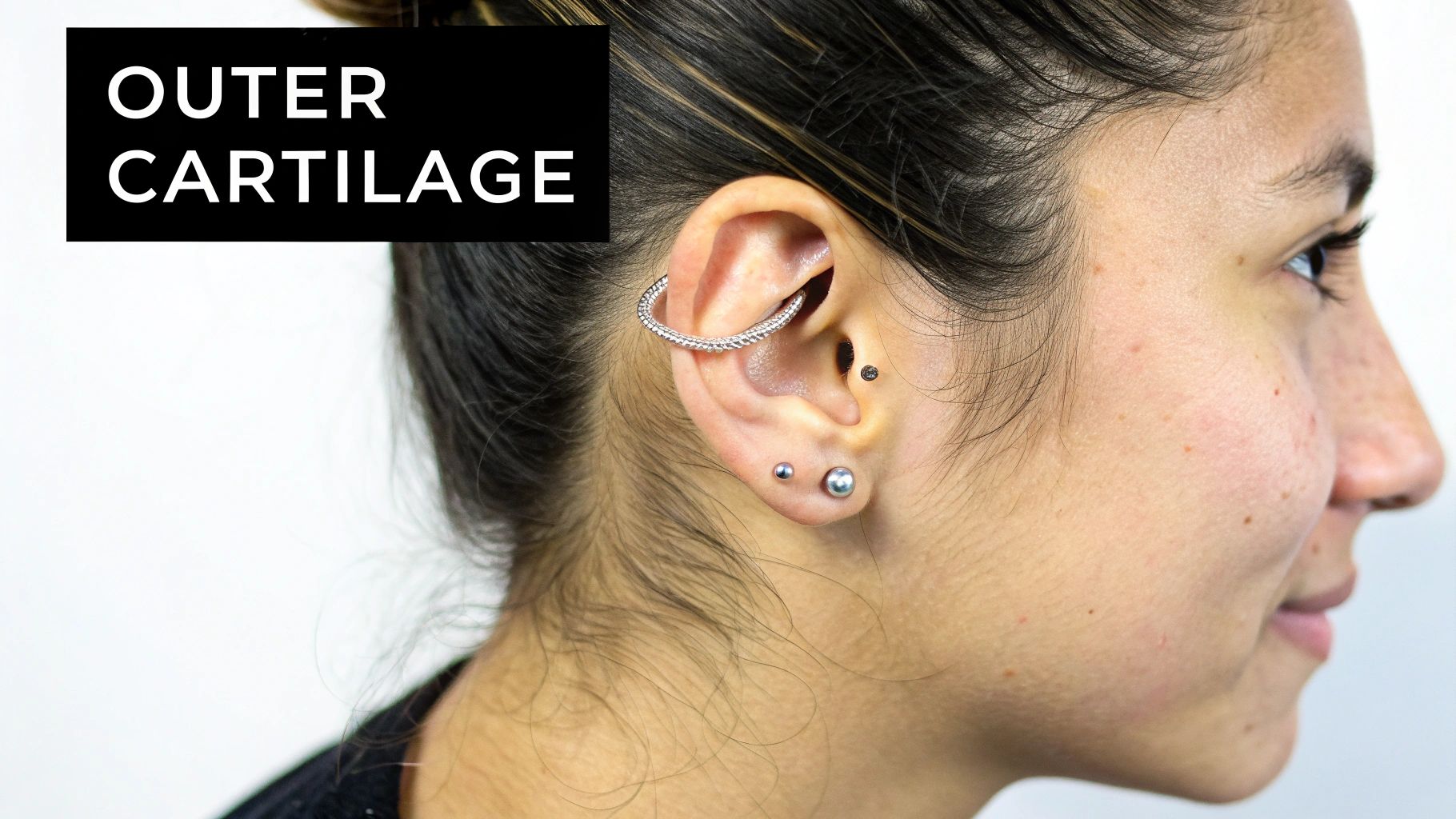
These spots are perfect for showing off your personality. But unlike the soft, fleshy lobe, cartilage is much tougher tissue. That means these piercings demand a bit more patience during the healing process. Trust us, though—the stunning results are more than worth the wait!
Let’s dive into some of the most popular outer cartilage ear piercing types.
The Ever-Popular Helix Piercing
If you’ve ever seen a cool little hoop hugging the upper curve of someone's ear, you've spotted a helix piercing. It's easily one of the most versatile and beloved cartilage piercings out there for a reason. Placed anywhere on the upper outer rim of the ear, the helix is your canvas.
- Pain Level: Expect a quick, sharp pinch, typically around a 5-6/10 on the pain scale. The initial sting fades pretty fast, but the area will feel tender for a while.
- Healing Time: Patience is everything here. A helix can take anywhere from 6 to 12 months to fully heal, so diligent aftercare is an absolute must.
- Best Jewelry: It’s smart to start with a flat-back labret stud for a smooth, snag-free healing process. Once you're fully healed, the sky's the limit—seamless rings, captive bead rings, and sparkling studs all look incredible.
Because the helix is so exposed, be mindful of catching it on your hair, clothes, or even your pillow, especially during those first few months.
The Tragus and Anti-Tragus
Now, let's talk about that little nub of cartilage that sits right in front of your ear canal—that's the tragus. A piercing here is subtle yet super chic, drawing attention right to the center of your ear. It’s the perfect spot for a tiny, sparkling stud that peeks out just enough to make a statement.
Its cool counterpart sits directly opposite, on the ridge of cartilage just above your lobe: the anti-tragus. It’s a less common but equally awesome choice that looks fantastic with a snug-fitting hoop or a delicate curved barbell.
Both the tragus and anti-tragus are all about that perfect, tiny accent. Think of them as the punctuation mark for your ear story—they complete the look with a touch of understated cool.
For both of these spots, you're looking at a pain level similar to the helix and a healing time of about 6-12 months. The biggest challenge? Keeping your earbuds, headphones, and phone from irritating them while they heal. For a deep dive into all the cartilage possibilities, check out our guide to ear cartilage piercings.
Getting Creative with Inner Cartilage Piercings
Alright, let's move inward from the ear's outer rim and explore the stunning piercings nestled within the folds of your cartilage. This is where you can get really creative. These spots are perfect for making a sophisticated, bold statement that feels personal and unique.
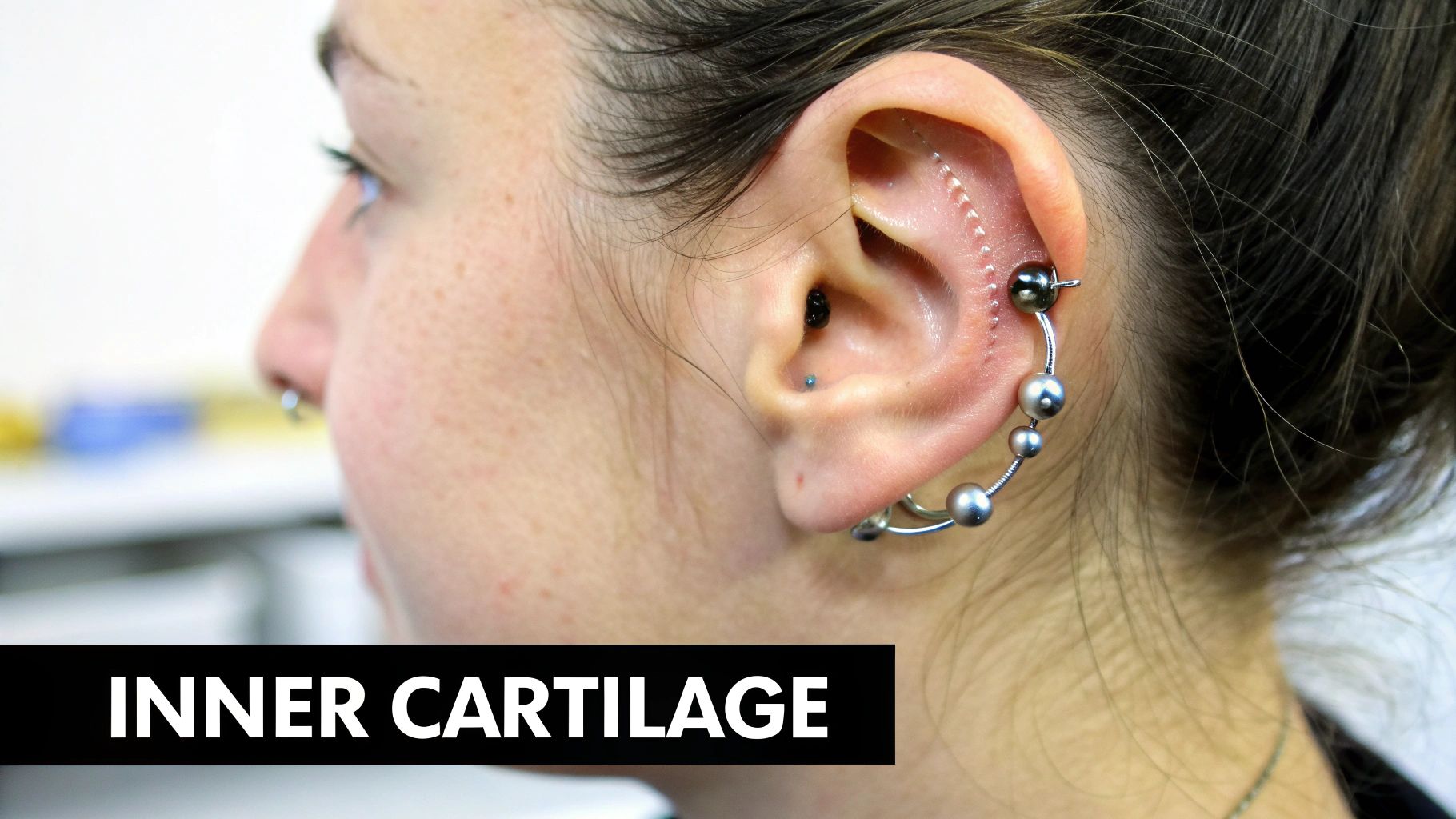
These inner ear piercings are all about working with the anatomy you have. A skilled professional will know instantly if your ear's shape is right for the piercing you're dreaming of, making sure the jewelry sits just right.
The Chic and Curved Daith Piercing
Tucked away in the absolute innermost fold of cartilage is the daith piercing. It's gotten incredibly popular, and for good reason. It looks amazing with a snug little hoop, but it’s also famous for the anecdotal belief that it can help with migraines. While that’s not scientifically proven, its cool factor definitely is!
- Pain Level: This is thick cartilage, so you can expect a solid 6-7/10. It's more of an intense pressure than a sharp pain, but it's over quickly.
- Healing Time: Settle in for a bit of a commitment. Full healing can take anywhere from 6-12 months.
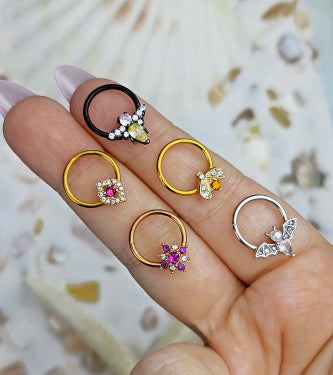
- Best Jewelry: Captive bead rings and clicker hoops are perfect. You’ll probably start with a slightly larger ring to give it some room for initial swelling.
The Vertical and Edgy Rook Piercing
Travel just a bit above the daith, and you’ll find the ridge of cartilage known as the rook. A rook piercing goes vertically through this fold, creating a cool, two-sided look that’s absolutely perfect for a curved barbell. It’s a real showstopper that adds an unexpected vertical touch to your ear curation.
A rook piercing is like a hidden gem. It’s not immediately obvious, but when someone catches a glimpse of that little curved barbell peeking out, it makes a serious impact.
Healing a rook takes patience since you have to care for both the top and bottom of the piercing. The go-to jewelry is a curved barbell, which lets you show off all kinds of decorative ends.
The Versatile Conch Piercing
The conch is that large, cup-shaped area of cartilage right in the center of your ear. This spot is incredibly versatile and lets you choose between two very different styles: the inner conch, perfect for a single, elegant stud, or the outer conch, where a large hoop can wrap dramatically around the outside of your ear.
A single stud placed in the inner conch gives off a minimalist, sophisticated vibe. If you want to get into the nitty-gritty of this particular style, check out our deep dive on the conch cartilage piercing. No matter which you go for, the conch makes a fantastic centerpiece for any curated ear project.
Bold & Advanced Ear Piercing Styles
Ready for a look that stops people in their tracks? If you're the kind of person who wants a piercing that's impossible to ignore, this is where the real fun begins. We're getting into the advanced ear piercing types that turn heads and show off a seriously bold personality.
Now, these styles do require a highly skilled piercer and your full commitment to aftercare. But trust us, the payoff is an epic look that’s all your own.
The Epic Industrial Piercing
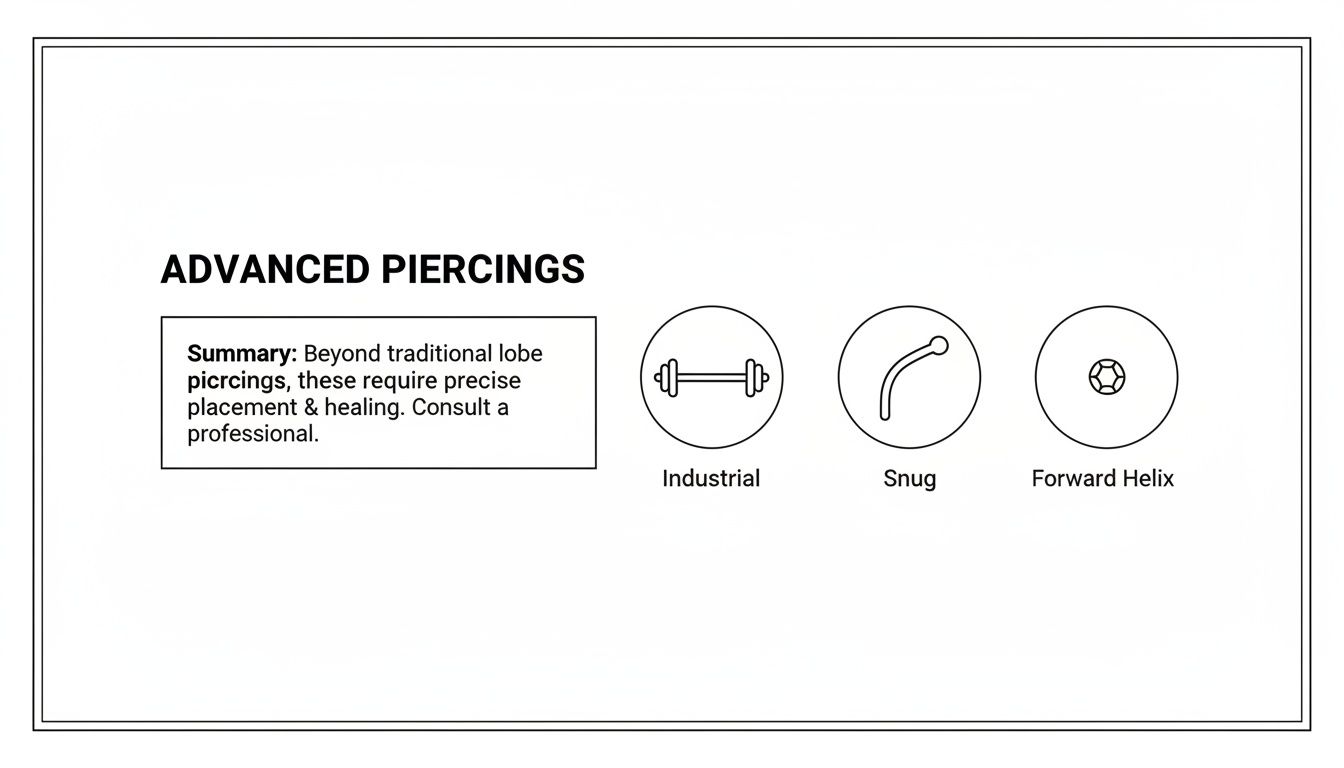
If you're ready to go big, the undisputed star of this category is the Industrial piercing. This isn't just one hole—it's two distinct cartilage piercings, usually on the helix and anti-helix, connected by a single, long straight barbell. It creates a striking, edgy aesthetic that’s both mechanical and beautiful.
Because it’s a two-point piercing, healing can be a bit of a journey. The absolute key is to avoid sleeping on it and to be super careful not to snag the long bar on hair or clothing.
Other Head-Turning Placements
Beyond the industrial, a few other advanced options command just as much attention. The Snug piercing is a horizontal piercing that goes through the inner ridge of cartilage just above the anti-tragus. It looks incredible with a tiny curved barbell hugging the cartilage.
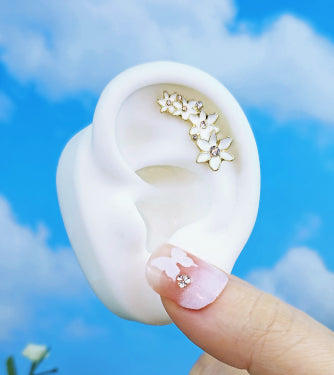
Another favorite is the Forward Helix, which is one or more piercings on the front-facing rim of cartilage where your ear meets your face. A cluster of three tiny, sparkling studs here creates a look that is delicate but undeniably cool, framing your face beautifully.
The secret to healing these advanced piercings is minimizing movement and irritation. A two-point piercing like the industrial is essentially two separate wounds trying to heal while being held together by a single piece of jewelry. Patience is your best friend here!
These piercings are a serious commitment, often taking 9-12 months or even longer to fully heal. The challenges are real, but the result is a truly customized and daring addition to your curated ear. Once you’re fully healed, you can explore Bodycandy’s incredible collection of industrial barbells.
Your Piercing Quick Reference Guide
Feeling inspired but a little dizzy from all the amazing options? We got you. This handy chart brings it all together so you can quickly compare the most popular ear piercing types. Think of this as your ultimate cheat sheet for planning your next piercing.
Ear Piercing Types Compared Pain Healing and Jewelry
Sometimes, seeing everything laid out side-by-side just makes it easier to decide. This little table is perfect for that—a quick glance gives you the essential info you need to compare some of our favorite piercing placements.
| Piercing Type | Pain Level (1-10) | Healing Time | Best Jewelry Style |
|---|---|---|---|
| Lobe | 2-4 | 6-8 Weeks | Studs, Hoops, Dangles |
| Helix | 5-7 | 6-12 Months | Flat Back Labrets, Hoops, CBRs |
| Tragus | 5-6 | 6-12 Months | Tiny Flat Back Studs, Hoops |
| Daith | 6-7 | 6-12 Months | Captive Bead Rings, Clicker Hoops |
| Rook | 6-8 | 9-12+ Months | Curved Barbells |
| Conch | 6-7 | 6-12 Months | Flat Back Studs (Inner), Large Hoops (Outer) |
| Industrial | 7-8 | 9-12+ Months | Straight Industrial Barbells |
Whether you're torn between a rook and a daith or just curious about what you're getting into with a helix, this chart is your go-to resource.
Remember: Healing times are just estimates! Your personal health, lifestyle, and how well you stick to your aftercare routine play the biggest roles in how quickly your new piercing will settle in.
So, save this, screenshot it, and use it to build the ear stack of your dreams with total confidence.
Got Questions? We've Got Answers.
You've got questions about all the different ear piercing types, and trust us, we've heard them all! This is where we tackle the stuff everyone wants to know. From what kind of jewelry to start with to nailing your cleaning routine, we're here to clear things up.
What Is the Best Material for a New Ear Piercing?
For a brand new, healing piercing, implant-grade titanium (ASTM F-136) is the undisputed champion. It's totally nickel-free, super lightweight, and won't react with your body, making it the top choice if you have sensitive skin.
Another fantastic option is 14k or 18k solid gold—but just a heads-up, never use gold-plated jewelry in a piercing that's still healing! We’ve got a huge stash of implant-grade titanium flat-back labrets and barbells that are perfect for getting started.
How Do I Clean My New Piercing Correctly?
Good aftercare is everything for a happy, healthy piercing. Your new best friend is a sterile saline solution, which you'll use once or twice a day. Just spray it on the front and back of your piercing, or you can soak a piece of non-woven gauze and gently hold it against the area.
Once you're done, pat it dry with a fresh paper towel. Stay away from cloth towels—they can hang onto bacteria and snag on your beautiful new jewelry.
Crucial Tip: Whatever you do, don't twist your jewelry! And please, step away from harsh stuff like alcohol or hydrogen peroxide. They can seriously irritate the healing tissue and just make the whole process take longer.
Can I Get Multiple Ear Piercings at Once?
Totally! Getting a few piercings in one sitting is a super popular way to kickstart a curated ear project. That said, we usually recommend sticking to no more than 3-4 at a time. This gives your body a fighting chance to heal everything effectively without getting overwhelmed.
It’s also a really smart move to get them all on one ear, so you still have a comfy side to sleep on. Always chat with your professional piercer about your vision! They can help map out a plan that works with your unique anatomy.
Ready to bring that dream ear stack to life? Bodycandy has everything you need, from healing-friendly titanium studs to statement-making hoops and barbells. Shop our massive collection today at https://bodycandy.com