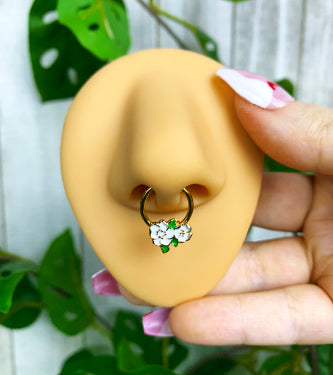
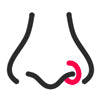
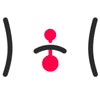

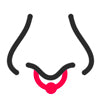









You finally got your nostril piercing settled down, the tenderness is gone, and now you're staring at jewelry options thinking, wait, why are there so many tiny metal shapes and why do they all look impossible to put in?
That moment is where a lot of people meet the curved nose ring.
If you're nervous about your jewelry slipping out, poking the inside of your nose, or feeling like you need an engineering degree just to change a stud, you're not overthinking it. Curved styles can look a little weird when you first hold one in your hand. Then you learn how they work, and suddenly they make a lot of sense.
Welcome to the World of Nose Rings
Nose piercings feel super current, but they aren't some random trend that popped up last week. In the West, nose piercing took off in the 1960s and kept growing from a subcultural look into a mainstream fashion choice. Today, it's worn around the world and has become one of the most common and expressive body modifications, as noted in this nose piercing history overview.
That matters because if you're wearing one now, you're not choosing some niche, confusing piece of jewelry. You're joining a style tradition that has become part of everyday self-expression for a lot of people.
Still, the shopping part can be messy.
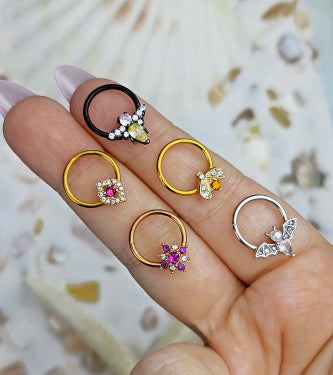
You see nose bones, L-bends, hoops, screws, twists, studs with gems, studs with balls, and clear retainers. Every listing seems to assume you already know the difference. If you don't, curved nose rings can sound way more complicated than they really are.
Quick reality check: A curved nose ring is popular for one very practical reason. It tends to stay put better than a straight post.
That little curve changes the whole wearing experience. It can mean less accidental fallout, a snugger fit, and a lot more confidence when you're washing your face, changing clothes, or sleeping on your side.
What Exactly Is a Curved Nose Ring
You spot a cute nostril stud online, add it to cart, and then pause. Curved? Twisted? Screw? Is this going to be comfortable, or is it going to fight you every time you try to put it in?
Fair question.
A curved nose ring is a nostril stud with a post that bends as it goes through the piercing, so the jewelry rests more securely inside your nose. You might also hear it called a nose screw, nose twist, or corkscrew nose ring.
The shape is the whole point. A straight post slides in on a direct path. A curved post follows the natural piercing channel, then tucks into place on the inside. That extra bend is why many people feel more confident wearing one during everyday stuff like washing their face, getting dressed, or sleeping on one side.

The basic parts
Most curved styles have three simple parts:
- The decorative top that sits outside your nostril
- The post that goes through the piercing
- The curved tail that rests inside your nose to help keep the jewelry in place
That curved tail matters more than it looks.
It works a bit like the hook on an earring backing. You do not really see it, but it changes how secure the piece feels once you're wearing it. Instead of hanging in a straight line and potentially slipping out more easily, the jewelry has a shape that helps it stay put after you guide it in correctly.
If you want to see how curved styles compare with other nostril jewelry shapes, this anatomy of a nose ring guide gives a useful visual breakdown.
How it compares to other nostril jewelry
A curved nose ring is usually the pick for someone who wants a stud look with a little more staying power.
L-bend studs have a sharp corner inside the nose. Some people find them simpler to insert at first, but they can also shift around more.
Nose bones use a straight post with a small rounded end. They can feel fast to put in, but that little ball has to pass through the piercing, which some people find annoying or too forceful.
Hoops create a totally different wearing experience. They are more visible, more style-forward, and less about that tucked-away stud feel.
So if your main question is, "What kind of nostril jewelry feels secure without looking bulky?" a curved nose ring is often the answer.
Why people keep choosing this style
The appeal is practical. You get the clean look of a stud, but the curved shape can make daily wear feel less stressful.
That matters if you are nervous about losing jewelry in your sleep, catching it on a towel, or dealing with a nostril piercing that gets irritated by too much movement. The design does not guarantee perfection, of course, but it often gives you a better balance of security, comfort, and a low-profile look than a totally straight post.
Nose piercing has a long history, and this history of nose piercing article explains how the practice developed across cultures. The curved version is a more modern jewelry shape, but its popularity makes sense. It solves a very current problem. You want something that looks good and feels easier to live with.
Finding Your Perfect Size and Gauge
You find a curved nose ring you love, add it to cart, and then hit the wall. 18G or 20G? 6mm or 8mm? Suddenly a tiny piece of jewelry feels weirdly high-stakes.
Good news. Sizing is much less scary once you split it into two parts: gauge and length.
Gauge is the thickness of the post
Gauge tells you how thick the part going through your piercing is. The two sizes you’ll see most often for curved nose rings are 20G and 18G.
Here’s the part that trips people up. Piercing gauges work backward. 20G is thinner than 18G.
A quick cheat sheet helps:
- 20G = thinner, often chosen for a more delicate fit
- 18G = slightly thicker, often feels a bit more substantial and secure
If your current jewelry goes in comfortably without sliding around too much, that’s your best clue. You probably want to stick with that same gauge.
Length is the wearable space inside your nostril
Length affects how the curved nose ring feels all day. For many curved styles, the post length usually lands somewhere in the 6mm to 8mm range. If sizing has ever felt confusing, this nose ring sizing Q&A about why a nose ring doesn’t fit gives extra context.
Real-life fit matters more than the number on the listing.
If the post is too short, your jewelry can press into the piercing and make you feel aware of it all day. If it’s too long, the top may sit away from your nostril or shift more than you want. A curved nose ring usually feels best when the top sits neatly outside and the curved tail stays tucked in without poking, scraping, or feeling cramped.
That balance is the whole point of this style. You want security without that “why is this thing fighting me?” feeling.
A good curved nose ring fit feels settled and low-stress. You notice how it looks, not constant pressure from the post.
How to choose your size without random guessing
Start with what your nose already likes.
-
Check your current jewelry
If you already wear a nostril stud that feels comfortable, look up the product details or original packaging. -
Measure carefully if you can
A caliper is best, but even a side-by-side comparison with known jewelry can help you avoid buying something wildly off. -
Ask your piercer for your exact size
This is the easiest route if you’re nervous about wasting money or dealing with a painful fit. A piercer can tell you both the gauge and a length that makes sense for your anatomy.
What a bad size feels like in everyday wear
This part matters because sizing problems often get mistaken for material problems.
Watch for these clues:
- The top sticks up or won’t lie flat: the post may be too long
- Your piercing feels squeezed: the post may be too short
- Insertion feels rough every time: the gauge may be off
- The jewelry keeps rotating or sitting strangely: the curve or length may not match your nostril shape very well
Your nose is not being difficult. It just has preferences.
That’s why “standard size” should be treated like a starting point, not a rule. The right curved nose ring should feel secure, easy to wear, and calm on your skin from morning to night.
Choosing the Best Material for Your Skin
Material is often the difference between a curved nose ring you forget about by lunch and one that keeps reminding you it exists.
That matters more than people expect. Two curved nose rings can look almost identical from the front, but feel completely different once you wear them all day. The curve helps the jewelry stay put. The material decides whether that secure fit feels calm and comfortable, or annoyingly reactive.

Why material matters so much in a curved nose ring
A curved post sits inside your nostril differently than a straight stud. It has more contact with the piercing channel, and it tends to stay in place instead of shifting around constantly. That can be great for security, but it also means your skin gets more ongoing contact with whatever metal or material you choose.
So if your nose is sensitive, the wrong material can feel like wearing the wrong fabric all day. Same shape. Same size. Completely different experience.
If you want a helpful overview of how different nose piercing materials affect comfort and wearability, that guide is a good companion read.
Curved Nose Ring Material Smackdown
| Material | Best For | Hypoallergenic? | Price Point |
|---|---|---|---|
| Titanium | Sensitive skin, everyday wear | Generally yes | Mid to higher |
| Surgical steel | Healed piercings, budget-friendly options | Sometimes, but may not suit everyone | Lower to mid |
| 14k or 18k gold | Classic luxe styling | Often well tolerated if quality is good | Higher |
| Borosilicate glass | Discretion, hypersensitivity | Yes, for many wearers | Varies |
Titanium for the cautious wearer
If your skin gets irritated easily, implant-grade titanium is usually the first material to try.
It is lightweight, widely preferred for sensitive piercings, and less likely to cause the mystery irritation spiral that sends you wondering whether the problem is your skin, your aftercare, or your jewelry. If you are tired of playing guessing games, titanium gives you a very calm starting point.
A lot of people also like it for everyday wear because it feels light in the nose. That may sound minor, but with a curved piece you can definitely feel the difference between jewelry that disappears into your routine and jewelry that feels present all day.
Surgical steel for a lower-cost option
316L surgical steel is common for nose jewelry, and plenty of people wear it comfortably in healed piercings.
The catch is nickel sensitivity. If cheap earrings have ever made your ears itchy, red, or weirdly sore, treat that as useful information. Your nostril may have the same opinion. Steel is often fine for some wearers and irritating for others, so this is not the best material to gamble on if your skin is already fussy.
Gold for people who want comfort and polish
A well-made 14k or 18k gold curved nose ring can feel comfortable and look expensive in the best way.
Quality matters a lot here. You want a smooth finish and solid construction, because a pretty top does not help much if the wearable part feels rough or inconsistent. For daily use, gold works best when you are buying real body jewelry quality, not mystery metal with a gold-colored coating.
Borosilicate glass for extra-sensitive skin or low-key wear
Glass surprises people, but it makes sense once you think about its practical use case.
If your skin reacts to metal, or you need something subtle for work or school, borosilicate glass can be a smart pick for a healed piercing. It is smooth, simple, and low-drama. Many wearers also like that it can look less obvious than shiny metal jewelry.
Quick rule: If your nose gets cranky fast, choose the material your skin likes first. You can choose the aesthetic version later.
How to tell whether your nose dislikes the material
Skin reactions are not always dramatic. Sometimes your nose gives you small, repeatable clues.
Watch for:
- Redness that keeps coming back
- Itching or a warm, stingy feeling
- Tenderness even when the jewelry is not getting bumped
- Irritation that starts after a material switch
- One metal feeling great while another never quite settles
That last one is especially helpful. If one curved nose ring feels easy and another feels annoying, your nose is giving you real information, not being dramatic.
Fit can still play a role, of course. But once the size is right, material is often the reason a curved nose ring feels secure and comfortable instead of secure and irritating.
How to Insert and Remove Your Curved Nose Ring
Your hands are clean, the mirror is ready, and then the tiny curve in the jewelry suddenly looks confusing.
That reaction is completely normal. A curved nose ring can seem weird the first time because your piercing channel is healed in place, but the jewelry has its own path. The trick is to follow the curve instead of trying to push the post straight through like a regular stud.

The basic motion
Start with clean hands and clean jewelry. Good lighting helps more than people expect.
Now go slowly:
- Line up the tip of the post with the piercing opening.
- Slide in just the very end.
- Rotate the jewelry gently as you guide it forward.
- Keep following the curve until the decorative top rests on the outside of your nostril.
A curved nose ring works a bit like threading a curved key through a lock. The shape is doing part of the job for you, but only if you let it move the way it was made to move.
If you ever tried to shove one in straight and your nose immediately got annoyed, that does not mean you're bad at this. It usually means the angle was off.
How to make insertion easier
Your nose tends to cooperate more when the tissue is relaxed and you are not rushing. A warm shower can help. So can a tiny bit of sterile saline or clean water on the post for slip.
A mirror with strong light also makes a big difference, especially if you are still learning the hand motion. Trying to do this by feel alone is how people end up poking around, getting frustrated, and blaming the jewelry.
If your skin is sensitive, go extra gently. A curved shape can feel secure once it's in place, but irritated tissue can make any insertion feel harder than it should.
This walkthrough can help if you want to see the motion in action:
Left bend and right bend
Some curved nose rings are bent for the left nostril and some for the right.
That sounds overly specific until you wear the wrong one. Then it makes immediate sense. The jewelry may press oddly, resist the turn, or sit in a way that never feels quite settled. If a screw-style curved ring keeps feeling awkward even though the size is right, the bend direction may not match your anatomy.
Removing it without drama
Taking it out uses the same motion in reverse. Slow is your friend here.
- Wash your hands
- Hold the decorative top steady
- Twist along the curve as you ease the post outward
- Pause if you feel pinching, sharp pain, or stubborn resistance
If your eyes start watering and you're gripping the sink for emotional support, stop for a minute. Add a little saline, relax your shoulders, and try again with a lighter touch.
The first removal can feel more intimidating than the first insertion because you do not get much visual help. That gets easier fast. Once your fingers learn the curve, the process usually feels much more manageable.
One more important note. If your piercing is fresh, irritated, or partly closed, do not force jewelry through it. At that point, getting help from a professional piercer is a lot kinder to your nose than turning a five-minute jewelry change into a week of tenderness.
Styling Your Curved Nose Ring Like a Pro
A curved nose ring can be tiny and subtle, or it can completely change your vibe.
That's what makes it fun. You're not locked into one look. The same basic jewelry shape can read polished, soft, edgy, playful, or straight-up sparkly depending on the top design.

For the low-key crowd
If you want people to notice your face before your jewelry, go for a small top.
Great minimalist picks include:
- Tiny ball ends for a clean, classic look
- Small bezel-set gems for a little light without full sparkle overload
- Clear or glass styles when you want your piercing to stay discreet
These styles work really well if your nostril piercing is part of an everyday look instead of the main event.
For the extra crowd
Maybe subtle isn't your thing. Fair enough.
A curved nose ring can also carry:
- Bright gem tops
- Cluster designs
- Shapes like stars, flowers, or hearts
- Warm gold tones that stand out more against the skin
The trick is balance. If your nose jewelry is doing a lot, you might want simpler earrings. If your ears are already stacked, a tiny nostril gem can tie everything together without competing.
Match the jewelry to your features, not just the trend
The best-looking curved nose ring usually isn't the trendiest one. It's the one that sits well on your nose and feels like you.
Some people love a dainty stone that catches light when they turn their head. Others want a smooth metallic dot that goes with every outfit. Both are good styling choices if you enjoy wearing them.
Your best style move is choosing a top size that looks intentional on your face, not oversized by accident.
Your Curved Nose Ring Questions Answered
Can you get pierced with a curved nose ring
Usually, a piercer will choose jewelry based on healing needs, placement, and swelling room. For fresh piercings, always follow your piercer's recommendation instead of choosing based on style alone.
Why is my curved nose ring so hard to insert
Most of the time, it's the angle. A curved nose ring needs a gentle twist, not a straight push. Trying after a warm shower and using a little sterile saline can help.
How do I know if the curve direction is wrong for me
If it always feels awkward, won't settle properly, or seems to fight the shape of your nostril, you may need the opposite bend orientation. A piercer can usually spot that quickly.
What should I do if my nose gets irritated
First, don't panic and don't keep messing with it all day. Check the basics:
- Material: your skin may prefer titanium or glass
- Fit: a post that's too long or too short can annoy the piercing
- Handling: frequent touching makes everything worse
If irritation keeps going, ask a professional piercer to assess the jewelry and fit.
Is a curved nose ring better than an L-bend
“Better” depends on what you care about most. Many people prefer a curved nose ring for security. Some prefer an L-bend because it feels simpler to insert. If you're active or worried about losing jewelry, curved styles often feel more dependable.
How should I clean it
Use the aftercare routine recommended by your piercer, keep your hands clean before touching the jewelry, and avoid unnecessary twisting if your piercing is still settling down. Gentle care beats over-cleaning every time.
Can I wear one every day
Yes, if the size and material work for you. The right curved nose ring should feel comfortable enough for daily wear, not like a constant little problem living on your face.
Ready to find your next favorite piece? Explore the curved nose ring styles and more at BodyCandy, and pick a look that feels secure, comfortable, and completely you.