


















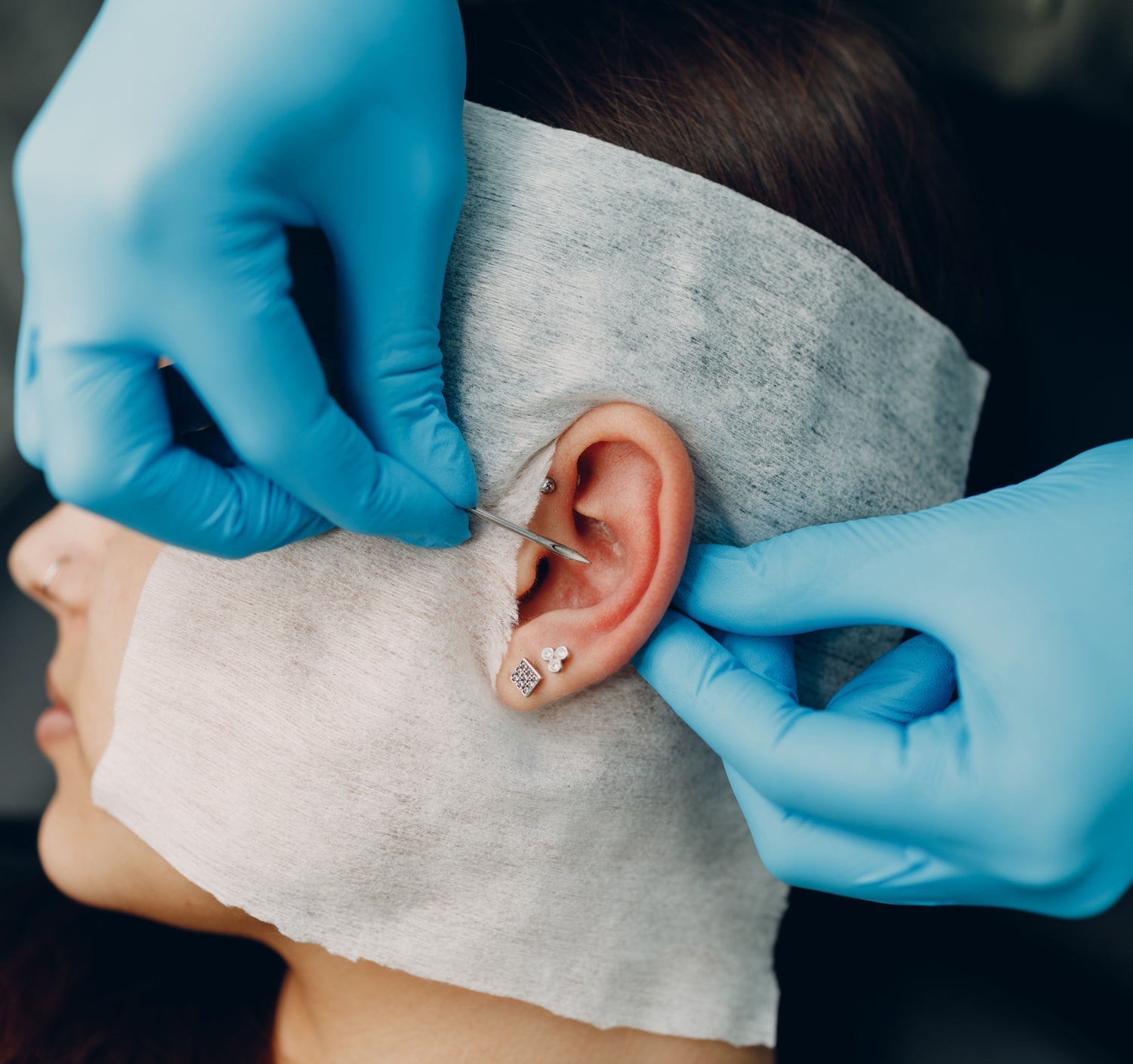
When you get a new piercing, your piercer should give you a few things afterwards like aftercare instructions, when to downsize, and a rough idea of how long it should take your new piercing to heal. We know, it’s hard to wait. Especially slower-healing piercings like snugs and industrials, it can just seem like an eternity before you can rock some stylish new jewelry. You might even consider changing it early. But before you do…. Here’s what can go wrong if you jump the gun — and how to do it safely when the time’s right.
Infection Risks
A piercing is actually an open wound, although we don’t often think of it that way. Putting new jewelry into an open wound can introduce bacteria and other nasties into that open wound. Imagine babying your piercing for months and then getting an infection and having to remove because you couldn’t wait any longer to change your jewelry. A nightmare. It may not even come from the actual jewelry but from your hands or from interrupting the healing process. An unhealed piercing is still growing fragile new cells inside the fistula. Disturbing these can end badly.
Prolonged Healing Time
Speaking of those fragile new cells, the mere act of moving your jewelry in and out of the fistula is enough to damage them. This can lead to delaying the healing time as well as infection. This is why it’s so important not to play with your jewelry. You don’t have to spin it; your skin will not grow onto it. That is a myth. All spinning your jewelry does is ensure that you will have to wear it for longer.

Starter Jewelry Is Starter Jewelry For A Reason
When you first get pierced, the piercer will generally select jewelry that is longer than the jewelry you’ll wear when it’s healed. This is to accommodate swelling that may come and go throughout the entire healing process. Even after the initial swelling has receded, your piercing may occasionally “flare up” and swell a bit. Changing your jewelry too soon doesn’t leave room for this and that can cause embedding and require emergency jewelry removal. Also, if you change the jewelry to a larger gauge than you were pierced with, that can also damage those healing cells in the fistula. So can putting in a different shape of jewelry than you were pierced with.
Closure
When you have a healing (or even fully healed but very fresh) piercing, the fistula can close in a matter of minutes after the jewelry is removed. Once the hole is closed, unless you have an insertion taper available or are able to get to your piercer pronto, you can only let it heal and hope that it can be re-pierced. Even attempting to forcibly re-insert the jewelry on your own can lead to damage to the fistula and set back your healing process at best. At worst, it’s going to hurt a lot, and you still won’t be able to replace the jewelry.
Is It Safe?
First of all, keep in mind the healing time your piercer should have given you, but remember that everybody’s body is different and we all heal at different rates. Make sure that the piercing shows all the signs of being healed. There should be no discharge, redness, or tenderness and the jewelry should move freely in the fistula. Finally, if you’re not certain it’s ready for new jewelry, have your piercer take a quick look at your piercing and make sure for you. They can even insert the new jewelry for you!

Pro Tip
Make your new jewelry the only jewelry you’re ever going to want. Treat yourself to high-quality materials like ASTM F-136 titanium or solid 14 karat gold. Maybe even consider a threadless style so that if you do want to rock something different down the line, you only have to change the ends.
So, there are the many reasons why you shouldn’t change your jewelry before you piercing is entirely healed. If you exercise patience, the final result will be something that is completely worth the wait. BodyCandy has tons of healed piercing safe options to upgrade your piercing the right way. Happy piercing!