








You got your nose pierced, you did the aftercare, you resisted the urge to yank the starter stud out on day ten, and now you’re staring at a cute new ring thinking, “Okay, can I change this thing already?”
That question hits almost everyone with a fresh nostril piercing. The tricky part is that a piercing can look calm on the outside while still being fussy on the inside. That’s where people get burned. They think the hard part is over, swap jewelry too soon, and suddenly they’re dealing with redness, soreness, or that annoying little bump that makes you want to fight your own face.
Changing nose piercing jewelry isn’t hard, but the first change needs a little respect. Timing matters. Fit matters. Material matters. And if the new piece doesn’t slide in the way you expected, that tells you something important.
So You’re Ready for a New Nose Ring?
Maybe your starter stud has officially entered its “I’m bored” era.
You’ve been scrolling tiny gems, sleek hoops, little opals, black finishes, gold finishes, maybe even building a whole face-curation mood board in your head. That excitement is part of the fun. A nose piercing is one of those small changes that can totally shift your look.

The cool part is, you’re not participating in some random passing trend. Nose piercing has serious history. It originated over 4,000 years ago in the Middle East, appeared in the Bible, moved into Indian bridal traditions in the 1500s, then later became part of Western counterculture before going mainstream, as noted in this history of nose piercing.
Why the first swap feels like a big deal
Your first jewelry change is where style finally meets healing reality.
A healed-looking nostril can still be tender inside the channel. The tissue is tiny, curved, and easy to irritate. So while changing nose piercing jewelry can feel like a quick bathroom-mirror task, this first switch is more like a test of patience and technique.
Real talk: The first change is usually not about what looks cutest. It’s about what your piercing will tolerate without getting mad.
A lot of people expect this to be super intuitive. Sometimes it is. Sometimes the jewelry won’t line up, your fingers feel huge, and the hole seems to disappear the second the starter piece comes out. That doesn’t mean you’re bad at this. It means nostril jewelry is small, slippery, and weirdly humbling.
The goal isn’t bravery
The goal is to keep your piercing happy while getting the look you want.
That means paying attention to readiness, not just impatience. If you do that, the swap is a lot less dramatic, and you won’t end up turning a fun style change into a healing setback.
The Waiting Game When Can You Change Your Piercing?
The answer commonly desired is a date.
The answer your nose wants is a little more annoying. Professional piercers recommend waiting a minimum of 6 months before changing nostril jewelry, because even though initial healing may look okay earlier, changing it too soon often leads to irritation bumps, prolonged healing, and other complications, according to this guide on when to change nose piercing jewelry.

The calendar matters, but your body matters more
A lot of confusion starts here. People hear that a nostril piercing can settle down in the early weeks, then assume that means it’s ready for jewelry changes. Not quite.
Initial healing and full stability are not the same thing. A piercing can stop looking dramatic long before it’s ready to handle removal, reinsertion, and a totally different shape of jewelry. That’s why some people feel fine one day, swap to a hoop the next, and spend the rest of the week wondering why their nose suddenly hates them.
Green flags that say your piercing may be ready
Before changing nose piercing jewelry, look for more than “it seems okay.”
Use this checklist:
- No tenderness when you gently touch nearby skin
- No visible swelling or puffiness around the entry point
- No discharge and no fresh crusting that keeps coming back
- No redness that lingers around the piercing
- Easy movement of the original jewelry without catching or stinging
If even one of those feels questionable, wait a little longer.
If you have to talk yourself into believing it’s healed, it probably isn’t ready yet.
What actually happens if you change it too soon
This is the part people underestimate. The piercing channel is still delicate, so taking jewelry out and putting new jewelry in can irritate the tissue fast.
You might notice:
- A sharp sting on insertion
- Redness that ramps up instead of calming down
- A bump forming near the piercing
- That “tight” feeling like the jewelry suddenly doesn’t fit
- A healing timeline that starts dragging instead of improving
Sometimes the problem isn’t dramatic. It’s just enough irritation to keep the piercing in a constant state of annoyance. That’s why waiting often feels boring but pays off big later.
A quick self-check before you try
Stand in front of a mirror and ask yourself:
- Can I touch around the piercing without discomfort?
- Has it looked calm for a while, not just for two good days?
- Am I changing it because it’s ready, or because I’m tired of the starter piece?
If the honest answer to that last one is “mostly because I’m bored,” you’re in very good company. Just don’t let boredom make decisions for healing tissue.
Get Ready Your Piercing Change Toolkit
Don’t start changing nose piercing jewelry by rummaging through drawers with one hand while your stud is halfway out. Set yourself up first.
This goes way smoother when everything is clean, close by, and easy to grab. Think less chaos, more tiny piercing spa setup.

What to have within reach
- Sterile saline solution. You’ll want this for cleaning the area before and after the swap.
- Sterile gloves if you have them. Clean hands are the baseline, but gloves give you extra control and cleanliness.
- A mirror with good lighting. Bad lighting turns a simple jewelry change into a guessing game.
- Clean paper towels. These are better than fluffy bathroom towels because they don’t shed fibers that can stick to jewelry or the piercing site.
- Your new jewelry, already checked. Make sure the style, thickness, and shape are what you intend to wear.
- A calm few minutes. Rushing is how people drop jewelry in the sink and make bad choices.
Why prep matters more than people think
The awkward part of a nose jewelry swap is usually not pain. It’s fumbling.
Tiny jewelry gets slippery. Backs roll away. Curved posts don’t line up on the first try. If you stop mid-change to search for saline or wipe your hands on a random towel, you’re making things harder on yourself and rougher on the piercing.
A smart move is to double-check fit before you begin. If you’re not sure why one piece sits nicely and another feels wrong, this nose ring sizing Q and A helps explain the usual fit issues.
Small prep, big payoff: Open the jewelry package, identify how it closes, and practice the motion in your fingers before anything goes near your nose.
Your setup should feel boring
That’s a compliment.
You want the room clean, the surface wiped down, your hands washed, and your jewelry ready. The less exciting the setup, the better the outcome. Save the drama for the mirror selfie after.
The Main Event A Step-by-Step Guide to the Swap
Start when you’re not sweaty, rushed, or about to leave the house.
Wash your hands thoroughly and dry them on a clean paper towel. If you’re using gloves, put them on after your hands are clean and dry. Then take a breath, because most of the stress comes from being tense, not from the jewelry itself.
Removing the starter piece without picking a fight
Look closely at what kind of jewelry you’re wearing now. Some starter pieces unscrew. Some pull apart. Some curved nostril studs just need a careful slide-out.
Go slowly. Support the outside of your nostril with one hand and work the jewelry with the other. If it feels stuck, don’t yank. Add a little saline, relax your grip, and try again gently.
Once it’s out, clean the area with saline and pat dry with a clean paper towel.
Inserting the new piece
This part is where people usually expect magic and get humbled instead.
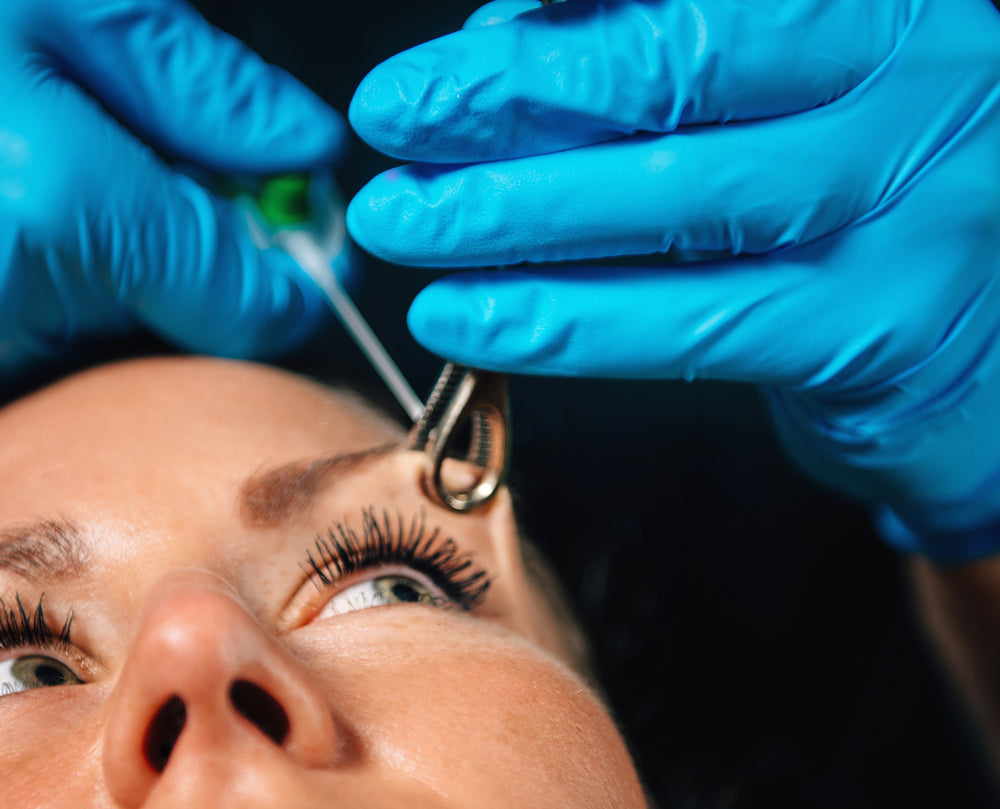
If you’re using an L-shaped stud, aim the tip into the piercing and gently guide the bend into place. If it’s a corkscrew, you’ll need to rotate it in slowly so the curve follows the piercing channel. If it’s a nose bone, take extra care because that little end can feel snug going through.
Use minimal pressure. You are guiding, not forcing.
The jewelry should follow the path your piercing already has. You should not be creating a new one.
If the tip keeps missing, try adjusting the angle of your nose slightly in the mirror. Sometimes a tiny change in wrist position makes all the difference. It can also help to insert right after cleansing, when everything is clean and a little less dry.
If it won’t go in easily
Stop there.
If new jewelry won’t go in easily, don’t force it. A piercing can heal at a slight angle, which means a straight post may not match the channel well. Forcing jewelry through can cause trauma and irritation. In that case, try a different style, such as an L-bend instead of a bone, or see a professional piercer, as explained in this guide to piercing angles and jewelry fit.
How geometry mismatch shows up in real life
This is one of those “I wish someone told me this” moments.
Your piercing might be healed, but the channel may not be perfectly straight. That means:
- A straight style may hit resistance
- One shape may sit flush while another sticks up oddly
- The jewelry may only seem to fit from one awkward angle
- You may feel pressure instead of a smooth slide
That doesn’t always mean something is wrong with the piercing itself. It may just mean your anatomy and your healed angle prefer one jewelry style over another.
A few examples:
- An L-shape can be easier for a slightly angled piercing because it gives you a little flexibility while inserting.
- A corkscrew can work well if you’re patient with the curve.
- A nose bone is often the least forgiving if the fit isn’t right.
Right after the swap
Once the jewelry is in, leave it alone.
Clean the area with saline and keep an eye on it over the next several days. A little awareness is good. Constant touching is not. If it feels mildly sensitive right after the change, that can happen. If it starts getting hotter, redder, or more irritated as time goes on, that’s your sign to reassess.
For the first stretch after a swap, keep things simple:
- Clean with saline
- Avoid unnecessary twisting
- Skip rough makeup application around the area
- Be careful with towels, shirts, and pillowcases
- Don’t keep changing it back and forth because you’re undecided
The first successful change is usually the least glamorous one. That’s normal. Smooth and uneventful is exactly what you want.
Choosing Your Next Look A Guide to Nose Jewelry
Your first post-starter piece should be cute, yes. It should also be easy to wear.
A lot of irritation comes from choosing jewelry based only on appearance. For a fresh first swap, shape and material matter just as much as sparkle.

Which style makes the easiest first change
Here’s the quick comparison often needed.
| Jewelry Style | Ease of Change | Security (How likely it is to fall out) | Best For |
|---|---|---|---|
| L-shaped stud | Easy for many people to guide into place | Moderate | First swaps, slightly angled piercings, simple everyday wear |
| Corkscrew stud | Moderate, takes a little practice | Good | People who want a secure stud once they learn the motion |
| Nose bone | Can feel tricky and tight | Good once inserted | Experienced wearers who already know this shape works for them |
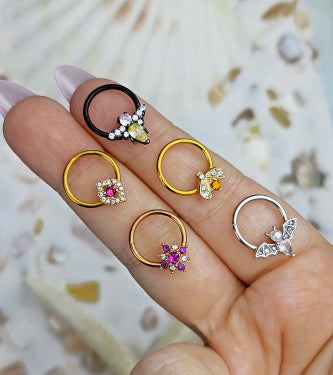
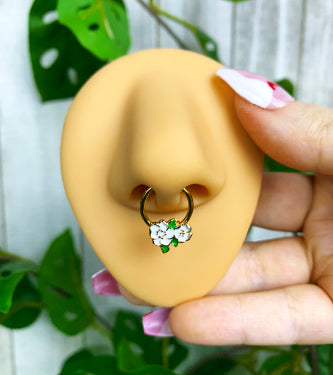
| Hoop or ring | More advanced for a first self-change | Varies by closure style | Fully settled piercings and people comfortable with ring insertion |
The style advice people usually need
For a first solo change, a stud is usually the least dramatic choice.
Rings can look amazing, but they move more, catch more easily, and can be frustrating if your piercing is still sensitive. If your nose has only ever known a starter stud, jumping straight to a hoop can be a lot for the tissue and a lot for your patience.
Practical rule: If your piercing has been peaceful, keep the first change peaceful too. Save the trickier style for later.
Material matters during the swap itself
This part gets overlooked all the time. Even if your piercing seems healed, the act of changing jewelry can create a secondary healing micro-phase for 48 to 72 hours, which temporarily increases sensitivity. During that window, implant-grade titanium or 14k gold can reduce the risk of irritation, according to this explanation of material choice during nose ring changes.
That means the “just this once” mystery metal gamble is not the move.
If you have sensitive skin, the safest plan is simple:
- Choose implant-grade titanium when you want the lowest-drama option
- Pick 14k gold if you want a classic upgrade with a gentler material choice
- Be cautious with anything that has given you irritation before
- Avoid downgrading material quality just because the piece is cute
If you want a deeper breakdown of what different metals can feel like in a nose piercing, this guide to picking the right nose piercing material is worth a look.
Pick for your real life, not just the photo
Ask yourself what you do all day.
If you change clothes fast, sleep on your face, wear glasses, wash your face aggressively, or fiddle with jewelry when you’re stressed, pick a piece that’s simple and secure. The smartest first change often isn’t the boldest one. It’s the one that lets your piercing stay calm while still giving you that fresh new vibe.
Help! Common Issues and How to Fix Them
You are not the only person who has stood in front of a mirror thinking, “Why is this tiny piece of jewelry winning?”
That’s extra true with nostril piercings. At one large group of studios, nostril piercings were the second most popular service in 2019, with 2,412 procedures performed, so questions and little problems during healing and jewelry changes are very common, as shown in these 2019 piercing statistics from Infinite Body Piercing.
I can’t get the new jewelry in
First, stop trying to brute-force it.
Wash your hands again, apply saline, and try once more with a calm angle and lighter pressure. If it still won’t go, the style may not match your piercing well. That’s when switching to a different shape or seeing a piercer makes more sense than turning your nostril into a battleground.
I dropped the jewelry
If it’s no longer clean, don’t pop it in anyway.
Set it aside and use a properly clean piece instead. The fastest way to create a problem is to take a borderline-healed piercing and add dirty jewelry to the mix.
My nose is red and sore after changing it
Mild irritation can happen after a swap. Your piercing just got disturbed.
Keep the jewelry in place, clean with saline, and leave it alone. If the irritation settles, great. If it keeps escalating, the fit or material may be the issue. If metal sensitivity is on your radar, this guide to allergic reactions and piercing care can help you think through what your skin may be reacting to.
Is it irritation or something more serious
Irritation often looks like localized redness, tenderness, or a small bump after friction, pressure, or a rough jewelry change.
Something more serious deserves professional attention, especially if you notice worsening symptoms, significant discharge, or the area seems increasingly angry instead of gradually calming. If you’re unsure, that’s your cue to check with a professional piercer or a medical professional rather than guessing.
When a piercing issue keeps getting worse instead of slowly settling, stop troubleshooting it like a DIY project.
Flaunt Your New Look and Keep It Happy
The best changing nose piercing advice is not glamorous. Wait longer than you want to, use cleaner tools than you think you need, and choose better jewelry than the cheapest option in your cart.
That’s what keeps a good piercing from becoming a high-maintenance mess.
Once your new piece is in, let it settle. Don’t keep touching it, don’t keep swapping it, and don’t panic over every tiny sensation. A calm piercing usually stays calm when you treat it gently.
Ready to upgrade your look without the guesswork? Browse BodyCandy for nose jewelry that fits your style, then come back to this guide when it’s time for your next swap.