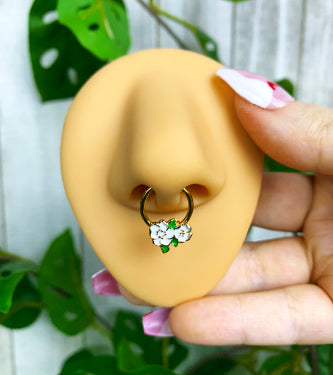




















You may have heard the term “migration” in regard to piercing and wondered what it was. No, your piercing will not fly south for the winter, this is something not as nice. Piercing migration is when your piercing begins to move through the tissue and ends up in a different position than when it was pierced. Migration can be the early stages of piercing rejection, which is when your body pushes your piercing out through your skin. However, piercings that are beginning to migrate can still be saved and migration doesn’t have to end in rejection. Let’s take a look at migration and how to avoid it in the first place.
Which piercings are likely to migrate?
Often, it’s the same piercings that have high rates of rejection. These are surface piercings such as navel, eyebrow piercings, and dermals, as well as piercings done with surface bars such as anti-eyebrow and forward anti-tragus piercings.

How to Spot It
If your piercing is beginning to reject, it may look like it’s sitting in a shallower position than it initially was. Alternately, it may look like one end of the jewelry is more embedded in your skin than the other, like a seesaw. You may be able to see more of the barbell or more of the post, depending on the style of jewelry that was used. The skin over or under the jewelry may look thinner or shiny and it may feel irritated, or the jewelry may feel looser in the piercing.
Causes
There are a few things that can cause your piercing to migrate. One is having it performed by an inexperienced piercer who placed it improperly. (This is why we place so much emphasis on going to trustworthy, experienced piercers!) Another cause can be the jewelry itself. If it is too small, too heavy (especially for the navel), or of poor quality, you may find it beginning to migrate. It is vital in this situation that you go to a trustworthy piercer and have that jewelry changed. Another potential cause is trauma, such as sleeping on your piercing or snagging it on something. Not having the correct anatomy for the piercing can definitely cause migration, yet another reason to go to an experienced piercer. And sometimes your immune system can simply decide to identify the jewelry as a foreign object and start moving it.

How to Make it Stop
The best way to make it stop is to prevent from starting. The best way to do that is to make sure your piercer is both experienced and trustworthy. (We repeat a lot because it’s important.) Your piercer should understand anatomy and placement, so the piercing is done correctly to begin with. Make sure you are using high-grade jewelry like ASTM F-136 titanium or other biocompatible materials. Make sure your jewelry is right for your anatomy and make sure that piercing jewelry is long enough to accommodate swelling. Avoid putting pressure on your piercings, meaning that you should do everything possible to avoid sleeping them. If it’s an ear piercing, consider using a traveler’s neck pillow to put your ear in at night. Also, avoid tight clothing on your piercing and DO NOT play with it. And follow the recommended aftercare routine. Don’t try to DIY this on your own.
What to Do if it Happens
If you think your piercing is migrating, don’t just ignore it and hope it will get better on its own. The sooner you deal with it, the better. See your trustworthy, experienced piercer as soon as possible for advice and fresh jewelry if needed. Your piercing may not be salvageable. In that case, removal is your only option and it’s best to do it early because leaving it can lead to noticeable scarring. After it has healed, you can consult your piercer about whether or not you can try and get it re-pierced.
Hopefully you understand piercing migration a little better now. With any luck, it’s something you’ll never have to deal with but if it should happen to you, now you will be able to recognize it and deal with it quickly. Happy piercing!