















So, you're dreaming about some fresh new bling, but one tiny question keeps popping into your head: how much is this going to hurt? The honest answer is that it really depends. Some piercings are just a quick pinch (like a classic earlobe), while others that go through thick cartilage can feel much more intense (looking at you, industrial).
Everyone's pain experience is unique, but a solid piercing pain level chart is the perfect way to get a feel for what you're getting into. Ready to dive in? Let's break it down together.
Your Ultimate Piercing Pain Cheat Sheet
Let's be real—pain is personal. What feels like a 2/10 for your best friend might feel like a solid 5/10 for you. Our bodies, nerve endings, and overall pain tolerance are all different. Still, having a general idea of what to expect helps you mentally prepare and walk into that studio feeling confident and ready.
This is where a piercing pain level chart becomes your best friend. Think of it as a guide that ranks different piercings on a scale, usually from 1 (barely there) to 10 (yep, you'll feel that one). It sets a realistic expectation so there are no major surprises when you're in the piercer's chair.
For a deeper look into what to expect during your appointment, check out our guide on preparing for your first-time piercing.
Quick Look Piercing Pain Scale
To give you a quick snapshot, we’ve put together a simple table that breaks down some of the most popular piercings and where they typically land on the pain scale.
| Pain Level (1-10) | Piercing Type | What It Feels Like |
|---|---|---|
| 1-3 (Mild) | Earlobe, Smiley | A quick, sharp pinch that's over in a second. |
| 4-6 (Moderate) | Helix, Nostril, Navel | A more noticeable, sharp pressure that might sting for a moment. |
| 7-8 (Intense) | Rook, Industrial, Nipple | A sharp, intense sensation that definitely gets your attention. |
| 9-10 (Very Intense) | Septum, Genital | A very sharp, eye-watering pain that is brief but significant. |
The perception of pain can vary widely, but these charts are often created by compiling feedback from thousands of clients. For instance, a standard ear lobe piercing consistently rates low on the pain scale at around a 3/10, but something like a septum piercing often lands much higher, around a 7/10 for many people.
Key Takeaway: Think of this chart as your roadmap, not a rigid rulebook. It’s here to empower you with knowledge, so you can choose your next piercing with confidence and excitement. Ready to explore what makes some piercings hurt more than others? Let's get into it.
What Actually Influences Piercing Pain
So, why did your friend barely flinch getting their helix piercing while you’re still working up the nerve? It’s not just in your head. While a piercing pain chart gives you a great starting point, the actual "ouch" is a unique recipe of factors that come together on appointment day.
Understanding these variables pulls back the curtain on the whole process. It's not some random roll of the dice; it's a mix of your own anatomy, your piercer's technique, and even your mindset. Knowing what’s at play gives you the power to make your next piercing experience as smooth as possible.
Location, Location, Location
The number one thing that dictates piercing pain is simple: where on your body it is. This all comes down to what the needle has to pass through.
-
Fleshy vs. Cartilage: Think about an earlobe piercing. It’s soft, has fewer nerve endings, and is usually a breezy 2/10 on the pain scale. Now, contrast that with a rook or industrial, which has to go through thick, hard cartilage. Cartilage is much tougher tissue, making the sensation way more intense.
-
Nerve Density: Some spots are just packed with more nerve endings, and that’s a fact. This is exactly why nipple and certain genital piercings sit higher on the pain scale—those areas are literally built for sensitivity.
The Piercer’s Skill and Technique
Never underestimate the importance of your piercer's experience. A seasoned pro who is confident, swift, and precise can make a world of difference in how much a piercing hurts.
A great piercer uses a brand-new, razor-sharp, hollow needle to create a perfectly clean channel for the jewelry. Their technique is quick and exact, which minimizes trauma to the surrounding tissue and, you guessed it, reduces pain. On the flip side, an inexperienced piercer might be slower or less steady, which can make for a much more uncomfortable experience.
The tool they use is a huge deal, too. A professional will always use a sterilized needle, never a piercing gun. Guns use blunt force to ram jewelry through tissue, causing a ton of unnecessary damage that leads to a more painful piercing and a rougher healing process. We have a whole deep dive into the piercing gun debate if you want to learn more.
Needle Size Matters
The thickness of the needle, known as the gauge, also plays a part. Most standard piercings use a needle somewhere between a 20g (thinner) and a 12g (thicker). A larger gauge needle has to create a slightly bigger hole, which can feel more intense.
For example, an industrial piercing often requires a 14g needle for the barbell, but a simple nostril piercing might just use a tiny 18g or 20g needle. The difference is pretty subtle, but it definitely contributes to the overall sensation.
Your Personal Pain Tolerance and Mindset
At the end of the day, a lot of it just comes down to you. Everyone’s pain threshold is different. What one person describes as a mild pinch, another might find genuinely painful. Things like your general health, stress levels, and even how much sleep you got the night before can affect how sensitive you are.
Your mental state is also incredibly powerful. If you walk into the studio a bundle of nerves, your body is going to be tense and on high alert, which can amplify pain. But if you can stay relaxed, breathe deeply, and focus on how excited you are, the whole thing will feel much, much smoother. A calm mind really does lead to a calmer piercing.
Alright, let's get into the nitty-gritty you've been waiting for. Now that we've covered why different piercings hurt in different ways, we can break down what to expect from each one. Think of this as your personal pain map, guiding you through every pinch, sting, and "ouch" you might encounter.
We're going to take a tour of the most popular piercing spots—from your ears down to your face and torso. For each one, I’ll give you a straight-up pain rating on that trusty 1-10 scale, describe what the sensation actually feels like, and give you the real-world context you need to choose your next piece of bling with confidence.
Decoding Ear Piercing Pain
The ear is basically a playground for piercings, offering a huge range of sensations. What you'll feel depends entirely on whether you're going through the soft, fleshy lobe or the tough, dense cartilage that makes up the rest of the ear.
-
Earlobe & High Lobe (Pain Level 2/10): This is the OG piercing for a reason. It’s a super quick pinch through soft tissue, and most people say it hurts less than a flu shot. You'll feel a brief sting that’s gone almost as soon as it starts, making it the perfect gateway piercing.
-
Helix (Pain Level 5/10): Welcome to the world of cartilage! The helix, located on the outer rim of your ear, feels like a sharp, warm pressure. It’s definitely more intense than a lobe, but it's over so fast that most of us are pleasantly surprised by how manageable it is.
-
Tragus (Pain Level 6/10): This one is on that little nub of cartilage right in front of your ear canal, and it delivers a very distinct pressure pop. The pain is sharp but quick. The weirdest part for many is hearing a "pop" so close to their eardrum, but the actual sensation is surprisingly short-lived.
This visual breaks down all the different factors that can tweak your personal pain experience, from your body's nerve layout to your own stress levels on piercing day.
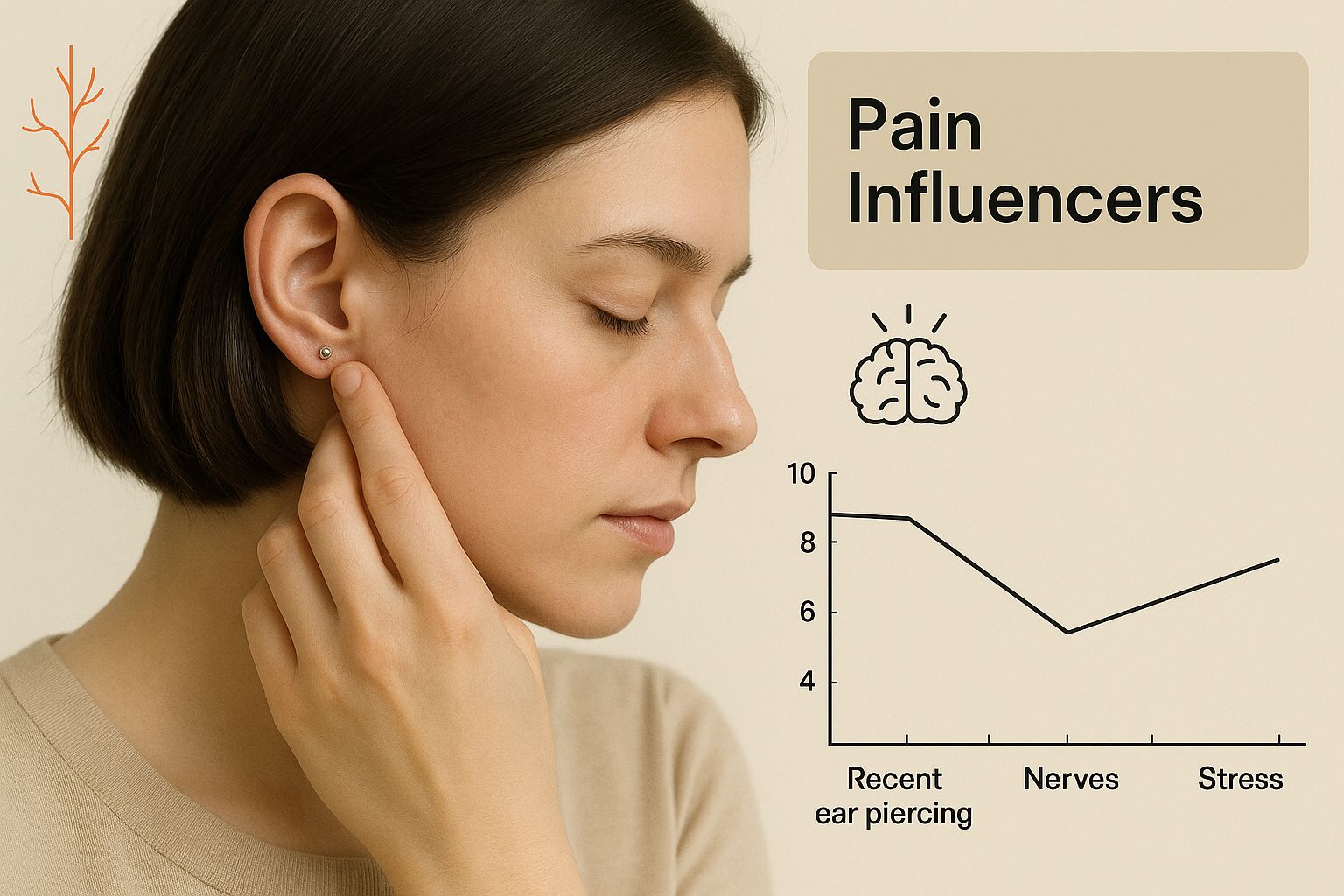
Ultimately, just knowing what influences the pain can help you walk in feeling more relaxed and ready, which makes for a much smoother session.
The More Intense Ear Spots
Ready to level up? These cartilage piercings are known for being a bit spicier, but let's be real—the stunning results are totally worth the brief discomfort.
Rook (Pain Level 7/10): This one goes through a thick fold of cartilage deep inside your inner ear. Because that tissue is so dense, the piercer has to apply a good amount of pressure. Expect a sharp, intense crunching sensation that lasts for just a few seconds. It’s a definite eye-waterer for some, but it heals into a gorgeous and unique look.
-
Conch (Pain Level 7/10): Piercing the inner "shell" of your ear, the conch is another one that goes through thick cartilage. This one feels more like a deep, thudding pressure rather than a sharp sting. The initial ouch is strong, but it quickly settles into a dull, manageable ache.
-
Industrial (Pain Level 8/10): The industrial is a double-whammy, no doubt about it. It’s two separate cartilage piercings connected by a single long barbell. You’ll feel two sharp, intense moments of pain, one for each hole. The second one often feels more intense simply because your adrenaline is already pumping from the first.
Facial Piercing Sensations
Moving on to the face, where the combination of nerve endings and different tissue types creates a whole new set of experiences.
-
Nostril (Pain Level 6/10): This one is famous for making your eyes water! It’s not necessarily because it’s extremely painful, but because it triggers the nerves connected to your sinuses. The feeling is a very sharp, quick sting that fades almost immediately, leaving just a bit of tenderness behind.
-
Septum (Pain Level 7/10): When done correctly, a septum piercing goes through a thin strip of flesh called the "sweet spot," not the hard cartilage. A proper septum piercing feels like an incredibly sharp, eye-watering pinch that makes you feel like you have to sneeze. The intensity is high but literally lasts for only a second before it's over.
-
Eyebrow (Pain Level 4/10): As far as facial piercings go, the eyebrow is one of the more chill options. It feels like a hard, sharp pinch since it only goes through surface-level skin. The pain is brief and not nearly as deep or intense as other piercings.
Torso and Body Piercing Pain Levels
Finally, let's talk about torso piercings. These spots are often more sensitive, and the healing process plays a huge role in the overall experience.
-
Navel (Belly Button) (Pain Level 5/10): A navel piercing goes through a fleshy bit of skin, so the sensation is a strong, deep pinch. It's more intense than an earlobe but is generally considered very tolerable. Honestly, the biggest challenge with this one is avoiding snags on your clothes while it heals.
-
Nipple (Pain Level 8/10): There's no sugarcoating it—this one is intense. The nipple is packed with nerve endings, making this a very sharp, hot, and breathtaking moment of pain. The good news? It's also incredibly fast. Most people find the initial clamp to be the worst part, with the needle itself being a quick, searing flash.
To give you a better idea of what to expect, here’s a quick-glance table comparing some of the most common piercings.
Detailed Piercing Pain and Healing Comparison
This chart breaks down the essentials for each piercing, from the initial sting to the long-term healing commitment. Remember, the numbers are just a guide—your mileage may vary!
| Piercing Location | Pain Level (1-10) | Typical Sensation | Average Healing Time |
|---|---|---|---|
| Earlobe | 2 | A quick, sharp pinch | 6-8 Weeks |
| Helix | 5 | Sharp pressure on cartilage | 6-12 Months |
| Tragus | 6 | Intense pressure, audible "pop" | 6-12 Months |
| Rook | 7 | Sharp, deep crunch | 6-12 Months |
| Industrial | 8 | Two sharp, intense stings | 9-12 Months |
| Nostril | 6 | Sharp sting, eye-watering | 4-6 Months |
| Septum | 7 | Intense pinch, like a sneeze | 2-3 Months |
| Navel | 5 | Deep, strong pinch | 9-12 Months |
| Nipple | 8 | Very sharp, hot, brief pain | 6-12 Months |
The healing process is just as important as the initial piercing. A difficult heal can make an easy piercing feel like a nightmare. For instance, an industrial isn't just a double-dose of pain upfront; its 9 to 12-month healing time can be tricky and requires careful attention to avoid bumps and irritation. Similarly, piercings like the tongue or septum (both around a 7/10) feel more intense during the first week due to swelling and sensitivity. You can explore more about how healing times affect different piercings to be fully prepared for the commitment.
At the end of the day, this pain chart is a guide. Your experience will be uniquely yours, but now you have the insider info to walk into your appointment feeling totally prepared and ready for your new bling.
Comparing Least Painful vs Most Painful Piercings
Alright, you've seen the full rundown on the piercing pain scale. Now for the big question: where do you land? Are you looking to ease into the piercing world with something low-key, or are you ready to go all-in and earn some serious bragging rights?
Let’s put the easiest ones head-to-head with the heavy hitters. This will give you a much clearer idea of what to expect from both ends of the pain spectrum, helping you pick a piercing that matches your comfort zone and your style.
The Gentle Giants: Low Pain Piercings
If you’re new to piercings or just know you’re not a fan of pain, these are your go-to options. They’re known for being quick, pretty painless, and having a smoother healing journey, making them a perfect first step into body modification.
Earlobe Piercings (Pain Level 2/10)
There's a reason this is the classic first piercing for so many of us! The needle passes through soft, fleshy tissue with very few nerve endings. It’s the definition of a low-stakes piercing.
- What It Feels Like: A quick, sharp pinch that is literally over in a second. Seriously, most people say a flu shot is more of a big deal.
- Best For: First-timers, anyone building a curated ear stack, or if you just want something that heals up fast (usually 6-8 weeks).
- Real-World Scenario: You want to add a bit of sparkle with zero drama. You can get this done on your lunch break and, aside from daily cleaning, pretty much forget it's there.
Smiley Piercing (Pain Level 3/10)
This one is located on that super-thin piece of tissue (the frenulum) connecting your upper lip to your gums. Because that tissue is so minimal, the smiley is surprisingly low on the ouch scale.
- What It Feels Like: A very brief, sharp sting. The needle is through it almost instantly, so there's no time for the pain to even register.
- Best For: Someone who loves the idea of a unique, hidden piercing that’s surprisingly gentle.
- Real-World Scenario: You're all about having a little secret that only makes an appearance when you have a huge grin on your face. The anticipation is often way worse than the actual piercing itself.
The Brave and Bold: High Pain Piercings
Ready to level up? These piercings pack more of a punch because of where they're located, usually going through thick cartilage or areas loaded with nerve endings. They take a bit more mental prep, but the aesthetic payoff is huge.
Industrial Piercing (Pain Level 8/10)
This piercing is a true commitment. It’s not one, but two separate piercings through the cartilage of your upper ear, connected with a single, long barbell.
- What It Feels Like: Two very distinct, sharp, and intense pangs of pain. The second one often feels more intense simply because your adrenaline is already going from the first.
- Best For: Seasoned piercing veterans who are after a high-impact, edgy look and are ready for a long and meticulous healing process (9-12 months).
- Real-World Scenario: You've had other cartilage piercings, so you know the drill. You’re prepared for the initial intensity and understand that healing two piercings at once requires a very strict aftercare routine.
Nipple Piercing (Pain Level 8/10)
Let's not sugarcoat this one—it's intense. The nipple is one of the most sensitive areas on the entire body, so you can expect the pain to be sharp and immediate.
- What It Feels Like: An extremely sharp, hot, and breathtaking flash of pain. The good news? It is over in a flash.
- Best For: Anyone seeking an empowering, confidence-boosting piercing who can handle a few seconds of serious intensity for a badass result.
- Real-World Scenario: You’ve been mulling this one over for a while and you’re mentally ready for it. You know it will be a brief but powerful moment, and you're way more excited about the bold, empowering final look.
Genital piercings are often considered the most intense, as they involve areas with a huge concentration of nerve endings. Since about 25% of adults in the United States have at least one body piercing besides their earlobes, these more daring options are becoming more common.
How to Make Your Piercing Hurt Less
Alright, so you've stared at the piercing pain charts and finally picked your spot. Even if you went with something on the lower end of the pain scale, it's completely normal to have a few butterflies about the actual poke. But here's the deal: you have way more control over the experience than you might think.
A few smart moves can turn your appointment from something you're dreading into a genuinely positive moment. It all starts way before you even hop into the piercer's chair. Let’s get you ready.
Prepare Your Body and Mind
Your physical and mental state on piercing day is a huge factor in how much things hurt. A calm, cared-for body is simply less sensitive to pain.
- Eat a Solid Meal: Never, ever get pierced on an empty stomach. That’s a recipe for disaster. Low blood sugar can make you feel dizzy, lightheaded, and much more sensitive to pain. Grab a good, balanced meal about one to two hours before you go in.
- Stay Hydrated: Gulp down plenty of water in the 24 hours leading up to your appointment. Skin that's well-hydrated is more pliable and easier to pierce, which can mean a smoother, less painful moment.
- Get a Good Night's Sleep: Showing up exhausted is a bad idea. Being well-rested helps your body manage stress and pain way more effectively. Aim for a full 8 hours before your big day.
What to Do During Your Appointment
This is it! The secret weapon in the chair is simply staying relaxed. When you tense up your muscles, the piercing is going to feel a lot more intense.
Pro Tip: Focus on your breathing—deep and slow. Inhale through your nose while the piercer gets everything ready, and then let out a long, slow exhale through your mouth as the needle goes through. It’s a classic trick for a reason: it actually works!
Another critical piece of the puzzle is trusting your piercer. A true professional will be quick, confident, and precise, which makes the whole sensation last for just a split second. They've done this thousands of times and know exactly how to make it as easy as possible for you.
What You Should Absolutely Avoid
Knowing what not to do is just as important as knowing what you should. Some common shortcuts can actually make your experience worse.
- Avoid Numbing Creams: They seem like a great idea, right? Wrong. Most professional piercers will tell you to skip them. These creams can change the texture of your skin, making it tougher and harder to pierce accurately. This can mess up placement and even make the piercing hurt more.
- Skip the Alcohol: Lay off the booze for at least 24 hours before your appointment. Alcohol thins your blood, which can lead to a lot of extra bleeding during and after the piercing. It makes your piercer's job harder and can mess with the crucial initial stages of healing.
Pain During Healing Is Different
That quick pinch from the needle? That's just the very beginning of your journey! Getting pierced is over in a flash, but the way your new bling feels while it’s healing is a whole different ball game. Don't mistake that initial sharp sting for what comes next.
Once you’ve left the studio, that sharp sensation will fade pretty quickly. It's often replaced by a dull, throbbing ache or just some general tenderness that can stick around for a few days, or even a couple of weeks. Think of it as your body's way of saying, "Hey, something new is here, and I'm working on it!"
Normal Healing vs. Red Flags
Your body is going to do some weird but completely normal things as it gets used to its new addition. Knowing what to expect keeps you from panicking over every little sensation.
Here’s what’s usually A-OK during the healing phase:
- Mild Swelling and Redness: Some puffiness and a pinkish color around the piercing are super common, especially in the first week.
- Tenderness to the Touch: Yep, the area will likely be sore if you bump or touch it. This is your cue to be extra gentle!
- "Crusties": You’ll probably notice some clear or whitish fluid that dries into little crusts around your jewelry. This is just lymph fluid, and it’s a totally normal sign that your body is healing correctly.
That said, it's crucial to know the difference between normal healing and signs of real trouble. A piercing that's healing the right way should gradually feel better over time, not worse.
Heads Up: If you notice persistent, bright red swelling that seems to be spreading, any yellow or green pus, skin that's hot to the touch, or a foul odor, it’s time to act. These are potential signs of an infection, and you should get in touch with your piercer or a doctor right away.
Aftercare Is Your Best Friend for a Pain-Free Heal
Want the real secret to a less painful healing process? A killer aftercare routine. Seriously, 90% of healing discomfort can be dodged just by following your piercer's instructions to the letter. A clean piercing is a happy—and comfortable—piercing.
Slacking on your aftercare can lead straight to irritation, dreaded piercing bumps, and a much longer, more painful healing journey. On the flip side, a simple routine of gentle saline soaks and leaving your jewelry alone lets your body do its thing with minimal drama. The initial pain is temporary, but a well-cared-for piercing sets you up for years of stylish success. To get a better idea of the commitment, you can explore more about how healing times affect different piercings and see just how important that aftercare really is.
Frequently Asked Questions About Piercing Pain
Still have a few questions buzzing around in your head? Don't worry, you're not alone! When it comes to something as personal as getting a new piercing, it's smart to have all the facts. Let's clear up some of the most common questions about piercing pain so you can walk into that studio feeling totally confident.
Does Taking a Painkiller Beforehand Help?
It seems logical, right? Pop an ibuprofen before your appointment to dull the pain. But hold off on that idea. Many common over-the-counter painkillers, like aspirin and ibuprofen, are actually blood thinners. Taking one beforehand can lead to more bleeding during and after the piercing, which is a headache for both you and your piercer.
Your best bet is to stick with our other tips: eat a good meal, stay hydrated, and practice some deep, calming breaths. A well-nourished and relaxed body is your best defense against pain.
Will Getting an Old Piercing Re-Done Hurt Less?
That's the million-dollar question, and the honest answer is: it depends! If the piercing channel has completely closed up, your piercer might be working through some scar tissue. That tissue can sometimes be a bit tougher and more sensitive than it was the first time around.
On the other hand, if the hole is still partially open, your piercer might just use a taper to gently guide it back open. That process is usually way less painful than a fresh piercing. The key is to have a professional take a look—they'll know exactly what they're dealing with.
The bottom line is that while it might feel different, re-piercing an old spot is usually very manageable. Don't let the fear of a little extra pinch stop you from bringing back a look you loved! A skilled piercer can make the process smooth, whether it's the first or second time around.
Ready to show off your bravery with some stunning new bling? BodyCandy has everything you need, from delicate starter studs to bold industrial barbells. Shop our full collection today and find your next favorite piece!