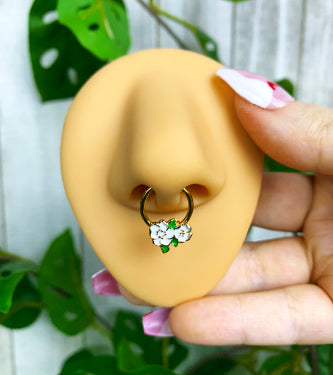

















Ugh, there’s nothing worse than the excitement for a new piercing turning into an itchy, red, irritated mess. If you’ve got sensitive skin, you know exactly what we’re talking about! That’s where hypoallergenic piercing earrings come in—they’re your secret weapon against those nasty reactions.
These pieces are made from specific materials that are way less likely to tick off your skin, making them the absolute best choice for both fresh piercings and sensitive, healed ones.
Your Guide to Happy Piercings and Hypoallergenic Earrings

If you’re on the hunt for jewelry that won't betray your skin, you're in the right place. So many of us need pieces that look amazing and feel great to wear. Consider this your go-to guide for picking out hypoallergenic earrings with 100% confidence.
We’re breaking down what "hypoallergenic" actually means, figuring out why your skin is throwing a fit, and showing you how to choose the perfect, irritation-free earrings from Bodycandy's huge collection.
What You'll Discover Inside
We’re diving deep into the metals that matter most for happy piercings. You'll learn all about the MVPs of body jewelry that will keep your skin calm and your style on point. It’s time to stop guessing and start making smart choices that protect your piercings.
Here’s a little peek at what’s coming up:
- Implant-Grade Metals: Find out why materials like titanium and implant-grade steel are the top-tier choices for safety and comfort, especially when a piercing is new.
- Decoding Jewelry Terms: We’ll clear up the confusion between "nickel-free" and "hypoallergenic" so you know exactly what to look for when you shop.
- Essential Aftercare: Get the real-deal on proper cleaning techniques to help your piercings heal beautifully without any drama.
- Styling with Confidence: We’ll give you tips on how to rock your favorite looks without having to worry about a painful reaction showing up later.
Choosing the right material isn't just about preventing a rash; it's about giving your piercing the best possible start. A biocompatible metal drastically cuts down the risk of complications, letting your body heal smoothly without putting up a fight.
Our goal here is to empower you. We want you to be excited about showing off your style, not anxious about it. By the time you're done with this guide, you'll have everything you need to say goodbye to painful piercings and hello to comfortable, cool jewelry you can wear all day, every day. Let's get your piercings on the path to happy and healthy!
What Does Hypoallergenic Mean for Your Piercings
You’ve probably seen the word "hypoallergenic" slapped on jewelry labels all the time, but what's the real story behind it? Let's break this super important term down, because when it comes to your piercings, it’s everything.
Think of hypoallergenic not as a 100% allergy-proof guarantee, but more like a promise that a material is far less likely to tick off your skin. It’s the jewelry’s way of saying, "Hey, your skin is probably going to love this." This is a huge deal, especially when you remember a new piercing is basically a small wound that needs the gentlest environment possible to heal right.
The Problem with Nickel
So, what are we trying to avoid? The main villain in pretty much every metal allergy horror story is nickel. It's a common, cheap filler metal that manufacturers use to make softer metals stronger and add shine. While it saves them a few bucks, it can be a total nightmare for your skin, causing anything from mild itching and redness to a full-blown blistering rash.
Hypoallergenic piercing earrings are specifically made with little to no nickel. By cutting out this main irritant, you dramatically reduce your risk of a painful reaction and give your piercing the best chance to heal happy.
And this isn't just a small-time issue. Did you know that around 36% of customers worry about allergic reactions? On top of that, 29% cite safety risks with long-term use. This is driving a massive demand for safer materials, especially in North America, which holds 34% of the market share. With over 61% of U.S. adults under 30 sporting piercings, that's a lot of bodies needing skin-friendly jewelry!
Meet the Biocompatible Heroes
This is where the true heroes of the piercing world come in: biocompatible metals. It sounds fancy, but the idea is simple. These are materials that your body accepts and doesn't see as a foreign invader.
Think of it like this: your immune system is a super-protective security guard. When you pop in some low-quality, nickel-heavy jewelry, the security guard sounds the alarm, leading to inflammation and irritation. But when you use a biocompatible material, the security guard gives it a nod, recognizes it as a friend, and just lets it be.
This is exactly why professional piercers and jewelry experts can't stop talking about materials like these:
- Implant-Grade Titanium: The undisputed champ. This is the same stuff used for medical implants like bone screws. It's totally nickel-free, surprisingly lightweight, and incredibly strong.
- Implant-Grade Steel: A fantastic and more budget-friendly option, but only if it’s the right grade (like 316LVM). This specific grade has an extremely low nickel-release rate, which makes it safe for most people.
- Niobium: Another elemental metal that’s highly biocompatible and nickel-free. You’ll often find it in a whole rainbow of cool anodized colors.
- Solid 14k-18k Gold: A classic for a reason, but it must be solid—not just plated—and confirmed nickel-free to be truly hypoallergenic.
Getting a handle on these differences is the key to picking the right hypoallergenic piercing earrings. It gives you the power to read product descriptions with confidence and know exactly what you’re putting in your body. For a deeper dive, check out our quick guide on hypoallergenic jewelry for sensitive skin. Making the right material choice isn't just about style; it’s the most important step you can take for a healthy, happy piercing.
The Best Hypoallergenic Metals for Your Ears
Ready to finally figure out which piercing metals are actually safe for you? Welcome to your ultimate guide to the best hypoallergenic materials Bodycandy has to offer. We're breaking down exactly what makes each one a great choice for sensitive skin so you can stop guessing and start shopping with confidence.
Let's get into the top players: Titanium, Implant-Grade Surgical Steel, Niobium, and solid Gold. We’ll compare them side-by-side so you can pick the perfect match for your style, budget, and whether your piercing is brand new or all healed up.
This simple chart is your new best friend for making the right call.

It really is that easy: for a fresh piercing that’s still healing, titanium is the only way to go. If your piercing is fully healed and happy, solid gold is a fantastic upgrade.
Titanium: The Undisputed Champion
If hypoallergenic metals had a rockstar, Implant-Grade Titanium would be it. This is the top-tier, gold standard for initial piercings, and it's what professional piercers everywhere recommend. Why all the hype? Because it's 100% nickel-free and completely biocompatible.
Basically, your body just ignores it, which means you get a super smooth, drama-free healing process. It's also ridiculously lightweight—you'll barely even feel it—but it's strong enough to handle whatever you throw at it.
- Best For: Brand new piercings, super-sensitive skin, and anyone who wants zero worries about allergic reactions.
- Pro-Tip: Always look for jewelry certified as ASTM F-136. This is the stamp of approval that means the titanium is medical implant-grade and safe enough to live inside the human body.
While titanium is the G.O.A.T., it does come with a slightly higher price tag. But honestly, for the peace of mind during that critical healing window, it’s an investment that pays off. We break it all down in our Need to Know: Titanium Body Jewelry article if you want to dive deeper.
Implant-Grade Surgical Steel: The Smart Budget Option
Don't let the word "steel" freak you out! When we talk about Implant-Grade Surgical Steel, we mean very specific, high-quality grades like 316LVM ASTM F-138. This is NOT the mystery metal you find at the mall kiosk. It's a medical-grade alloy with an extremely low nickel-release rate, making it a safe bet for most people, even those with sensitivities.
It's tough, has that classic polished shine, and is way more affordable than titanium. It’s no wonder it's one of the most popular choices out there.
The secret is making sure it's explicitly labeled "implant-grade." If a piece of jewelry just says "surgical steel" without the grade, it could have more nickel and trigger a nasty reaction. Always read the fine print!
Niobium: The Colorful Underdog
Ever seen body jewelry in electric blue, vibrant purple, or a shimmering rainbow? You were probably looking at Niobium. This elemental metal is highly biocompatible and completely nickel-free, putting it right up there with titanium in terms of safety.
What really makes Niobium stand out is its ability to be anodized. This cool process uses electricity—not paint or plating—to create a whole spectrum of permanent, vivid colors. Since there's no coating to flake or chip off, it stays 100% safe for your piercing.
- Best For: Anyone wanting to rock some serious color without sacrificing safety. It’s an awesome choice for healed piercings when you're ready to get creative with your style.
Solid 14k-18k Gold: The Luxe Choice
For that classic, luxurious touch, nothing beats solid gold. But hold on—not all gold is created equal, especially when it comes to piercings. You need to stick to 14k or 18k solid gold that is specifically marked as nickel-free.
Pure 24k gold is way too soft to hold its shape in a piercing, so it’s mixed with other metals (alloys) to make it stronger. The problem is, lower-karat golds (like 10k) contain more of these other metals, and that often means more nickel.
- Avoid: Gold-plated, gold-filled, or gold vermeil jewelry for any piercing that isn't fully healed. That thin layer of gold will eventually wear off, exposing your skin to the mystery base metal underneath—usually a one-way ticket to Irritation City.
- Choose: Solid 14k or 18k gold for healed piercings. It’s the perfect way to splurge on a forever piece that's both gorgeous and safe for your sensitive skin.
Hypoallergenic Metals At-a-Glance
Still trying to decide? This table breaks it all down. Use it as a quick cheat sheet to find the perfect metal for your piercing and your skin.
| Material | Best For | Pros | Cons | BodyCandy Pro Tip |
|---|---|---|---|---|
| Titanium | New piercings & ultra-sensitive skin | 100% nickel-free, lightweight, super strong, piercer recommended. | Higher price point. | Look for ASTM F-136 certification. It's the best you can get for healing. |
| Implant-Grade Steel | Healed piercings & budget-conscious shoppers | Durable, affordable, classic polished look, low nickel content. | Not 100% nickel-free; "surgical steel" can be misleading. | Only buy if it's specified as 316LVM or ASTM F-138. |
| Niobium | Adding vibrant, permanent color | Nickel-free, biocompatible, huge color range from anodizing (no plating!). | Can be harder to find than titanium or steel. | Perfect for showing off your personality in healed piercings with unique colors. |
| Solid 14k-18k Gold | Healed piercings & luxury style | Timeless look, safe for most when nickel-free, holds value. | Expensive, too soft for new piercings, risk of nickel in lower karats. | Stick to 14k or 18k for the best balance of purity and strength. Avoid plated! |
Now that you're armed with all this knowledge, you can confidently choose the perfect hypoallergenic earrings for any situation. Whether you're all about ultimate safety with titanium or timeless style with gold, BodyCandy has the right metal for your look.
How to Spot the Signs of a Metal Allergy
So, your new piercing is red and a little angry. Is it just part of the normal healing process, or is your body trying to tell you it hates your new jewelry? Knowing the difference is a superpower for anyone with piercings, especially if you suspect you might need hypoallergenic piercing earrings.
Let's get down to it. A fresh piercing is, well, a wound. It's totally normal to see some redness, a little bit of swelling, and feel some warmth for the first few days. That's just your body's healing crew clocking in for their shift.
But a true metal allergy? That's a whole different beast. The reaction is a type of contact dermatitis, which is just a fancy way of saying your skin is freaking out about something it’s touching. In the world of piercings, the usual culprit is nickel lurking in your jewelry.
Normal Healing vs. Allergic Reaction
Think of normal healing irritation as a visitor who shows up, hangs out for a few days, and then leaves. The initial swelling and redness should start to calm down within a week or so. You might even see some clear or whitish fluid that dries into "crusties"—totally fine! That's a sign your body is hard at work building new tissue.
An allergic reaction, on the other hand, is the guest that overstays its welcome and trashes the place. It doesn't get better with time; it usually gets worse. The symptoms are way more intense and just won't quit.
An allergic reaction from jewelry almost always points to a nickel sensitivity. Unlike normal healing irritation, which subsides, an allergy will persist and often worsen as long as the offending metal is present.
When you're wearing low-quality jewelry, your immune system can flag the nickel as a threat and go into full-on attack mode. This leads to some pretty unmistakable signs that your body is flat-out rejecting the earring.
Telltale Signs of a Metal Allergy
So, what exactly should you be looking for? If your piercing is throwing any of these fits well after the first week, you're probably dealing with an allergy:
- Intense and Persistent Itching: We're not talking about a little tickle. This is a deep, gotta-scratch-it-now kind of itch right at the piercing site.
- Spreading Redness: Instead of staying put, the redness starts to expand, creating a red "halo" around your earring.
- Swelling That Won't Go Down: A little puffiness at the start is expected. Swelling that sticks around or gets worse after the first week is a major red flag.
- Blistering or Bumps: You might see tiny, fluid-filled blisters or develop a bumpy, rash-like texture on the skin touching the jewelry.
- Weeping or Oozing: This isn't the clear fluid of a healthy, healing piercing. Allergic reactions can cause the area to weep a yellowish, sticky fluid.
- Crusting and Flaking: The skin around the hole might become dry, flaky, or develop a thick, colored crust that just keeps coming back no matter how much you clean it.
If you're nodding along to any of these, your body is sending you a clear signal to act fast. For a deeper dive, check out our guide on allergic reactions and piercing care. Your best first move is to take out the problem jewelry immediately. Swap it for a sterile, implant-grade titanium piece that you know is safe. Clean the area gently with a saline solution and keep an eye on it. If things don't get better, it’s time to have a chat with your professional piercer or a doctor.
Choosing and Caring for Your Hypoallergenic Earrings

Alright, you've figured out which hypoallergenic metal is your soulmate—awesome! Now for the fun part: picking out the perfect jewelry style and learning how to keep it looking fresh. It’s not just about the metal; the shape of the earring matters a ton, especially when you’re dealing with a brand-new piercing.
Picking the Right Style for Your Piercing
For any new piercing, your piercer is almost always going to start you with a flat-back labret stud or a straight barbell. There's a really good reason for this. These styles are specifically designed to keep movement and snagging to a minimum, giving your piercing the chill, stable environment it needs to heal up without any drama.
Hoops are cool, we get it, but they can spin through the piercing channel, dragging in germs and causing all sorts of irritation. And those classic butterfly-back studs? They're notorious for trapping gunk and squeezing a fresh piercing, which is a major no-no for healing.
Once you’re fully healed, the sky’s the limit! Go nuts building your dream ear stack with Bodycandy's huge collection of hypoallergenic hoops, studs, and dangles. Just remember, the right jewelry is only half the battle. Aftercare is absolutely non-negotiable.
The boom in hypoallergenic piercing earrings is all part of a bigger movement toward safety and self-expression in the body jewelry world, which is on track to be an $8.69 billion market by 2026. People just like you are driving this trend: 61% of young shoppers use fashion to express themselves, and 48% want personalized styles. And with 36% of customers worried about allergies, it’s no surprise that safe, stylish options are what everyone is after. Discover more insights about the body piercing jewelry market and its growth.
The Golden Rules of Piercing Aftercare
Good cleaning habits are the secret to a happy, healthy piercing that’ll look amazing for years. Let's bust a few myths and get you on the right track. Think of your new piercing as a wound that needs a little TLC.
Step away from the harsh chemicals! Stuff like rubbing alcohol and hydrogen peroxide are way too aggressive. They don't just kill the bad bacteria; they also destroy the delicate new cells your body is trying to build, which can seriously set back your healing time.
Your piercing’s new BFF is a sterile saline solution. It’s gentle, it’s effective, and it’s perfectly formulated to clean your piercing without causing any irritation.
Proper aftercare isn't a suggestion; it's a requirement for a healthy piercing. Using a simple sterile saline solution is the safest and most effective way to clean your piercing without disrupting the natural healing process.
Your Step-by-Step Cleaning Routine
Ready to become an aftercare expert? Just follow these simple steps twice a day, and you'll keep your piercing clean and on the fast track to healing.
- Wash Your Hands: First, always. Before you even think about touching your piercing, wash your hands thoroughly with soap and water. You don't want to transfer any germs.
- Soak, Don't Scrub: Spray your sterile saline solution directly on the front and back of the piercing. You can also soak a clean piece of non-woven gauze and hold it on the piercing for a few minutes. This helps soften up any of those little "crusties."
- Gently Pat Dry: Use a fresh piece of non-woven gauze or a paper towel to gently pat the area dry. Stay away from cloth towels—they can harbor bacteria and snag on your new jewelry.
- Leave It Alone: This is the hardest part, we know! Resist the urge to twist, turn, or play with your earring. The only time you should touch it is when you’re cleaning it.
By sticking to this routine and starting with high-quality hypoallergenic piercing earrings, you’re setting yourself up for success. You’ll sidestep irritation, heal faster, and be ready to show off your awesome new piercing in no time.
Your Hypoallergenic Piercing Earrings FAQ
You've got questions about what makes jewelry safe for sensitive skin, and we've got the answers. We’ve pulled together the most common questions we hear about hypoallergenic piercing earrings to give you the real-deal, straightforward info you need to feel amazing about your jewelry choices.
Is Surgical Steel Truly Hypoallergenic?
This is a big one, and the honest answer is: it depends! The term "surgical steel" gets thrown around a lot, but when we talk about piercer-approved, safe-for-your-body jewelry, we mean one thing and one thing only: implant-grade surgical steel, like 316LVM. This specific grade is designed with an incredibly low nickel content and, more importantly, a low nickel-release rate, which makes it a safe bet for most people.
But here's the catch. A ton of cheap jewelry gets labeled "surgical steel" without mentioning the grade. This is mystery metal, plain and simple, and it often packs enough nickel to make your skin very, very unhappy.
BodyCandy Pro Tip: For a fresh, healing piercing, we always tell you to play it safe with implant-grade titanium. It's 100% nickel-free and the absolute best way to start your piercing's healing journey. Once you're fully healed, 316LVM steel can be an awesome, affordable option—but you have to check that grade!
Can I Be Allergic to Gold Piercing Earrings?
It's surprising, but yes, you can—but it's almost never the gold that's the problem. The real troublemaker is the other metals mixed in with it!
Pure, 24k gold is way too soft for body jewelry; it would get bent out of shape and scratched in a heartbeat. To make it strong enough for you to wear, it gets blended (or "alloyed") with other metals. Cheaper, lower-karat golds, like 10k and even some 14k, are often mixed with nickel to make them harder.
If you want to rock gold safely and in style, always look for solid 14k or 18k nickel-free gold. And whatever you do, stay far, far away from anything "gold-plated" in a piercing. That super-thin layer of gold wears off fast, exposing your piercing to whatever cheap (and probably irritating) metal is hiding underneath.
Are 'Nickel-Free' and 'Hypoallergenic' the Same Thing?
They're close cousins, but there's a small difference that's super important to know. Think of it like this:
- Nickel-Free: This is a clear, simple promise. The jewelry contains absolutely zero nickel. Implant-grade titanium and niobium are the stars of this category.
- Hypoallergenic: This means the jewelry is less likely to cause an allergic reaction. This usually means it's either totally nickel-free or contains such a tiny, medically-approved amount of nickel that it won't bother most people. Implant-grade surgical steel is the perfect example here.
For total peace of mind, especially with a brand-new piercing or if you know you have super sensitive skin, go for the gold standard: anything labeled both nickel-free AND hypoallergenic. Our favorite, titanium, fits the bill perfectly.
How Long Until I Can Change My Earrings After a Piercing?
Patience is everything here! A new piercing is basically a puncture wound, and it needs time to heal from the inside out. It might look healed on the surface, but the tissue on the inside is still super fragile. Swapping jewelry too early can cause major irritation, invite infection, and set your healing time way, way back.
The real timeline depends on where your piercing is and how your body heals. Here’s a general idea:
- Lobe Piercings: You’re typically looking at a minimum of 6-8 weeks.
- Cartilage Piercings (Helix, Conch, Tragus): These are a long-haul commitment. Expect 6-12 months or even longer before they are truly healed and ready for you to change the jewelry whenever you want.
Always, always listen to your piercer's advice! They’ll tell you when you can come back for your first jewelry change, which is usually a "downsize" to a shorter post after the first big wave of swelling has gone down. Don't rush it—a healthy, happy piercing is worth the wait.
What Should I Do If My Piercing Reacts to New Earrings?
First off, don't panic! If you pop in a new pair of earrings and your piercing gets red, itchy, swollen, or starts weeping, your body is sending you a very clear signal. The first, most important thing to do is take the offending jewelry out immediately.
Once that problem piece is out, switch back to a tried-and-true earring you know your body loves. This should be a sterile, high-quality piece made of implant-grade titanium or solid 14k gold. This is exactly why you should always keep your initial piercing jewelry!
After you've swapped back to your safe jewelry, get back to your aftercare routine. Clean the area gently with a sterile saline solution two or three times a day. If the redness, swelling, and irritation don't start to get better within a day or two, it’s time to text your piercer or check in with a doctor. They’ll help you figure out what's up and get your piercing happy again.
Ready to find the perfect, irritation-free jewelry that lets you express your style without the worry? At BodyCandy, we have a massive collection of hypoallergenic piercing earrings in titanium, implant-grade steel, and solid gold. Shop our full collection today and give your piercings the love they deserve!