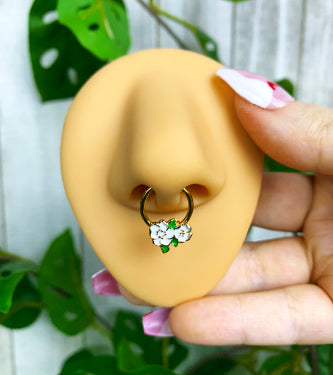


















Your favorite nose ring looked perfect when you first put it in. A few weeks later, it's cloudy, there's mystery gunk around the post, and your piercing feels a little cranky for no obvious reason.
That's normal. It's also fixable.
A good body jewelry cleaner routine isn't about being extra. It's how you keep your jewelry looking sharp and your piercing from getting annoyed by buildup, residue, and cleaning products that should never have touched it in the first place. Common issues include either under-cleaning, over-cleaning, or using the wrong stuff entirely. All three are bad.
The part hardly anyone talks about is the gross little space where jewelry sits against skin. That hidden spot collects debris fast, especially in pieces you wear constantly. If you only clean the visible part, you're doing half the job.
Why That Sparkle Fades and How to Get It Back
You buy a cute new belly ring, wear it every day, and suddenly it stops looking expensive. It's not scratched. It's just... tired. Lotion, skin oil, soap residue, hair product, sweat, and regular life stack up on the surface until the shine disappears.
Then comes the second problem. Your jewelry may look dull, but your piercing also starts feeling off. Not full-blown disaster. Just that annoying little tenderness or crusty buildup that makes you wonder if something's wrong.
Daily wear changes everything
Body jewelry doesn't live in a jewelry box. It lives on you. That means it deals with your shower products, skincare, makeup, body oils, sleep, workouts, and whatever else your day throws at it.
That's why cleaning it matters. Not because you need a sterile lab setup at home, but because body jewelry sits in a much more sensitive place than a regular ring or necklace.
Real-talk rule: Jewelry that goes in a piercing needs gentler care than jewelry that only touches the outside of your skin.
A fully healed piercing and a healing piercing also need different energy. Healing piercings need calm, simple aftercare and as little messing with the jewelry as possible. Healed jewelry can handle a proper clean when buildup starts making it look dull or feel grimy.
If you want your pieces to stay cute longer, basic maintenance matters just as much as what you bought in the first place. The same common-sense habits that help make your jewelry and body jewelry last longer also keep your favorite pieces from turning cloudy and uncomfortable.
What you're actually trying to remove
Most of the time, you're not dealing with anything dramatic. You're cleaning off:
- Skin oils that leave a film on metal
- Soap and product residue that makes jewelry look cloudy
- Everyday grime that settles into tiny grooves and settings
- Buildup near the piercing opening that can irritate skin
Ignore that for long enough, and sparkle fades first. Comfort usually goes next.
Your Go-To Cleaning Kit for Most Jewelry
You don't need a fancy setup. For most quality body jewelry, the best body jewelry cleaner routine is the simple one.

The safest and most effective at-home method uses warm water, a few drops of mild dish soap like Dawn, and a soft-bristled toothbrush, with a short 2 to 5 minute soak before gentle scrubbing to avoid damage, according to this at-home jewelry cleaning recommendation.
What you need
Keep it boring. Boring is good here.
- Warm water. Not boiling, not steaming hot.
- Mild dish soap. A few drops is enough.
- A soft-bristled toothbrush. Baby-soft is better than scrubby.
- A clean lint-free cloth or paper towel for drying
- A small bowl so you're not chasing jewelry around the sink
If your jewelry has tiny grooves, gems, or threaded parts, that soft brush matters. Your fingers won't get into those little crevices well enough.
How to clean it without wrecking it
- Fill a small bowl with warm water and add a few drops of mild dish soap. You're making a gentle cleanser, not bubble bath soup.
- Soak the jewelry briefly. Keep it in the mixture for 2 to 5 minutes. Longer isn't better. Too much soaking can be rough on some finishes and materials.
- Use a soft-bristled toothbrush to clean the details. Brush lightly around threads, gem settings, and any little edges where buildup likes to hide.
- Rinse well with clean water so no soap hangs around on the surface.
- Dry it completely before storing or re-inserting it.
What makes this method work
Warm water loosens film and grime. Mild soap helps lift oil and residue. The soft brush gets into the spots your washcloth never will.
That's the whole trick. Gentle products, gentle tools, short cleaning time.
If your cleaning routine sounds like it belongs in a garage, not a bathroom, it's the wrong routine for body jewelry.
A few smart habits that save you trouble
Some people ruin jewelry during cleaning, not wear. Don't be that person.
- Plug the sink or use a bowl. Tiny ends disappear fast.
- Use a dedicated brush. Don't grab the one sitting next to your toothpaste.
- Dry threaded pieces carefully. Water trapped in grooves can hold onto loosened debris.
- Stop if the finish looks delicate. If you know a piece is plated or coated, use extra-light pressure.
If you want a quick visual before you start, this walkthrough helps:
Best for most healed jewelry
This method is your default move for many solid, non-porous pieces that need routine care. It's easy, low-drama, and effective.
If something needs stronger chemicals to look clean, the cleaner is probably the problem.
The Big No-No List What to Never Use on Your Jewelry
You know that moment when your jewelry looks dull, your piercing feels cranky, and you're tempted to blast the whole thing with alcohol and call it clean? That's how people end up with shiny-looking jewelry and an irritated piercing.
Body jewelry is different from regular jewelry because it sits in or against a piercing channel. The hidden debris gap matters here. Gunk loves to collect around threads, gem settings, clickers, and the tiny spaces between the jewelry and your skin. If you dump harsh cleaner on it, you can push residue right into the spot that already gets irritated fastest.

The stuff you should keep far away from body jewelry
- Gold and silver jewelry cleaners. They're made for standard jewelry, not pieces that go through a piercing.
- Rubbing alcohol and hydrogen peroxide. These can be too harsh on jewelry finishes and rough on tissue if residue is left behind.
- Bleach, vinegar, and lemon juice. Cute internet hack. Bad idea.
- Chlorinated pool water as a “cleaner.” Swimming is not a cleaning method.
- Stiff brushes, baking soda pastes, and abrasive scrubbers. Scratches make jewelry look worse and feel worse.
- Heavy hand soaps with fragrance, moisturizers, or antibacterial additives. They leave film behind, especially in threads and seams.
Lynn Loheide's body jewelry care guide calls out peroxide and harsh cleaners for good reason. They can damage certain materials and create problems you do not need.
Why these products backfire
A bracelet can tolerate more abuse because it sits on the surface of your skin. Body jewelry does not get that luxury. It goes back into a piercing, or stays in one while you clean around it, so anything left on the piece can sit right against sensitive tissue.
That's the part a lot of guides miss.
If you're cleaning jewelry while it's still in your piercing, harsh products are even dumber. You are not just cleaning the visible surface. You are dealing with the hidden debris gap where buildup gets trapped out of sight. Strong chemicals, thick soaps, and abrasive scrubbing can shove loosened grime and cleaner into that tight space instead of getting it out.
If it burns, stings, or leaves a coating, it does not belong on body jewelry.
“Natural” does not mean safe
Vinegar and lemon juice still hit hard. They can mess with finishes, bother already-sensitive skin, and leave your jewelry looking tired instead of fresh.
Boiling water is another one people love to recommend like it's some magic reset button. Skip it. High heat can stress delicate stones, coatings, adhesives, and lower-quality pieces. If you don't even know your jewelry material, don't experiment. Use this quick guide to body jewelry materials that fit before you clean anything aggressively.
My blunt take
Your cleaner should not smell harsh, feel harsh, or act harsh. You do not need chemistry-lab energy for body jewelry.
Simple wins. Mild soap, warm water, soft tools, and extra attention to the hidden spaces around jewelry that stays in the piercing. That's how you get sparkle back without making your piercing mad.
Cleaning Secrets for Every Jewelry Material
Not every piece wants the same treatment. Clean titanium one way, plated jewelry a softer way, and acrylic with almost absurd gentleness. Material matters.
Here's the cheat sheet version first.
Body Jewelry Cleaning Cheat Sheet
| Material | Recommended Cleaner | Key Tip |
|---|---|---|
| Titanium | Warm water and mild soap | Use a soft brush and skip harsh metal cleaners |
| Surgical steel | Warm water and mild soap | Dry thoroughly around threads and closures |
| Solid gold | Warm water and mild soap | Gentle brushing works well on quality solid metal |
| Gold-plated jewelry | Mild soap and water with light contact | Don't scrub hard or over-soak |
| Acrylic | Damp cloth with mild soap | Never soak it |
| Bioflex | Damp cloth with mild soap | Keep it away from harsh chemicals and soaking |
| Natural stone or wood | Gentle surface cleaning only | Use minimal moisture and avoid long exposure to water |
For a broader breakdown of what different pieces are made from, this guide to body jewelry materials that fit is worth bookmarking.
Titanium and surgical steel
These are the workhorses in a lot of collections. They're common, practical, and usually the easiest to maintain if the quality is good.
Use warm water, mild soap, and a soft brush. Focus on threads, bead openings, and any spot where debris can hang out. Rinse well and dry the piece completely.
Don't get cocky and reach for regular silver or gold cleaner just because the jewelry looks metal and sturdy. That's exactly how people damage perfectly good pieces.
Solid gold and higher-quality metal pieces
Solid gold can usually handle the gentle soap-and-water routine nicely. A soft toothbrush helps clean around decorative details and crevices.
This is also where some people use an ultrasonic cleaner, but only if the piece is high quality and solid metal. If you're not sure what you own, assume less is better.
Practical rule: If you don't know whether a piece is solid or plated, clean it like it's delicate.
Gold-plated jewelry
Plated pieces need lighter handling. The goal is to clean the surface without wearing away the finish.
Keep the soak short. Use soft pressure only. Skip aggressive brushing around edges where plating can wear first. If the piece starts looking faded after rough cleaning, that wasn't “dirt.” That was your finish.
Acrylic and Bioflex
A common and constant mistake people make is that Acrylic and Bioflex should never be soaked in water or exposed to harsh chemicals like rubbing alcohol or hydrogen peroxide because those can break the material down, crack it, discolor it, swell it, or warp it. The safer move is a gentle wipe-down with a damp cloth and mild soap, as explained in this BodyCandy guide to cleaning body jewelry.
That means no long baths in water. No “disinfecting” with alcohol. No peroxide. No aggressive antibacterial products.
Clean these like you're handling something that can lose its shape, because it can.
Wood, stone, and other specialty materials
These pieces usually need a lighter touch than metal. Natural materials can react badly to long exposure to water or strong cleansers.
Use minimal moisture. Wipe gently. Dry promptly. If a piece has decorative inlays, glued gems, or porous material, stay conservative.
Quick material matching tips
- Sturdy metal piece you know is good quality: mild soap, warm water, soft brush
- Plated or coated piece: same basic cleaner, less pressure, less soaking
- Flexible or plastic-based piece: damp wipe only
- Natural material: gentle surface clean, very little moisture
The right body jewelry cleaner routine depends less on hype and more on what the piece is made of.
Level Up Your Clean Pro Tips and Tricks
You know that annoying moment when your jewelry looks shiny from the front, but your piercing still feels itchy, sore, or weirdly grimy? That usually means the problem is hiding where the jewelry sits against the skin, not on the part you can see.
That hidden debris gap gets ignored all the time, and it is one of the biggest reasons a piercing can stay cranky even when the jewelry itself looks fine.
Clean the part that lives inside the piercing
If your jewelry is staying in, your cleaning needs to target the tight little contact point around the post, ring, or decorative base. That is where softened crust, skin oil, soap residue, and general gunk like to collect.
Go slow and keep it gentle:
- Start with warm water. Let running water or a warm compress loosen buildup first.
- Use a clean soft mascara wand. It works well around prongs, textured ends, and other tiny details.
- Use unwaxed dental floss only if the jewelry shape allows it. Guide it carefully around the jewelry-skin contact area. No sawing. No snapping it through.
- Support the jewelry with clean fingers. You want to clean around it, not drag it back and forth through the channel.
- Stop if the area gets angry. Bleeding, sharp pain, or instant swelling means you are doing too much.
Short version. Clean what touches your skin, not just what catches the light.
A few smarter moves that make a big difference
Clean after workouts, hair product buildup, sunscreen-heavy days, and anytime your jewelry starts feeling sticky or filmy. Those are classic times for residue to pack itself into the hard-to-see spots.
For threaded ends, gem settings, and ornate pieces, check them under bright light after cleaning. If you still see residue tucked into corners, do another gentle pass instead of scrubbing harder.
If this keeps happening with a specific piece, the issue may be the jewelry design, finish, or fit. A professional piercer checklist that helps you choose someone qualified is worth using if you need an expert to check whether your jewelry is helping or irritating the piercing.
When an ultrasonic cleaner actually makes sense

Ultrasonic cleaners can do a solid job on grime packed into tiny crevices, but this is for jewelry that is out of your body, not still in your piercing.
Use one only for high-quality solid metals you can identify with confidence, such as implant-grade titanium or solid gold. If the piece is plated, coated, mystery metal, glued, fragile, or just questionable, skip it.
Keep your standards high here. Fancy cleaning tools do not fix bad materials, and they definitely do not belong anywhere near an irritated piercing.
Keeping It Fresh and When to Call for Backup
Clean jewelry looks better, but maintenance is what keeps it from getting nasty again two days later. A little routine goes a long way.
For permanent body jewelry, especially industrial bars or chains, weekly use of a non-toxic, biodegradable, skin-safe jewelry cleaner helps maintain freshness and keeps skin oils and grime from building up and dulling the look over time, according to this skin-safe jewelry cleaner guidance for permanent jewelry.
Keep your jewelry from getting gross again
- Store pieces separately. Tossing everything into one dish is how you get scratches, tangled chains, and mystery residue transfer.
- Dry before storing. Moisture left on jewelry can leave it looking cloudy.
- Clean regularly, not aggressively. Routine light cleaning beats occasional panic-scrubbing.
- Check threaded ends and details. Buildup loves tiny mechanical parts.
Know when home care isn't enough
Some problems need a pro, not another round of dish soap.
Get help from a professional piercer if you notice ongoing pain, major swelling, obvious jewelry damage, or anything that feels worse after gentle cleaning. If you're not sure whether your issue is irritation, buildup, or a placement problem, get another set of trained eyes on it.
A good place to start is this professional piercing checklist for choosing a piercer. A solid piercer can tell you if the jewelry, fit, or material is part of the problem.
Ready to upgrade your rotation with pieces that are easier to care for and fun to wear? Browse BodyCandy for fresh styles, then keep them looking amazing with smarter cleaning habits.