
















You're probably here because you want a necklace that feels cute, a little lucky, and easy to wear with the rest of your jewelry. But you also don't want to buy something that looks great for a week, then turns your skin angry or starts looking tired way too fast.
That's where a 4 leaf clover necklace gets interesting. It's not just a sweet little symbol. It has real history, strong gift appeal, and a look that plays well with piercings, layered chains, and everyday outfits.
If you're choosing one for yourself or someone else, the smart move is to look past the charm shape alone. Meaning matters. Material matters. Chain length matters. Comfort matters even more.
More Than Luck The Meaning of a 4 Leaf Clover Necklace
You spot a tiny clover pendant on a chain, and it reads fast. A little hopeful. A little protective. A little like the kind of piece you reach for on a stressful Monday or before a big flight.
That instant recognition is part of the charm. A 4 leaf clover necklace carries meaning without needing a long explanation, which is why it works so well as everyday jewelry.
The symbol has real roots, too. The four-leaf clover is a rare variation of white clover, and that rarity helped turn it into a lasting sign of good fortune in jewelry, according to this history of clover jewelry symbolism.
Why the symbol stuck
Long before clovers showed up in polished pendants, people treated them like protective tokens. In BodyCandy's guide to four-leaf clover jewelry, the symbol is tied to older folklore, including Celtic traditions that connected the clover with protection from harm.
That backstory gives the design more weight than a passing micro-trend. It has been carried, gifted, and worn as a personal symbol for a long time, so the necklace can feel meaningful even if your style is more modern than mystical.
By the 19th century, the motif had already moved into lockets, brooches, and pendants. Jewelry designers kept returning to it for a simple reason. The shape is easy to recognize, soft-looking on the body, and loaded with positive symbolism.

A good charm necklace feels personal before you even clasp it. The clover's connection to hope and good energy is widely understood, so it lands quickly without feeling generic.
What the four leaves mean
The classic interpretation gives each leaf its own job, which is part of why this symbol feels richer than a plain lucky charm.
- Faith adds a grounded, steady feeling.
- Hope brings in optimism and fresh-start energy.
- Love makes the necklace feel warm and giftable.
- Luck gives it the familiar meaning everyone recognizes.
That mix is what keeps the design from feeling one-note. It can mark a graduation, a birthday, a hard year, a new job, or just a reminder to stay open to good things.
For a savvy jewelry buyer, that matters in a practical way too. A symbol with layered meaning usually has better staying power in your collection. You are less likely to get tired of it after one season, especially if you want a necklace that can sit beside your everyday studs, cartilage jewelry, and favorite stack without feeling random.
Why it still feels current
The clover has lasted because it balances sentiment with clean design. Four rounded leaves make a simple, symmetrical shape, so the pendant reads clearly even at a small size. That is great news if you like jewelry that layers well and does not fight with other details, like a nose ring, a curated ear, or a shorter choker.
In other words, the necklace works like a classic charm with better range. It can feel sweet, polished, playful, or a little luxe depending on the chain, finish, and how you wear it.
That long history is a big reason the 4 leaf clover necklace still feels current now. It carries symbolism, rarity, and personal meaning, all in a shape that stays easy to wear.
Choosing Your Metal For Looks and Comfort
A necklace can be adorable and still be wrong for your skin. If you've ever taken off jewelry and found itching, redness, or that weird irritated patch where the chain sat, you already know material isn't a tiny detail. It's the whole game.
For daily wear, skin sensitivity matters a lot. Nickel is a common cause of allergic contact dermatitis, and regulators in major markets such as the EU have set nickel-release limits for jewelry worn in prolonged skin contact, which is why materials like hypoallergenic stainless steel or titanium matter for everyday pieces, as explained by BodyCandy's material guidance.
Quick comparison before you shop
| 4-Leaf Clover Necklace Material Comparison | Hypoallergenic? | Durability | Best For |
|---|---|---|---|
| Titanium | Often a strong choice for sensitive skin | Very durable | Everyday wear, sensitive skin |
| Stainless steel | Can be a practical option for many wearers | Durable | Affordable daily wear |
| Sterling silver | Depends on alloy and your skin | Good with care | A classic precious-metal look |
| Gold-plated alloy | Depends on the base metal | Finish can wear over time | Fashion styling, occasional wear |
What each material feels like in real life
Titanium is the low-drama friend. If your skin gets annoyed easily, this is usually the first place I'd look. It's light, simple, and often a solid match for people who already choose titanium for piercings.
Stainless steel gives you a practical balance of durability and cost. For a necklace you want to wear a lot without babying it, this can make sense. Just make sure the product listing is clear about what the chain and pendant are made from.
Sterling silver looks polished and classic, especially if you like a cooler-toned jewelry stack. The catch is maintenance. Silver can need more attention to keep its finish looking fresh.
Gold-plated pieces can look amazing, especially if you want that warm luxe tone without jumping to a higher-end metal. But what you're paying for is often the look, not lifelong toughness. If the plating wears, the piece won't look the same.
Practical rule: If you want to wear your 4 leaf clover necklace most days, prioritize skin comfort first, then finish, then trend appeal.
What to check on the product page
Before you hit add to cart, scan for these details:
- Base metal: Don't stop at “gold tone” or “silver tone.” That's color, not material.
- Chain and pendant match: Sometimes the charm and chain aren't the same metal.
- Sensitive skin wording: Look for clear material info and allergy notes.
- Wear pattern: If it's plated, assume it needs gentler treatment than solid precious metal.
If you've got multiple piercings, this matters even more. A necklace sits on a high-friction area. Sweat, hair products, perfume, and constant movement all test the material fast.
Finding Your Perfect Clover Necklace
Picking the right 4 leaf clover necklace gets easier when you treat it like styling, not guessing. You're looking at three things at once: the pendant, the chain, and the value behind the piece.
Start with the size and mood
A tiny clover pendant gives you a softer, everyday look. It's the kind of necklace that works with a tee, a hoodie, or a stack of other chains without taking over.
A larger clover reads more like the main event. That works if you want one standout charm or if you like jewelry that shows up clearly in selfies, mirror pics, and dressier outfits.

Use chain length on purpose
Chain length changes the whole vibe. Commercially sold four-leaf clover necklaces commonly come in 16-inch and 18-inch chain lengths. A 16-inch chain typically sits closer to the collar like a choker, while an 18-inch chain falls nearer the base of the neck, according to this clover necklace product specification example.
That affects more than comfort.
- 16-inch works well if you want a tighter neckline look or you layer with a longer second chain.
- 18-inch feels easier and more relaxed on most necklines.
- Charm-only options can help if you already own a favorite chain.
Don't overpay for the shape alone
The clover motif shows up in everything from fashion jewelry to luxury houses. That means two necklaces can look similar at a glance and still offer very different value.
Use this quick filter when comparing pieces:
- Check the actual metal first. Precious metal, stainless steel, and plated alloy aren't the same purchase.
- Look at construction. Are the edges clean? Does the setting look secure? Does the chain look flimsy?
- Decide what matters more to you. Daily wear, gift meaning, or designer association.
A famous clover design can be fun inspiration, but logo recognition isn't the same thing as lasting value. If you care about smart buying, focus on materials and finish before branding.
How to Style and Layer Your Necklace
A 4 leaf clover necklace is easy to wear solo, but it gets even better when you treat it like part of your full jewelry lineup.

Wear it alone when the pendant has a lot to say
If your clover has texture, crystals, or a bold outline, let it breathe. Pair it with simple hoops, a clean lobe stack, or one standout cartilage piece. That keeps the necklace from competing with everything else.
This works especially well with lower necklines, open collars, and solid-color tops.
Layer it without making a mess
The easiest neck stack uses different lengths and different chain personalities. Think one delicate chain, one pendant chain, and one slightly bolder texture.
Try combinations like these:
- Soft and minimal: Clover pendant with one plain fine chain
- Mixed texture: Clover pendant with a snake chain or paperclip chain
- Piercing-friendly stack: Clover necklace with small hoops and subtle studs so your face jewelry still gets attention
Keep one visual focal point. If your ear stack is busy, go simpler on the necklace layers.
A short styling demo can help if you're building a layered look for the first time.
Match your metal, or don't
You can absolutely keep everything in one metal tone for a cleaner look. Gold feels warm and a little dressier. Silver feels crisp and cool.
You can also mix metals if the rest of your jewelry already does. The trick is repeating each tone somewhere else. If your necklace is gold and your nose hoop is silver, add another small silver detail or another gold detail so it looks intentional.
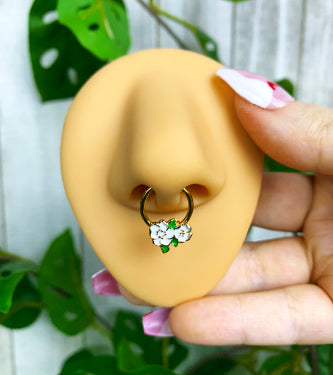
For body jewelry fans, the necklace should work with your piercings, not fight them. If your septum ring, conch hoop, or lobe stack is already your signature, use the clover as the softer supporting piece.
Keeping Your Lucky Charm Looking Its Best
A necklace you wear often needs easy care, not a whole ceremony. Small habits make the biggest difference.
Daily habits that help
Take your necklace off before anything sweaty, messy, or chemical-heavy. That includes workouts, swimming, perfume spraying, lotion layering, and hair product sessions right over your chain.
Store it somewhere dry and separate if you can. Chains tangle fast, and pendants scratch more easily when they're tossed together.
Jewelry lasts longer when you treat “last step on, first step off” like a rule.
Clean it gently based on the metal
For most pieces, a soft cloth wipe after wear goes a long way. That clears off skin oils and product buildup before they dull the finish.
A few simple guidelines help:
- Stainless steel or titanium: Wipe with a soft cloth and keep it dry after wear.
- Sterling silver: Use a silver-safe polishing cloth when it starts to lose brightness.
- Plated jewelry: Be extra gentle. Scrubbing and soaking can wear down the finish faster.
If you want more general jewelry care habits, BodyCandy's guide to making jewelry and body jewelry last has useful basics you can apply to necklaces too.
What not to do
Don't sleep in a delicate chain if it tangles easily. Don't spray perfume directly on the pendant. Don't assume “water-resistant enough” means pool-safe.
A lucky charm only stays charming if the finish, chain, and clasp stay in good shape.
The Perfect Gift of Good Fortune
You need a gift that feels personal, but not overly risky. A 4 leaf clover necklace fits that sweet spot. It carries a built-in message of faith, hope, love, and luck, so the piece already says something before the box is even open.
That makes it a strong pick for birthdays, graduations, fresh starts, recovery seasons, or the friend who could use a little extra encouragement.
Why this gift keeps working
Clover jewelry has stuck around for a reason. It has roots in long-standing symbolism, and it has also shown up again and again in fashion and fine jewelry, so it rarely feels like a passing fad. This history makes the design a reliable choice for a gift, since it feels intentional rather than random.
That balance is what makes it easy to give. The necklace can feel meaningful without getting too formal, and stylish without feeling trend-chasing.

A smart gift checklist
A good gift choice gets clearer when you ask a few practical questions first:
- What do they wear? Tiny everyday pieces, or pendants that stand out a bit more?
- Will they wear it with piercings? If they already wear curated ear stacks, nose rings, or other body jewelry, pick a necklace that matches the vibe instead of fighting it.
- Do they have sensitive skin? If yes, stick with skin-friendlier metals you already read about earlier, like titanium, stainless steel, or high-quality gold options.
- Are they hard on jewelry? A sturdier chain and simple setting usually hold up better for daily wear than delicate, ultra-fine styles.
- Do they care more about symbolism or finish? Some people love the meaning most. Others notice clasp quality, plating wear, and whether the metal will stay comfortable all day.
That last point gets overlooked a lot. Savvy jewelry buyers usually care less about a cute product photo and more about whether the piece will still look good after months of wear.
If you're shopping across jewelry categories, BodyCandy also carries themed body jewelry, including clover-inspired designs, so it helps to consider whether your recipient wears necklaces, piercings, or both.
The sweetest part of the gift
A clover necklace is easy to personalize without adding engraving or making the gift feel too serious. You can give it as a quiet wish for confidence, protection, healing, love, or better luck in a new chapter.
That is why it connects so easily. The necklace looks pretty, but it also carries a clear message. You want good things for them.