Spiral Twister Rings

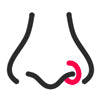
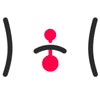
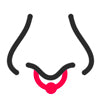
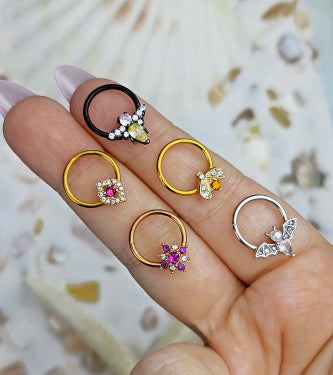
The barbell with a twist: a spiral twister coils one full turn through the piercing and shows a loop of metal on the surface, so it reads like a ring and wears like a bar. Iridescent acrylic balls, CZ and faux-opal ends, butterflies, skulls and seasonal pieces, in 16G for eyebrow and lip and 14G for the navel, in 316L steel and PVD color. Since 1999.


Spiral Twister Fit & Insertion Guide

Fit follows the piercing: eyebrow and lip spirals are 16G, usually 5/16 inch (8mm) or 3/8 inch (10mm) across the coil; belly spirals are 14G in 3/8 or 7/16 inch and sit where a curved barbell would, gem end on the bottom. A spiral cannot be downsized once it is in, so match the gauge of the piece you wear now; both numbers are on every product page.

Putting one in: unscrew one end and rotate the spiral through the piercing like a corkscrew, following the curve rather than pushing straight, then thread the end back on by hand. Because the bar travels through the tissue as it turns, spirals are for healed piercings; heal on the straight or curved bar your piercer placed. The coil cannot slip free on its own, so the only maintenance is a gentle righty-tighty on both ends once a week.

Metal: most spirals here are 316L surgical steel, with a trace of nickel locked in the alloy that most people never notice; gold-tone, rose-tone and black are PVD finishes over steel, the iridescent colors are acrylic ball ends, and gem or faux-opal ends are set in metal. The title names the finish. Nothing here is plated mystery metal.

More ways to wear it:

FAQ

A barbell bent into a corkscrew: one full twist of bar with a threaded ball or gem end on each side, so it coils through the piercing and shows a loop of metal on the surface. It reads like a ring from the front and wears like a barbell, which is why it works in an eyebrow, a navel, a lip or a rook where a plain hoop would stick out.

Unscrew one end, then rotate the spiral through the piercing the way you would turn a corkscrew, following the curve rather than pushing straight. Thread the end back on by hand, snug, never forced. Because the bar travels through the tissue as it turns, spirals are for healed piercings; heal on the straight or curved bar your piercer placed.

Eyebrow and lip: 16G, usually 5/16 inch (8mm) or 3/8 inch (10mm) across the coil. Navel: 14G in 3/8 or 7/16 inch; a spiral belly ring sits where a curved bar would, with the gem end on the bottom. Match the gauge of the piece you wear now, since a spiral cannot be downsized in the piercing; both numbers are on every product page.

Not if the ends are on. The coil has to be rotated out deliberately, so it cannot slip free the way a captive bead can; the only thing to watch is the threaded ends, which back off a little with daily movement. Give both a gentle righty-tighty once a week. Spirals do move more than a stud when you touch them, so leave them for piercings that are done healing.

Most are 316L surgical steel, the everyday standard, with a trace of nickel locked in the alloy that most people never notice; gold-tone, rose-tone and black are PVD finishes over steel, and the acrylic ball ends are what give the iridescent colors. Gem and faux-opal ends are set in metal. The title names the finish, and nothing here is plated mystery metal.

Same gauge, same piercing, different silhouette. A curved barbell sits flat and low under waistbands and is the everyday pick; a spiral twister shows a visible coil of metal above and below the navel and is the statement. Both take the same 14G 3/8 inch bar, so if your curved bar fits, the spiral in the same numbers fits too.