Eyebrow Rings

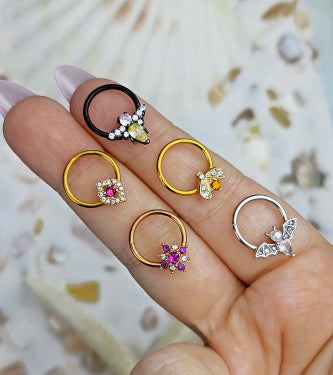
Every eyebrow ring we make, in one grid: 16G curved barbells with gem, matte, opal and titanium ends, spiral twisters, and the hoops, captives and horseshoes a healed brow can carry. Sized for the outer third of the brow where the piercing lives, in 5/16 and 3/8 inch, from a few dollars to solid 14k gold. Since 1999.


Eyebrow Ring Fit & Style Guide

Fit: 16G is the eyebrow standard, with 18G as the finer option and 14G for fuller brows. A curved bar runs 5/16 inch (8mm) or 3/8 inch (10mm) between the balls; a ring needs at least 3/8 inch inside diameter to clear the brow. Snug but not tight is the goal, because the eyebrow is a surface piercing and jewelry that levers against the skin is what makes it migrate. Match the piece you wear now; every product page lists gauge and length.

Styles: the curved barbell is the daily driver and the piece the piercing was designed around; spiral twisters are the same idea with attitude. Captive bead rings, seamless hoops and horseshoes suit a healed brow and sit out further, so they catch more on towels and hair. Many pieces here are cross-listed as curved eyebrow rings and vertical labret or rook jewelry because it is the same 16G curved bar; gauge and length are what matter, not the word in the title.

Metal: 316L steel suits most people and holds a trace of nickel in the alloy; titanium is the nickel-free pick for skin that reacts; solid 14k gold is the forever one. And for the record, the facial-paralysis story about eyebrow piercings is a myth; the real risks are snagging and migration, both of which the right curved bar prevents.

More for the brow:

- Plain curved bars → Basic Eyebrow Rings

- Gem and crystal ends → Gem & Crystal Eyebrow Rings

- Hoops for the brow → Captive Eyebrow Rings

- Solid gold → 14k Gold Eyebrow Rings

- Same curved bar, different piercing → Vertical Labret Jewelry

FAQ

The standard is a 16G curved barbell: a short bent bar with a ball or gem on each end that follows the curve of the brow. Once healed, rings work too, from captive bead rings to seamless hoops and spiral twisters. Most of this page is the curved bar, because that is what the piercing was built for.

16G is the eyebrow standard; 18G is the finer option and 14G suits fuller brows. For a curved bar, 5/16 inch (8mm) or 3/8 inch (10mm) between the balls covers most people; a ring needs at least 3/8 inch inside diameter to clear the brow. Match the piece you wear now; every product page lists gauge and length.

Yes, on a healed piercing, with a ring of at least 3/8 inch so it clears the brow. Captives, seamless rings and horseshoes all sit well through the outer third of the eyebrow. Know the trade-off: a ring sticks out more than a curved bar and catches on towels, hair and glasses, and snagging is what makes eyebrow piercings migrate. Curved bar for daily, hoop for the look.

The eyebrow is a surface piercing: the jewelry sits under a shallow strip of skin, so anything that tugs on it encourages the body to push it out. The jewelry matters a lot. A curved bar in the right length, snug but not tight, moves with the skin instead of levering against it. Too long flops and snags; too short pinches. If yours is thinning or shifting, see your piercer before the jewelry does the deciding.

No. That one is a myth. The nerve people worry about does not run where a standard eyebrow piercing sits; the worst a well-placed piercing does is a little temporary numbness, and even that is rare. The real risks are the boring ones: snagging, migration and scarring if it is abandoned. Pick a good piercer and the right curved bar.

Eyebrows heal in about 6 to 8 weeks, faster than most facial piercings, but keep the starter bar in until your piercer clears you. First swap: another curved bar in the same gauge and length, titanium if your skin reacts to steel. Save the hoops and spirals for a piercing that has settled.